


Longchenpa composed this prayer of lamentation shortly after the parinirvāṇa of his teacher Rigdzin Kumārādza in the autumn of 1343. The prayer is a eulogy that expresses devotion and grief, while also conveying wonder at the signs that accompanied the master's passing. The text was appended to the full-length biography and testament of Kumārādza which appear in the Vima Nyingtik.
Latest from the Khenchen Ngawang Palzang’s Counsels Project
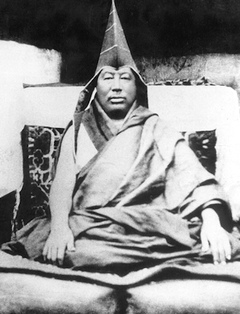
When Khenchen was about to return to his homeland, he offered this series of aphorisms as parting advice to a disciple, most likely a monk at Katok Monastery, referred to in the text (rather obscurely) as Athibathi.
Latest from the Longchen Nyingtik Project
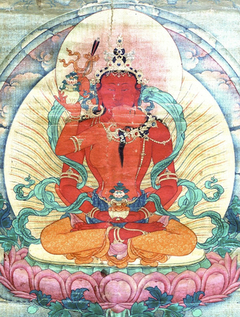
An extensive manual for bestowing the long-life empowerment associated with The Vase of Immortal Life, which is part of Jigme Lingpa's Longchen Nyingtik revelation of Rigdzin Düpa. Besides the empowerment and the summoning of longevity, the text also provides an elaborate teaching on the practice's historical background and on longevity more generally, including the conditions for untimely death (i.e., exhaustion of life-force, karma, and merit), the conditions that contribute to depleted life-force, the signs of depletion, the master who restores it and the method for doing so.
Latest from the Nyingtik Yabzhi Project
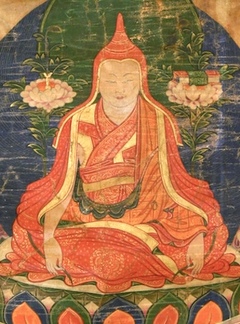
Longchenpa clearly drew upon earlier histories, such as the Great History from the Vima Nyingtik, to compose this survey of the Zabmo Yangtik lineage, which follows the mind-direct transmission of Samantabhadra and the Twelve Dzogchen Teachers, the symbolic transmissions of vidyādharas beginning with Garab Dorje, and the transmission of individuals from Nyang Tingdzin Zangpo and other Tibetan masters down to himself.
Latest from the Ḍākinī Treasury Project
Khenmo Dawa Drolma retells the story of Liaoran of Mo Mountain, an early female Ch'an master. Rather than recasting the Ch'an riddles in the formal style of classical Tibetan literature she instead preserves the cryptic tone of the original in idiomatic Tibetan. The result is a truly original contribution to modern Tibetan literature.
Other recent additions
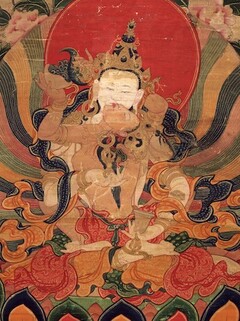
This preliminary practice features an extensive contemplation of impermanence as part of the common preliminaries and a meditation on Vajrasattva that includes the other uncommon practices of refuge, bodhicitta, maṇḍala offering and guru yoga.
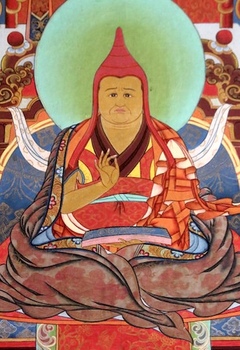
These three verses on the key elements of Dzogchen practice, which appear in the Collected Advice on the Uncommon Great Perfection section of Mipham's writings, were composed in March 1892.
Latest Topic Introductions
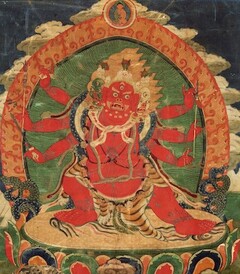
A brief introduction to the deity Hayagrīva, a wrathful manifestation of Avalokiteśvara who symbolizes enlightened speech and is usually depicted with a horse's head protruding from his crown.
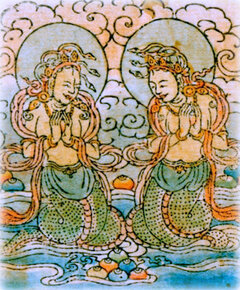
A brief historical introduction to nāgas (Tib. klu), a class of semi-divine, serpentine beings central to the cosmology and popular religious life of South and Inner Asia.
Highlights from Archive

A short historical guide to the sacred place of Samyé Chimpu, where Guru Padmasambhava taught and granted empowerments to his twenty-five disciples, who then meditated in the surrounding caves and attained signs of accomplishment. Later, as Jigme Lingpa explains, the place became a pilgrimage site that was visited by many of Tibet's most illustrious masters.
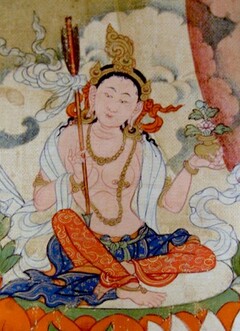
This prayer to the extraordinary Gyarong Khandro Dechen Wangmo, who was considered to be an emanation of Mandāravā, was written by Jamyang Khyentse at the request of Khandro Tsering Chödrön (1929–2011).
Featured Topic
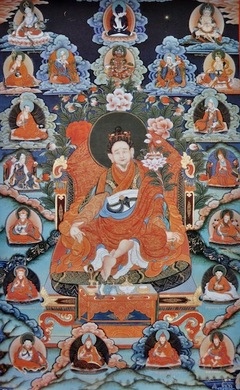
A selection of prayers to the chains of successive rebirths (skye phreng gsol 'debs or skyes rabs gsol 'debs/'khrungs rabs gsol 'debs) of prominent masters, such as Jigme Lingpa, Jamyang Khyentse Wangpo, Jamyang Khyentse Chökyi Lodrö and Sera Khandro.
* Lotsāwa ལོ་ཙཱ་བ་; lo tsā ba n. Title used for native Tibetan translators who worked together with Indian scholars (or paṇḍitas) to translate major buddhist texts into Tibetan from Sanskrit and other Asian languages; it is said to derive from lokacakṣu, literally “eyes of the world”. See also paṇḍita.
Lotsawa House is registered in the UK as a Community Interest Company (#14358325), a category of company which exists primarily to benefit a community or with a view to pursuing a social purpose, with all profits having to be used for this purpose.