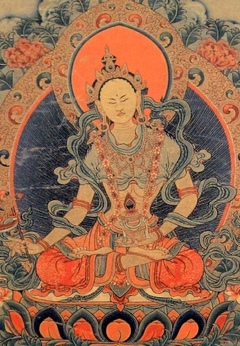
Daily Practice of Vijayā
༄༅། །རྣམ་རྒྱལ་མའི་རྒྱུན་ཁྱེར་ནི།
Daily Practice of Uṣṇīṣavijayā
by Dudjom Rinpoche
སྐྱབས་སེམས་སྔོན་དུ་འགྲོ་བས།
Having taken refuge and generated bodhicitta as a preliminary, recite the following:
སྟོང་པའི་ངང་ལས་པད་ཟླའི་སྟེང་། །
tongpé ngang lé pé dé teng
Out of the state of emptiness, upon lotus and moon,
རང་ཉིད་འཕགས་མ་རྣམ་པར་རྒྱལ། །
rangnyi pakma nampar gyal
I appear as noble Uṣṇīṣavijayā,
ཆུ་ཤེལ་མདོག་ཅན་ཞི་འཛུམ་མཛེས། །
chushel dokchen zhi dzum dzé
Crystal-coloured, serene, smiling and beautiful.
ཕྱག་གཡས་སྐྱབས་སྦྱིན་ལྕགས་ཀྱུ་དང་། །
chak yé kyab jin chakkyu dang
Her right hand is in the refuge-granting gesture and holds an iron hook;
གཡོན་པས་མཆོག་སྦྱིན་ཚེ་བུམ་བསྣམས། །
yönpé chok jin tsebum nam
Her left hand is in the gesture of supreme generosity and holds a long-life vase.
ལོངས་སྤྱོད་རྒྱན་རྫོགས་སྐྱིལ་ཀྲུང་བཞུགས། །
longchö gyen dzok kyiltrung zhuk
She has all the sambhogakāya adornments and sits in cross-legged posture.
ཐུགས་ཀར་ཉི་སྟེང་བྷྲཱུཾ་དཀར་མཐར། །
tukkar nyi teng droom kar tar
At her heart, upon a sun disc is a white syllable bhrūṃ
སྔགས་ཀྱིས་བསྐོར་ལས་འོད་ཟེར་སྤྲིན། །
ngak kyi kor lé özer trin
Surrounded by the mantra, from which radiate clouds of light rays,
ཉི་ཟེར་རྡུལ་ལྟར་མཁའ་ཁྱབ་འཕྲོས། །
nyizer dul tar khakhyab trö
Like specks of dust in a sunbeam, filling the whole of space
བདག་གཞན་ནད་གདོན་སྡིག་སྒྲིབ་སོགས། །
dakzhen nedön dikdrib sok
And entirely purifying all forms of harm and adverse circumstances,
མི་མཐུན་ཉེས་ཚོགས་ལྷག་མེད་སྦྱངས། །
mitün nyé tsoklhak mé jang
Such as sickness, harmful influences, misdeeds and obscurations, for myself and others.
འཁོར་འདས་བརྟན་གཡོའི་དྭངས་བཅུད་ཀུན། །
khordé tenyö dangchü kün
The light then gathers the vital essence of saṃsāra and nirvāṇa, environment and inhabitants,
འོད་ཟེར་བདུད་རྩིའི་རྣམ་པར་བསྡུས། །
özer dütsi nampar dü
In the form of nectarous light rays,
རང་ཐིམ་ཡེ་ཤེས་སྐུ་གྲུབ་སྟེ། །
rang tim yeshe ku drub té
Which dissolve into me, so that I attain a wisdom kāya
བདེ་ཆེན་རྡོ་རྗེའི་སྲོག་ཐོབ་གྱུར། །
dechen dorjé sok tob gyur
And secure the life-force of adamantine great bliss.
ཨོཾ་ཨ་མྲྀ་ཏ་ཨ་ཡུརྡཱ་དེ་སྭཱ་ཧཱ།
om amrita ayurdadé soha
oṃ amṛtāyurdade svāhā
ཞེས་བཟླ།
Recite the mantra.
ལྷར་སྣང་འོད་གསལ་དབྱིངས་སུ་ཐིམ། །
lhar nangö sal ying su tim
Appearance as the deity dissolves into the space of clear light.
ཟུང་འཇུག་སྒྱུ་མའི་ཕྱག་རྒྱར་སད། །
zungjuk gyumé chakgyar sé
And I awaken in the illusory mudrā of union.
དགེ་བ་འདི་ཡིས་མྱུར་དུ་བདག །
gewa di yi nyurdu dak
Through the positivity and merit of this, may I swiftly
རྣམ་པར་རྒྱལ་མ་འགྲུབ་གྱུར་ནས། །
nampar gyalma drub gyur né
Attain the realization of Uṣṇīṣavijayā, and thereby
འགྲོ་བ་གཅིག་ཀྱང་མ་ལུས་པ། །
drowa chik kyang malüpa
Every single sentient being
དེ་ཡི་ས་ལ་འགོད་པར་ཤོག །
dé yi sa la göpar shok
Reach her state of perfection too.
སོགས་ཀྱིས་བསྔོ་སྨོན་བྱའོ། །
Conclude with other such prayers of dedication and aspiration.
ཞེས་པའང་འཁྲུལ་ཞིག་རྡོ་རྗེའི་ངོར་འཇིགས་བྲལ་ཡེ་ཤེས་རྡོ་རྗེས་སོ།། །།
Jigdral Yeshe Dorje wrote this for Trulshik Dorje.
| Translated by Adam Pearcey, 2026.
Source
'jigs bral ye shes rdo rje. "rnam rgyal ma’i rgyun khyer". In bdud 'joms 'jigs bral ye shes rdo rje'i gsung 'bum dam chos rin chen nor bu'i bang mdzod. Kalimpong: Dupjung Lama, 1979–1985. Vol. 25: 182–183
Version: 1.0-20260413