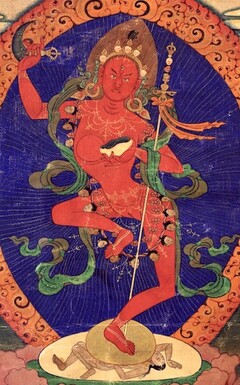
Short Vajravārāhī Sādhana
༄༅། །ཡི་དམ་རྡོ་རྗེ་ཕག་མོའི་རྒྱུན་ཁྱེར་ཉུང་ངུ་ནི།
A Short Sadhana of Vajravārāhī
by the Fifteenth Karmapa, Khakhyab Dorje
སྟོང་ལས་རང་ཉིད་སྐད་ཅིག་དྲན་རྫོགས་སུ། །
tong lé rangnyi kechik dren dzok su
Within emptiness, in a moment of perfect recollection,
བཅོམ་ལྡན་རྡོ་རྗེ་ཕག་མོ་སྐུ་མདོག་དམར། །
chomden dorjé pakmo kudok mar
I appear as the red bhagavatī Vajravārāhī.
ཞལ་གཅིག་ཕྱག་གཉིས་གཡས་པས་གྲི་གུག་ཕྱར། །
zhal chik chak nyi yepé driguk char
I have one face and two hands; the right holds a flaying knife,
གཡོན་པས་ཐོད་པ་བདུད་རྩིས་གང་བ་འཛིན། །
yönpé töpa dütsi gangwa dzin
And the left, a skull-cup filled with nectar.
ཞབས་གཉིས་པད་ཉི་རོ་སྟེང་བརྐྱང་བསྐུམ་བཞུགས། །
zhab nyi pé nyi ro teng kyangkum zhuk
I stand upon a lotus, sun disc and corpse, with one leg straight and the other drawn in.
ཐུགས་ཀའི་ཧྲཱིཿམཐར་སྔགས་ཀྱི་ཕྲེང་བས་བསྐོར། །
tukké hrih tar ngak kyi trengwé kor
At my heart is the syllable hrīḥ surrounded by a mantra garland,
དེ་ལས་འོད་འཕྲོས་སྲས་བཅས་རྒྱལ་བ་མཆོད། །
dé lé ö trö sé ché gyalwa chö
The radiance of which makes offerings to the buddhas and bodhisattvas
ཁམས་གསུམ་འགྲོ་བའི་སྡིག་སྒྲིབ་མ་ལུས་སྦྱངས། །
kham sum drowé dikdrib malü jang
And purifies all the negative actions and obscurations of beings throughout the three realms.
ཕྱི་སྣོད་འཇིག་རྟེན་དག་པ་རབ་འབྱམས་ཞིང་། །
chinö jikten dakpa rabjam zhing
The environment becomes a pure buddha realm,
ནང་བཅུད་སྐྱེ་འགྲོ་ལྷ་དང་ལྷ་མོའི་དང་། །
nangchü kyendro lha dang lhamö dang
And its inhabitants become celestial divinities, male and female.
སྒྲ་གྲགས་སྔགས་ལ་དྲན་རྟོག་འོད་གསལ་དབྱིངས། །
dra drak ngak la dren tok ösal ying
All sound is transformed into mantra, and all recollection and thought into the dhātu of natural luminosity.
ཨོཾ་བཛྲ་བཻ་རོ་ཙ་ནཱི་ཡེ་ཧཱུཾ་ཧཱུཾ་ཕཊ་སྭཱཧཱ།
om benza bairo tsa niyé hung hung pé soha
oṃ vajra vairocanīye hūṃ hūṃ phaṭ svāhā
ཞེས་བཟླ།
སྣོད་བཅུད་ཐམས་ཅད་འོད་ཞུ་རང་ལ་ཐིམ། །
nöchü tamché ö zhu rang la tim
The environment and its inhabitants melt into light, which dissolves into me.
རང་ཡང་ཐུགས་ཀའི་ཧྲཱིཿར་ཐིམ་དེ་ཡང་ཡལ། །
rang yang tukké hrir tim deyang yal
I dissolve into the syllable hrīḥ which, in turn, simply vanishes.
སྣང་སྟོང་ངང་ལས་སླར་ཡང་ཝཱ་ར་ཧཱིའི། །
nangtong ngang lé lar yang wa ra hi
Out of appearance and emptiness, I arise as Vajravārāhī
ཁྱེར་སོ་གསུམ་གྱི་རྣལ་འབྱོར་ལམ་དུ་བྱ། །
khyer so sum gyi naljor lam duja
To enact the yogic approach of threefold integration.1
དགེ་བ་འདི་ཡིས་མྱུར་དུ་བདག །
gewa di yi nyurdu dak
Through the positivity and merit of this, may I swiftly
རྡོ་རྗེ་ཕག་མོ་འགྲུབ་གྱུར་ནས། །
dorjé pakmo drub gyur né
Attain the level of Vajravārāhī and thereby
འགྲོ་བ་གཅིག་ཀྱང་མ་ལུས་པ། །
drowa chik kyang malüpa
Every single sentient being
དེ་ཡི་ས་ལ་འགོད་པར་ཤོག །
dé yi sa la göpar shok
Reach her state of perfection too.
ཅེས་པའང་སྒིས་སྣའི་གྲྭ་ཀརྨ་གཞན་ཕན་གྱིས་ལྷ་སྐལ་དང་དེའི་སྒོམ་བཟླས་བཅས་དགོས་ཞེས་རྟེན་བཅས་བསྐུལ་ངོར་ཀརྨ་པ་བཅོ་ལྔ་པ་བྲིས་པ་དགེ། །།
When Karma Zhenpen, a monk from Gina, made a request—supported by an offering—for an allotted deity and related practice of visualization and mantra recitation, this was written by the Fifteenth Karmapa. Virtue!
| Translated by Sean Price, 2026.
Source
mkha’ khyab rdo rje. “yi dam rdo rje phag mo’i rgyun khyer nyung ngu” in ??????
Version: 1.0-20260706
Notes
- khyer so gsum. All appearances as the deity, all sound as mantra, and all thought (or mental activity) as wisdom. ↑