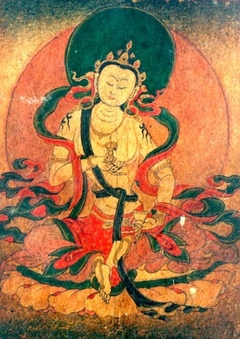
The Excellent Path of Union
༄༅། །ཞི་ཁྲོ་དགོངས་པ་རང་གྲོལ་གྱི་རྒྱུན་ཁྱེར་སྙིང་པོར་དྲིལ་བ་ཟུང་འཇུག་ལམ་བཟང་ཞེས་བྱ་བ་བཞུགས་སོ།།
The Excellent Path of Union
An Essentialized Daily Practice of the Self-Liberated Wisdom Mind of the Peaceful and Wrathful Deities (Zhitro Gongpa Rangdrol)
by Jamyang Khyentse Wangpo
ན་མོ་གུ་རུ་བྷྱཿ
Namo gurubhyaḥ.
འདིར་ཟབ་ཆོས་ཞི་ཁྲོ་དགོངས་པ་རང་གྲོལ་གྱི་བསྐྱེད་རིམ་མདོར་བསྡུས་ཏེ་ཉམས་སུ་བླང་བའི་ཚུལ་ལ།
Here is an abbreviated sādhana for practicing the generation stage of the profound teaching Self-Liberated Wisdom Mind of the Peaceful and Wrathful Deities.
ཐོག་མར་སྐྱབས་སེམས་ནི།
Taking Refuge and Generating Bodhicitta
བླ་མ་མཆོག་གསུམ་ཡི་དམ་ལྷར། །
lama chok sum yidam lhar
I respectfully take refuge in the Guru,
གུས་པས་སྐྱབས་མཆི་མཁའ་མཉམ་འགྲོ། །
güpé kyab chi khanyam dro
The Three Jewels, and the yidam deities.
བླ་མེད་བྱང་ཆུབ་མཆོག་ཐོབ་ཕྱིར། །
lamé changchub chok tob chir
So that all beings equal to space may attain supreme unsurpassed enlightenment,
ཞི་ཁྲོའི་ལྷ་ཚོགས་བསྒོམ་པར་བགྱི། །
zhitrö lhatsok gompar gyi
I will meditate on the assembly of Peaceful and Wrathful Deities
ལན་གསུམ།
Repeat three times.
སྤྲོ་ན། རྡོ་རྗེ་སློབ་དཔོན་སངས་རྒྱས་དཔལ། ཞེས་སོགས་རྒྱུན་བཤགས་ཀྱང་བྱ།
If you wish, you may also perform the daily confession that begins, "I prostrate to the vajra master, glorious embodiment of the buddhas of past, present and future!"1
དངོས་གཞི་ནི།
Main Practice
སྐད་ཅིག་མི་དམིགས་སྟོང་པའི་ངང་༔
kechik mimik tongpé ngang
In a moment of non-referential emptiness,
ཆུ་ནང་ཉ་འཕར་ཇི་བཞིན་དུ༔
chu nang nya par jizhin du
Like a fish leaping out of water…
ཨོཾ་ཨཱཿཧཱུྃ།
om ah hung
oṃ āḥ hūṃ
སྐྱེ་མེད་ཆོས་དབྱིངས་ཞིང་ཁམས་སུ༔
kyemé chöying zhingkham su
In the realm of the unborn dharmadhātu,
འགག་མེད་ཐིག་ལེའི་གཞལ་ཡས་ན།
gakmé tiklé zhalyé na
Within the unceasing bindu palace,
ཐབས་ཤེས་ཉི་ཟླ་པདྨའི་སྟེང་༔
tabshé nyida pemé teng
Upon lotus and sun and moon seats of method and wisdom,
རང་ཉིད་རྡོ་རྗེ་སེམས་དཔའ་ནི༔
rangnyi dorjé sempa ni
I appear as Vajrasattva,
དཀར་གསལ་ཞལ་གཅིག་ཕྱག་གཉིས་པ༔
karsal zhal chik chak nyipa
White and luminous, with one face and two arms.
ཕྱག་གཡས་རྡོ་རྗེ་ཐུགས་ཀར་འཛིན༔
chak yé dorjé tukkar dzin
My right hand holds a vajra at my heart,
གཡོན་པས་དྲིལ་བུ་དཀུ་ལ་བརྟེན༔
yönpé drilbu ku la ten
And my left holds a bell while resting at my hip.
ལོངས་སྤྱོད་རྫོགས་སྐུའི་རྒྱན་རྣམས་རྫོགས༔
longchö dzok kü gyen nam dzok
I am adorned with all the sambhogakāya ornaments
ཞབས་གཉིས་རོལ་པའི་སྟབས་ཀྱིས་བཞུགས༔
zhab nyi rolpé tab kyi zhuk
And seated with my two feet in the posture of ease.
ཙིཏྟ་སྙིང་གི་གཞལ་ཡས་སུ༔
tsitta nying gi zhalyé su
In the palace of my heart,
དྭངས་མ་ལྔ་ཡི་དབུས་ཉིད་དུ༔
dangma nga yi ü nyi du
At the centre of the five pure essences,
འོད་ལྔའི་ཐིག་ལེའི་དཀྱིལ་འཁོར་བསམ༔
ö ngé tiklé kyilkhor sam
I visualize a maṇḍala of bindus of five-coloured light.
སེང་གེ་གླང་ཆེན་རྟ་མཆོག་དང་༔
sengé langchen tachok dang
There, upon thrones supported by lions, elephants, mighty horses,
རྨ་བྱ་ཤང་ཤང་ཁྲི་ཡི་སྟེང་༔
maja shang shang tri yi teng
Peacocks, and shang-shang birds,
ཉི་ཟླ་པདྨ་བརྩེགས་པ་ལ༔
nyida pema tsekpa la
Topped with lotus, sun, and moon discs,
སངས་རྒྱས་བཞི་བཅུ་རྩ་གཉིས་ནི༔
sangye zhibchu tsa nyi ni
I visualize the forty-two peaceful Buddhas,
སྟོང་གསལ་འོད་ཀྱི་སྐུ་རུ་བསྒོམ༔
tong sal ö kyi ku ru gom
Their translucent bodies made of light.
ཀླད་པ་དུང་ཁང་གཞལ་ཡས་སུ༔
lepa dungkhang zhalyé su
Inside the palace of the skull's conch chamber in my brain,
ཡེ་ཤེས་ལྔ་ཡི་ཐིག་ལེ་ལས༔
yeshe nga yi tiklé lé
From the bindu of the five wisdoms
འོད་འབར་དྲོད་ཀྱི་མེ་ཕུང་ཀློང་༔
öbar drö kyi mepung long
And within a fiery expanse, warm and blazing with light,
ཁྱུ་མཆོག་མ་ཧེ་གཟིག་དང་སྟག༔
khyuchok mahé zik dang tak
Upon thrones supported by buffalos, wild oxen, leopards, tigers,
གཏུམ་པོ་དོམ་གྱི་ཁྲི་སྟེང་དུ༔
tumpo dom gyi tri tengdu
And fierce bears,
དྲེགས་པ་ཕོ་མོ་པདྨ་དང་༔
drekpa pomo pema dang
Atop male and female spirits
ཉི་ཟླ་བརྩེགས་པའི་གདན་སྟེང་དུ༔
nyida tsekpé den tengdu
And lotus, sun, and moon discs,
ཁྲག་འཐུང་ཁྲོ་བོའི་ལྷ་ཚོགས་བཞུགས༔
traktung trowö lhatsok zhuk
Reside the assembly of blood-drinking wrathful deities.
ཨོཾ་ཧཱུྃ་ཏྲཱྃ་ཧྲཱིཿཨཱཿ
om hung tra hrih ah
oṃ hūṃ trāṃ hrīḥ āḥ
ཨོཾ་ཨཱཿཧཱུྃ༔
om ah hung
oṃ āḥ hūṃ
བཛྲ་ས་མཱ་ཛཿ
benza sa ma dza
vajra samāja
ཨེ་ཧྱེ་ཧི༔
é hyé hi
e hye hi
ཛཿཧཱུྃ་བྃ་ཧོཿ
dza hung ba ho
jaḥ hūṃ baṃ hoḥ
བཛྲ་ས་མ་ཡ་ཏིཥྛ༔
benza samaya tishta
vajra samaya tiṣṭha
ཨ་ཏི་པུ་ཧོཿ པྲ་ཏཱིཙྪ་ཧོཿ
ati puho pratitsa ho
ati pu hoḥ | praticcha hoḥ
ཨོཾ་སརྦ་ཏ་ཐཱ་ག་ཏ་བཛྲ་ཨརྒྷཾ་ནས། ཤབྡའི་བར་དང་།
om sarwa tathagata benza argham padam pupé dhupé aloké gendé newidye shabda
oṃ sarva tathāgata vajra arghaṃ pādyaṃ puṣpe dhūpe āloke gandhe naivedye śabda
རཱུ་པ། ཤབྡ། གནྡྷེ། རཱ་ས། སྤཪྴེ། བོདྷི་ཙིཏྟ་མ་ཧཱ་སུ་ཁ་པཱུ་ཛ་ཧོཿ
rupa shabda gendhé rasa parshé bodhi tsitta maha sukha pudza ho
rūpa śabda gandha rāsa sparśa bodhicitta mahāsukha pūja hoḥ
སརྦ་པཉྩ་ཨ་མྲྀ་ཏ་ཁ་རཾ་ཁཱ་ཧི།
sarva pentsa amrita kha ram khahi
sarva pañcāmṛta kharaṃ khāhi
མ་ཧཱ་རཀྟ་ཁ་རཾ་ཁཱ་ཧི།
maha rakta kha ram khahi
mahā-rakta kharaṃ khāhi
མ་ཧཱ་བ་ལིཾ་ཏ་ཁ་རཾ་ཁཱ་ཧི།
maha balingta kha ram khahi
mahā-baliṅta kharaṃ khāhi
ཧཱུྃ༔ ཆོས་སྐུ་ནམ་མཁའ་ལྟ་བུར་ཁྱབ་པ་ལ༔
hung chöku namkha tabur khyabpa la
Hūṃ. The dharmakāya pervades all, like space;
ལོངས་སྐུ་ཉི་འོད་ལྟ་བུར་སོ་སོར་གསལ༔
longku nyi ö tabur sosor sal
The sambhogakāya illuminates all, like sunlight;
སྤྲུལ་སྐུ་འཇའ་ཚོན་ལྟ་བུས་འགྲོ་དོན་མཛད༔
tulku jatsön tabü dro dön dzé
And the nirmāṇakāya helps beings, appearing like a rainbow—
རྒྱལ་བ་ཞི་ཁྲོའི་ཚོགས་ལ་ཕྱག་འཚལ་བསྟོད༔
gyalwa zhitrö tsok la chaktsal tö
I bow before and praise the assembly of Peaceful and Wrathful Victorious Ones.
ཨོཾ་ཨཱཿཧཱུྃ།
om ah hung
oṃ āḥ hūṃ
ཆོས་ཉིད་དམིགས་སུ་མེད་པ་ལ༔
chönyi mik su mepa la
In the inconceivable ultimate reality,
ཕྱི་སྣོད་འཇིག་རྟེན་གཞལ་ཡས་ཁང་༔
chinö jikten zhalyé khang
The outer world-container is the divine palace,
ནང་བཅུད་སེམས་ཅན་ལྷ་ཡི་ཚོགས༔
nangchü semchen lha yi tsok
And the inner contents, sentient beings, are the assembly of deities.
འཁོར་བ་སྡུག་བསྔལ་ཆོས་ཉིད་རོལ༔
khorwa dukngal chönyi rol
Saṃsāra and suffering are simply the play of this ultimate reality.
ཨ་ལ་ལ་ཧོ་བཞེས་སུ་གསོལ༔
a la la ho zhé su sol
Please accept this offering: a la la ho!.
ཨོཾ་དང་ཨཱཿདང་ཧཱུྃ་དང་གསུམ༔
om dang ah dang hung dang sum
The three, oṃ, āḥ and hūṃ,
དུས་གསུམ་སངས་རྒྱས་སྐུ་གསུང་ཐུགས༔
dü sum sangye ku sung tuk
Are the body, speech, and mind of the buddhas of the three times.
བོ་དྷི་ཙིཏྟ་བྱང་ཆུབ་སེམས༔
bodhitsitta changchub sem
Bodhicitta represents the awakening mind;
མ་ཧྭཱ་སུ་ཁ་བདེ་བ་ཆེ༔
ma ha sukha dewa ché
Mahāsukha means 'great bliss';
ཛྙཱ་ན་དྷཱ་ཏུ་ཡེ་ཤེས་དབྱིངས༔
jnana dhatu yeshe ying
Jñānadhātu, the sphere of primordial wisdom,
ཨཱ་ནི་སྐྱེ་བ་མེད་པ་སྟེ༔
a ni kyewa mepa té
And āḥ means the unborn,
ཞི་བ་ལྷུན་གྱིས་གྲུབ་པའི་ལྷ༔
zhiwa lhün gyi drubpé lha
The spontaneously present peaceful deities.
བཞི་བཅུ་རྩ་གཉིས་སྙིང་པོའོ༔
zhibchu tsa nyi nyingpo’o
This is the essence of the forty-two.
ཞི་བའི་ཐུགས་ཀར་ཟླ་བའི་སྟེང་༔
zhiwé tukkar dawé teng
At the heart of the peaceful deities, upon a moon disc,
ཧཱུྃ་ལ་སྔགས་ཀྱི་ཕྲེང་བས་བསྐོར༔
hung la ngak kyi trengwé kor
Stands the syllable hūṃ, surrounded by a garland of mantra,
མགལ་མེ་ཀླད་འཁོར་ལྟར་གསལ་བཟླས༔
galmé lé khor tar sal dé
Visualized clearly like a whirling firebrand.
ཨོཾ་ཨཱཿཧཱུྃ་བོ་དྷི་ཙིཏྟ་མ་ཧཱ་སུ་ཁ་ཛྙཱ་ན་དྷཱ་ཏུ་ཨཱཿ
om ah hung bodhitsitta maha sukha jnana dhatu ah
oṃ āḥ hūṃ bodhicitta mahāsukha jñānadhātu āḥ
སྔགས་ཕྲེང་ལས་འོད་ཟེར་འཕྲོས། འཕགས་པ་མཆོད། སེམས་ཅན་གྱི་དོན་བྱས། འཁོར་འདས་ཀྱི་དྭངས་བཅུད་ཐམས་ཅད་འོད་ཟེར་གྱི་རྣམ་པར་སྤྱན་དྲངས་ཏེ་རང་གི་སྙིང་གའི་ས་བོན་ལ་སིབ་སིབ་ཐིམ་པས་དངོས་གྲུབ་རྣམ་པ་གཉིས་ཐོབ།
ngak treng lé özer trö pakpa chö semchen gyi dön jé khordé kyi dangchü tamché özer gyi nampar chendrang té rang gi nyinggé sabön la sib sib timpé ngödrub nampa nyi tob
Light rays emanate from the mantra garland, making offerings to the noble ones, benefiting sentient beings, and gathering the pure essence of saṃsāra and nirvāṇa in the form of light rays. These rays dissolve into the seed syllable at my heart, whereby I achieve the two kinds of accomplishment.
སྣོད་བཅུད་ཐམས་ཅད་ལྷ་སྔགས་ཡེ་ཤེས་ཀྱི་རོལ་པ་གཅིག་ཏུ་གསལ་བར་བསམས་ལ་བཟླས་པ་ཅི་ནུས་བྱ།
nöchü tamché lha ngak yeshe kyi rolpa chik tu salwar gyur
I visualize the entire universe and its contents as a unified display of deity, mantra, and primordial wisdom.
Recite the mantra as much as possible.
ཨོཾ་ནི་ཡེ་ཤེས་ལྔ་དང་ལྡན༔
om ni yeshe nga dangden
Oṃ means possessing the five wisdoms;
རུ་ལུ་གནས་ལུགས་ཆོས་ཀྱི་དབྱིངས༔
rulu neluk chö kyi ying
Rulu is the dharmadhātu, the nature of reality;
འོག་མ་སྣང་ལུགས་ཆོས་ཀྱི་སྐུ༔
ok ma nang luk chö kyi ku
The second rulu is the dharmakāya, the manifestation of reality;
ཧཱུྃ་ནི་འགག་མེད་ཐིག་ལེ་ཉིད༔
hung ni gakmé tiklé nyi
Hūṃ is the unceasing bindu itself;
བྷྱོཿནི་སྐྱེ་མེད་དགོངས་པའི་ངང་༔
jo ni kyemé gongpé ngang
Bhyoḥ is the state of unborn wisdom mind;
ཧཱུྃ་ནི་སྐྱེ་འགག་མེད་པ་སྟེ༔
hung ni kyegak mepa té
And hūṃ is neither born nor ceases—
ཁྲོ་བོ་ཁྲག་འཐུང་རིག་པའི་རྩལ༔
trowo traktung rigpé tsal
The wrathful blood-drinkers are the expression of awareness.
དྲུག་ཅུ་ཐམ་པའི་སྙིང་པོའོ༔
drukchu tampé nyingpo o
This is the essences of the sixty.
ཁྲོ་བོའི་ཐུགས་ཀར་ཉི་མའི་སྟེང་༔
trowö tukkar nyimé teng
At the heart of the wrathful deities, upon a sun disc,
ཧཱུྃ་ལ་སྔགས་ཀྱི་ཕྲེང་བས་བསྐོར༔
hung la ngak kyi trengwé kor
Stands the syllable hūṃ, surrounded by the mantra garland,
མགལ་མེ་ཀླད་འཁོར་ལྟར་གསལ་བཟླས༔
galmé lé khor tar sal dé
Visualized clearly like a whirling firebrand.
ཨོཾ་རུ་ལུ་རུ་ལུ་ཧཱུྃ་བྷྱོ་ཧཱུྃ༔
om rulu rulu hung jo hung
oṃ rulu rulu hūṃ bhyoḥ hūṃ
འོད་ཟེར་སྤྲོ་བསྡུའི་དམིགས་གནད་སྔར་བཞིན་སྦྱར་ལ་ཅི་ནུས་བཟླ།
Apply the same visualization of the radiation and reabsorption of light rays as before, and recite the mantra as much as possible.
ཐུན་མཐར་མཆོད་ཅིང་བསྟོད་ལ།
At the end of the session, make offerings and praises.
རྩ་སྔགས་ཀྱི་མཐར།
After the root mantra, recite:
ཀཱ་ཡ་ཝཱ་ཀ་ཙིཏྟ་སིདྡྷི་ཕ་ལ་ཧོཿ
kaya waka tsitta siddhi pala ho
kāya vāk citta siddhi phala hoḥ
ཞེས་པས་དངོས་གྲུབ་བླང་།
Thereby receiving the accomplishments.
ཡི་གེ་བརྒྱ་པས་ནོངས་པ་བཤགས།
Confess mistakes by repeating the hundred-syllable mantra.
སྣང་གྲགས་རིག་པའི་དཀྱིལ་འཁོར་གསུམ། །
nang drak rigpé kyilkhor sum
The three maṇḍalas of appearance, sound, and awareness
འོད་གསལ་ཆོས་སྐུའི་ཀློང་དུ་ཐིམ། །
ösal chökü long du tim
Dissolve into the expanse of clear light dharmakāya.
སླར་ཡང་ཟུང་འཇུག་སྒྱུ་མའི་ངང་། །
lar yang zungjuk gyumé ngang
Once again, in the illusory state of union,
སྒོ་གསུམ་ལྷ་སྔགས་ཆོས་སྐུར་ཤར། །
go sum lha ngak chökur shar
The three doors arise as deity, mantra, and dharmakāya.
ཅེས་རྟག་ཆད་ཀྱི་མཐའ་བསལ།
Thus, remove the extremes of eternalism and nihilism.
Dedication
དགེ་བ་འདི་ཡིས་མྱུར་དུ་བདག །
gewa di yi nyurdu dak
Through the positivity and merit of this, may I swiftly
རྒྱལ་བ་ཞི་ཁྲོ་འགྲུབ་གྱུར་ནས། །
gyalwa zhitro drub gyur né
Accomplish the Peaceful and Wrathful Victorious Ones, and thereby
འགྲོ་བ་གཅིག་ཀྱང་མ་ལུས་པ། །
drowa chik kyang malüpa
Every single sentient being
དེ་ཡི་ས་ལ་འགོད་པར་ཤོག །
dé yi sa la göpar shok
Reach their state of perfection too.
སོགས་ཀྱིས་དགེ་བ་བསྔོ་ཞིང་སྨོན་ལམ་བཏབ་ནས་ཐུན་མཚམས་ཀྱི་རིམ་པ་ལ་འཇུག་པར་བྱའོ། །
With this, dedicate the merit and make aspirations, before carrying out activities during the break between sessions.
ཞེས་པའང་རིག་འཛིན་གྱི་བཙུན་པ་རྡོ་རྗེ་ཐུགས་མཆོག་རྩལ་གྱིས་སྦྱར་བ་སརྦ་དཱ་མངྒ་ལཾ།། །།
This was composed by the vidyādhara-monk Dorje Tukchok Tsal. Sarvadā maṅgalam!
| Translated by Sean Price, 2026.
Sources
mkhyen brtseʼi dbang po. “kar gling zhi khro rgyun khyer snying por dril ba zung ʼjug lam bzang.” In gsung ʼbum mkhyen brtseʼi dbang po. Gangtok: Gonpo Tseten, 1977–1980. Vol. 14: 119–123
mkhyen brtse'i dbang po. "zhi khro dgongs pa rang grol gyi rgyun khyer snying por dril ba zung 'jug lam bzang." In 'jam dbyangs mkhyen brtse'i dbang po'i bka' 'bum, Vol. 14: 119–124. Khams sde dge rdzong sar dgon: rdzong sar blo gros phun tshogs, 2020.
Version: 1.0-20260306