Physical Exercises (Lüjong)
Translators’ Introduction
The illustrated guide translated below presents the twenty physical exercises (lüjong) that are extracted from the section on the physical preliminaries in Longchen Rabjam’s Vajra Essence, a commentary on the same author’s Wish-Fulfilling Treasury.
Physical Exercises from Vajra Essence: A Commentary on the Profound Meaning of the Wish-Fulfilling Treasury
by Longchen Rabjam
illustrated by Akyong Tokden
annotated by Lama Jigme Namgyal
Exercise One: Crossing the Upper Arms[1]
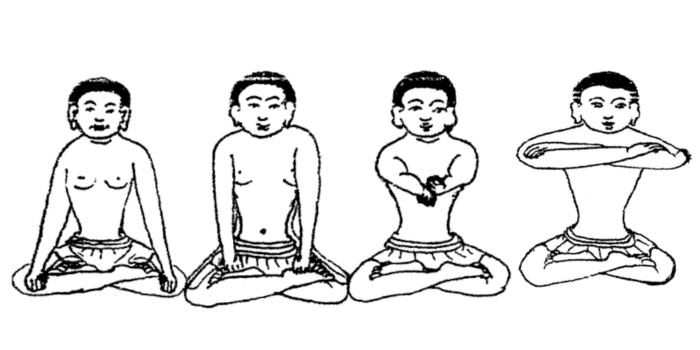
The first of the twenty movements is to sit cross-legged with the left and right arms embracing each other. This removes ailments of the limbs.
Slap your armpits.
Exercise Two: Massage
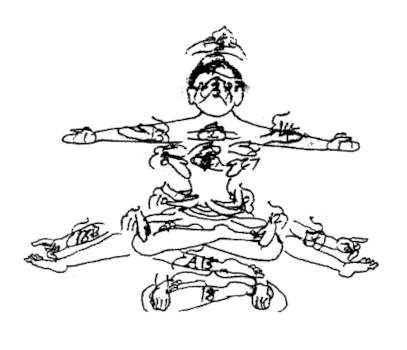
Rub and massage the body. This generates warmth in the body.
Massage the right and left arm three times. Put the palms together and rub. Then massage your face, and vigorously massage the front and back of your body. Release the vajra posture, stretch out your legs and massage both legs three times. Finally, place your fists on your thighs and jump up, doing three smacks.
Exercise Three: Interlacing the Fingers
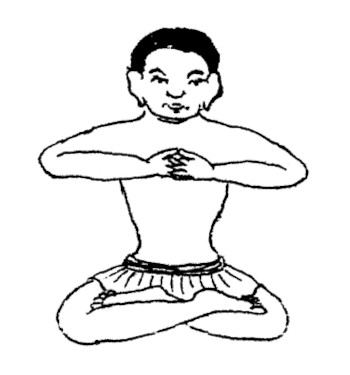
Interlace the fingers and press them against the chest and then push them outwards again. This removes ailments of the chest.
From the chest, turn the hands facing out and then in again. You can also massage the chest directly.
Exercise Four: Twisting the Upper Arms
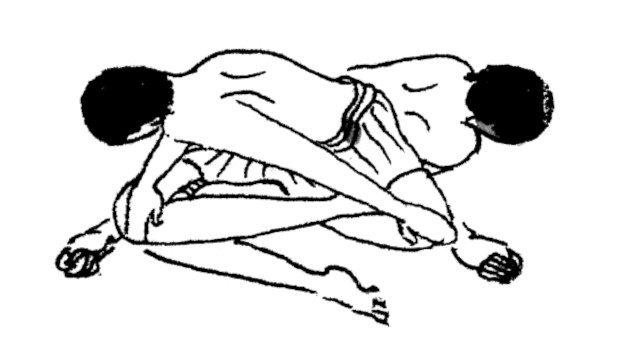
The fourth is to twist the shoulders and spread them left and right. This removes ailments of the upper arms.
Twist the shoulder to the right and left. Then, with palms facing upward, spread your arms to the left and right. “Releasing the vajra posture” means releasing the cross-legged posture. Then resume the cross-legged posture.
Exercise Five: Vulture’s Upper Arms
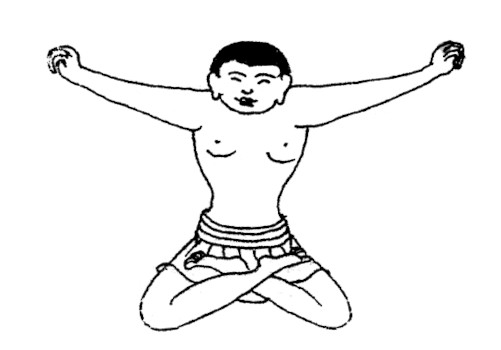
Make fists with both hands and push them out from the chest. This removes ailments of the flesh, skin, and lymph.
First your place your fists at your chest with the knuckles joined, then thrust them straight out diagonally to the right and left.
Exercise Six: Stretching the Chest
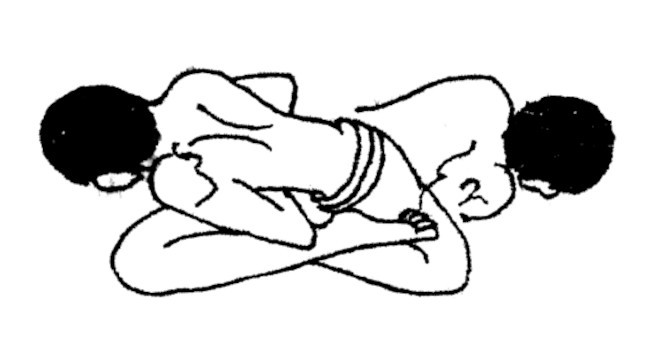
The sixth is to cross your arms at the upper arms and hold them there. Then twist the entire body. This clears ailments of the waist.
Twist the body vigorously to the right and left.
Exercise Seven: Extending the Legs
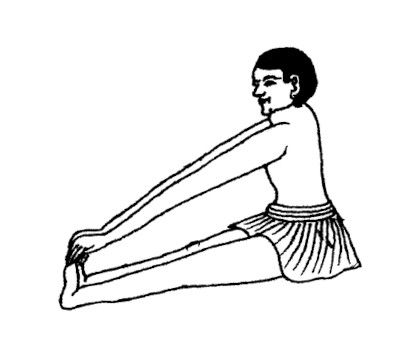
With both legs extended, pull with both hands (from the level of the breasts). This clears ailments of the sinews.[2]
Pull upward with both hands from the tops of the two feet. Then resume the cross-legged posture.
Exercise Eight: Drawing the Bow
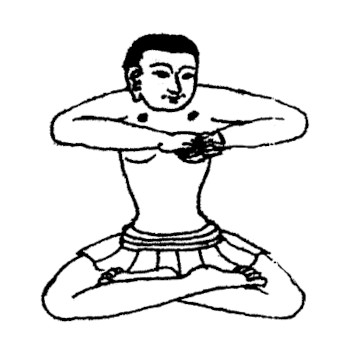
Extend the hands right and left as if drawing a bow. This clears ailments of the joints of the hands and the shoulder blades.
Extend both fists straight out, spread the elbows, and pull back with the [arms] to the left and right.
Exercise Nine: Pushing a Mountain
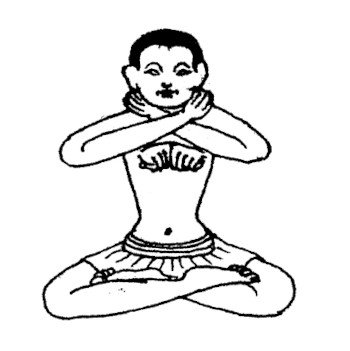
Thrust both fists forward as if pushing a mountain. This develops the flesh of the upper body and clears ailments of the muscles of the hands.
Then cross your two fists with palms facing inward and rub from your chest to your collarbone three times.
Exercise Ten: Bending Backward and Forward
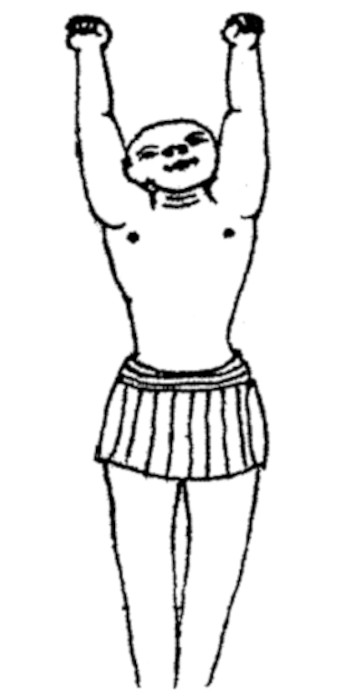
The tenth is to bend the body forward and backward. This will cure ailments with the kidneys and the spleen.
Release the vajra posture, stand up and slap your armpits. Make fists, extend your arms along your head, and then stretch your body forwards and backwards.
Exercise Eleven: The Vajra Posture
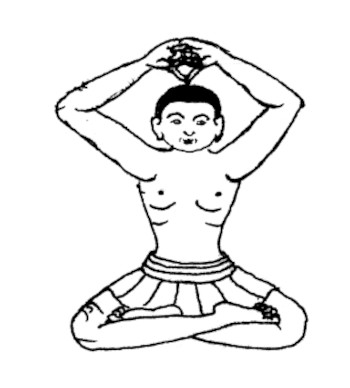
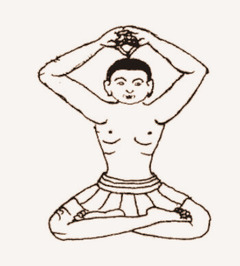
Interlace the little fingers of both hands and place the two index fingers straight on the crown of the head. This cures the ailments of the ribs.
Hook the two little fingers together, tuck in the thumbs, and place the tips of the two index fingers on the crown of the head.
Exercise Twelve: Pulling in the Navel
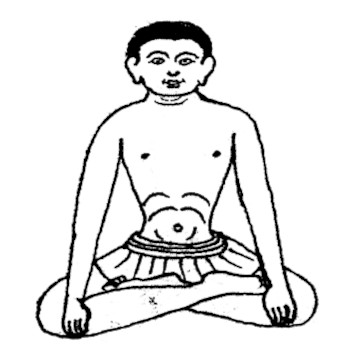
Pull the navel inward. This cures indigestion and stomach ailments.
Place the two hands on your knees, draw the navel in while elongating the spine, three times.
Exercise Thirteen: The Elephant
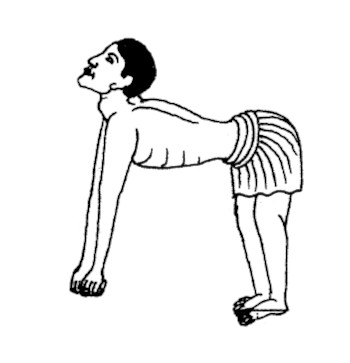
Place the four limbs on the ground and move the head up and down. This cures ailments of the limbs and ‘minor limbs’.[3]
Form fists and place your palms and the soles of your feet on the ground as you move the head up and down. There is no armpit slap. Then release the vajra posture.
Exercise Fourteen: The Lion Showing of His Mane
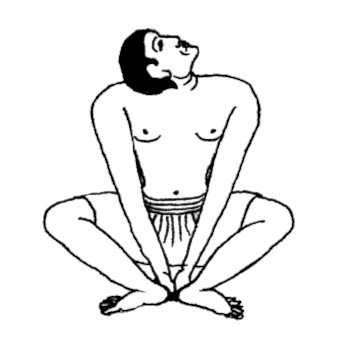
Place the four limbs on the ground and look to the right and left. This cures ailments of the jugular veins.[4]
Place the soles of your feet on the ground and place your fists in between them. Look to the right and left of your body. There is no armpit slap. Then release the vajra posture.
Exercise Fifteen: The Peacock Stretching
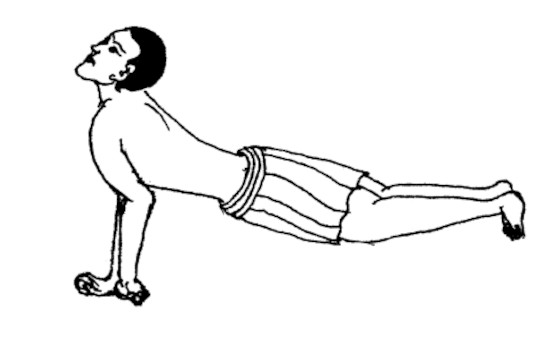
Lie facing down with the legs stretched out and the palms of the hands on the ground, with the elbows pressed against the chest. This cures internal and external ailments of the upper body.
Form firsts and place your palms on the ground. Place the chest on top of the two elbows and arch and curve three times. There is no armpit slap. Then release the vajra posture.
Exercise Sixteen: Rotating the Head
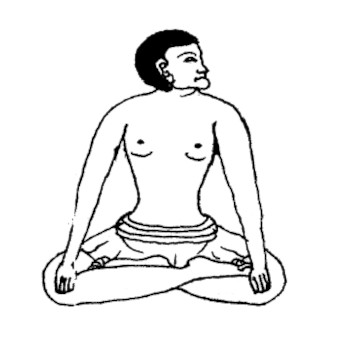
Rotate your head clockwise and anticlockwise. This cures ailments of the neck and throat.
Place your two hands on your knees and rotate your head three times clockwise and three times anticlockwise.
Exercise Seventeen: The Threatening Mudrā
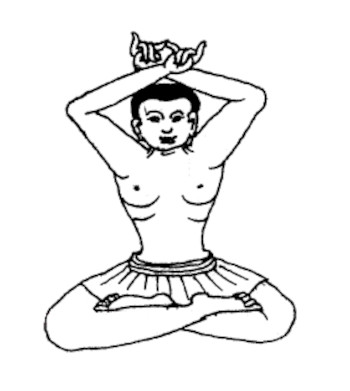
Interlace your hands and place them on the crown of your head. This cures ailments of the upper body.
Interlace your two fists in threatening mudrā at the crown of the head, alternating with the right and left hand on the inside and outside.
Exercise Eighteen: The Steed
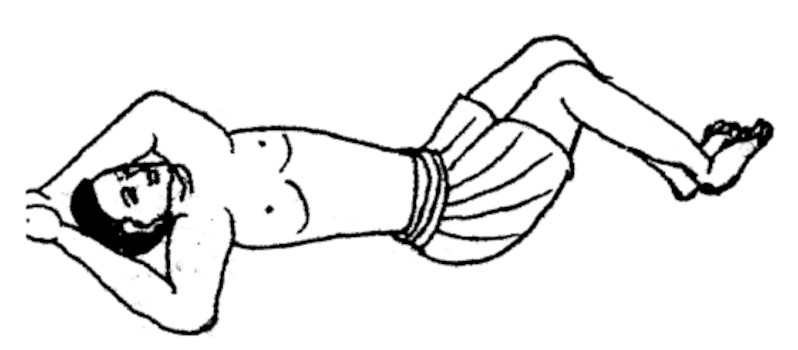
Lie on your back with the knees raised and the palms of your hands joined straight above your head. This cures ailments of the joints of the legs and arms.
There is no armpit slap. Release the vajra posture.
Exercise Nineteen: The Shang Shang Bird
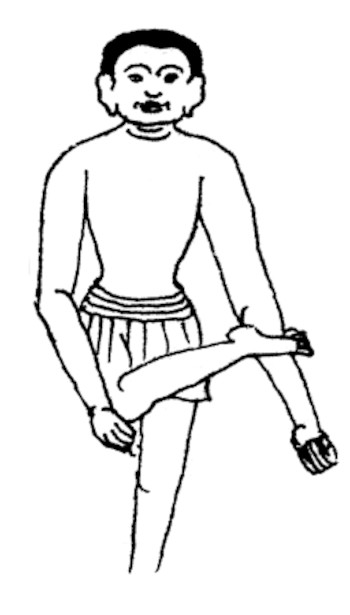
Take each leg alternately into the crook of the elbow, thus having one leg stretched and the other bend. This removes ailments of the calf muscles.
There is no armpit slap. Release the vajra posture.
Exercise Twenty: The Standing Vajra Posture & Bha Shake
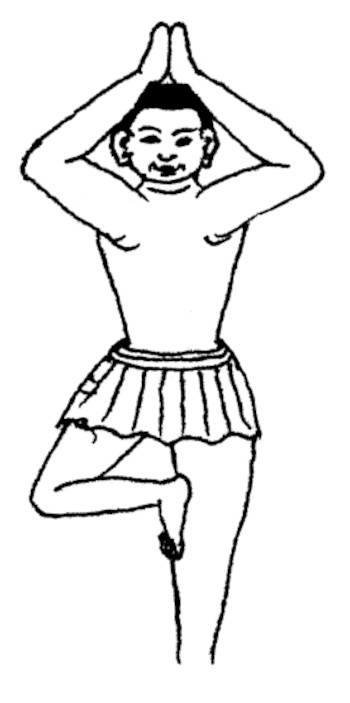
Alternately place your foot on the opposite knee, with the other foot planted on the ground, and join the palms. This removes all ailments of the upper and lower body.
Release the vajra posture, stand up, slap your armpits, and then join your palms.
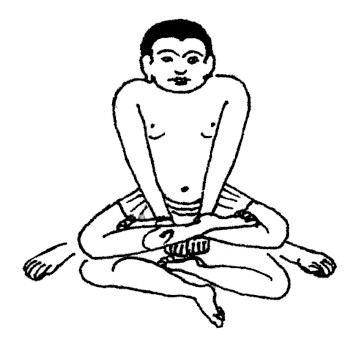
Sit down and jump up three times, saying “bha ha ha.” This completes the exercises.
Note: Spreading the arms, twisting the body, rubbing and massaging, and so forth, may each be done three times or as many times as one prefers.
This text was compiled by Jigme Namgyal, based on notes taken when questioning Lama Tubten Tsultrim from Golok, a direct student of Akyong Tokden Rinpoche, who had previously practiced these exercises and gained experience in them. Later, I acquired illustrations for the physical exercises, and put them into book form. Let it be virtuous! Virtuous! May there be auspiciousness!
| Provisional translation by Han Kop and Matthias Staber for the Longchen Nyingtik Project, 2026.
Bibliography
Tibetan Edition
'jigs med rnam rgyal. "yid bzhin mdzod kyi don khrid zab don rdo rje'i snying po las/ lus sbyong skor gyi dpe ris" In rdzogs pa chen po snying thig gong 'og las/ rlung dang thig le'i rdzogs rim phyogs bsgrigs. [s.l.]: [s.n.], [n.d.].
Version: 1.0–20260305
Notes
-
There are no titles in Longchenpa’s original text. For the benefit of practitioners, titles have been added by the translators, mostly based on the treasure revelation of Jigme Lingpa, whose yantra (trulkor) exercises have a strong resemblance to Longchenpa’s lujong exercises. The illustrations come from Dzogchen Monastery in Tibet. According to Lama Jigme Namgyal, it is likely that they were drawn by Akyong Tokden Lodrö Gyatso (a skyong rdzogs chen rtogs ldan blo gros rgya mtsho’am a skyong rtogs ldan bla ma, 1928/1930–2002) himself, since he made several drawings of Tögal postures to be found in the same collection. ↩
-
Skt. snāyu. The sinews or tendons. ↩
-
Skt. pratyaṅgam. Minor parts of the body such as the fingers, toes, ears, and nose. ↩
-
Tib. rtse’u chung. ↩