A Blessing for Newborns
Translator’s Introduction
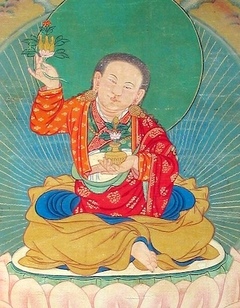
This blessing for newborns has been excerpted from The Four Medical Tantras, the foundational scriptures of the Tibetan medical system. It comes from an exchange in the third tantra, The Oral Instructions Tantra (man ngag gi rgyud), between the sage Manasija (yid las skyes), the main interlocutor in The Four Medical Tantras, and the great sage Vidyājñāna (rig pa’i ye shes), the emanation of the Medicine Buddha. Manasija inquires about how to care for children, and Vidyājñāna advises that, when children are first born, one should first examine the auspicious or inauspicious omens and then read aloud the present aspiration before cutting the umbilical cord (lte ba), celebrating, and letting the newborn nurse. Further rituals are described including washing the newborn’s body with fragrant, lukewarm water and writing a hrīḥ with saffron on their tongue.
༄༅། །གསར་སྐྱེས་བྱིས་པའི་ཤིས་ཚིག
A Blessing for Newborns
from the Four Medical Tantras
སྐྱེས་མ་ཐག་ཏུ་བཀྲ་ཤིས་ཚིག་འདི་བརྗོད། །
Recite the following words of auspiciousness as soon as the child is born:
བདག་གི་བུ་ཁྱོད་སྙིང་ལས་སྐྱེས་པ་ཡིན། །
dak gi bu khyö nying lé kyepa yin
My child, you are born of my heart.
ལོ་བརྒྱ་འཚོ་ཞིང་སྟོན་བརྒྱ་མཐོང་གྱུར་ཅིག །
lo gya tso zhing tön gya tong gyur chik
May you live a hundred years and see a hundred harvests.
ཚེ་རིང་དཔལ་ཐོབ་ངན་དགུ་ཐུབ་པ་དང་། །
tsering pal tob ngen gu tubpa dang
May you have a long life full of splendor, overcome every evil,1
མི་ནོར་བཀྲ་ཤིས་བདེ་སྐྱིད་ཕུན་ཚོགས་ཤོག །
mi nor tashi dekyi püntsok shok
And enjoy an abundance of prosperity, good fortune, and happiness.
| Translated by Lowell Cook, 2026.
Source
Yutok the elder, Yönten Gönpo (g.yu thog rnying ma yon tan mgon po). gso rig rgyud bzhi. gser rta rdzong: gser thang bla rung lnga rig nang bstan slob gling. BDRC: MW3CN5036, p. 320.
Version: 1.0-20260713
Notes
- The term ngan dgu, translated here as “every evil,” can also refer to a specific set of nine unpropitious astrological omens. ↑