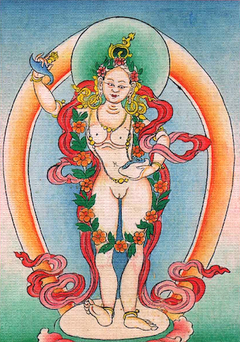
Khandro Tuktik Practice Manual
༄༅། །ཟབ་ལམ་མཁའ་འགྲོའི་ཐུགས་ཐིག་གི་ལས་བྱང་བདེ་ཆེན་འདོད་འཇོ་ཞེས་བྱ་བ་བཞུགས་སོ། །
Wellspring of Great Bliss
The Practice Manual for the Profound Path, The Heart Essence of the Ḍākinī
by Dudjom Rinpoche
ཨོཾ་སྭསྟི།
Oṃ svasti.
མི་འགྱུར་སྟོང་ཉིད་མཛེས་མའི་ལང་ཚོ་ནི། །
ཟུང་འཇུག་བདེ་ཆེན་རྡོ་རྗེར་ཆགས་པའི་གར། །
རྣམ་པ་ཀུན་གྱི་མཆོག་ལྡན་མཚོ་རྒྱལ་མས། །
ཡིད་ལ་ལྷན་སྐྱེས་དགའ་བའི་བཀའ་དྲིན་སྩོལ། །
Beautiful maiden of unchanging emptiness,
Passionate dance of immutable great-bliss unity,
Mother Tsogyal, supreme in all aspects—
With your kindness, fill our minds with innate joy.
གང་གི་རྣལ་འབྱོར་དྲན་ཙམ་གྱིས། །
གྲུབ་གཉིས་འདོད་རྒུར་འཇོ་མཐོང་ནས། །
སྒྲུབ་ཅིང་མཆོད་པའི་ཐབས་ཀྱི་ཚུལ། །
འཇུག་བདེའི་ཁྲིགས་སུ་བསྡེབས་ལ་སྤྲོ། །
By merely thinking of your practice,
I behold a bounty of twofold accomplishment.
Thus, with delight, I shall arrange this manual of practice and worship
In a way that is easy to apply.
དེ་ཡང་ཟུང་འཇུག་མཆོག་གི་ཡེ་ཤེས་བདེ་བླག་ཏུ་བསྐྱེད་ཅིང་ལས་དང་དངོས་གྲུབ་ཐམས་ཅད་ཀྱི་རྩ་བར་གྱུར་པ་ནི་ཟབ་ལམ་མཁའ་འགྲོ་ཐུགས་ཀྱི་ཐིག་ལེའི་རྣལ་འབྱོར་འདི་ཁོ་ན་ཡིན་ཏེ། དེའི་ཚུལ་ཉམས་སུ་ལེན་པར་འདོད་པས། ཐོག་མར་ཇི་སྐད་དུ། དབེན་ཅིང་ཉམས་དགའ་བག་ཕེབས་ལ༔ མཁའ་འགྲོ་འདུ་བའི་གནས་རྣམས་སུ༔ ཞེས་དང་༔ མཚན་ཉིད་ལྡན་པའི་གནས་སུ་ཕྱིན༔ ས་ཡི་ཆོ་ག་ལ་སོགས་བྱ༔ དཀྱིལ་འཁོར་བཞེངས་ཤིང་སྒྲུབ་རྫས་བཀྲམ༔ མཆོད་གཏོར་དམ་རྫས་བག་དྲོ་བཤམ༔ མཚན་ཉིད་དང་ལྡན་པའི་གནས་སུ་སྒྲུབ་པའི་ཁང་པ་བྱི་དོར་གྱིས་མཛེས་པར་བྱ། གང་དུ་བྱ་བའི་གཞི་དེར་གཏོར་མ་དཀར་དམར་གཉིས་བཤམ་ལ།
The practice that quickly and easily engenders the wisdom of supreme unity, and that is the source of all activities and accomplishments, is the Profound Path, the Heart Essence of the Ḍākinī—this and this alone. If you wish to engage in this practice, you should first, as it is taught, seek out “remote, pleasing, and relaxing places, the gathering places of the ḍākinīs.” And, “Take yourself to a suitable location, and there perform the land ritual and so forth. Erect a maṇḍala, arrange the practice substances, and set out the offerings, tormas, and samaya substances in a pleasing fashion.” Thus, go to a suitable place, clean and tidy the building in which you will be practicing, and create a beautiful practice space. Then prepare on site two tormas—a white torma and a red torma—and imagine that:
རང་ཉིད་སྐད་ཅིག་གིས་བདུད་འདུལ་ཡེ་ཤེས་མཁའ་འགྲོའི་སྐུར་གྱུར་པར་མོས།
rangnyi kechik gi düdul yeshe khandrö kur gyur
Instantly, I become the wisdom ḍākinī Subjugator of Māras.
Cleanse and purify with:
རཾ་ཡཾ་ཁཾ་གིས་བསང་སྦྱང་།
ram yam kham
raṃ yaṃ khaṃ
སྟོང་པའི་ངང་ལས་བྷྲཱུཾ་ལས་རིན་པོ་ཆེའི་སྣོད་ཟབ་ཅིང་རྒྱ་ཆེ་བའི་ནང་དུ་གཏོར་མ་ཁ་དོག་དྲི་རོ་ནུས་པ་ཕུན་སུམ་ཚོགས་པར་གྱུར་པར་བསམ་ཞིང་།
tongpé ngang lé droom lé rinpoche nö zab ching gyachewé nang du torma khadok dri ro nüpa pünsum tsokpar gyur
From emptiness appears bhrūṃ, which transforms into a jewel vessel, deep and vast, containing a torma of perfect colour, fragrance, taste, and potency.
Consecrate with:
ཨོཾ་ཨཱཿཧཱུྃ་གིས་བྱིན་བརླབ།
om ah hung
oṃ āḥ hūṃ.
བྷུ་མི་པཱ་ཏི་ས་པ་རི་ཝཱ་ར་བཛྲ་ས་མཱ་ཛཿས་ཞིང་སྐྱོང་གཞི་བདག་རྣམས་སྤྱན་དྲངས།
bhumi pa ti sapariwara benza sa ma dza
bhūmipati saparivāra vajra samājaḥ
With that, invite the lokapālas and landowner deities.
དཀར་གཏོར།
1. White Torma (Kartor)
Then present the white torma to them by reciting the following mantra three times.
སྠཱ་ན་པ་ཏི་ཀྵེ་ཏྲ་པཱ་ལཉྩ་ན་མ༔ སརྦ་ཏ་ཐཱ་ག་ཏེ་བྷྱོ་བི་ཤྭ་མུ་ཁེ་བྷྱ་སརྦ་ཐཱ་ཁཾ་ཨུཏྒ་ཏེ་སྥ་ར་ཎ་ཨི་མཾ་ག་གན་ཁཾ་སྭཱ་ཧཱ། ཞེས་ལན་གསུམ་གྱིས་ཕུལ་ལ།
tanapati kshetra pala tsa nama | sarva tatagaté jo bisho mugebé sarva takham utgaté saparana imam gagen kham soha
sthānapati kṣetrapālañca namaḥ | sarva-tathāgatebhyo viśvamukhebhyaḥ sarvathā khaṃ utgate spharaṇa imaṃ gaganaṃ khaṃ svāhā
གང་དག་འདིར་གནས་ལྷ་དང་ཀླུ། །
gangdak dir né lha dang lu
All those who dwell in this place—gods and nāgas,
གནོད་སྦྱིན་སྲིན་པོའམ་གཞན་དག་ལ། །
nöjin sinpo am zhendak la
Yakṣas, rākṣasas, and others—
དཀྱིལ་འཁོར་དོན་དུ་ས་ཕྱོགས་འདི། །
kyilkhor döndu sachok di
For the sake of this maṇḍala,
བདག་ཞུ་ཁྱེད་ཀྱིས་སྩལ་དུ་གསོལ། །
dak zhu khyé kyi tsal du sol
I pray: please grant us use of this place!
ཅེས་པས་གནང་བ་བྱིན་ནས་རང་གནས་སུ་གཤེགས་པར་བསམ།
Thus, imagine that they grant their permission and depart to their own abodes.
སརྦ་བྷུ་ཏ་ཨཱ་ཀཪྵ་ཡ་ཛཿས་ལན་ཆགས་ཀྱི་མགྲོན་རྣམས་བཀུག
sarva bhuta a karsha ya dza
sarva bhūta ākarṣaya jaḥ
With that, summon the karmic creditors as your guests.
གཏོར་མ་གཉིས་པ།
2. Red Torma (Gektor)
Then dedicate the second torma to them by reciting the following mantra three times.
སརྦ་བིགྷྣཱཾན་ན་མཿ སརྦ་ཏ་ཐཱ་ག་ཏེ་བྷྱོ་སོགས་ནས་གྲྀཧྞ་དཾ་བ་ལིཾ་ཏེ་སྭཱ་ཧཱ། ཞེས་ལན་གསུམ་གྱིས་བསྔོས་ལ།
nama sarva tatagaté bayo bisho mukhebé sarva takham udgaté saparana imam gagana kham girhana dam balingte soha
namaḥ sarvatathāgatebhyo viśvamukhebhyaḥ | sarvathā kham udgate spharaṇa imaṃ gaganakhaṃ gṛhṇa daṃ baliṃ te svāhā
ཧཱུྃ༔ སྣང་སྲིད་དག་པ་རབ་འབྱམས་ལ༔
hung, nangsi dakpa rabjam la
Hūṃ. In the boundless purity of appearance and existence,
གཉིས་འཛིན་འཁྲུལ་པའི་མིང་ཡང་མེད༔
nyidzin trulpé ming yangmé
Even the name of dualistic delusion does not exist.
གློ་བུར་རྣམ་རྟོག་མ་རིག་བགེགས༔
lobur namtok marik gek
The obstructors—adventitious thought and ignorance—
བདག་མེད་ཆེན་པོར་མཚམས་བཅད་དོ༔
dakmé chenpor tsam ché do
Are expelled in the great expanse of no-self.
དྷརྨ་དྷཱ་ཏུ་རཀྵ་ཨ༔
dharma dhatu raksha a
dharmadhātu rakṣa aḥ
ཞེས་ཚམ་རྔམས་དྲག་པོས་བསྐྲད་ནས་སྲུང་བའི་འཁོར་ལོས་བཅིངས་པར་བསྒོམ།
Thus, visualize exorcising the obstructors with ferocious force, then sealing the perimeter with a protection circle.
དེ་ནས་དཀྱིལ་འཁོར་འདུ་བྱ་བ་ནི། ཇི་སྐད་དུ། ཚོང་དུས་དང་ནི་སྨད་འཚོང་དང་༔ ཕོ་མོ་ཉལ་པོ་བྱས་པའི་སས༔ སྟེགས་བུ་སྐྱེ་གནས་དབྱིབས་སུ་བརྩིག༔ ཅེས་པ་བཞིན་དངོས་སུ་བརྩིག་པའམ། ལག་ལེན་བདེ་ཁྱད་དེར་མོས་པའི་སྟེགས་བུ་མདའ་གང་གྲུ་བཞི་པར་བདུད་རྩི་ལྔ་དང་ཅུ་གང་སིནྡྷུ་ར་ཆ་དང་སྦྱར་བས་ཆག་ཆག་གདབ།
Then, to generate the maṇḍala, as it is taught, “With earth from marketplaces and brothels, from places where men and women have lain together, build a platform in the shape of a womb.” Thus, construct such a platform. Alternatively, if you prefer a more convenient approach, arrange a platform one cubit square and sprinkle it with sindhūra mixed with the five and ten amṛtas.
དེའི་ཁར་རྡུལ་ཚོན་དམར་པོ་ཤས་ཆེ་བའི་ཆོས་འབྱུང་བསྣོལ་མ་ཕྱི་སྐོར་དུ་པད་ཕྲེང་རྡོ་ར་མེ་རི་རྣམས་ཀྱིས་བསྐོར་ཞིང་། ཆོས་འབྱུང་གི་ཟུར་དྲུག་ཏུ་དགའ་འཁྱིལ་དཀར་པོ་རེ་རེ། ལྟེ་བར་དགའ་བ་འཁྱིལ་བ་བྃ་ཡིག་གིས་མཚན་པའི་རྣམ་པར་བྲི་བ་ནི་འདོད་ཁམས་རྣམ་དག་སྐུ་སྤྲུལ་སྐུའི་དཀྱིལ་འཁོར།
Upon it, draw a crossed dharmodaya with powder that is mainly red in colour, and surround it with a garland of lotuses, a vajra fence, and a ring of flames. In each of the six points of the dharmodaya, draw a white sphere-of-joy, and at its center a sphere-of-joy marked with the syllable bāṃ. This is the nirmāṇakāya maṇḍala of awakened body—the desire realm purified.
དེའི་དབུས་སུ་མཉྫིའི་ཁར་ཐོད་པ་དུམ་བུ་གཅིག་པའི་ནང་དུ་ཆོས་འབྱུང་བསྣོལ་མ་དགའ་འཁྱིལ་ས་བོན་དང་བཅས་པ་བྲིས་ལ་རླན་གྱིས་མི་འཇིག་པ་བྱས་པའི་ནང་ཆང་དང་མངར་གསུམ་ཆོས་སྨན་སྦྱར་བས་བཀང་ལ་དར་དམར་བརྒྱད་ལྟེབ་ཀྱིས་ཁ་བཀབ་པ་ནི་གཟུགས་ཁམས་རྣམ་དག་གསུང་ལོངས་སྐུའི་དཀྱིལ་འཁོར། དེའི་སྟེང་དུ་མེ་ལོང་བདུད་རྩིས་བརླན་ཞིང་སིནྡྷུ་གསེང་རས་ཀྱིས་ཁྱབ་པར་བརྡལ་བ་ལ་ཐོད་ནང་གི་དཀྱིལ་འཁོར་ཇི་ལྟ་བ་བཞིན་བྲིས་པ་འགོད་པ་ནི་གཟུགས་མེད་གནས་དག་ཐུགས་ཆོས་སྐུའི་དཀྱིལ་འཁོར་ཏེ།
At the center of this maṇḍala, place a tripod, and upon it place a single-piece skull. Inside it, draw a crossed dharmodaya, a sphere-of-joy, and the seed syllable. Make it waterproof, fill the skullcup with alcohol mixed with the three sweets and Dharma medicine, then cover it with a lid of red cloth folded into eight layers. This is the saṃbhogakāya maṇḍala of awakened speech—the form realm purified.
དེར་སྨྱུག་མའི་སྒྲོམ་ལ་བརྟེན་པའི་དར་དམར་གྱི་གུར་ཕུབ། དཀྱིལ་འཁོར་གྱི་མཐའ་སྐོར་དུ་པདྨའི་སྣོད་ལ་སོགས་པར་གཏོར་མ་དམར་པོ་ཟླ་གམ་གྱི་དབྱིབས་ཅན་ཤ་ཆང་གིས་སྦྲན་པ། བདུད་རྩི། རཀྟ། ཆུ་གཉིས་ཉེར་སྤྱོད་ལྔ། གཞན་ཡང་དམ་ཚིག་གི་རྡོ་རྗེ་དྲིལ་བུ་ཐོད་རྔ་རྐང་གླིང་ཧསྟ་གསུར་ཆེན་སོགས་ཐུན་མོང་དང་ཁྱད་པར་གྱི་མཆོད་པ་མཁའ་འགྲོ་མཉེས་པའི་དམ་རྫས་སུ་འོས་པ་རྣམས་མཐོང་བ་བརྒྱུད་པའི་ལག་ལེན་བཞིན་དུ་བཤམ་པར་བྱ་བ་རྣམས་ནི་སྦྱོར་བའོ། །
Upon this, place a mirror anointed with amṛta and coated with sindhūra, upon which is drawn the same maṇḍala as within the skullcup. This is the dharmakāya maṇḍala of awakened mind—the formless realm purified. Construct a canopy of red cloth using a bamboo frame. Surrounding the maṇḍala, in vessels of lotuses and the like, arrange a red crescent-shaped torma adorned with meat and alcohol; amṛta; rakta; and the general offerings of the two waters and five sensory delights. In addition, set out the samaya articles—the vajra, bell, skull drum, thigh-bone trumpet, hasta, surchen, and so on—and the common and special offerings—all the samaya substances pleasing to the ḍākinīs—following the visually transmitted tradition of practice. With this, the preparations are complete.
The Main Part
དེ་ནས་དངོས་གཞིའི་ཐོག་མར་སྐྱབས་སུ་འགྲོ་ཞིང་སེམས་བསྐྱེད་པ་ནི།
Taking Refuge and Cultivating Bodhicitta
སྒྲུབ་པ་པོ་བདེ་བའི་སྟན་ལ་ཁ་ནུབ་ཏུ་ཕྱོགས་པས་འཁོད་དེ།
The practitioner should sit down on a comfortable seat facing west, and recite:
མདུན་གྱི་ནམ་མཁར་བླ་མ་དང་། །
dün gyi namkhar lama dang
In the sky before me appears the guru,
ཡེ་ཤེས་མཁའ་འགྲོ་དབྱེར་མེད་པ། །
yeshe khandro yermé pa
Inseparable from the wisdom ḍākinī,
སྐྱབས་ཡུལ་ཀུན་འདུས་ངོ་བོར་བཞུགས། །
kyabyul kündü ngowor zhuk
Embodiment of all objects of refuge.
ན་མོ༔ རང་རིག་ཡེ་ཤེས་མཁའ་འགྲོ་མར༔
namo rangrig yeshe khandromar
Namo. In the wisdom ḍākinī of self-awareness
འདུ་འབྲལ་མེད་པར་སྐྱབས་སུ་མཆི༔
dudral mepar kyab su chi
I take refuge by recognizing inseparability.
མ་རྟོགས་གཉིས་འཛིན་འཁྲུལ་པའི་བློ༔
ma tok nyidzin trulpé lo
Releasing ignorant, dualistic deluded mind
རང་གྲོལ་ཆེན་པོར་སེམས་བསྐྱེད་དོ༔
rangdrol chenpor semkyé do
Into the naturally free expanse, I arouse bodhicitta.
ལན་གསུམ།
Recite that three times.
ཚོགས་བསགས་པ་ནི།
Gathering the Accumulations
ཨ༔ ཀ་དག་གཏིང་གསལ་མཁའ་འགྲོ་མར༔
ah, kadak tingsal khandromar
A. To the ḍākinī of primordially pure inner luminosity,
ཆོས་ཉིད་མངོན་སུམ་མཐོང་བས་འདུད༔
chönyi ngönsum tongwé dü
By directly beholding dharmatā, I bow down.
ཉམས་སྣང་གོང་དུ་འཕེལ་བས་མཆོད༔
nyam nang gong du pelwé chö
With the increase of experience, I make offerings.
རིག་པ་ཚད་ལ་ཕེབས་པར་བཤགས༔
rigpa tsé la pebpar shak
In awareness reaching full measure, I confess.
ཆོས་ཉིད་ཟད་ལ་རྗེས་ཡི་རང་༔
chönyi zé la jé yi rang
In the exhaustion of phenomena in reality, I rejoice.
བརྗོད་མེད་ཆོས་འཁོར་བསྐོར་བར་བསྐུལ༔
jömé chökhor korwar kul
I entreat you to turn the wheel of inexpressible dharma,
འཕོ་བ་ཆེན་པོར་བཞུགས་གསོལ་འདེབས༔
powa chenpor zhuk soldeb
I beseech you to remain in the kāya of great transference,
དགེ་ཚོགས་འོད་གསལ་དབྱིངས་སུ་བསྔོ༔
gé tsok ösal ying su ngo
And I dedicate all virtue in the luminous expanse.
ཞེས་ཚོགས་བསགས་མཐར།
With that, gather the accumulations. Then:
ཚོགས་ཞིང་རང་ཐིམ་དབྱེར་མེད་དང་། །
tsok zhing rang tim yermé dang
The field of accumulation dissolves inseparably into me,
སྒྲིབ་དག་བྱིན་གྱིས་བརླབས་པར་གྱུར། །
drib dak jin gyi labpar gyur
Purifying my obscurations and filling me with blessings.
བྱིན་དབབ་པ་ནི།
Invoking a Shower of Blessings
སྤོས་དང་རོལ་མོའི་བརྡས་བསྐུལ་ཏེ།
Symbolically summon the deities with incense and instruments, while reciting:
ཨོཾ་ཨཱཿཧཱུྃ༔ ཨ་ལ་ལ་ཧོཿ ས་མ་ཡ་ཧོཿ ས་མ་ཡ་སྟྭཾ༔
om ah hung a la la ho samaya ho samaya tom
oṃ āḥ hūṃ | a la la hoḥ | samaya hoḥ | samaya stvaṃ
ཨ༔ ངོ་བོ་སྟོང་པའི་ཞིང་ཁམས་ནས༔
ah, ngowo tongpé zhingkham né
A. From the realm of empty essence,
ཆོས་སྐུའི་མཁའ་འགྲོས་བྱིན་ཕོབ་ཅིག༔
chökü khandrö jin pob chik
Dharmakāya ḍākinīs, rain down blessings!
རང་བཞིན་གསལ་བའི་ཕོ་བྲང་ནས༔
rangzhin salwé podrang né
From the palace of luminous nature,
ལོངས་སྐུའི་མཁའ་འགྲོས་བྱིན༴
longkü khandrö jin
Saṃbhogakāya ḍākinīs, rain down blessings!
ཐུགས་རྗེ་ཀུན་ཁྱབ་གཞལ་ཡས་ནས༔
tukjé künkhyab zhalyé né
From the mansion of all-pervasive capacity,
སྤྲུལ་སྐུའི་མཁའ་འགྲོས༴
tulkü khandrö
Nirmāṇakāya ḍākinīs, rain down blessings!
སྐྱེ་མེད་དགོངས་ཉམས་ཡ་ལ་ལ༔
kyemé gongnyam ya la la
Vivid realization of the unborn flowing forth,
འགགས་མེད་སྔགས་སྒྲ་དི་རི་རི༔
gakmé ngak dra di riri
The unceasing sound of mantra ringing out,
སྣང་བ་འཇའ་སྐུར་ལམས་སེ་ལམ༔
nangwa ja kur lam sé lam
Appearances shimmering as the rainbow body—
སྣང་སྲིད་གཞིར་བཞེངས་བྱིན་ཕོབ་ལ༔
nangsi zhir zheng jin pob la
Bless us that appearance and existence manifest as the ground.
གློ་བུར་འཁྲུལ་པའི་བར་ཆད་སོལ༔
lobur trulpé barché sol
Dispel the obstacles of adventitious delusion.
འདུ་འབྲལ་མེད་པར་དབང་སྐུར་ཅིག༔
dudral mepar wang kur chik
Empower us to be inseparable from you.
ཛྙཱ་ན་ཨ་བེ་ཤ་ཡ་ཨ༔ ཧཱུྃ་ཧཱུྃ་ཧཱུྃ༔
jnana abeshaya a hung hung hung
jñāna ābeśaya aḥ | hūṃ hūṃ hūṃ
མཆོད་རྫས་བརླབ་པ་ནི།
Consecrating the Offering Materials
ཧཱུྃ༔ ཀུན་བཏགས་སྣ་ཚོགས་སྣང་བའི་ཆོས༔
hung, küntak natsok nangwé chö
Hūṃ. Imputed appearing phenomena, in all their diversity,
ཡོངས་གྲུབ་མཆོད་པའི་ཕུང་པོ་ནི༔
yongdrub chöpé pungpo ni
Are mountains of primordially present offerings—
ཀུན་ཏུ་བཟང་པོའི་སྒྱུ་འཕྲུལ་ལས༔
kuntuzangpö gyutrul lé
The illusory emanations of Samantabhadra,
ནམ་མཁའ་ལྟ་བུར་འཛད་པ་མེད༔
namkha tabur dzepamé
Infinite as the boundless expanse of space.
བཛྲ་སྥ་ར་ཎ་ཁཾ༔
benza saparana kham
vajra spharaṇa khaṃ
ཞེས་མཁའ་ཁྱབ་ཏུ་སྤེལ།
Thus, multiply the offerings to fill the whole of space.
དམ་ཚིག་གི་དཀྱིལ་འཁོར་གསལ་གདབ་པ་ནི།
Visualizing the Maṇḍala of Samaya Being
ཨཿ མ་བཅོས་ཀ་དག་དེ་བཞིན་ཉིད༔
ah, machö kadak dezhin nyi
Āḥ. Reality is unfabricated and primordially pure.
ལྷུན་གྲུབ་ཀུན་སྣང་སྙིང་རྗེའི་རྩལ༔
lhündrub kün nang nyingjé tsal
Its spontaneous display, compassion’s creative power,
སོར་རྟོག་ཡེ་ཤེས་ཡི་གེ་བྃ༔
sortok yeshe yigé bam
Manifests as baṃ, syllable of discriminating wisdom,
མཁའ་ལ་འཇའ་ཚོན་བཞིན་དུ་ཤར༔
kha la jatsön zhindu shar
Like a brilliant rainbow appearing in the sky.
འོད་འཕྲོས་མ་དག་དངོས་འཛིན་སྦྱངས༔
ö trö ma dak ngödzin jang
From it, light streams forth purifying all impurity and reification,
སྣོད་བཅུད་བདེ་ཆེན་པདྨ་འོད༔
nöchü dechen pema ö
And transforming the world and beings into the Lotus Light Palace of Great Bliss.
ངོ་མཚར་དག་པའི་གྲོང་ཁྱེར་དབུས༔
ngotsar dakpé drongkhyer ü
Here, in the centre of this magnificent, pure metropolis,
པདྨ་ཉི་ཟླའི་གདན་སྟེང་དུ༔
pema nyidé den tengdu
Upon a seat of lotus, sun- and moon-discs,
རང་ཉིད་ཡེ་ཤེས་མཚོ་རྒྱལ་མ༔
rangnyi yeshe tsogyalma
I am the Mother, Yeshe Tsogyal,
བདེ་སྟོང་དབྱེར་མེད་དཀར་དམར་མདངས༔
detong yermé kar mar dang
Bliss and emptiness inseparable, white with a red glow.
མཚན་དཔེའི་ལང་ཚོ་མཆོག་ཏུ་འབར༔
tsenpé langtso chok tu bar
I blaze with the youthful splendour of the marks and signs.
ཐིག་ལེ་ཉག་གཅིག་ཞི་འཛུམ་ཞལ༔
tiklé nyakchik zhi dzum zhal
My face, the single sphere, smiles peacefully.
ཐབས་ཤེས་ཟུང་འཇུག་ཕྱག་གཉིས་ཀྱིས༔
tabshé zungjuk chak nyi kyi
In my two hands, means and wisdom unified,
བདག་རྟོག་རྩད་གཅོད་གྲི་གུག་དང་༔
dak tok tsé chö driguk dang
I hold a curved knife that severs the conception of self
དངོས་གྲུབ་མཆོག་སྩོལ་ཐོད་པ་འཛིན༔
ngödrub chok tsol töpa dzin
And a skullcup that bestows the supreme siddhi.
ཞབས་གཉིས་མཉམ་པའི་སྟབས་ཀྱིས་བཞེངས༔
zhab nyi nyampé tab kyi zheng
I stand with my two legs in even stance,
གཅེར་མོ་དར་དང་རིན་པོ་ཆེ༔
chermo dar dang rinpoche
My naked body adorned with silks and jewels
མེ་ཏོག་ཕྲེང་བ་དུ་མས་བརྒྱན༔
metok trengwa dumé gyen
And bedecked with an array of flower garlands.
སྤྱི་བོར་ཐབས་མཆོག་རིགས་ཀྱི་བདག༔
chiwor tab chok rik kyi dak
On my crown is the Family Lord, the supreme means,
པདྨ་གར་དབང་ཐོད་ཕྲེང་རྩལ༔
pema gar wang tötreng tsal
Lord of the Lotus Dance, Pema Garwang Tötreng Tsal.
རྡོ་རྗེ་དྲིལ་འཛིན་ལོངས་སྐུའི་ཆས༔
dorjé dril dzin longkü ché
He holds a vajra and bell and wears sambhogakāya attire,
འཇའ་འོད་ཟེར་ཐིག་ཀློང་དུ་བརྗིད༔
ja özer tik long du ji
While seated majestically in an expanse of rainbow lights, rays, and bindus.
གདན་གསུམ་སྐུ་ཡི་བཀོད་པ་ལ༔
den sum ku yi köpa la
In the three seats of our divine forms
རྩ་གསུམ་རྒྱལ་བ་རབ་འབྱམས་ཀུན༔
tsa sum gyalwa rabjam kün
All infinite victorious Three Roots
མ་འདྲེས་ཏིལ་གོང་ཕྱུར་བཞིན་རྫོགས༔
ma dré til gong chur zhin dzok
Are distinctly present, like sesame seeds serried in a pod.
གདོད་ནས་དམ་ཡེ་དབྱེར་མེད་གསལ༔
döné damyé yermé sal
Samayasattva and jñānasattva are primordially inseparable.
ཡེ་ཤེས་ཀྱི་འཁོར་ལོ་སྤྱན་དྲང་བ་ནི།
Inviting the Maṇḍala of Wisdom Beings
ཐོད་རྔ་སོགས་རོལ་མོ་དབྱངས་དང་སྦྱར་ཏེ།
While playing the skull drum and so on, chant melodiously:
ཧཱུྃ༔ བདེ་ཆེན་སྐྱེ་མེད་ཕོ་བྲང་ནས༔
hung, dechen kyemé podrang né
Hūṃ. From the palace of unborn great bliss,
རང་བྱུང་འགགས་མེད་མཁའ་འགྲོའི་ཚོགས༔
rangjung gakmé khandrö tsok
Host of self-arisen, unceasing ḍākinīs,
ཐུགས་རྗེས་གཟུགས་ཀྱི་སྐུར་བཞེངས་ལ༔
tukjé zuk kyi kur zheng la
Out of compassion, manifest in visible form—
འདིར་གཤེགས་དབང་བསྐུར་བྱིན་ཆེན་ཕོབ༔
dir shek wangkur jin chen pob
Come here, bestow empowerments and blessings!
བཛྲ་ས་མཱ་ཛ༔ ཛཿཧཱུྃ་བྃ་ཧོཿ
benza samadza dza hung ba ho
vajra-samājaḥ | jaḥ hūṃ baṃ hoḥ
ཞེས་གནས་གསུམ་གྱི་མཁའ་འགྲོ་མ་ཐམས་ཅད་སྤྲིན་འཐིབས་པ་བཞིན་དུ་བྱོན་པར་བསམ་ལ༔
Thus, envision all the ḍākinīs of the three sacred places arriving like billowing clouds.
བཞུགས་སུ་གསོལ་ཞིང་ཕྱག་འཚལ་བ་ནི།
Requesting Them to be Seated and Paying Homage
ཧཱུྃ༔ དབྱིངས་ནས་སྤྱན་དྲངས་ཡེ་ཤེས་པ༔
hung, ying né chendrang yeshepa
Hūṃ. Wisdom beings summoned from the expanse,
སྒོ་གསུམ་རྡོ་རྗེའི་ངོ་བོར་བཞུགས༔
go sum dorjé ngowor zhuk
Please remain as vajra body, speech, and mind.
མཁའ་འགྲོ་སེམས་ཀྱི་སྒྱུ་འཕྲུལ་གར༔
khandro sem kyi gyutrul gar
O Ḍākinīs—primordially present,
ལྷན་ཅིག་སྐྱེས་ལ་ཕྱག་འཚལ་ལོ༔
lhenchik kyé la chaktsal lo
Illusory dance of mind—I pay homage to you!
ས་མ་ཡ་ཏིཥྠ་ལྷན༔ ན་མོ་ཧོཿ
samaya tishta lhen namo ho
samaya tiṣṭha lhan | namo hoḥ
མཆོད་པ་འབུལ་བ་ནི།
Making Offerings
ཧོཿ ཡུལ་དྲུག་འདོད་ཡོན་བཀོད་པའི་ཆོས༔
ho, yul druk döyön köpé chö
Hoḥ. This array of the six sense pleasures—
སྣང་ཡང་འཛིན་པས་མ་བསླད་པར༔
nang yang dzinpé malepar
Appearing yet unsullied by reification—
ཡེ་གྲོལ་མཆོད་པའི་སྤྲིན་དུ་ཤར༔
yedrol chöpé trin du shar
Manifests as clouds of originally free offerings.
བདེ་བ་ཆེན་པོའི་ངང་དུ་འབུལ༔
dewa chenpö ngang du bul
In the innate state of great bliss, I offer them to you.
ཨོཾ་སརྦ་པཱུ་ཛ་མེ་གྷ་ཨཱཿཧཱུྃ༔
om sarva pudza megha ah hung
oṃ sarva pūja megha āḥ hūṃ
ཧཱུྃ༔ ཡེ་ནས་མ་བཅོས་རིག་པའི་གཤིས༔
hung, yené machö rigpé shi
Hūṃ. Primordially unaltered basic awareness,
བདེ་ཆེན་མཁའ་འགྲོའི་རང་བཞིན་ཏེ༔
dechen khandrö rangzhin té
The nature of the ḍākinīs of great bliss—
མངོན་སུམ་ལྷུག་པར་མཇལ་བའི་ངང་༔
ngönsum lhukpar jalwé ngang
Beholding you nakedly, face to face,
ངོ་མཚར་ཆེན་པོས་ཕྱག་འཚལ་བསྟོད༔
ngotsar chenpö chaktsal tö
With great wonder, I offer homage and praise.
བཟླས་པ་བྱ་བ་ནི།
The Mantra Recitation
གསལ་བརྟན་དག་དྲན་དང་ལྡན་པས།
With vivid appearance, steadfast dignity, and the recollection of purity:
ཐུགས་ཀར་ཉི་ཟླའི་གའུའི་སྦུབས༔
tukkar nyidé ga'ü bub
In my heart centre, inside a locket of sun and moon,
བྃ་མཐར་སྔགས་ཀྱི་ཕྲེང་བས་བསྐོར༔
ba tar ngak kyi trengwé kor
Is baṃ encircled by the mantra garland, radiating light
འོད་འཕྲོས་བརྟན་གཡོའི་དངོས་ཀུན་ཁྱབ༔
ö trö tenyö ngö künkhyab
That pervades the entire animate and inanimate world.
སྣང་གྲགས་རྟོག་པའི་ཚེས་རྣམས་ཀུན༔
nang drak tokpé tsé nam kün
All appearances, sounds, and thoughts—all possible phenomena—
ལྷ་སྔགས་ཡེ་ཤེས་རོལ་པར་བལྟ༔
lha ngak yeshe rolpar ta
Are seen as the display of deity, mantra, and wisdom.
ཨོཾ་ཛྙཱ་ན་ཌཱ་ཀི་ནཱི་བྃ་ཧ་རི་ནི་ས་སིདྡྷི་ཧཱུྃ༔
om jnana dakini ba harinisa siddhi hung
oṃ jñāna ḍākinī baṃ harinisa siddhi hūṃ
ཞེས་བཟླས་པའི་སྐྱོན་ཐམས་ཅད་སྤང་ལ་ཏིང་ངེ་འཛིན་རྩེ་གཅིག་པས་བཟླ་བ་ནི་བསྙེན་པའོ། །
Avoiding the various types of flawed mantra repetition, recite the mantra with one-pointed concentration. This is the approach.
རང་གི་ཐུགས་ཀའི་སྔགས་ཕྲེང་ལས༔
rang gi tukké ngak treng lé
From the mantra garland in my heart,
འོད་ཟེར་མཆོད་པའི་ཚུལ་དུ་འཕྲོས༔
özer chöpé tsul du trö
Rays of light stream forth as offerings,
སྤྱི་བོའི་རིགས་བདག་ཐུགས་རྒྱུད་བསྐུལ༔
chiwö rikdak tukgyü kul
Invoking the Family Lord above my head,
སྐུ་གསུང་ཐུགས་ཀྱི་དབང་བྱིན་ཀུན༔
ku sung tuk kyi wang jin kün
And gathering all the empowerments and blessings of his body, speech, and mind
འོད་ཟེར་བདུད་རྩིའི་རྣམ་པར་བསྡུས༔
özer dütsi nampar dü
In the form of ambrosial rays of light.
རང་གི་གནས་བཞིར་ཐིམ་པ་ཡིས༔
rang gi nezhir timpa yi
Dissolving into my four places,
དབང་བསྐུར་རྣམ་བཞིའི་བྱེད་ལས་ཀྱིས༔
wangkur nam zhi jelé kyi
They grant empowerment and enact the four activities,
བདེ་ཆེན་ཡེ་ཤེས་ཉམས་སུ་མྱོང་༔
dechen yeshe nyam su nyong
So that the experience of great-bliss wisdom is born.
ཞེས་སྤྲོ་བསྡུའི་དམིགས་གནད་དང་སྦྱར་ཏེ་གོང་བཞིན་བཟླ་བ་ནི་སྒྲུབ་པའོ། །
Applying the key points of the visualization of radiating and reabsorbing, recite the mantra as above. This is the accomplishment.
ཐུགས་སྲོག་ལས་བྱུང་འོད་ཟེར་སྤྲིན། །
tuk sok lé jung özer trin
From the life-force in my heart, clouds of light rays
ནམ་མཁའ་གང་བར་རབ་འཕྲོས་པས། །
namkha gangwar rab tröpé
Stream forth, filling the whole of space,
གང་འདུལ་ཞི་རྒྱས་དབང་དྲག་གི །
gang dul zhi gyé wang drak gi
Enacting all the activities—pacifying, increasing,
ཕྲིན་ལས་ཐམས་ཅད་སྒྲུབ་པར་གྱུར། །
trinlé tamché drubpar gyur
Magnetizing, and subjugating—according to beings’ needs.
ཅེས་བསྒོམ་ལ་སྔགས་ཤམ་དུ།
Visualize that and recite the mantra with the following appendices:
ནད་གདོན་སྡིག་སྒྲིབ་ཤཱིནྟཾ་ཀུ་རུ་སྭཱ་ཧཱ༔
nedön dikdrib shanting kuru soha
Illness, harmful forces, misdeeds, and obscurations—śāntiṃ kuru svāhā.
ཚེ་བསོད་དཔལ་འབྱོར་པུཥྚིཾ་ཀུ་རུ་ཨོཾ༔
tsé sö paljor pushting kuru om
Longevity, merit, and prosperity—puṣṭiṃ kuru oṃ.
ཁམས་གསུམ་སྣོད་བཅུད་ཝཱ་ཤཾ་ཀུ་རུ་ཧོཿ
kham sum nöchü washam kuru ho
The environment and beings of the three realms—vāśaṃ kuru hoḥ.
གནོད་བྱེད་དགྲ་བགེགས་མཱ་ར་ཡ་ཕཊ༔
nöjé dragek maraya pé
Harm-doers, enemies, and obstructors—māraya phaṭ.
ཅེས་སོ་སོར་སྦྱར་ཏེ་བསྙེན་སྒྲུབ་ཀྱི་འགྲོས་བཞིན་བཟླ་བ་ལས་སྦྱོར་རོ། །
Append each of these to the mantra and recite, as during the approach and accomplishment. This is the activity application.
ཐུན་མཚམས་སུ་གཏོར་མ་ལ་སྨན་རག་སྦྲན་ཅིང་།
In between sessions, sprinkle the torma with amṛta and rakta,
Purify it with
རཾ་ཡཾ་ཁཾ་གིས་བསང་།
ram yam kham
raṃ yaṃ khaṃ
And consecrate it with:
ཨོཾ་ཨཱཿཧཱུྃ་ཧོཿས་བྱིན་གྱིས་བརླབ།
om ah hung ho
oṃ āḥ hūṃ hoḥ.
བསྙེན་སྔགས་མཐར།
Then offer the torma by reciting, seven or three times, the approach mantra with the following mantra appended:
མ་ཧཱ་པཉྩ་ཨ་མྲྀ་ཏ་རཀྟ་བ་ལིང་ཏ་ཁ་ཁ་ཁཱ་ཧི་ཁཱ་ཧི།
maha pentsa amrita rakta baling ta kha kha khahi khahi
mahā pañca amṛta rakta balingta kha kha khāhi khāhi
ཞེས་ལན་བདུན་ནམ་གསུམ་གྱིས་ཕུལ་ལ།
ཧཱུྃ༔ བདེ་ཆེན་རྡོ་རྗེ་མཁའ་འགྲོ་མ༔
hung, dechen dorjé khandroma
Hūṃ. Ḍākinī of immutable great bliss,
སྐུ་གསུང་ཐུགས་དང་ཡེ་ཤེས་ལྔ༔
ku sung tuk dang yeshe nga
Queen of the entire ocean of ḍākinīs
ཡོངས་རྫོགས་མཁའ་འགྲོ་ཀུན་གྱི་གཙོ༔
yongdzok khandro kün gyi tso
Of body, speech, mind, and the five wisdoms,
འཁོར་ལོས་སྒྱུར་བ་སྟོབས་ཆེན་མོ༔
khorlö gyurwa tobchenmo
Universal monarch, maiden of great might,
དངོས་གྲུབ་ཕྲིན་ལས་ཀུན་གྱི་བདག༔
ngödrub trinlé kün gyi dak
Sovereign of all accomplishments and activities,
ཆོས་དབྱིངས་འོག་མིན་མཁའ་སྤྱོད་ཞིང་༔
chöying womin khachö zhing
Residing eternally in dharmadhātu,
ཨོ་རྒྱན་གནས་སུ་རྟག་ཏུ་བཞུགས༔
orgyen né su taktu zhuk
The unexcelled celestial realm, Uḍḍiyāna’s sacred land;
ཞིང་དང་སྐུ་ཡི་བཀོད་པའི་ཚོགས༔
zhing dang ku yi köpé tsok
In each of the manifold realms and kāyas
རེ་རེ་ལ་ཡང་མཁའ་འགྲོ་འབུམ༔
reré la yang khandro bum
Reside millions of ḍākinīs;
གར་གྱི་རྣམ་འགྱུར་བསམ་ལས་འདས༔
gar gyi namgyur sam lé dé
Displaying inconceivable modes of dance,
འགྱུར་བ་མེད་པའི་མཁའ་འགྲོ་འབུམ༔
gyurwa mepé khandro bum
A million immutable ḍākinīs;
གསུང་དབྱངས་ནམ་མཁའ་ཁྱབ་པ་ལ༔
sung yang namkha khyabpa la
Their speech resounding throughout space,
ཚངས་པའི་གླུ་ལེན་མཁའ་འགྲོ་འབུམ༔
tsangpé lulen khandro bum
A million ḍākinīs singing songs of transcendence;
རྟོག་མེད་རྣམ་ཐར་གསུམ་དབྱིངས་ལས༔
tokmé namtar sum ying lé
From the thought-free expanse of the three freedoms,
ཐུགས་རྗེ་རོལ་པའི་མཁའ་འགྲོ་འབུམ༔
tukjé rolpé khandro bum
A million ḍākinīs of compassionate display;
རྒྱན་དང་ཡོན་ཏན་ལོངས་སྤྱོད་ལས༔
gyen dang yönten longchö lé
From their ornaments, qualities, and riches,
བསམ་མི་ཁྱབ་པའི་མཁའ་འགྲོ་འབུམ༔
sam mi khyabpé khandro bum
A million ḍākinīs surpassing thought;
འགྲོ་བའི་དོན་མཛད་ཕྲིན་ལས་བཞི༔
drowé dön dzetrin lé zhi
Benefitting beings with the four activities,
ལྷུན་གྱིས་གྲུབ་པའི་མཁའ་འགྲོ་འབུམ༔
lhün gyi drubpé khandro bum
A million spontaneously present ḍākinīs;
ཡེ་ཤེས་དང་ནི་ལས་ལས་གྲུབ༔
yeshe dang ni lé lé drub
Born from wisdom and karma,
འཁོར་གྱི་མཁའ་འགྲོ་བྱེ་བ་འབུམ༔
khor gyi khandro jewa bum
Many billions of retinue ḍākinīs—
ཀུན་ཀྱང་བདུད་རྩི་རཀྟ་དང་༔
kün kyang dütsi rakta dang
All of you, accept this offering of amṛta,
འདོད་ཡོན་གཏོར་མའི་མཆོད་པ་བཞེས༔
döyön tormé chöpa zhé
Rakta, and torma of sensory delights.
ཕྱི་ནང་གསང་བའི་བར་ཆད་སོལ༔
chi nang sangwé barché sol
Dispel outer, inner, and secret obstacles,
མཆོག་དང་ཐུན་མོང་དངོས་གྲུབ་སྩོལ༔
chok dang tünmong ngödrub tsol
Grant the supreme and common accomplishments,
ཕྲིན་ལས་རྣམ་བཞི་མྱུར་དུ་སྒྲུབས༔
trinlé nam zhi nyurdu drub
And swiftly accomplish the four activities.
ཞེས་ཅང་ཏེའུ་སོགས་རོལ་མོའི་སྒྲ་དང་བཅས་པས་གཏོར་མ་ནམ་མཁར་འབུལ་ལོ། །
Thus, accompanied by the sound of the hand drum and other instruments, offer the torma into the sky.
Gaṇacakra
དེ་ནས་ཁྱད་པར་གྱི་དམ་ཚིག་ཚོགས་ཀྱི་འཁོར་ལོས་མཆོད་པ་ནི། ཇི་སྐད་དུ།
རྣལ་འབྱོར་ཕོ་མོ་དབེན་པར་ཚོགས༔
ཤིན་ཏུ་རྒྱན་གྱིས་བརྒྱན་ནས་སུ༔
མ་ད་ན་དང་བཱ་ལ་སོགས༔
དམ་ཚིག་རྫས་རྣམས་འདུ་བྱས་ལ༔
ཞེས་པ་ལྟར་དཀྱིལ་འཁོར་གྱི་སྣམ་ལོགས་སུ་དར་རས་ལ་ཆོས་འབྱུང་བསྣོལ་མ་དམར་པོ་བྲིས་པའི་ཁར་མ་ད་ན་སོགས་བཏུང་བའི་བྱེ་བྲག་དང་། དགའ་བ་འཁྱིལ་བ་དཀར་པོ་བྲིས་པའི་ཁར་བཱ་ལ་སོགས་བཟའ་བའི་དམ་རྫས་རྣམས་བཀོད། བདུད་རྩིས་བསང་གཏོར་བྱས་ལ།
Next, the Specific Samaya of Offering a Gaṇacakra:
As it is taught,
“Male and female practitioners should assemble in a remote place.
Richly adorned with ornaments,
They should gather the samaya substances
Of madana, bāla, and so on….”
Just so, in front of the maṇḍala, upon a cloth draw a red crossed dharmodaya and upon it arrange madana and other drinks, and on a drawing of a white swirl-of-joy arrange bāla and other foods. Purify and cleanse these samaya substances with amṛta, and say:
ཧཱུྃ༔ རང་རིག་རྩལ་ལས་རཾ་ཡཾ་ཁཾ༔
hung, rangrig tsal lé ram yam kham
Hūṃ. From the creative power of natural awareness, raṃ, yaṃ and khaṃ
འཕྲོས་པས་ཚོགས་ཀྱི་ཉེས་སྐྱོན་སྦྱངས༔
tröpé tsok kyi nyekyön jang
Radiate forth, purifying all impurities of the gathered feast.
བཟའ་བཏུང་ལོངས་སྤྱོད་དམ་ཚིག་རྫས༔
zatung longchö damtsik dzé
Thus the samaya substances of food, drink, and enjoyment
ཡེ་ཤེས་བདུད་རྩིའི་ངོ་བོར་གྱུར༔
yeshe dütsi ngowor gyur
Are transformed into primordial wisdom amṛta.
ཨོཾ་ཨཱཿཧཱུྃ༔
om ah hung
oṃ āḥ hūṃ
ལན་གསུམ་གྱིས་བྱིན་བརླབ།
Consecrate the feast by reciting these three syllables three times.
ཚོགས་ཞིང་སྤྱན་དྲང་བ་ནི།
Inviting the Feast Guests
སྤོས་བཏུལ་ཞིང་ཐོད་རྔ་སོགས་རོལ་མོ་དབྱངས་དང་བཅས་པས།
Accompanied by incense and the music of the skull drum and so forth, chant the following with a melody:
ཧཱུྃ༔ འོག་མིན་བདེ་ཆེན་པདྨ་འོད༔
hung, womin dechen pema ö
Hūṃ. From the inconceivable pureland of wonder,
ངོ་མཚར་ཞིང་ཁམས་བསམ་ཡས་ནས༔
ngotsar zhingkham samyé né
Lotus Light, the unexcelled realm of great bliss,
ཡེ་ཤེས་མཁའ་འགྲོའི་ལྷ་ཚོགས་རྣམས༔
yeshe khandrö lhatsok nam
Throngs of divine wisdom ḍākinīs,
འདོད་ཡོན་ཚོགས་ཀྱི་འདུ་བར་གཤེགས༔
döyön tsok kyi duwar shek
Come to this feast of sensory delights!
དབུ་སྐྲ་ཐོར་ཚུགས་ཤིགས་སེ་ཤིག༔
utra tortsuk shik sé shik
With your top knots swaying,
རུས་པའི་རྒྱན་ཆ་ཁྲ་ལ་ལ༔
rüpé gyencha tra la la
Your bone ornaments rattling,
དར་གྱི་ཅོད་པན་པུ་རུ་རུ༔
dar gyi chöpen pururu
Your silken streamers fluttering,
ཌཱ་རུ་ཅང་ཏེ་ཁྲོ་ལོ་ལོ༔
da ru chang té trololo
Your ḍamaru drums clattering,
གཡེར་ཁ་དྲིལ་བུ་སི་ལི་ལི།
yerkha drilbu si li li
Your bangle-bells chiming,
བརྡ་སྐད་བཤུག་གླུ་ཀྱུ་རུ་རུ༔
da ké shuk lu kyururu
Your symbolic songs ringing out,
འཁྲིལ་སྦྱོར་བདེ་ཉམས་གར་སྟབས་བསྒྱུར༔
tril jor denyam gartab gyur
Your bodies performing the dance of blissful union,
རྡོ་རྗེའི་གླུ་དང་ཛཔྲ་དབྱངས་ལྡིར༔
dorjé lu dang dzatra yang dir
Your speech roaring with vajra songs and mantra melodies,
ཐུགས་ཀྱི་དགོངས་པ་འོད་གསལ་དབྱིངས༔
tuk kyi gongpa ösal ying
Your wisdom minds the vast expanse of luminosity—
རྣལ་འབྱོར་ཕོ་མོའི་འདུ་བ་ལ༔
naljor pomö duwa la
To this gathering of male and female practitioners,
ད་ལྟ་ཉིད་དུ་གཤེགས་སུ་གསོལ༔
danta nyi du shek su sol
Please come right now, I pray!
ཚོགས་ཁང་རང་བཞིན་སྤྲུལ་པའི་ཞིང་༔
tsokkhang rangzhin trulpé zhing
Shower down a rain of blessings
འདོད་ཡོན་རྡོ་རྗེའི་དམ་ཚིག་རྫས༔
döyön dorjé damtsik dzé
That this hall becomes a natural nirmāṇakāya realm,
ཅིར་སྣང་ལྷ་དང་སྔགས་ཀྱི་སྒྲ༔
chir nang lha dang ngak kyi dra
These sensory delights become vajra samaya substances,
ཡེ་ཤེས་ཆེན་པོར་བྱིན་ཕོབ་ཅིག༔
yeshe chenpor jin pob chik
That whatever appears manifests as deity, mantra, and great wisdom.
ཨེ་ཨ་རལླི་ཧྲཱིཾ་ཕེཾ་ཛཿ
é a rali hrim pem dza
e a ralli hrīṃ pheṃ jaḥ
ཞེས་སྤྱན་དྲངས།
With that, invite the guests to the feast.
ཚོགས་ཕུད་རིམ་པ་གསུམ་དུ་སྤྲོས་ཏེ།
Divide the finest part of the feast into three portions and offer them as follows.
དང་པོ་མཆོད་པ་ནི།
Offering the First Portion
ཧོཿ སྣ་ཚོགས་སྣང་བ་ཕྱི་ཡི་ཚོགས༔
ho, natsok nangwa chi yi tsok
Hoḥ. An array of appearances—the outer feast;
རང་བྱུང་འདོད་ཡོན་ནང་གི་ཚོགས༔
rangjung döyön nang gi tsok
Natural sense pleasures—the inner feast;
གཉིས་མེད་འཛིན་བྲལ་གསང་བའི་ཚོགས༔
nyimé dzindral sangwé tsok
Freedom from duality—the secret feast;
བློ་འདས་གཉུག་མའི་ངང་དུ་འབུལ༔
lodé nyukmé ngang du bul
I offer in the innate state beyond ordinary mind.
གྷ་ཎ་ཙཀྲ་པཱུ་ཛ་ཧོཿ
ghana tsatra pudza ho
gaṇacakra pūja hoḥ
བར་པ་བཤགས་པ་ནི།
Offering the Second Portion as a Confession:
ཨ༔ ཡེ་གྲོལ་ཕྱལ་པའི་དམ་ཚིག་ལ༔
ah, yedrol chalpé damtsik la
A. Though in the samaya of all-pervasive, primordial freedom,
འགལ་དང་བཤགས་བྱ་མི་དམིགས་ཀྱང་༔
gal dang shakja mimik kyang
There are no transgressions and nothing to confess,
གློ་བུར་ལྟར་སྣང་འཁྲུལ་པའི་སྒྲིབ༔
lobur tarnang trulpé drib
With this feast offering, I amend and confess
ཚོགས་ཀྱི་མཆོད་པས་བསྐང་ཞིང་བཤགས༔
tsok kyi chöpé kang zhing shak
The veils of seeming deluded appearances.
ས་མ་ཡ་ཤུདྡྷེ་ཨ༔
samaya shuddhé ah
samaya śuddhe āḥ
ཐ་མ་བསྒྲལ་བསྟབ་ནི།
The Final Portion, the Liberation Offering
ཚོགས་ཆ་གསུམ་པ་དེའི་འདོད་ཡོན་གྱི་ལྷ་མོ་རང་ལ་བསྡུས་ནས།
Dissolve the sense-pleasure goddesses from the third portion of the feast offering into yourself, and then summon and dissolve the enemies and obstructors, with:
ཎྲྀ་ཏྲི་བཛྲ་ཨངྐུ་ཤ་ཛཿཛཿཧཱུྃ་བྃ་ཧོཿས་དགྲ་བགེགས་བཀུག་ཅིང་བསྟིམ་སྟེ།
ni tri benza angku sha dza dza hung ba ho
nṛ tri vajra aṅkuśa jaḥ jaḥ hūṃ baṃ hoḥ
ཧཱུྃ༔ གཟུང་འཛིན་རྟོག་པའི་རུ་དྲ་ཀུན༔
hung, zungdzin tokpé ru dra kün
Hūṃ. All the rudras of dualistic concept
བདག་མེད་རིག་པའི་མཚོན་གྱིས་བསྒྲལ༔
dakmé rigpé tsön gyi dral
Are liberated with the piercing awareness of no-self,
མཉམ་པ་ཉིད་ཀྱི་དབྱིངས་སུ་བསྟབ༔
nyampa nyi kyi ying su tab
Offered up in the expanse of equality,
ཞེན་མེད་བདེ་བ་ཆེན་པོར་རོལ༔
zhenmé dewa chenpor rol
And, free of attachment, enjoyed as great bliss.
ཨ་ཨ་ཨ༔
ah ah ah
ah ah ah
ཞེས་བསྒྲལ་ཞིང་སྟོབ།
With that, perform the liberation and offer up the remains.
འདིར་ཐུགས་དམ་སྐོང་ཞིང་ཉམས་ཆག་བཤགས་པའི་རིམ་པ་གཞན་སྦྱར་བར་འདོད་ནའང་སྤྲོས་པས་ཆོག་གོ །
At this point, if you wish, you may insert other amendment and confession liturgies.
དེ་ནས་ལས་ཀྱི་རྡོ་རྗེས་ཐབས་ཤེས་ཀྱི་རྫས་རྣམས་ལག་པ་པདྨའི་གར་གྱིས་སྟོབ་ཅིང་། ལེན་པས་རྡོ་རྗེའི་གར་གྱིས་བླངས་ཏེ་བདེ་སྟོང་གཉིས་མེད་ཟུང་འཇུག་ཏུ་སྦྱོར་བའི་ཚུལ་གྱིས་འདོད་ཡོན་ལ་ཚིམས་པར་ལོངས་སྤྱད་དེ་ཉམས་སྦར།
Then, the vajra server offers the substances of means and insight while performing the lotus dance with their hands. The practitioners receive them with the vajra dance and, engaging in the nondual unity of bliss and emptiness, fully enjoy the sense pleasures, thereby causing meditative experience to blaze forth.
སྤྲོ་ན་རྡོ་རྗེའི་གླུ་ཡང་བྱ་སྟེ།
If you wish, you can also sing vajra songs:
འགྲོ་བ་ཀུན་ནི་མཆོག་ཏུ་དགའ་བའི་རང་བཞིན་ཏེ། །
drowa kün ni chok tu gawé rangzhin té
All beings are the nature of supreme joy,
རྣལ་འབྱོར་མ་ནི་འཁོར་ལོའི་རང་བཞིན་དུ་གནས་ཀྱི། །
naljorma ni khorlö rangzhin du né kyi
All yoginīs are the nature of the maṇḍala,
ས་གསུམ་མ་ལུས་འགྲོ་བ་སངས་རྒྱས་ཀྱི་རང་བཞིན། །
sa sum malü drowa sangye kyi rangzhin
All beings of the three planes are the nature of buddha—
སྙིང་རྗེས་གཞོན་ནུ་མ་དང་ལྷན་ཅིག་རོལ་པར་བྱའོ། །
nyingjé zhönnuma dang lhenchik rolpar ja o
With compassion, sport with the youthful maiden.
གང་གིས་དོན་དམ་པ་ནི་མ་བསྒོམས་པར། །
gang gi döndampa ni magompar
Those who do not meditate on the ultimate
དེ་ཡིས་སངས་རྒྱས་ཉིད་ནི་ཐོབ་པ་མ་ཡིན་ནོ། །
dé yi sangye nyi ni tobpa mayin no
Will not attain buddhahood.
ནང་དང་ཕྱི་ནི་དབྱེ་བ་མེད་པར་ཤེས་པར་གྱིས། །
nang dang chi ni yewa mepar shepar gyi
Recognise that there is no distinction between inside and outside.
འཇིག་རྟེན་ཐམས་ཅད་བསྒྲལ་བར་ནུས་པའོ། །
jikten tamché dralwar nüpa o
Then you will be able to free the entire universe!
ཞེས་པའི་ཤླཽ་ཀ་གཉིས་སོ་སོའི་མཐར།
At the end of each of these two verses, say:
ཨ་རེ་གཏི་མུག་ཕྱུགས་ཀྱིས་མི་ཤེས་སོ། །
a ré timuk chuk kyi mi shé so
Alas, dumb beasts do not understand this.
ལྷན་སྐྱེས་མཛེས་མས་བླངས་ནས་བདེ་བ་ཆེ་ལ་མནོས། །
lhenkyé dzé mé lang né dewa ché la nö
Innate maidens accept it and hold it in great bliss.
ཞེས་དྲུག་འགྱུར་དུ་བླང་ངོ་།
These verses are to be sung with the sixfold melody.
ལྷག་མ་གཏོང་བ་ནི།
Sending Out the Leftovers
ཚོགས་ལ་རོལ་པའི་ལྷག་མ་བསྡུས་པའི་ཁར་ཕུད་ལྷག་བསྣན་ལ་བདུད་རྩིའི་ཞལ་ཕྲུ་སྦྲེང་ཞིང་།
Gather together the leftovers of the feast, place the pure leftovers on top of them, sprinkle them with amṛta swirled in the mouth, say:
ཨོཾ་ཨཱཿཧཱུྃ་གིས།
om ah hung
oṃ āḥ hūṃ
འདོད་ཡོན་རྡོ་རྗེའི་དམ་ཚིག་ནམ་མཁའ་གང་བའི་བདུད་རྩིའི་སྤྲིན་དུ་གྱུར་པར་བསམ།
döyön dorjé damtsik namkha gangwé dütsi trin du gyur
These vajra-samaya sensory delights become clouds of amṛta filling the whole of space.
ཕེཾ།
pem
pheṃ
ཞེས་འབར་བའི་རྒྱས་ལྷག་མགྲོན་རྣམས་སྤྱན་དྲངས་ལ།
Say that while performing the blazing mudrā to invite the leftover recipients.
ཀུན་སྣང་འདོད་ཡོན་ལྷག་གཏོར་འདི༔
kün nang döyön lhaktor di
This leftover torma of all possible sensory delights
ཀུན་རྟོག་ལྷག་སྡུད་མགྲོན་ལ་འབུལ༔
küntok lhak dü drön la bul
I offer to conceptual constructs—the leftover recipients.
མ་རིག་འཁྲུལ་པར་གོལ་བའི་དཔུང་༔
marik trulpar golwé pung
Enact the activity of purifying ignorance,
གཞི་ལ་དག་པའི་ཕྲིན་ལས་མཛོད༔
zhi la dakpé trinlé dzö
That which strays into delusion, in the ground.
ཨོཾ་ཨུཙྪིཥྚ་བ་ལིཾ་ཏ་ཁཱ་ཧི༔
om utsita balingta khahi
oṃ ucchiṣṭa baliṃta khāhi
ཞེས་ཕྱི་རོལ་དུ་འབུལ།
Then offer the leftovers outside.
མཁའ་འགྲོ་མ་ཡི་གྲོང་ཁྱེར་དུ། །
khandroma yi drongkhyer du
By making this feast offering
ཚོགས་ཀྱི་འཁོར་ལོ་བསྐོར་བ་ཡིས། །
tsok kyi khorlo korwa yi
To the ḍākinī’s metropolis,
བདག་གཞན་འགྲོ་བ་མ་ལུས་པ། །
dakzhen drowa malüpa
May I and all beings, every single one,
དཀྱིལ་འཁོར་གཅིག་ཏུ་འགྲུབ་པར་ཤོག །
kyilkhor chik tu drubpar shok
Attain realization in the same maṇḍala!
ཅེས་སྨོན་ལམ་གྱི་རྒྱས་གདབ།
Thus, seal with aspirations.
འདིར་གཞུང་དུ་གཏོར་སྐྱོང་མི་འབྱུང་བས་མ་བཏང་ཀྱང་ཆད་པར་མི་འགྱུར་མོད། སྤྲོས་པ་ལ་དགའ་ན་རིགས་མཐུན་གྱི་ཆོ་ག་ལས་བླངས་ཏེ་བྱའོ། །
Since there is no torma offering to the protectors in the main text, there is no fault of omission if you do not perform one. Nevertheless, if you wish to take a more elaborate approach, take any suitable liturgy and insert it here.
དེ་ནས་དངོས་གྲུབ་བླང་བ་ནི།
Receiving the Accomplishments
ཧོཿ ཡེ་ཤེས་མཁའ་འགྲོའི་གསང་གསུམ་གྱི༔
ho, yeshe khandrö sang sum gyi
Hoḥ. Bestowing upon me, this supreme practitioner,
དངོས་གྲུབ་བདུད་རྩིའི་དབྱིག་ཆེན་པོ༔
ngödrub dütsi yik chenpo
This precious amṛta—the accomplishments
སྒྲུབ་མཆོག་བདག་ལ་སྩལ་ནས་ཀྱང་༔
drub chok dak la tsal né kyang
Of the wisdom ḍākinī’s three secrets—
སྒོ་གསུམ་རྡོ་རྗེར་སྨིན་གྲོལ་མཛོད༔
go sum dorjér mindrol dzö
May my three gates be ripened and freed into the three vajras.
འགྱུར་མེད་སྐུ་ཡི་དཀྱིལ་འཁོར་ནས། །
gyurmé ku yi kyilkhor né
From the maṇḍala of immutable body,
རྡོ་རྗེ་ཚེ་ཡི་དངོས་གྲུབ་སྩོལ། །
dorjé tsé yi ngödrub tsol
Grant the accomplishment of vajra life.
འགགས་མེད་གསུང་གི་དཀྱིལ་འཁོར་ནས། །
gakmé sung gi kyilkhor né
From the maṇḍala of unceasing speech,
མི་ཤིགས་དབྱངས་ཀྱི་དངོས་གྲུབ་སྩོལ། །
mishik yang kyi ngödrub tsol
Grant the accomplishment of invincible melody.
འཁྲུལ་མེད་ཐུགས་ཀྱི་དཀྱིལ་འཁོར་ནས། །
trulmé tuk kyi kyilkhor né
From the maṇḍala of unerring mind,
འོད་གསལ་མཆོག་གི་དངོས་གྲུབ་སྩོལ། །
ösal chok gi ngödrub tsol
Grant the accomplishment of supreme luminosity.
བསམ་ཡས་ཡོན་ཏན་དཀྱིལ་འཁོར་ནས། །
samyé yönten kyilkhor né
From the maṇḍala of inconceivable qualities,
འདོད་འབྱུང་ཡིད་བཞིན་དངོས་གྲུབ་སྩོལ། །
dö jung yizhin ngödrub tsol
Grant the accomplishment of all wishes being perfectly fulfilled.
ཐོགས་མེད་ཕྲིན་ལས་དཀྱིལ་འཁོར་ནས། །
tok mé trinlé kyilkhor né
From the maṇḍala of unimpeded activities,
གང་འདུལ་འགྲོ་དོན་དངོས་གྲུབ་སྩོལ། །
gang dul dro dön ngödrub tsol
Grant the accomplishment of benefitting beings according to their needs.
ཐུན་མོང་ལས་བཞིའི་དངོས་གྲུབ་སྩོལ། །
tünmong lé zhi ngödrub tsol
Grant the accomplishment of the four common activities.
ཁྱད་པར་དབང་བཅུའི་དངོས་གྲུབ་སྩོལ། །
khyepar wang chü ngödrub tsol
Grant the accomplishment of the ten exceptional powers.
བླ་མེད་མཆོག་གི་དངོས་གྲུབ་སྩོལ། །
lamé chok gi ngödrub tsol
Grant the unsurpassable supreme siddhi!
སརྦ་སིདྡྷི་ཕ་ལ་ཧོཿ
sarva siddhi pala ho
sarva siddhi phala hoḥ
ཞེས་བསྐུལ་ཏེ་ཀ་པཱ་ལའི་བདུད་རྩི་རོལ། མེ་ལོང་གི་སིནྡྷུ་ར་ཕྱིས་ཏེ་སྙིང་གར་ཐིག་ལེ་བྱའོ། །
Thus, invoke the siddhis, then drink amṛta from the kapāla. Wipe some sindhūra off the mirror and make a circular mark in the center of your chest.
སླར་ཡང་གཏང་རག་གི་དོན་དུ་མཆོད་ཅིང་བསྟོད་ནས། ནོངས་པ་བཤགས་པ་ནི།
Once more, render offerings and praise as an act of thanksgiving. Then confess mistakes, with:
ཧོཿ ཡེ་ཤེས་མཁའ་འགྲོའི་དཀྱིལ་འཁོར་དུ༔
ho, yeshe khandrö kyilkhor du
Hoḥ. Whatever mistakes I made when worshipping, meditating,
མཆོད་དང་ཏིང་འཛིན་ཕྲིན་ལས་སོགས༔
chö dang tingdzin trinlé sok
Enacting the activities, and so on in the wisdom ḍākinī’s maṇḍala—
ཚུལ་བཞིན་མ་བགྱིས་ནོངས་པ་ཀུན༔
tsulzhin ma gyi nongpa kün
Everything I failed to do correctly
འོད་གསལ་གཉུག་མའི་ངང་དུ་བཤགས༔
ösal nyukmé ngang du shak
I confess and part from in innate luminosity.
ཨ་ཨ་ཨ༔
ah ah ah
ah ah ah
རྟག་ཆད་ཀྱི་མཐའ་བསལ་བ་ནི།
Dispelling the Extremes of Eternalism and Nihilism
ཧོཿ རིག་པ་རང་ཤར་མཚན་མའི་ལྷ༔
ho, rigpa rangshar tsenmé lha
Hoḥ. The deity of attributes, the natural manifestation of awareness,
གཉིས་མེད་བློ་འདས་ཆེན་པོར་བརྡལ༔
nyimé lodé chenpor dal
Dissolves into the nondual expanse beyond conceptual mind.
སླར་ཡང་ཟུང་འཇུག་སྒྱུ་མའི་རྩལ༔
lar yang zungjuk gyumé tsal
Once more, through the magical power of unity,
སྣོད་བཅུད་ཡེ་ཤེས་རོལ་པར་ཤར༔
nöchü yeshe rolpar shar
The world and beings manifest as wisdom display.
ཨོཾ་ཨཱཿཧཱུྃ༔
om ah hung
oṃ āḥ hūṃ
ཞེས་སྒོ་གསུམ་མཁའ་འགྲོའི་སྐུ་གསུང་ཐུགས་ཀྱི་ཕྱག་རྒྱར་རྒྱས་གདབ།
Thus, seal your three gates with the mudrās of the ḍākinī’s body, speech, and mind.
དགེ་བ་བསྔོ་བ་ནི།
Dedicating the Virtue
ཧོཿ དུས་གསུམ་བསགས་པའི་དགེ་ཚོགས་ཀུན༔
ho, dü sum sakpé gé tsok kün
Hoḥ. All virtue gathered through past, present, and future
དམིགས་མེད་མཐའ་བྲལ་ཀློད་དུ་བསྔོ༔
mikmé tadral lö du ngo
I dedicate in the expanse beyond references and extremes.
ཁམས་གསུམ་འཁོར་བའི་སེམས་ཅན་ཀུན༔
kham sum khorwé semchen kün
May all beings in saṃsāra’s three realms
དག་མཉམ་ཆེན་པོར་སངས་རྒྱས་ཤོག༔
dak nyam chenpor sangye shok
Awaken in great purity and equality.
ཤིས་པར་བྱ་བ་ནི།
Making Prayers for Auspiciousness
རྩ་གསུམ་མཁའ་འགྲོའི་བྱིན་རླབས་མཐུས༔
tsa sum khandrö jinlab tü
Through the mighty blessings of the Three Roots and ḍākinīs,
བདག་ཅག་སྒྲུབ་མཆོག་འཁོར་བཅས་ཀྱི༔
dakchak drub chok khor ché kyi
For us supreme practitioners and our retinues,
འགལ་རྐྱེན་ཀུན་ཞི་བསམ་དོན་འགྲུབ༔
galkyen kün zhi samdön drub
May obstacles be quelled, all wishes fulfilled,
འགྲོ་ཁམས་དོང་སྤྲུགས་བཀྲ་ཤིས་ཤོག །
dro kham dongtruk tashi shok
And may the realms of saṃsāra be emptied from their depths!
ཅེས་མེ་ཏོག་གི་ཆར་དབབ་པས་ཀུན་ཏུ་བདེ་ལེགས་ཀྱིས་ཡོངས་སུ་ཁྱབ་པར་བྱའོ། །
Thus, showering down a rain of flowers, make bliss and excellence spread far and wide.
ཚུལ་དེ་ལྟ་བུའི་སྒོ་ནས་ཉམས་སུ་བླངས་པའི་ཡོན་ཏན་ནི། ཇི་སྐད་དུ།
དེ་ལྟར་སྦྱོར་དངོས་རྗེས་གསུམ་གྱི༔
ངེས་རྫོགས་ཉམས་སུ་བླང་བ་ན༔
བླ་མེད་འབྲས་བུ་ཐོབ་པར་འགྱུར༔
མོས་སྒོམ་བསྙེན་སྒྲུབ་ཙམ་བགྱིས་ཀྱང་༔
དངོས་གྲུབ་སྣ་རེ་ངེས་པར་ཐོབ༔
ཚུལ་མཐུན་ཚོགས་འཁོར་རེ་རེ་ཡིས༔
ལམ་རྟགས་ཡོན་ཏན་གོང་དུ་སྤར༔
རྗེས་མཐུན་དག་པའི་མཆོད་པ་ཡིས༔
ཉམས་པ་སྐོང་ཞིང་ཚོགས་ཆེན་རྫོགས༔
དེར་འདུས་སྡིག་པ་ཀུན་བྱང་ནས༔
ཐར་པའི་འབྲས་བུ་ཐོབ་པར་འགྱུར༔
དད་མེད་ཉམས་པ་རྣམས་ལ་མིན༔
ཤིན་ཏུ་མོས་པས་ཉམས་པའང་གསོ༔
དངོས་གྲུབ་སྣོད་དུ་འགྱུར་བར་ངེས༔
ཞེས་གདམས་པ་ནི་མི་བསླུ་བའི་ཚད་མ་ཉིད་དུ་ངེས་པའོ། །
As for the virtues of training in this way, the scriptures explain:
“When you train like this, to definitive perfection,1
In the preparation, main part, and conclusion,
The unsurpassable fruition will be attained.
Even by performing the approach and accomplishment merely as aspirational practice,
You will be sure to attain a few accomplishments.
With every correctly performed gaṇacakra,
Signs of progress on the path will increase.
By making a semblance of pure offerings,
Breaches will be mended, vast stores of merit and wisdom will be perfected,
The misdeeds of all those present will be purified
And the fruition—freedom—will be attained.
This is not so for the degenerate, those lacking faith.
Through intense aspiration, breaches will be repaired,
And you are guaranteed to become a fit vessel for accomplishment.
These are, without a doubt, infallible words of truth.
ལྷན་ཅིག་སྐྱེས་མའི་ཉེ་རྒྱུ་གང་། །
མྱུར་བདེའི་འཇུག་ངོགས་གཅིག་པུ་སྟེ། །
དེ་ཡི་ཐབས་ཚུལ་སྙིང་པོའི་བཅུད། །
སྐལ་བཟང་འདོད་འཇོའི་དཔྱིད་དུ་ཕྱེས། །
དགའ་བཞིས་རྣམ་པར་རྩེན་པ་འོག་མིན་ཞིང་། །
མཁའ་སྤྱོད་གྲོང་ཁྱེར་མཛེས་པའི་དོ་ར་རུ། །
ཤེས་རབ་དགའ་མས་བདག་སོགས་མདུན་བསུས་ཏེ། །
ཧེ་རུ་ཀ་དང་ལྷན་ཅིག་གར་བྱེད་ཤོག །
The proximate cause of the innate maiden—
The sole swift and easy entryway,
The quintessence of this approach—
I have laid out here as a wellspring of riches for the fortunate.
May I and all others be welcomed by the Goddess of Joyful Insight
Into the Unexcelled Realm—the display of the four joys,
The ḍākinī’s magnificent metropolis—
And there may we dance in union with the heruka!
ཅེས་པའང་ཆོས་ཀྱི་བདག་པོར་གྱུར་པའི་སྐལ་ལྡན་རྣམས་ཀྱི་ཉམས་བཞེས་འཇུག་པ་བདེ་བའི་ཕྱིར་རྩ་བའི་གཞུང་ལ་གསལ་བྱེད་ཁ་སྐོང་གིས་ཅུང་ཟད་བརྒྱན་ཏེ། རིག་པ་འཛིན་པའི་མྱུ་གུ་འཇིགས་བྲལ་ཡེ་ཤེས་རྡོ་རྗེས་ཉི་མའི་ལོ་མགོ་ཉ་བའི་ཤེས་རབ་ཀྱི་ཆའི་ཌཱ་ཀི་འདུ་བའི་དུས་བཟང་པོར་ངོ་མཚར་བསམ་རྒུ་འགྲུབ་པའི་གནྡྷོ་ལ་འོག་མིན་བདེ་བ་ཆེན་པོའི་ཕོ་བྲང་དུ་སྦྱར་བ་ཟུང་འཇུག་ཡེ་ཤེས་མཁའ་འགྲོ་མའི་གོ་འཕང་མངོན་དུ་བྱེད་པའི་རྒྱུར་གྱུར་ཅིག །སརྦ་དཱ་མངྒལཾ༎ །།
So that the fortunate beings who are the holders of these teachings might undertake the practice easily, the budding vidyādhara Jikdral Yeshe Dorje composed this by adorning the root text with minor clarifications and additions. The composition was made at the Palace of Unexcelled Great Bliss, the wondrous wish-fulfilling temple, on the auspicious occasion of the ḍākinīs’ gathering, in the wisdom phase of the full moon at the beginning of the solar year. May it be a cause for manifesting the state of the wisdom ḍākinī of natural union. Sarvadā maṅgalaṃ!
| Translated by Laura Swan, 2026
Source
bdud 'joms 'jigs bral ye shes rdo rje. “zab lam mkha' 'gro'i thugs thig gi las byang bde chen 'dod 'jo.” In bdud 'joms 'jigs bral ye shes rdo rje'i gsung 'bum dam chos rin chen nor bu'i bang mdzod, Vol. 16: 85–99. Kalimpong: Dupjung Lama, 1979–1985.
Version: 1.1-20260604
Notes
- As Jamgön Mipham Rinpoche (2009, 28) explains in his treatise Luminous Essence (spyi don ’od gsal snying po): “Devoted training [or: aspirational practice] involves a mere meditation on general features, without having perfected absorption. This produces the ability to actualize the genuine path in one’s stream of being, and carries the benefit of accomplishing various temporary activities. Definitive perfection [or: exact perfection] refers to a path where meditation is perfected in the five gradual practices, such as great emptiness, as they pertain to the stages of death, the intermediate state, and birth. Based on this path, one actualizes the levels of the four knowledge-holders.” ↑