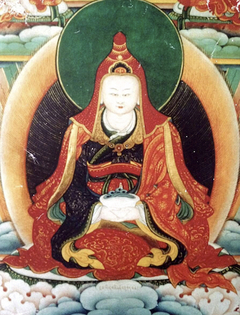
Daily Guru Dewa Chenpo
༄༅། །གུ་རུ་བདེ་བ་ཆེན་པོའི་རྣལ་འབྱོར་རྒྱུན་ཁྱེར་བཞུགས།
Daily Practice of the Guru of Great Bliss
by Dudjom Rinpoche
ན་མོ།
namo
Namo!
སྐྱབས་གནས་ཀུན་འདུས་དྲིན་ཆེན་བླ་མ་ལ། །
kyabné kündü drinchen lama la
In the gracious guru, who embodies all sources of refuge
སྙིང་ནས་སྐྱབས་མཆི་བྱང་ཆུབ་སེམས་མཆོག་བསྐྱེད། །
nying né kyab chi changchub sem chok kyé
I take refuge sincerely, and generate bodhicitta supreme.
ལན་གསུམ།
Three times.
ཨ། རང་ཉིད་གཞི་གྱུར་དབང་ཆེན་རྟ་མཆོག་དཔལ། །
ah, rangnyi zhi gyur wangchen tachok pal
A. I assume the form of the glorious and mighty Hayagrīva,
གྲི་གུག་ཐོད་འཛིན་ཕག་མོ་ཡུམ་དང་འཁྲིལ། །
driguk tö dzin pakmo yum dang tril
Holding curved knife and skullcup and embracing the consort, Vārāhī.
རུས་པའི་རྒྱན་ལྡན་དུར་ཁྲོད་ཆས་ཀུན་རྫོགས། །
rüpé gyenden durtrö ché kün dzok
They wear the bone ornaments and all the charnel-ground accoutrements,
བདེ་དྲོད་མེ་དཔུང་འཁྲིགས་པའི་ཀློང་དུ་རོལ། །
dé drö mepung trikpé long du rol
As they frolic amidst swirling flames of blissful warmth.
རང་གི་སྙིང་གར་ཙིཏྟ་རིན་པོ་ཆེ། །
rang gi nyinggar tsitta rinpoche
Within my heart is the precious citta,
པདྨ་འདབ་བརྒྱད་ཅུང་ཟད་ཁ་བྱེའི་ནང་། །
pema dab gyé chungzé kha jé nang
An eight-petalled lotus that is slightly open,
ཟླ་བའི་སྟེང་དུ་རང་རིག་བདེ་བར་གཤེགས། །
dawé tengdu rangrig dewar shek
In which, upon a moon disc, my own awareness
གུ་རུ་བདེ་བ་ཆེན་པོ་དཀར་དམར་མདངས། །
guru dewa chenpo kar mar dang
Is the sugata Guru Dewa Chenpo with a pinkish complexion.
མཛེས་པའི་ཉམས་ལྡན་ཁྲོ་འཛུམ་བརྗིད་ཆགས་པ། །
dzepé nyamden tro dzum ji chakpa
He is handsome, with a fierce smile and magnificent presence.
གསང་གོས་ཕོད་ཀ་ཆོས་གོས་རིན་ཆེན་བརྒྱན། །
sang gö pöka chögö rinchen gyen
He wears the secret garment, gown, monastic shawl, jewels,
པད་ཞྭ་བེར་སྨུག་ལྷུབ་གསོལ་སྐྱིལ་ཀྲུང་བཞུགས། །
pé zha ber muk lhub sol kyiltrung zhuk
Lotus hat, and a loose maroon cloak, and sits in cross-legged posture.
མཉམ་གཞག་སྟེང་ན་ཐོད་པ་འོད་འབར་ནང་། །
nyam zhak teng na töpa öbar nang
In his hands, which rest in equanimity, is a skullcup that blazes with light.
བདེ་གཤེགས་ཀུན་གྱི་བྱང་སེམས་འདུས་པ་ཡི། །
deshek kün gyi changsem düpa yi
Inside it is baṃ, the syllable of great bliss,
བདེ་བ་ཆེན་པོ་ཡི་གེ་བྃ་དུ་གསལ། །
dewa chenpo yigé ba du sal
Which contains the bodhicitta of all the sugatas.
བྃ་ལས་བདུད་རྩིའི་རྒྱུན་བབས་ཐོད་པ་གང་། །
ba lé dütsi gyün bab töpa gang
From baṃ flows a stream of nectar that fills the skullcup.
འཕྱུར་ཞིང་ལུད་པས་སྙིང་གི་ནང་གང་བས། །
chur zhing lüpé nying gi nang gangwé
Surging and overflowing, it pours into and fills my heart,
བདེ་བ་ཆེན་པོ་རྡོ་རྗེའི་སྲོག་འགྲུབ་གྱུར། །
dewa chenpo dorjé sok drub gyur
Whereby I attain the vajra life-force of great bliss.
ཨོཾ་ཨཱཿཧཱུྃ་བཛྲ་གུ་རུ་པདྨ་སིདྡྷི་ཧཱུྃ།
om ah hung benza guru pema siddhi hung
oṃ āḥ hūṃ vajra guru padma siddhi hūṃ
ཞེས་བཟླ།
Recite the mantra.
ཐུན་མཐར།
At the end of the session, continue with:
གུ་རུ་དགྱེས་པ་ཆེན་པོས་འོད་དུ་ཞུ། །
guru gyepa chenpö ö du zhu
The guru, in his great gladness, melts into light.
རང་སེམས་དབྱེར་མེད་ལྷན་སྐྱེས་ཆོས་སྐུར་གནས། །
rangsem yermé lhenkyé chökur né
As he becomes indivisible from my own mind, I abide in co-emergent dharmakāya.
ཞེས་མཉམ་པར་བཞག །རྗེས་བསྔོ་སྨོན་གྱིས་མཚམས་སྦྱར་ཏེ་སྤྱོད་ལམ་ལ་འཇུག་གོ །
Rest in meditation. Then conclude with prayers of dedication and aspiration before setting about your daily activities.
ཞེས་པའང་རྣམ་པར་དགེ་བའི་རྣམ་དཔྱོད་ཅན་གུ་རུ་ནོར་བུའི་ཐུགས་དམ་ཉམས་བཞེས་སུ་འཇིགས་བྲལ་ཡེ་ཤེས་རྡོ་རྗེས་བྲིས་པ་དགེ། །།
Jigdral Yeshe Dorje wrote this for the personal meditation practice of Guru Norbu, who has the discernment to appreciate the auspicious. May it prove virtuous!
| Translated by Adam Pearcey, 2026.
Source
bdud 'joms ye shes rdo rje. "gu ru bde ba chen po’i rgyun khyer" in bdud 'joms 'jigs bral ye shes rdo rje'i gsung 'bum Kalimpong: Dupjung Lama, 1979–1985. Vol. 25: 117–119.
Version: 1.0-20260409