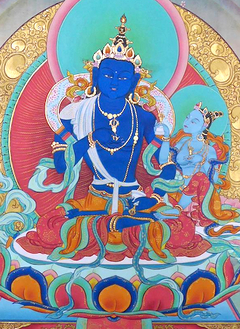
Daily Narak Dongtruk Vajrasattva
༄༅། །ན་རག་དོང་སྤྲུགས་ཕྱག་རྒྱ་གཅིག་པའི་རྒྱུན་ཁྱེར་ཡང་ཟབ་སྙིང་པོ་བཞུགས་སོ།།
The Ultra-Profound Essence
A Daily Practice of the Single-Mudrā Form of Vajrasattva, Dredger of the Depths of Hell
by Dudjom Rinpoche
ཨོཾ་སྭ་སྟི།
Oṃ svasti!
ན་རག་དོང་སྤྲུགས་ཕྱག་རྒྱ་གཅིག༌པའི༌རྣལ་འབྱོར་ཤིན་ཏུ་བསྡུས་པའི་ཚུལ་གྱིས་ཉམས་སུ་ལེན་པ་ལ་གསུམ། སྦྱོར་བ། དངོས་གཞི། རྗེས་སོ། །
This extremely concise practice of the Single Mudrā Form of Vajrasattva, Dredger of the Depths of Hell, consists of three parts: (1) the preliminaries, (2) main practice, and (3) conclusion.
1. Preliminaries
དང་པོ་ལའང་སྐྱབས་སེམས་གཉིས་ལས།
The preliminaries consist of two parts: (1) taking refuge and (2) generating bodhicitta.
དང་པོ་སྐྱབས་འགྲོ་ནི།
1. Taking Refuge
Visualize:
མདུན་གྱི་ནམ་མཁར་བླ་མ་རྡོ་རྗེ་སེམས་དཔའ་སྐྱབས་གནས་ཀུན་འདུས་ཀྱི་ངོ་བོར་བཞུགས་པར་བསམ་ལ།
dün gyi namkhar lama dorjé sempa kyabné kündü kyi ngowor zhukpar gyur
In the sky before me is Guru Vajrasattva, embodying all sources of refuge.
ན་མོ། བླ་མ་བདེ་གཤེགས་འདུས་པའི་སྐུ། །
namo lama deshek düpé ku
Namo. In the Guru, who embodies all sugatas
དཀོན་མཆོག་གསུམ་གྱི་རང་བཞིན་ལ། །
könchok sum gyi rangzhin la
And whose nature is that of the Three Jewels,
བདག་དང་འགྲོ་དྲུག་སེམས་ཅན་རྣམས། །
dak dang dro druk semchen nam
I and all other sentient beings of the six realms
བྱང་ཆུབ་བར་དུ་སྐྱབས་སུ་མཆི། །
changchub bardu kyab su chi
Take refuge until we attain awakening.
ཞེས་སྐྱབས་སུ་འགྲོ་བ་ཀུན་རྫོབ་དང་། མཐར་བླ་མ་རང་ལ་བསྡུས་ཏེ་འཁོར་གསུམ་མི་དམིགས་པའི་ངང་དུ་མཉམ་པར་འཇོག་པ་དོན་དམ་མོ། །
With this, take refuge on a relative level. For the ultimate refuge, dissolve the Guru into yourself and rest evenly in a state in which there is no observation of the three conceptual spheres.
གཉིས་པ་སེམས་བསྐྱེད་ནི།
2. Generating Bodhicitta
བདག་དང་མཐའ་ཡས་སེམས་ཅན་རྣམས། །
dak dang tayé semchen nam
I, along with the infinity of sentient beings,
ཡེ་ནས་སངས་རྒྱས་ཡིན་མོད་ཀྱང་། །
yené sangye yinmö kyang
Though primordially buddhas,
རྟོག་པའི་དབང་གིས་འཁོར་བ་ལས། །
tokpé wang gi khorwa lé
Are bound by conceptualization to cyclic existence.
བྱང་ཆུབ་མཆོག་ཏུ་སེམས་བསྐྱེད་དོ། །
changchub chok tu semkyé do
Therefore, I generate the mind of supreme awakening!
ཞེས་གཞན་དོན་དུ་སེམས་བསྐྱེད་པ་ཀུན་རྫོབ་དང༌། སེམས་བསྐྱེད་པའི་སེམས་དེ་སྐྱེ་འགག་གནས་དམིགས་འགྲོ་འོང་དང་བྲལ་བའི་ངང་ལ་སེམས་རྩེ་གཅིག་ཏུ་མཉམ་པར་འཇོག་པ་དོན་དམ་མོ། །
With this, generate bodhicitta on the relative level for the sake of others. For the ultimate bodhicitta, rest one-pointedly in a state in which the mind that generates bodhicitta is freed of any notion of arising, ceasing or abiding, and any coming or going.
2. Main Practice
གཉིས་པ་དངོས་གཞི་ལ་གཉིས། ལྷ་སྒོམ་པ་དང་། སྔགས་བཟླ་བའོ། །
Second, the main practice consists of two parts: (1) meditation on the deity and (2) recitation of the mantra.
དང་པོ་ལྷ་སྒོམ་པ་ནི།
1. Meditation on the Deity
ཨོཾ་མ་ཧཱ་ཤུ་ནྱ་ཏཱ་ཛྙཱ་ན་བཛྲ་སྭ་བྷཱ་ཝ་ཨཱཏྨ་ཀོ྅་ཧཾ།
om maha shunyata jnana benza sobhava atma ko hang
oṃ mahāśūnyatā jñāna vajra svabhāva atmako ’ham
འདི་ལྟར་སྣང་བའི་ཆོས་ཐམས་ཅད་མི་དམིགས་ཤིང་སྤྲོས་པ་དང་བྲལ་བའོ། །
ditar nangwé chö tamché mimik shing tröpa dang dralwa
All phenomena that appear are unobservable and lie beyond all elaboration.
དེ་ལྟར་མ་རྟོགས་པའི་སེམས་ཅན་རྣམས་ལ་འཛིན་མེད་སྒྱུ་མ་ལྟ་བུའི་སྙིང་རྗེ་མཁའ་ཁྱབ་ཏུ་སྤྲོས།
detar matokpé semchen nam la dzinmé gyuma tabü nyingjé khakhyab tu trö
For all sentient beings who have not realized this, I extend an ungraspable, illusory compassion everywhere.
སྟོང་ཉིད་སྙིང་རྗེ་ཟུང་དུ་འཇུག་པའི་རང་རིག་ཨ་ཡིག་དཀར་པོ་བདེ་གསལ་སྟོང་པ་ཉིད་ཀྱི་རང་བཞིན་དུ་གསལ་བ་ལས།
tongnyi nyingjé zungdu jukpé rangrig a yikkar po dé saltong pa nyi kyi rangzhin du salwa lé
This union of emptiness and compassion, natural awareness, clearly appears as a white letter a with the nature of bliss, clarity, and emptiness.
ཧཱུྃ་གི་སྒྲ་གདངས་ནམ་མཁའ་གང་བར་སྤྲོས་པ་ལས་རྡོ་རྗེའི་ས་གཞི་རྭ་གུར་ཡེ་ཤེས་ཀྱི་མེ་དཔུང་མཐའ་མེད་དུ་འཕྲོ་བས་ཕྱོགས་ཀུན་གཏམས་ཏེ་ཅིས་ཀྱང་མི་ཤིགས་པའི་སྲུང་བའི་འཁོར་ལོར་གྱུར་པའི་ནང་དུ་ཡེ་ཤེས་རིན་པོ་ཆེ་འབར་བའི་གཞལ་ཡས་ཁང་མཚན་ཉིད་ཐམས་ཅད་ཡོངས་སུ་རྫོགས་པའི་དབུས་སུ།
hung gi dra dang namkha gangwar tröpa lé dorjé sa zhi ra gur yeshe kyi mepung tamé du trowé chok kün tam té chikyang mishik pé sungwé khorlor gyurpé nang du yeshe rinpoche barwé zhalyé khang tsennyi tamché yongsu dzokpé ü su
The resonance of hūṃ fills the whole of space. It emanates the vajra ground, fence, and canopy, which are surrounded by swirling flames of wisdom that pervade all directions to form an indestructible protective maṇḍala. Inside, there is a palace of blazing wisdom jewels, fully complete with all its features intact.
སེང་གེ་བརྒྱད་ཀྱིས་བཏེགས་པའི་རིན་པོ་ཆེའི་ཁྲི་པད་ཉི་ཟླ་བའི་གདན་ལ་རང་གི་སེམས་ཉིད་ཨ་དཀར་པོ་གསལ་བ་བབས། དེ་ཡོངས་སུ་གྱུར་པ་ལས་ཧཱུྃ་ཡིག་སྔོན་པོ་གསལ་ཞིང་འབར་བ།
sengé gyé kyi tekpé rinpoche tri pé nyi dawé den la rang gi semnyi a karpo salwa bab dé yongsu gyurpa lé hung yik ngönpo sal zhing barwa
There, on a precious throne supported by eight lions and a seat of stacked lotus, sun, and moon, the clear white a—representing my own mind—descends and completely transforms into a brilliant blue syllable hūṃ.
དེ་ལས་འོད་ཟེར་འཕྲོས། སངས་རྒྱས་ཀྱི་མཛད་པ་བསྒྲུབས།
dé lé özer trö sangye kyi dzepa drub
Its light rays blaze forth and carry out the deeds of the buddhas.
སླར་འདུས་ཡོངས་སུ་གྱུར་པ་ལས་རྡོ་རྗེ་སྔོན་པོ་རྩེ་ལྔ་པ།
lar dü yongsu gyurpa lé dorjé ngönpo tsé ngapa
As the rays return, the hūṃ transforms into a five-pronged blue vajra.
དེ་ལས་འོད་ཟེར་འཕྲོས་པས་འཇིག་རྟེན་ཁམས་ཀྱི་ཐབས་ཀྱི་ཆ་ཐམས་ཅད་བསྡུས་ཏེ་ཐིམ་པ་ཡོངས་སུ་གྱུར་པ་ལས།
dé lé özer tröpé jikten kham kyi tab kyi cha tamché dü té timpa yongsu gyurpa lé
The vajra emits light that gathers all forms of skilful means from throughout the world.
རང་ཉིད་བཅོམ་ལྡན་འདས་དཔལ་རྡོ་རྗེ་སེམས་དཔའ་སྐུ་མདོག་མཐིང་ག་ཞལ་གཅིག་ཕྱག་གཉིས་པ།
rangnyi chomdendé pal dorjé sempa kudok ting ga zhal chik chak nyipa
By absorbing them, it transforms, and I manifest as the Bhagavān, the glorious Vajrasattva, dark blue in colour, with one face and two hands.
ཞི་ཞིང་རབ་ཏུ་འཛུམ་པའི་མདངས་གསལ་བའི་ཞལ་གྱི་འགྱུར་བ་ཏིང་ངེ་འཛིན་གྱི་རྣམ་པར་རོལ་པའི་ཉམས་ཅན། མཚན་དང་དཔེ་བྱད་ཀྱིས་འབར་བ།
zhi zhing rabtu dzumpé dang salwé zhal gyi gyurwa ting ngé dzin gyi nampar rolpé nyamchen tsen dang pejé kyi barwa
I am tranquil and smile with radiance; my face displays a deep meditative calm, shining with the major and minor marks of perfection.
ཕྱག་གཡས་རྡོ་རྗེ་ཐུགས་ཀར་འཛིན་ཅིང༌། གཡོན་དྲིལ་བུ་དཀུར་བརྟེན་པས་ཡུམ་ལ་འཁྱུད་པ།
chak yé dorjé tukkar dzin ching yön drilbu kur tenpé yum la khyüpa
My right hand holds a vajra close to my heart, while my left hand holds a bell at my hip; my left arm is waiting to embrace the consort.
དབུ་སྐྲ་རལ་པའི་ཐོར་ཚུགས་ཅན། ཞབས་གཉིས་རྫོགས་པའི་སྐྱིལ་མོ་ཀྲུང་གིས་བརྟན་པར་བཞུགས་པ།
utra ralpé tortsuk chen zhab nyi dzokpé kyilmo trung gi tenpar zhukpa
My hair is tied in a topknot, and I sit in a stable, cross-legged posture.
ཡབ་ཀྱི་ཐུགས་ཀ་ནས་མཱུྃ་ཆད།
yab kyi tukka né mu ché
A syllable mūṃ appears in my heart.
འོད་ཟེར་འཕྲོ་འདུས་ཡོངས་སུ་གྱུར་པ་ལས་དྲིལ་བུ། དེ་ལས་འོད་ཟེར་འཕྲོས་པས་འཇིག་རྟེན་ཁམས་ཀྱི་ཤེས་རབ་ཀྱི་ཆ་ཐམས་ཅད་བསྡུས་ཏེ་ཐིམ་པ་ཡོངས་སུ་གྱུར་པ་ལས།
özer trodü yongsu gyurpa lé drilbu dé lé özer tröpé jikten kham kyi sherab kyi cha tamché dü té timpa yongsu gyurpa lé
It radiates light which retracts, transforming the syllable into a bell that, radiating light, gathers every aspect of wisdom in the world.
ཡབ་ཀྱི་གཡོན་ཕྱོགས་ཉེ་བའི་པང་དུ་ཡུམ་རྡོ་རྗེ་དབྱིངས་ཕྱུག་མ་སྔོན་མོ་གཡས་དྲིལ་བུ་འཛིན་པས་ཡབ་ལ་འཁྱུད་ཅིང༌། གཡོན་རྡོ་རྗེ་རང་གི་ཐུགས་ཀར་འཛིན་པ།
yab kyi yön chok nyewé pang du yum dorjé yingchuk ma ngönmo yé drilbu dzinpé yab la khyü ching yön dorjé rang gi tukkar dzinpa
Absorbing them, it transforms and appears as the blue consort Vajradhātvīśvarī, who sits to the left of my lap. Her right arm embraces me; her right hand holds a bell, while her left holds a vajra at her heart.
བརྟུལ་ཞུགས་ཀྱི་སྐྱིལ་མོ་ཀྲུང་གིས་འཁྲིལ་བ། གཉིས་ཀའང་ཞི་བའི་རྒྱན་ཆས་བཅུ་གསུམ་གྱིས་སྤྲས་ཤིང་། ཞི་བའི་ཉམས་དགུ་རྒྱས་པ། འོད་ཟེར་ཁ་དོག་དྲུག་གི་སྣང་བ་རེ་རེའང་བྱེ་བ་ཕྲག་དྲུག་དྲུག་ཏུ་འཕྲོ་བའི་ཀློང་ན་བཞུགས་པ།
tulzhuk kyi kyilmo trung gi trilwa nyika ang zhiwé gyenché chusum gyi tré shing zhiwé nyam gu gyepa özer khadok druk gi nangwa reré ang jewa trak druk druk tu trowé long na zhukpa
We sit in the natural embrace of yogis; both of us adorned with the thirteen peaceful ornaments, exhibiting the nine peaceful expressions, and seated in a luminous expanse where each of the six-coloured light rays emanates light that illuminates the ten-millionfold expanse.
ཡབ་ཡུམ་གཉིས་ཀྱི་ཐུགས་ཀར་རང་འདྲའི་ཡེ་ཤེས་སེམས་དཔའ་རྒྱན་དང་ཕྱག་མཚན་སྤངས་པ་རེ་རེའི་ཐུགས་ཀར་ཟླ་བ་ལ་ཧཱུྃ་དང་ཧཱུྃ་ཡིག་སྔོན་པོ་རྟག་ཏུ་འཆར་བཞིན་པ།
yabyum nyi kyi tukkar rang dré yeshe sempa gyen dang chaktsen pangpa reré tukkar dawa la hung dang hung yik ngönpo taktu char zhinpa
In our hearts, wisdom beings similar to ourselves—the samaya beings—appear. They are without ornaments and implements. In the hearts of each sits a blue hūṃ set upon a moon disc.
དེ་ལས་བྱུང་བའི་འོད་ཟེར་གྱིས་ཕྱོགས་བཅུ་དུས་བཞིའི་རྒྱལ་བ་སྲས་དང་བཅས་པ་ཐམས་ཅད་རྡོ་རྗེ་སེམས་དཔའ་ཡབ་ཡུམ་གྱི་རྣམ་པར་སྤྱན་དྲངས། ཆུ་ལ་ཆུ་བཞག་པ་ལྟར་རང་ལུས་ལ་དབྱེར་མེད་དུ་འདྲེས།
dé lé jungwé özer gyi chok chu dü zhi gyalwa sé dang chepa tamché dorjé sempa yabyum gyi nampar chendrang chu la chu zhakpa tar rang lü la yermé du dré
Lights radiate from these syllables and invoke the buddhas and their heirs from all directions and times. Appearing as Vajrasattva and consort, they dissolve into us—the samaya beings—and become inseparable, like water poured into water.
སླར་ཡང་ཐུགས་ཀའི་ཧཱུྃ་ལས་འོད་ཟེར་འཕྲོས་པས་དབང་གི་ལྷ་མི་བསྐྱོད་པ་གཙོ་བོར་གྱུར་པའི་རིགས་ལྔ་ཡབ་ཡུམ་གྱི་རྣམ་པར་སྤྱན་དྲངས། རིགས་ལྔ་ཡབ་ཡུམ་གཉིས་སུ་མེད་པར་སྦྱོར་བ་མཛད།
lar yang tukké hung lé özer tröpé wang gi lhami kyöpa tsowor gyurpé rik nga yabyum gyi nampar chendrang rik nga yabyum nyisumepar jorwa dzé
Again, light rays emanate from the hūṃs at our hearts. They invite the empowering deities, the buddhas of the five families together with their consorts. Akṣobhya is the principal deity. The buddhas of the five families enter an indivisible union with their consorts.
རྗེས་ཆགས་ཀྱི་མེས་ཞུ་བའི་ཡེ་ཤེས་ལྔའི་ཆུ་རྒྱུན་མགོ་བོའི་གནས་ལྔར་བབས་ཏེ་དབང་བསྐུར་བས་ལུས་ཐམས་ཅད་གང༌། ཉོན་མོངས་པ་ལྔ་སྦྱངས། ཕུང་པོ་ལྔ་རིགས་ལྔའི་སངས་རྒྱས་སུ་གནས་གྱུར།
jé chak kyi mé zhuwé yeshe ngé chugyün gowö né ngar bab té wangkurwé lü tamché gang nyönmongpa nga jang pungpo nga rik ngé sangye su né gyur
The warmth of their passionate union causes the five wisdoms to melt and stream downward, entering the five places of my—the samaya being’s—crown; empowerment is conferred, and my very being is filled with this nectar, further purifying the five mental afflictions and transforming my five aggregates into the five buddha families.
ཆུའི་ལྷག་མ་སྤྱི་བོར་བརྟན་པ་ལས་མི་བསྐྱོད་པ་བདག་པོར་གྱུར་པའི་རིགས་ལྔ་སྤྲུལ་སྐུའི་ཆ་བྱད་ཅན་གྱིས་དབུ་བརྒྱན་པར་བསམ།
chü lhakma chiwor tenpa lé mikyöpa dakpor gyurpé rik nga tulkü chajé chen gyi u gyenpar gyur
The excess water at the crown of my head transforms into the crown of the five buddha families.
སླར་ཡང་སྤྱི་བོར་ཟླ་བ་ལ་ཨོཾ་དཀར་པོ། མགྲིན་པར་པདྨ་ལ་ཨཱཿདམར་པོ། སྙིང་གར་ཉི་མ་ལ་ཧཱུྃ་སྔོན་པོ། དེ་གསུམ་ལས་འཕྲོས་པའི་འོད་ཟེར་གྱིས་རྡོ་རྗེ་གསུམ་གྱི་ལྷ་ཚོགས་ནམ་མཁའ་གང་བར་སྤྱན་དྲངས་ཏེ་ཡི་གེ་སོ་སོ་ལ་ཐིམ་པས་དེ་བཞིན་གཤེགས་པ་ཐམས་ཅད་ཀྱི་རྡོ་རྗེ་གསུམ་དང་གཉིས་སུ་མེད་པར་གྱུར།
lar yang chiwor dawa la om karpo drinpar pema la ah marpo nyinggar nyima la hung ngönpo dé sum letrö pé özer gyi dorjé sum gyi lhatsok namkha gangwar chendrang té yigé soso la timpé dezhin shekpa tamché kyi dorjé sum dang nyisumepar gyur
All the buddhas appear in the form of the nirmāṇakāya, and Akṣobhya sits (in the centre) as their lord. On the crown of my head, a white oṃ stands on a moon disc; at my throat, a red āḥ rests on a lotus; and at my heart, a blue hūṃ is on a sun disc. Light rays radiate from these three syllables and invite deities of the three vajras, who appear, filling the sky, and dissolve into their respective syllables, causing my body, speech, and mind to become inseparable from the three vajras of all the tathāgatas.
ཡི་གེ་སོ་སོ་ཡོངས་སུ་གྱུར་པ་ལས། སྤྱི་བོར་སྐུ་རྡོ་རྗེ་དཀར་པོ་འཁོར་ལོ། མགྲིན་པར་གསུང་རྡོ་རྗེ་དམར་པོ་པདྨ། སྙིང་གར་ཐུགས་རྡོ་རྗེ་སྔོན་པོ་རྡོ་རྗེ་འཛིན་པ་རྣམས་ཀྱིས་རྒྱས་བཏབ་པར་བསམ།
yigé soso yongsu gyurpa lé chiwor ku dorjé karpo khorlo drinpar sung dorjé marpo pema nyinggar tuk dorjé ngönpo dorjé dzinpa nam kyi gyé tabpar gyur
The three syllables fully transform and become, at the crown, white vajra-body appearing as a wheel; at the throat, red vajra-speech appearing as a lotus; and at the heart, blue vajra-mind appearing as a vajra. Thus, my three doors are sealed as the three vajras.
སླར་ཡང་སྙིང་གའི་ཧཱུྃ་གི་འོད་ཟེར་གྱིས་ཕྱོགས་བཅུ་དུས་བཞིའི་རྒྱལ་བ་སྲས་དང་བཅས་པ་མཁའ་ཁྱབ་ཏུ་སད་པ་རང་ལ་དབྱེར་མེད་དུ་འདྲེས་པར་བསམས་ལ་ཡང་ཡང་བཟླ་བ་ནི་ཡེ་ཤེས་སེམས་དཔའ་བསྐྱར་བསྣན་གྱི་སྦྱོར་བ་དང་།
lar yangnying gé hung gi özer gyi chok chu dü zhi gyalwa sé dang chepa khakhyab tu sepa rang la yermé du drepar gyur
Once again, light radiates from the hūṃ at my heart. It draws the attention of the victorious buddhas and their bodhisattva offspring who pervade the ten directions and four times, and they immediately merge and become indivisible from me. Repeat this practice of invoking the wisdom beings again and again.
དེ་ནས་ལྷ་སྐུའི་གསལ་སྣང་ལ་སེམས་རྩེ་གཅིག་ཏུ་བཟུང་ཞིང༌། རེས་ཞུ་བདེས་དྲངས་པའི་བདེ་སྟོང་གི་ལྷ་སྐུར་འཆར་བ་ལ་སློབ་པ་དང་། ཡང་རང་སེམས་ལྷག་པ་བདེན་གཉིས་དབྱེར་མེད་ཀྱི་ལྷའི་སྐུར་རྣམ་པར་དག་པའི་ངེས་ཤེས་བསྐྱེད་ལ་བསྐྱང་ངོ་། །
Then, focusing the mind single-pointedly on the clear visualization of the deity's form, train in perceiving the deity's form as the unity of bliss and emptiness, induced through the bliss of melting. Additionally, cultivate and sustain the firm conviction that one’s own mind is completely pure, the kāya of the deity, the exalted union of the two truths.
གཉིས་པ་སྔགས་བཟླ་བ་ནི།
2. Mantra Recitation
ཐུགས་ཀའི་ཧཱུྃ་ཡིག་གི་མཐར་ཡི་གེ་བརྒྱ་པའི་སྔགས་ཕྲེང་ཁ་དོག་དཀར་པོ་གཡས་བསྐོར་དུ་འཁོར་བ།
tukké hung yik gi tar yigé gyapé ngak treng khadok karpo yé kor du khorwa
At my heart stands the syllable hūṃ surrounded by a white garland of the hundred-syllable mantra, arranged clockwise.
དེ་ལས་བྱུང་བའི་འོད་ཟེར་གྱིས་རྒྱལ་བ་སྲས་དང་བཅས་པའི་ཐུགས་དམ་བསྐུལ།བདག་དང་མཁའ་ཁྱབ་ཀྱི་དེ་བཞིན་གཤེགས་པ་ཐམས་ཅད་ཀྱི་ཞལ་ནས་སྔགས་ཀྱི་སྒྲ་དང་ཐུགས་རྗེའི་འོད་ཟེར་འཕྲོས་པས་ཁམས་གསུམ་ཐམས་ཅད་སྣང་བར་བྱས། ལས་དང་ཉོན་མོངས་པ་ཐམས་ཅད་སྦྱངས།
dé lé jungwé özer gyi gyalwa sé dang chepé tukdam kul dak dang khakhyab kyi dezhin shekpa tamché kyi zhal né ngak kyi dra dang tukjé özer tröpé kham sum tamché nangwar jé lé dang nyönmongpa tamché jang
Light rays emanate from the syllables and invoke the heart pledges of all buddhas and bodhisattvas. The sound of mantra resounds from my own mouth as well as from the mouths of all other tathāgatas throughout space; and from our hearts light-rays of compassion radiate and illuminate the three realms. All karma and mental affliction is purified;
ན་རཀ་སོགས་ངན་སོང་གི་གནས་རྣམས་དོང་ནས་སྤྲུགས་ཏེ།
narak sok ngensong gi né nam dong né truk té
The lower realms, such as the hells, are dredged to their depths;
སེམས་ཅན་ཐམས་ཅད་སངས་རྒྱས་ཀྱི་ཞིང་དུ་བསྒྲལ།
semchen tamché sangye kyi zhing du dral
And all sentient beings are led to the buddha realms.
འོད་ཟེར་རྣམས་སླར་འདུས་ཏེ་སྔགས་ཕྲེང་ལ་ཐིམ།
özer nam lar dü té ngak treng la tim
The lights then return and dissolve back into the syllables.
སྣང་གྲགས་འགྱུ་གསུམ་ལྷ་སྔགས་འོད་གསལ་གྱི་འཁོར་ལོར་སད་པར་མོས་ལ།
nang drak gyu sum lha ngak ösal gyi khorlor separ gyur
All appearance, sound, and movement of mind now continually awaken as deity, mantra, and luminosity.
ཡིག་བརྒྱའི་ཛཔ་ཉེར་གཅིག་ལས་མི་ཉུང་བར་བཟླའོ། །
Recite the hundred-syllable mantra at least twenty-one times.
3. Conclusion
གསུམ་པ་རྗེས་ལ་གཉིས། བསྡུ་ལྡང་དང༌། བསྔོ་བའོ། །
Third, there are two concluding practices: (1) dissolution of the maṇḍala and re-emergence as the deity, and (2) dedication.
དང་པོ་ཐུན་བསྡུ་བ་ནི།
1. Dissolution of the Maṇḍala and Re-Emergence as the Deity
སྣོད་བཅུད་ཀྱི་སྣང་བ་ཐམས་ཅད་འོད་དུ་ཞུ་བ་རང་ལ་ཐིམ།
nöchü kyi nangwa tamché ö du zhuwa rang la tim
All perceptions of the environment and its inhabitants melt into light and dissolve into me.
རང་ཡེ་ཤེས་སེམས་དཔའ་ལ། དེ་ཏིང་འཛིན་སེམས་དཔའ་ཧཱུྃ་ལ།
rang yeshe sempa la dé tingdzin sempa hung la
I, in turn, dissolve into the wisdom being. The wisdom being dissolves into the meditative being, hūṃ.
ཧཱུྃ་གྱེན་རྫོགས་ནཱ་དའི་བར་དུ་ཐིམ་ནས་རྣམ་པར་རྟོག་མེད་ལྷུན་གྲུབ་ནམ་མཁའ་ལྟ་བུའི་ངང་ལ་མཉམ་པར་བཞག །
hung gyen dzok na dé bardu tim né nampar tokmé lhündrub namkha tabü ngang la nyampar zhak
The syllable hūṃ then dissolves upwards into the nāda which itself dissolves. Rest in a state of spontaneous, non-conceptual awareness, as vast as space.
ཐུན་ལས་ལྡང་བ་ནི།
For rising from the session:
སླར་ཡང་རང་ཉིད་དཔལ་རྡོ་རྗེ་སེམས་དཔའ་སྣང་སྟོང་སྒྱུ་མ་ལྟ་བུའི་སྐུར་གྱུར་པའི་སྤྱི་བོར་ཨོཾ། མགྲིན་པར་ཨཱཿ སྙིང་གར་ཧཱུྃ་ཡིག་གིས་མཚན་པ།
lar yang rangnyi pal dorjé sempa nangtong gyuma tabü kur gyurpé chiwor om drinpar ah nyinggar hung yik gi tsenpa
I instantly appear as the glorious Vajrasattva, appearing in an illusory form that is both manifest and empty. At the crown of my head is oṃ, at my throat, āḥ, and at my heart, hūṃ.
ལུས་རྡོ་རྗེའི་གོ་ཆས་ཞུ་ལུགས་སུ་གཡོགས་པས་སྒོ་གསུམ་རྡོ་རྗེ་གསུམ་དང་དབྱེར་མི་ཕྱེད་པར་བསམ་ཞིང་ང་རྒྱལ་བྱ།
lü dorjé goché zhu luk su yokpé go sum dorjé sum dang yer michepar gyur
Thus, my body is covered in the molten vajra armour with the three doors inseparable from the three vajras.
སྤྱོད་ལམ་ཐམས་ཅད་ལྷའི་སྐུ་གསུང་ཐུགས་ཀྱི་རོལ་པར་སྤྱད་དོ། །
Cultivate the pride of this realization, and all activities should be performed as the play of the deity's body, speech, and mind.
གཉིས་པ་བསྔོ་བ་ནི།
2. Dedication
དགེ་བ་འདི་ཡིས་མྱུར་དུ་བདག །
gewa di yi nyurdu dak
Through the positivity and merit of this, may I swiftly
རྡོ་རྗེ་སེམས་དཔའ་འགྲུབ་གྱུར་ནས། །
dorjé sempa drub gyur né
Attain the realization of Vajrasattva, and thereby
འགྲོ་བ་གཅིག་ཀྱང་མ་ལུས་པ། །
drowa chik kyang malüpa
Every single sentient being
དེ་ཡི་ས་ལ་འགོད་པར་ཤོག །
dé yi sa la göpar shok
Reach his state of perfection too.
ཅེས་དགེ་བ་བསྔོ།
Thus, one dedicates the virtue.
ཤིས་བརྗོད་ཇི་ལྟར་རིགས་པས་མཐའ་བརྒྱན་པར་བྱའོ། །
The conclusion should be adorned with appropriate verses of auspiciousness.
ཞེས་པའང་རྒྱའི་སྔགས་སྟོན་བསོད་ནམས་ཆོས་ཀྱི་རྒྱལ་མཚན་ནས་བསྐུལ་བར་མཛད་པ་ལས་དོང་སྤྲུགས་རྩ་བའི་ཁྲིད་ཡིག་གི་སྙིང་པོ་དོན་གྱི་བཅུད་ཕྱུངས་ཏེ་འཇིགས་བྲལ་ཡེ་ཤེས་རྡོ་རྗེས་སྦྱར་བ་དགེ་ལེགས་སུ་གྱུར་ཅིག། །།
At the behest of the Chinese mantra master Sonam Chökyi Gyaltsen, Jigdral Yeshe Dorje composed this by extracting the essential points from the primary instruction manual for the Dredger of the Depths of Hell. May it prove virtuous!
| Translated by Sean Price, 2025.
Source
’jigs bral ye shes rdo rje “na rag dong sprugs phyag rgya gcig pa’i rgyun khyer yang zab snying po” In gsung ’bum ’jigs bral ye shes rdo rje. Kalimpong: Dupjung Lama, 1979–1985. Vol. 4: 515–523
Version: 1.0-20251206