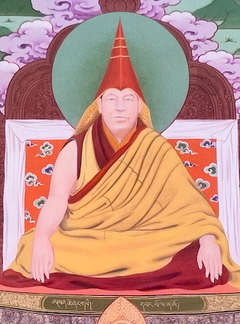
Confession
༄༅། །བཤགས་པ།
Confession1
by Khenchen Ngawang Pelzang
ཨོཾ། རིག་འཛིན་བླ་མ་བདེ་གཤེགས་ཞི་ཁྲོ་དང་། །
om, rigdzin lama deshek zhitro dang
Oṃ. Vidyādhara gurus, peaceful and wrathful sugatas;
དཔའ་བོ་མཁའ་འགྲོ་ཆོས་སྲུང་དམ་ཚིག་ཅན། །
pawo khandro chösung damtsik chen
Ḍākas, ḍākinīs, dharma guardians, oath-bound ones;
དབང་སྐུར་མགོན་པོ་ཡེ་ཤེས་སྤྱན་མངའ་བ། །
wang kur gönpo yeshe chen ngawa
And empowering protector with your eyes of wisdom,
ཀུན་མཁྱེན་གསལ་བའི་དགོངས་པ་བླ་ན་མེད། །
künkhyen salwé gongpa lanamé
All-knowing one whose lucid enlightened perspective is unsurpassed,
ཐུགས་རྗེ་དངོས་གྲུབ་བྱིན་རླབས་རྒྱ་མཚོའི་བདག །
tukjé ngödrub jinlab gyatsö dak
Lord of the ocean of compassion, siddhis, and blessings—
བདག་གི་ནོངས་པ་བཤགས་ལ་དགོངས་སུ་གསོལ། །
dak gi nongpa shak la gong su sol
I beg you to consider this confession of my wrongs!
ངང་ཉིད་ཡེ་ནས་སངས་རྒྱས་ཡིན་མོད་ཀྱང་། །
ngang nyi yené sangye yinmö kyang
Though my true state is primordially awakened,
རྟོག་པའི་དབང་གིས་འཁོར་བ་འདིར་འཁྱམས་ནས། །
tokpé wang gi khorwa dir khyam né
Under the influence of conceptualization, I’ve been wandering here in saṃsāra,
ལས་དང་ཉོན་མོངས་བཟོད་དཀས་ཡུན་རིང་མནར། །
lé dang nyönmong zö ké yün ring nar
Interminably oppressed by unbearable karma and afflictions.
རྒྱུན་རིང་ཤུགས་དྲག་རྟོག་པའི་རྦ་རླབས་གཡོ། །
gyün ring shuk drak tokpé ba lab yo
For the longest time, crashing waves of discursive thoughts have roiled,
སྡུག་བསྔལ་སྣ་ཚོགས་དབང་གིས་ཉམས་རེ་ཐག །
dukngal natsok wang gi nyam ré tak
And I've grown so weary under the weight of my untold sufferings.
འདི་ལ་སྐྱབས་དང་སྐྱོབས་པར་མཛད་དུ་གསོལ། །
di la kyab dang kyobpar dzé du sol
From all of this, I beg you to shelter and protect me!2
བདག་ནི་ཐོག་མ་མེད་ནས་ད་ལྟའི་བར། །
dak ni tokma mé né danté bar
Throughout beginningless time until now
ཉོན་མོངས་འདོད་ཆགས་ཞེ་སྡང་གཏི་མུག་ཞིང་། །
nyönmong döchak zhedang timuk zhing
I've been animated by the benighted impulses
ང་རྒྱལ་ཕྲག་དོག་འཁྲུལ་པའི་ཀུན་བསླང་ནས། །
ngagyal trakdok trulpé kün lang né
Of the afflictions—desire, hostility, delusion, pride, and jealousy—
སྲོག་གཅོད་མ་བྱིན་བླངས་དང་མི་ཚངས་སྤྱོད། །
sokchö ma jin lang dang mi tsangchö
And I've indulged in, instigated, and rejoiced in
རྫུན་ཚིག་ཕྲ་མ་ཚིག་རྩུབ་ངག་འཁྱལ་དང་། །
dzün tsik trama tsiktsub ngakkhyal dang
The wrongs of killing, stealing, lechery,
བསྣབ་སེམས་གནོད་སེམས་ལོག་པར་ལྟ་བ་དང་། །
nab sem nösem lokpar tawa dang
Lying, slander, abuse, pointless chatter,
མཚམས་མེད་ལྔ་དང་དེ་དང་ཉེ་བ་ལྔ། །
tsammé nga dang dé dang nyewa nga
Wanting what others have, malice, distorted views,
ལྕི་བཞི་ལོག་བརྒྱད་ཁ་ན་མ་ཐོ་བའི། །
chi zhi lok gyé khana matowé
The five unmediated3 and five barely mediated crimes,4
སྡིག་པ་བགྱིད་དང་སྩལ་ཡི་རང་བའི། །
dikpa gyi dang tsal yirangwé
The four heavy acts,5 and the eight perversions.6
རང་བཞིན་མི་དགེ་སྡིག་པ་ཅི་མཆིས་པ། །
rangzhin mi gedik pa chichi pa
Whatever toxic, inherently unvirtuous deeds I have done,
སྐྱབས་གནས་རྒྱ་མཚོའི་སྤྱན་སྔར་མཐོལ་ལོ་བཤགས། །
kyabné gyatsö chen ngar tol lo shak
I admit them and lay them down before the vast sources of refuge!
མི་གསང་མི་སྦེད་གནོང་འགྱོད་དྲག་པོས་བཤགས། །
mi sang mi bé nonggyö drakpö shak
Without obfuscation, without concealment, I lay them down with piercing regret!
ཕྱིན་ཆད་སྲོག་ལ་བབ་ཀྱང་མི་བགྱིད་དོ། །
chinché sok la bab kyang mi gyi do
From now on, even at the cost of my life, I will not do them again!
ཕམ་པ་བཞི་དང་ལྷག་མ་བཅུ་གསུམ་དང་། །
pampa zhi dang lhakma chusum dang
The four defeats,7 the thirteen moderated failings,8
སྤང་ལྟུང་སུམ་ཅུ་ལྟུང་བྱེད་དགུ་བཅུ་དང་། །
pang tung sumchu tung jé guchu dang
The thirty failings needing forfeit,9 the ninety-two breaches,10
སོར་བཤགས་བཞི་དང་ཉེས་བྱས་བརྒྱད་བཅུ་གཉིས། །
sorshak zhi dang nyejé gyé chunyi
The four pratimokṣa confessables,11 the eighty-two misdeeds;12
དཀར་ནག་ཆོས་བརྒྱད་བླང་དོར་ཉམས་པ་དང་། །
karnak chö gyé langdor nyampa dang
My mistakes around the four good things to do and the four bad things to avoid;13
རྩ་བའི་ལྟུང་བ་བཞི་དང་ཡན་ལག་གི །
tsawé tungwa zhi dang yenlak gi
The four root downfalls,14
ཉེས་བྱས་བཞི་དྲུག་ལ་སོགས་པའི། །
nyejé zhi druk lasokpé
The forty-six secondary transgressions,15 and all the rest;
རྒྱལ་སྲས་བྱང་ཆུབ་སེམས་པའི་གནང་བཀག་གི །
gyalsé changchub sempé nangkak gi
All my faults and failings
མཚམས་ལས་འགལ་བའི་ཉེས་ལྟུང་ཅི་མཆིས་པ། །
tsam lé galwé nyetung chichi pa
That fly in the face of the bodhisattva vows—
མི་གསང་མི་སྦེད་གནོང་འགྱོད་དྲག་པོས་བཤགས། །
mi sang mi bé nonggyö drakpö shak
Without obfuscation or concealment, I lay them down with piercing regret!
བརྟུལ་ཞུགས་ཉེར་ལྔ་རྩ་ལྟུང་བཅུ་བཞི་དང་། །
tulzhuk nyernga tsa tung chuzhi dang
The twenty-five modes of tamed behavior;16 the fourteen root downfalls of the Vajrayāna;17
ཡན་ལག་སྦོམ་པོའི་ལྟུང་བ་རྣམ་པ་བརྒྱད། །
yenlak bompö tungwa nampa gyé
The eight serious branch downfalls;18
ཁྱད་པར་རྫོགས་པ་ཆེན་པོའི་དམ་ཚིག་ནི། །
khyepar dzogpachenpö damtsik ni
And the specific samayas of the Great Perfection tradition:
ཉི་ཤུ་རྩ་བདུན་རྩ་བའི་ལྟུང་བ་དང་། །
nyishu tsa dün tsawé tungwa dang
The twenty-seven root downfalls [associated with body, speech, and mind];19
ཡན་ལག་དམ་ཚིག་ཉི་ཤུ་རྩ་ལྔ་དང་། །
yenlak damtsik nyishu tsa nga dang
The twenty-five branch samayas; 20
ལྷག་པའི་དམ་ཚིག་ཆེན་པོ་ཉི་ཤུ་སྟེ། །
lhakpé damtsik chenpo nyishu té
The twenty great higher samayas;21
བྱ་སྤྱོད་རྣལ་འབྱོར་བླ་ན་མེད་པ་ཡི། །
jachö naljor lanamepa yi
All my damaged and broken samayas and misdeeds related to
དམ་ཚིག་ཉམས་ཆག་མི་དགེ་སྡིག་པའི་ཚོགས། །
damtsik nyamchak mi gedik pé tsok
Krīya, Cārya, Yoga, and Highest Yoga22 tantras—
གནོང་འགྱོད་དྲག་པོས་མཐོལ་བཤགས་བཟོད་པར་སྩོལ། །
nonggyö drakpö tol shak zöpar tsol
These I admit and lay down with piercing regret. Please forgive me!
བདག་ནི་སེམས་ཅན་འཁྲུལ་བའི་རང་བཞིན་ལགས། །
dak ni semchen trulwé rangzhin lak
My nature is just that of a confused being.
མི་ཤེས་དབང་གིས་ཉེས་པ་ཅི་མཆིས་པ། །
mi shewang gi nyepa chichi pa
Everything I have done under the influence of my ignorance,
དོན་དམ་ཡེ་ཤེས་མངའ་བའི་ལྷ་ལ་བཤགས། །
döndam yeshe ngawé lha la shak
I lay it down before the divine ones in their ultimate wisdom.
བརྩེ་བའི་དབང་གིས་བཟོད་པ་དང་དུ་བཞེས། །
tsewé wang gi zöpa dang du zhé
With the power of your love, please forgive me.
དག་ཅིང་ཚངས་པའི་དགྱེས་པའི་ཞལ་རས་སྟོན། །
dak ching tsangpé gyepé zhalré tön
Please show me the smiling face of purity and health.23
ཕྱིན་ཆད་མི་བགྱིད་དམ་བཅའ་ཁྱེད་ལ་འབུལ། །
chinché mi gyi damcha khyé la bul
Going forward, I promise I will not go so wrong again.
རྩ་གསུམ་རྒྱ་མཚོའི་བྱིན་རླབས་རྨད་བྱུང་གིས། །
tsa sum gyatsö jinlab mejung gi
May the wondrous graces of the vast Three Roots
བདག་རྒྱུད་ཡོངས་སུ་དག་པར་བྱིན་གྱིས་རློབས། །
dak gyü yongsu dakpar jingyi lob
Transform my mind into absolute purity!
ཅེས་པ་འདི་ནི་གུ་ཎའི་མིང་གིས་བསྐུལ་བའི་ངོར། དུག་ལྔ་མེ་ལྕེ་དབྱིངས་སུ་འཁྱིལ་བའི་ཚ་ཟེར་ཅན་སྔགས་ཀྱི་རྣལ་འབྱོར་པ་ལས་འབྲེལ་རྩལ་གྱིས་བྲིས་པ་དགེའོ།། །།
This was written at the exhortation of one named Guṇa by the mantra-yogi Ledrel Tsal, deep within whom the heat of the five poisons' flames swirls. May it be virtuous!
| Translated by Joseph McClellan, 2026.
Source
mkhan po ngag dgaʼ. gsung ʼbum ngag dbang dpal bzang, vol. 1, pp. 85–88. Khreng tuʼu, nd. BDRC MW22946.
Secondary Sources:
Ārya Asaṅga. The Bodhisattva Path to Unsurpassed Enlightenment: A Complete Translation of the Bodhisattvabhūmi. Translated by Artemus B. Engle. Boulder: Snow Lion, 2016.
Aśvaghoṣa. "Root Downfalls of the Vajra Vehicle." Translated by Adam Pearcey. Lotsawa House, 2018. https://www.lotsawahouse.org/indian-masters/ashvaghosha/root-downfalls
Berzin, Alexander. "Kalachakra 25 Modes of Tamed Behavior." Study Buddhism. https://studybuddhism.com/advanced-studies/prayers-rituals/vows/kalachakra-25-modes-of-tamed-behavior
Chökyi Drakpa. "A Torch for the Path to Omniscience." Translated by Adam Pearcey. Lotsawa House, 2012. https://www.lotsawahouse.org/tibetan-masters/chokyi-drakpa/a-torch-for-the-path
Dudjom Rinpoche. Perfect Conduct: Ascertaining the Three Vows. Translated by Khenpo Gyurme Samdrub and Sangye Khandro. Boston: Wisdom Publications, 1996.
Jigme Lingpa ('jigs med gling pa). “yon tan rin po che'i mdzod kyi 'grel pa zab don snang byed nyi ma'i 'od zer”. In snga 'gyur bka' ma shin tu rgyas pa, vol. 115. Edited by Tshe ring rgya mtsho. Chengdu: Si khron dpe skrun tshogs pa si khron mi rigs dpe skrun khang, 2009. BDRC MW1PD100944.
Khenpo Ngawang Palzang. Wondrous Dance of Illusion. Translated by Heidi L. Nevin and J. Jakob Leschly. Boston and London: Snow Lion: 2013.
Kongtrul, Jamgon. The Torch of Certainty. Translated by Judith Hanson. Boulder: Shambhala, 1977.
SuttaCentral.net. “Nissaggiya Pācittiya” https://suttacentral.net/lzh-upp-bu-np
SuttaCentral.net “Pācittiya.” https://suttacentral.net/lzh-sarv-bu-vb-pc
SuttaCentral.net “Saṅghādisesa.” https://suttacentral.net/pli-tv-bu-vb-ss
Version: 1.1-20260209
Notes
- The original is untitled; this title has been added by the translator. ↑
- In this line, Khenpo Ngaga plays on the relation between the noun skyabs (refuge/shelter) and the active verb skyobs ("protect!"). ↑
- These are the acts that lead to one's immediate plunge into hell upon death. They are (1–3) to kill one's father, mother, or an arhat; (4) to maliciously harm the person of a buddha; and (5) to cause a schism in the sangha. ↑
- These are five heinous crimes ranked just below the former set. They are (1) to kill one's teacher, (2) to cause a bikkṣuṇī to lose her vows, (3) to kill a bodhisattva, (4) to steal the collective property of the sangha, and (5) to destroy a stūpa. ↑
- The four weighty acts, or four burdens (lci ba bzhi) are four sets of ethical failings. Kongtrul (1977), 89n17 lists them as follows: The '"four burdens" (or "weighty acts") consist of four sets of acts: 1. Four burdens of perversity: a. Looking down on learned people; b. treating holy persons, monks or nuns in a condescending manner; c. stealing food belonging to someone in meditation retreat; d. stealing a yogin's ritual implements. 2. Four burdens of degeneracy: a. Swearing in order to conceal your guilt; b. violating the Shravaka precepts; c. the Bodhisattva precepts; d. tantric precepts. 3. Four burdens of verbal abuse: a. Denouncing sacred images; b. belittling the knowledge of learned people; c. deriding words of truth; d. engaging in religious polemics out of prejudice. 4. Four burdens of blasphemy: a. Holding perverted views; b. injuring a holy person; c. insulting your equals; d. accusing an innocent person of wrongdoing. ↑
- The ‘eight perversions’: despising the wholesome, glorifying the unwholesome, disturbing truth-seekers, abandoning your spiritual teacher, dividing the Sangha, abandoning spiritual brothers and sisters, and desecrating a sacred mandala.” ↑
- The four defeats (pham pa bzhi; pārājikas) result in expulsion from the monastic community without compromise. They are (1) sexual intercourse, (2) stealing anything worth more than 1/24 oz. of gold, (3) intentionally contributing to the death of a human being, (4) lying about having exalted spiritual qualities. ↑
- The thirteen moderated failings require moderation by the saṅgha. With repentance and a period of probation, the saṅgha may allow reinstatement. They are (1) masturbation, (2) forbidden physical contact, (3) indecent speech, (4) encouraging someone to indulge in their desires, (5) matchmaking, (6) building an unapproved hut, (7) having another build one an unapproved dwelling, (8) making a groundless accusation of another monk out of anger, (9) making a deceitful accusation of another monk, (10) causing a schism in the saṅgha, (11) following a schismatic, (12) rejecting well-founded criticism in stubbornness, (13) causing laypeople to lose faith by criticizing the saṅgha’s rebukes of oneself (SuttaCentral) ↑
- Tib. spang ltung; Pāli nissaggiya pacittiya. See SuttaCentral.net, “Nissaggiya Pācittiya.” These are offenses associated with a monk's mishandling or possession of of prohibited property (e.g. extra robes, money, etc.). ↑
- Tib. ltung byed; Pāli pācittiya. See SuttaCentral.net, “Pācittiya.” These are minor lapses in conduct (e.g., mindlessly picking grass, acidently harming insects, etc.). ↑
- Tib. sor bshags; Skt. pratideśanīya. These are four specific rules associated with meal protocol: (1) If a monk eats food received from a bikkṣuṇī who has not obtained permission from the sangha to distribute it, they must confess the offense; (2) if a monk who, while sick, eats normally prohibited food in the presence of a layperson without having previously informed a fellow monk about it, they must confess the offense; (3) if a monk who, in a time of famine or scarcity, invites himself to a meal with a lay family without a valid reason, he must confess the offense; and (4) if a monk accepts alms offerings in a dangerous place without warning the devotees of the perils of animals, weather, etc., he must confess the offense. See smon lam tshig mdzod chen mo, "sor bshags bzhi"). ↑
- Tib. nyes byas; Skt. duṣkṛta. These are a broad range of minor offenses such as to wear one's robes slightly improperly and to carry oneself in subtly undignified ways. Here the Tibetan text has an unusual interlinear note or correction in which “eight sets of ten” (bcu phrag brgyad) is given as an alternative for eighty-two (brgyad bcu gnyis). ↑
- Lit. "the eight white and black dharmas" (dkar nag chos brgyad): The four bad things to avoid are (1) deceiving those worthy of worship, (2) causing unnecessary regret, (3) slandering holy beings, and (4) acting with guile and deceit. The four good things to do are (1) relying on and praising noble ones, (2) encouraging sentient beings to be virtuous, (3) considering bodhisattvas equal to the highest teacher (rgyal sras rnams la ston pa'i 'du shes bskyed), and (4) resolving to bring benefit and happiness to beings (Longchen Rabjam, rdzogs pa chen po sems nyid ngal gso, 48) ↑
- These seem to be, as translated by Artemis B. Engle, Asaṅga's "four acts that represent an extreme form of defeat" from the Bodhisattvabhūmi: (1) Praising oneself and disparaging others; (2) refusing to give to those in need; (3) being overcome by anger; (4) disparaging the Mahāyāna (Ārya Asaṅga, The Bodhisattva Path to Unsurpassed Awakening, §"four acts that represent an extreme form of defeat" [I.10.2.9]). ↑
- There are twenty faults that one possesses oneself, twenty-three that can come from oneself or others and three that come from others (Khenpo Tsöndrü, "Seventy Points of Abhisamayālaṃkāra," note 43). ↑
- This set derives from the Kālacakra Tantra. The twenty-five are given in five groups of five: (1) Five things to abandon: killing, lying, stealing, adultery, and drinking liquor; (2) five things to avoid: gambling, eating unwholesome food, engaging in negative speech, and training in the spiritual traditions of elemental spirits and titans; (3) five prohibitions on killing: killing of cows, children, men, and women and the destruction of stūpas; (4) five not to have aggression toward: avoid feeling aggression coward are virtuous friends, elders, the buddhas, the sangha, and one's spiritual mentor; (5) five non-attachments: have no attachment through the five sense organs to the five sense objects (Dudjom Rinpoche, Perfect Conduct, 111–112). See also Berzin, "Kalachakra 25 Modes of Tamed Behavior." ↑
- See Aśvaghoṣa, "Root Downfalls of the Vajra Vehicle." ↑
- Yan lag sbom po'i ltung ba brgyad. Also called the eight major transgressions: (1) relying on a consort who has not matured through empowerment and samaya, (2) physically or verbally fighting during a feast-offering ceremony, (3) receiving the nectar of an unauthorized consort, (4) failing to reveal the Secret Mantra to a qualified recipient, (5) teaching something other than what has been requested by a faithful aspirant, (6) staying seven complete days with a shravaka, (7) proclaiming oneself to be a tantric adept when the yoga of primordial wisdom has not been realized, and (8) teaching unsuitable recipients (Khenpo Ngawang Palzang, Wondrous Dance of Illusion, 312). ↑
- For these, see Chökyi Drakpa, "A Torch for the Path to Omniscience." ↑
- See Chökyi Drakpa, "A Torch for the Path to Omniscience." ↑
- lhag pa'i dam tshig chen po nyi shu. This more uncommon list is glossed in Jigme Lingpa's yon tan rin po che'i mdzod kyi 'grel pa zab don snang byed nyi ma'i 'od zer, 500–501. They are couched in veiled, metaphorical tantric language requiring extensive unpacking: (1) Do not kill the lion, king of beasts; (2) do not put foul poison into a precious casket; (3) do not cut the roots of a precious medicinal plant; (4) do not drink the boiling melted water of the glaciers; (5) do not open the anthers of a blooming lotus; (6) do not pour essence into a leaking vessel; (7) do not mix unexamined wealth and food; (8) do not submerge a white crystal sphere in the mud; (9) do not milk the milk of a lioness into an inferior vessel; (10) do not burn a wish-fulfilling jewel in a hearth; (11) do not break the wings of the Garuda, king of birds; (12) do not strike the meteoric iron claws against the ground; (13) do not eat the leftovers of the play of tigers and leopards; (14) do not destroy the cliffs filled with vajras; (15) do not tear the raiment surrounded by a vajra fence; (16) do not extinguish the lamp that dispels darkness; (17) do not divert the course of a vajra river (18) do not give away the seal of a king’s insignia; (19) do not overturn the foundations of a vajra fortress; (20) do not defile the precious jewel tied to the top of a victory banner with signs of desire. ↑
- Although this term is often ‘back-translated’ into Sanskrit as Anuttarayoga, the term that is attested in original sources is Yoga-niruttara. ↑
- In this line, "pure" (dag) and "clean/healthy" (tshangs) qualify, via genetive construction, the "delighted face" (dgyes pa'i zhal ras) of the divine ones (lha), but there is considerable nuance. The poetic implication is that the divine ones are not only pure and clean themselves but that they would also be delighted by the supplicant's purification through this confession. ↑