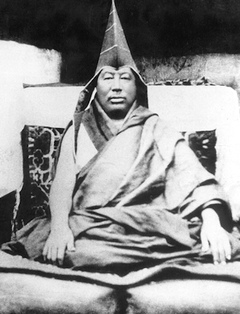
A Feast of Fresh Aphorisms
A Feast of Fresh Aphorisms
by Khenchen Ngawang Palzang
Homage to my father of incomparable kindness,
The lord of Dharma, my protector, Tenpé Nyima.
As I head for home, these are my parting words,
The legacy I leave to my son who stays behind.
Should you take these meanings to heart, they can be your pith instructions.
To my son, Athibathi,[1]
In these degenerate times, beings’ characters are unrefined, and since it’s hard to find anyone keeping to a genuine path, don’t pour your heart out to acquaintances or close relations. When you talk a lot and do a lot, you just deplete yourself and everyone else. Though you’re constantly observing the faults and qualities of those who are good, bad, and in between, don’t let a single word of praise or criticism slip from your mouth. There is no way to voice your inner dialogue straightforwardly without distorting your intention, so never share your deep feelings;[2] [if you must speak], just be undogmatic,[3] without harping on what’s good and bad.
Don’t trust these Khampas;[4] they’ll deceive you with their friendly advice and inner guile.
Clinging to permanence and attachment to this life are huge obstacles to the Dharma, so don’t throw yourself into business, investments, and the life of a householder.
The repository and wellspring of every problem is recklessness with your body and speech, so conduct your body and speech with calm and discipline.
The immature companions you’ll find in these degenerate times will let you down, so hitch your wagon to an authentic spiritual guide and to virtuous friends with exceptional qualities.
Since [your vows] are the basis for all good qualities, you must, by all means, at the cost of your life, stay unstained by the seventeen defeats and infractions.[5]
Since it undergirds the qualities of clear realization, you need excellent samādhi; you need genuine study and contemplation, since without them, there is no way to overcome all the enemies of the afflictions; and you need the qualified spiritual mentor, since they are the condition that supports your samādhi, study, and contemplation.[6] Win their heart by honoring them in the three ways.[7] Regarding their instructions, you should be like a parched person guzzling water. Drinking them in is not enough; you need to fill your mindstream with their benefits.
In short, be able to resolve things on your own;[8] though you see keenly, act like you are blind; though you hear everything, act like you are deaf;[9] don’t praise or criticize others; stand firm against all your mental afflictions; don’t give your heart over to the affairs of this life; without self-importance or pride, put your mind in the service of the Dharma; put all your efforts into the Dharma.
Otherwise, with all your learning and experience, you’ll become an arrogant blowhard who can’t examine or see the flaws in your own character. All you’ll be able to do is pick out the flaws in others. Doing and saying all kinds of things, you’ll turn your back on the Dharma, go all in on this life, and without any sense of disenchantment or renunciation, you’ll be in a spiritual no-man’s land,[10] playing the roles of both layman and monk, throwing your future lives to the wind while you peddle the compassionate teacher’s message for your own gain.[11]
Whatever you make of yourself, the choice is in your hands right now. Always hold your mind accountable; always examine your character closely. Every instruction really comes down to this, so remember it; always remember it!
If, inwardly, you don’t see your mental afflictions as the enemy, then your lama’s pretty instructions just remain on the surface. Remember every word of them deep inside.
Ha! Ha!
Over the past five years, I’ve given you so many instructions on the paths of sūtra and tantra. Now, the most important thing is that you make sure your character is in tune with the Dharma and that you don’t go out and bring shame on me.[12]
| Translated by Joseph McClellan, 2026.
Bibliography
Source Text
mkhan po ngag dgaʼ. "zhal gdams legs bshad gsar pa'i dga' ston". In gsung ʼbum kun mkhyen ngag gi dbang po, vol. 2, pp. 151–153. Si khron mi rigs dpe skrun khang, 2017. BDRC MW4CZ364088.
Secondary Texts
Dratön Ngawang Kelzang Tenpa'i Gyeltsen (dbra ston skal bzang bstan paʼi rgyal mtshan), "Exhortation to the Ordained to Uphold Monastic Discipline" (rab byung rnams 'dul khrims la bskul ba). In gsung ʼbum dbra ston ngag dbang bskal bzang bstan paʼi rgyal mtshan, vol. 4. Mi rigs dpe skrun khang, 2009. BDRC MW4CZ62374.
Shantideva. The Way of the Bodhisattva. Translated by Padmakara Translation Group. London and Boston: Shambhala Publications, 2011.
Version: 1.0–20260922
Notes
-
This nicknamed figure remains unidentified. He was most likely a student at Katok Monastery, where the Khenpo taught from 1909–1922, when he returned to his homeland of Nyoshul. ↩
-
In this line, “inner dialogue” renders rang gi sems la dran pa’i gtam—lit. “thought-narrative in your own mind”; “without distorting your intention” renders kha zhe gnyis med—lit. “without the bifurcation of your mouth and deep inside”; and “deep feelings” renders zhe phugs nas dran pa’i gtam—lit. “thought-narrative that comes from deep inside you.” ↩
-
“Undogmatic” for lung ma bstan, “neutral.” It carries the sense of “not discussed in the scriptures.” ↩
-
Khenpo uses the general noun khams pa, signifying the people of Kham, a category that includes the Khenpo himself. Since he seems to be addressing a student at Katok, in Kham’s Derge region, we can surmise that either the addressee was a visitor to the region or that the intended message is to avoid giving yourself over to the cultural or group identity around you. ↩
-
pham lhag bcu bdun:
The four defeats are the four offenses that a monk cannot ritually repair, and which result in compulsory disrobing. They are killing a human, stealing, sexual misconduct, and lying about one’s spiritual powers.
The thirteen infractions are reparable through confession. They come down to the following two categories:
Nine Immediate Offenses (dang por ’gyur ba dgu): (1) khu ba ’byin (śukravisṛṣṭi)—intentional emission of semen (except in a dream); (2) lus kyi reg pa (kāyasaṁsarga)—physical bodily contact motivated by lust; (3) ’khrig pa dang ldan pa’i tshig smra ba (maithunābhāṣaṇa)—lewd speech or speaking lustful words directly to a woman; (4) bdag gi bsten bkur bsngags pa (ātmakāmaparicarana)—praising oneself to a woman to solicit sexual favors or physical intimacy; (5) pho nya byed pa (sañcaritra)—acting as a matchmaker/intermediary between a man and a woman to arrange a sexual union or marriage; (6) khang pa byed pa (kuṭīkāra)—constructing a small individual hut/dwelling (kuṭī) without a donor, without saṅgha site-approval, or exceeding prescribed vinaya measurements; (7) khang chen byed pa (mahallakavihāra)—constructing a large residence (vihāra) with a donor without obtaining prior saṅgha site-inspection and approval; (8) gzhi med par skur ba ’debs (amūlakābhyākhyāna)—groundless accusation of another monk with a pārājika offense out of malice; (9) bag tsam gyi gnas la brten nas skur ba ’debs (leśamātrādhikaraṇa)—accusing another monk of a pārājika based merely on a trivial pretext, irrelevant similarity, or circumstantial sign.
Four Offenses Established Upon the Third Admonition (nan tan gyis ’gyur pa bzhi): (1) dge ’dun gyi dbyen byed pa (saṅghabheda)—persisting in attempting to cause a schism within a concordant saṅgha after three formal admonitions; (2) dbyen gyi rjes su phyogs pa (bhedānuvartaka)—persisting in siding with and supporting a schismatic monk after three formal admonitions; (3) khyim sun ’byin pa (kuladūṣaka)—corrupting lay families through improper conduct and refusing the Saṅgha’s banishment/correction after three formal admonitions; (4) bka’ blo mi bde ba (durdvacas)—being obstinate, refusing legitimate vinaya admonition from fellow monks, and resisting correction after three formal proceedings. ↩
-
For clarity, we have resupplied “samādhi, study, and contemplation” for de thams cad (“all those”). ↩
-
mnyes pa gsum—Three ways to honor [the guru]: the best is to wholeheartedly practice the liberative instruction they give; in lieu of that, you should offer material support and labor. ↩
-
gnyan po rang tshugs thub pa—lit. “self-reliant antidotes.” ↩
-
This seems to be in the style of Śāntideva’s advice in the Bodhisattvacāryāvatāra:
When the urge arises in your mind
To feelings of desire or angry hate,
Do not act! Be silent, do not speak!
And like a log of wood be sure to stay.—Shantideva, The Way of the Bodhisattva (Padmakara trans.), ch. 5, verse 48. ↩
-
“Spiritual no-man’s land” speculatively renders the ambiguous term ban ma hor, which is not found in any lexicons, but appears as an attested term in several sources. Etymologically, it seems to combine ban [de] (monk) + ma (negative particle) + hor (Mongolian or somewhat exotic nomad).
The most illuminating of these usages is in Dratön Ngawang Kelzang’s, Exhortation to the Ordained to Uphold Monastic Discipline (rab byung rnams ’dul khrims la bskul ba), 416, 420. Dratön describes the ban ma hor as someone who has taken on the outward look of a monk without upholding proper vows. He defines the type by a double absence: no real inner commitment to religious life, and no proper outward observance either. He also pairs the word with a parallel formation meaning “lay, not ordained,” (skya ma ser) confirming that the compound names someone who is neither one thing nor the other. ↩
-
The phrase used here is bla btsong—lit. “sell the soul,” carrying the sense of disgrace, betrayal. ↩
-
Here, the earlier phrase bla btsong is repeated. ↩