A Letter Filled with Aphorisms
A Letter Filled with Aphorisms[1]
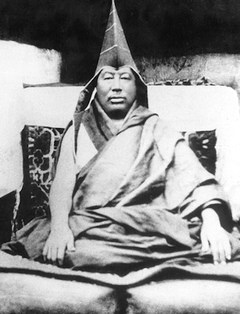
by Khenchen Ngawang Palzang
Namo guru!
Having paid homage to bodhicitta, mind as such,
The expanse of reality that is primordially pure by nature,
I offer this letter filled with aphorisms,[2]
Which you would do well to heed, O my virtuous friend,[3]
Whose life of freedoms and advantages, born of millions of merits,[4]
Glows with the sublime jewels of positive qualities.[5]
The freedoms and advantages [of human life] are so hard to obtain.
Now that you have found them, for the time being, on the strength of your past virtues,
You would do well to embrace the divine Dharma, so deeply sacred.
At this crossroads—with one way up and one way down,
Turn your mind inward and imbibe what is essential.
Just as you can turn to credit for essential items,
Use this body to do everything the Dharma requires of it.
Life’s short; it doesn’t last; it’s blighted by death.
Death’s hour is a mystery; nothing’s set in stone.
Nothing will help you; friends, family, and wealth don’t come along.
When death is on you, the sacred Dharma alone
Can be your refuge, defender, guardian, ally, and light.
[It alone] is your supreme harbor and lamp.[6]
Give yourself over to this lamp that guides the three kinds of seekers.[7]
With conviction in the infallibility of cause and effect,
Hewing[8] to mindfulness, vigilance, and circumspection,
Guard your pure moral discipline at the risk of your life.
The treasury of the all-knowing Teacher’s speech
Comes down to dependent origination: the absence of intrinsic nature.
When it comes to actions and their consequences, you should avoid what’s wrong and do what’s right to the best of your ability.[9]
This realm of saṃsāra is where the sharks[10] of misery swim;
Opportunities for even the slightest happiness are few and far between.
The wheel of death and birth spins on and on.
Here, where the three sufferings[11] constantly torment us,
We must, day and night, never stop contemplating all that is wrong with saṃsāra.
Renunciation is the path that leads to liberation.
If you’ve got it, the Buddha’s teaching is right at hand.
Without it, you’re just chasing the gains and honors of this life.[12]
Until this attitude of renunciation is truly born in your soul,[13] without being forced,
You would do well to keep cultivating it.
The precious, authentic guru,
The spiritual friend who is the source of all positive qualities—
When you start out on the unmistaken path, rely on them;
Then, act with wise discernment[14] along this way of the three seekers.[15]
[Though] you’ve amassed an ocean of learning that allows you to sort through your perceptions,[16]
In whatever practice you do, you need to know how to realize it deep inside.
Dogmatic erudition gets you nowhere;
In the matter of practice, you’ve got to cut through your doubts.
The guru and the Three Jewels are your unfailing sanctuaries;
Take refuge in them, day and night, with the faith of conviction.
Just as the vulnerable entrust themselves to defenders,
When you absorb the Three Jewels’ blessings,
Your mind meets no obstacles as it travels the path of virtue.
Pure bodhicitta is the Dharma’s root.
Arousing the spirit of awakening, in its aspirational and active forms;[17]
Training in its causes,[18] its essence,[19] and the stages of its precepts;[20]
Refining this mindset again and again,
You’ll find that one fine day it arises on its own, without any effort.
Until then, keep striving, as hard as you can.
Once you’ve trained your mind in bodhicitta like this,
There’s no need for other, elaborate practices—no need at all.
What we call lojong[21] comes down to steering your mind’s comings and goings.
Don’t let your mind run wild; turn it inward;
Drive it, by all means, along the path of virtue.
The path of creation and completion is so profound.
It’s a teaching for those with the most exceptional acuity,
So for me to assume that I’m one of them would be nothing but conceit.
[Nevertheless], when I say a bit about [creation and completion], you would do well to listen:
Refining your ordinary, fixated perceptions—esoteric though this may sound—[22]
Really comes down to your self-fixation and your fixation on the reality of things.
Their remedies are the lucidity of features[23] and not losing touch with purity.[24]
With stable pride[25] in the natural character of being,
When you internalize the pith of the four stakes that bind the life-force,[26]
You are on the path that delights the victorious ones.
Otherwise, with your ritual missing something,
And estranged from the lineage’s intimate instructions,
To presume that the deity’s mere appearance amounts to the creation stage is to be a smug fool.[27]
Once you’ve correctly and definitively established the basis of purification,[28]
The object of purification,[29] and the basis for accomplishing the fruit,[30]
Then, as you work your winds with the four applications,[31]
Experiences of entering, abiding, and dissolving[32] will dawn in succession.
Then, in the blissful wisdom of the four joys,[33]
Reveling in all that’s desirable, everything dawns as euphoric love.[34]
But if, instead, you just [try to] settle your winds, close your eyes, and strip naked—[35]
Tormenting yourself with such pointless, empty hardships—
Is like setting out on an unknown road with no idea where it leads;
It’s nothing but a contrived path of self-deception.
Ha ha! Those are all paths of elaboration.
The unelaborate path of Luminous Great Perfection
Has nothing to do with the elaborations of ordinary mind and its states;
It is the path of innate pristine awareness, naturally lucid and naked.
In pure awareness—without holding onto or letting go of anything, with nothing coming or going,
Without fixating on any target with intense, piercing focus—[36]
Rest in the even state of dharmatā’s spontaneous presence,
And, in the vast spaciousness of the ground of being[37]—innately limpid, naturally smooth—
Settle into[38] the Great Perfection of view, meditation, and conduct. This is vital.
In the expanse of the view, everything is the state of dharmakāya;
In the expanse of meditation, all is equalness;
In the expanse of conduct, there is the bliss of natural liberation;
In the expanse of fruition, there are no expectations or doubts.
Everything, all of it, is the spectacle of dharmatā.
Looking inward, you meet the naked character of your being, the union of awareness and emptiness,
The perfect, unitary bindu in which all elaborations are set free.[39]
Looking outward, within a state of illusion, you see phenomena that do not exist—
Appearances that are unreal, nebulous, and evanescent.[40]
Looking at the juncture of outside and inside,[41] you encounter mind and all its states—
Its insubstantial stirrings shimmering into freedom.[42]
Take appearances—every appearance’s character is empty.
Take emptiness—this entails the naked expanse of empty awareness.
Thus, in the supreme state of equalness and perfection, in the recognition of pristine awareness,
Good and bad and help and harm have no place.
See that these practices flourish in your soul.[43]
Otherwise, squeezing your discursive mind,[44] binding it with deliberate recollection,[45]
You imagine that your ordinary subjectivity,[46] with all its conceptual proliferations, is pure awareness,
And you think that meditation amounts to time lapsing in intentional mindfulness.[47]
Calling your compounded delusions “conduct,”[48]
You might pointlessly fritter your life away in the mountains.
Don’t emulate the ways of Dharma pretenders:
Ordinary people who never show signs of progress or [genuine] positive qualities.
All this deception—this distraction with meaningless gains and honors—
Has derailed so many beings in these degenerate times.
Don’t be one of them. Don’t let your mind wander among the elaborate joys and sorrows
Of sensual pleasures; contemplate all the drawbacks of sensual pleasures.
Following the magnificent ways that delight the past buddhas,
For the rest of your life, may you be a renunciate immersed in the Dharma.
Meeting no obstacles on the path to liberation,
May you flourish in the auspiciousness of positive interdependence.
Offered by one who is a khenpo in name only, who has heard many of the sublime guru’s teachings.
| Translated by Joseph McClellan, 2026.
Bibliography
Tibetan Editions
mkhan po ngag dgaʼ. "gdams pa na mo gu ru sems nyid rang bzhin". In gsung ʼbum kun mkhyen ngag gi dbang po, vol. 2, pp. 134–138. Si khron mi rigs dpe skrun khang, 2017. BDRC MW4CZ364088.
Secondary Texts
Berzin, Alexander. "Congruent and Noncongruent Affecting Variables." Study Buddhism.
Berzin, Alexander. "Kalachakra: The Winds of Karma & Devoid Forms." Study Buddhism.
Berzin, Alexander. "Objects in Non-Conceptual Cognition." Study Buddhism.
Berzin, Alexander. "The Guhyasamaja Presentation of the Process of Death." Study Buddhism.
Chögyal Namkhai Norbu. The Precious Vase: Instructions on the Base of Santi Maha Sangha. Translated by Adriano Clemente and Andy Lukianowicz. Arcidosso: Shang Shung Edizioni, 1999.
Hartmann, Catherine Anne. To See a Mountain: Writing, Place, and Vision in Tibetan Pilgrimage Literature. PhD diss. Harvard University, 2020.
Jigme Lingpa, Patrul Rinpoche, and Getse Mahapandita. Deity, Mantra, and Wisdom: Development Stage Meditation in Tibetan Buddhist Tantra. Translated by Dharmachakra Translation Committee. Ithaca: Snow Lion, 2006.
Karmay, Samten. The Arrow and the Spindle: Studies in History, Myths, Rituals and Beliefs in Tibet. Kathmandu: Mandala Book Point, 2009.
Pearcey, Adam. A Greater Perfection? Scholasticism, Comparativism and Issues of Sectarian Identity in Early 20th Century Writings on rDzogs-chen. PhD diss. SOAS, University of London, 2018.
Tobden Chöying Lingpa. Precious Vase Containing the Nectar-Like Essence of Chülen from The Secret Treasury of the Authentic State of Immortality Treasure Teaching of Tobden Chöying Lingpa. Translated by Gerd Manusch. Naldjor, Institute for Movement and Tibetan Yoga, 2018–2019.
Version: 1.0–20261022
Notes
-
The original piece is untitled. This title is supplied by the translator. ↩
-
“Letter filled with aphorisms” for legs par bshad pa’i zhu mchid—lit. “respectful, well-explained letter.” The phrase legs par bshad pa can also connote aphorisms, which indeed is how the following text is structured. ↩
-
Kalyāṇamitra is the Sanskrit for dge ba’i bshes gnyen—lit. “ally in virtue / spiritual mentor.” This phrase, along with the honorific zhu mchid “respectful letter” makes it clear that the recipient of this letter is an anonymous lama of some standing in the khenpo’s eyes.
The line contains the somewhat puzzling phrase gang gi drung, literally “in the presence of [that] [spiritual friend].” We understand this as an elaborate, honorific way of addressing the recipient directly. ↩
-
We strongly suspect that the final two lines of this introductory stanza employ the classical Sanskritic kāvya literary device called “name ornamentation” (ming gi rgyan), where a poet riffs on the meaning of someone’s name. In this case, Khenpo Ngaga seems to be addressing a student named Sonam Rinchen (bsod nams rin chen; “merit + jewel”) or Sonam Yonten (bsod nams yon tan; “merit + positive qualities.” ↩
-
In this line, “glows with” figuratively renders brgyan pa—“adorned [by].” ↩
-
“Harbor and lamp” are loose for gling dang sgron me—lit. “island and torch/lamp.” gling serves not only as “island,” but also “continent,” and “sanctuary.” ↩
-
“Light that guides the three kinds of seekers,” for rnam gsum sgron me’i snang ba. We take this as an allusion to Atiśa’s famous discussion of the “three [types of] beings” (skyes bu gsum) in his Lamp for the Path to Enlightenment (byang chub lam gyi sgron ma). See Patrick Dowd’s translation (Lotsawa House, 2021). The three types of beings are those of lesser, middling, and great scope, referring to their motivation for following the spiritual path.
In general, a being of lesser scope is focused on avoiding the suffering of the lower realms and having a nice life as a human or god; those of middling scope want liberation, outright, from saṃsāra; and those of greatest scope are motivated by compassion to establish all beings in ultimate buddhahood. In Atiśa’s discourse, however, all three refer to those on the Mahāyāna path. A Mahāyāna practitioner of lesser scope wishes to first gain the stronghold of enlightenment so that they can then help others, the way a benevolent sovereign helps their subjects from a seat of power. The second type of practitioner pursues awakening together with others, like a ferryman who crosses a torrent with his passengers. The greatest type of practitioner deprioritizes their own enlightenment entirely, resolving to establish every being in full awakening first, the way a shepherd would never rest until their flock is safe. The Khenpo’s own synopsis of these three types (translated as the “three degrees of courage”) is found in Khenpo Ngawang Palzang, Guide to the Words of My Perfect Teacher, 152. ↩
-
“Hewing” for skya bar nas—an idiom related to masonry that connotes staying between the guide or plumb lines so that one’s work is straight and sound. ↩
-
In this aphorism, there seems to be an untranslatable play on the word mdzod. In the first line, mdzod is the noun “treasury”; in the third line, it is the polite imperative of the honorific verb mdzad pa “please do” (viz., “should”). ↩
-
’dzin khri—lit. “throne-holder,” an ornamental word for chu srin (Skt. makara), a “sea monster” or more specific dangerous aquatic species like crocodiles, sharks, or hippos. The Mönlam Grand Dictionary (s.v. ’dzin khri) says it is an allusion to makara being like the throne-holding kings of the sea. ↩
-
sdug bsngal gsum—Three sufferings: the suffering of suffering (sdug bsngal gyi sdug bsngal)—i.e., straightforward pain; the suffering of change (’gyur ba’i sdug bsngal)—i.e., aging, loss, etc.; and structural, conditioned, or pervasive suffering (khyab pa ’du byed kyi sdug bsngal). This latter type of suffering evokes how our reality is conditioned by formative factors (’du byed; Skt. saṃskāra)—i.e., our generally toxic, afflictive intentions that cause us to act, which creates our fraught reality. For this reason, saṃskāras are iconographically represented by a potter at his wheel. This truth describes our general existential disquiet even when nothing is acutely wrong at the moment. ↩
-
med na tshe ’di’i rnyed bkur sa ru chas—lit. “Without it, you’re off to the place of this life’s gains and honors.” ↩
-
“Soul,” in its colloquial, not metaphysical sense, renders blo—one of many words for mind that connotes its rational, judging aspect, and also the deeply feeling aspect tied to the terms “attitude” and “orientation.” ↩
-
“Wise discernment” for blang dor—“accept[ance] and reject[ion],” usually referring to moral choices, but also contemplative choices. ↩
-
“Way of the three seekers” for skyes bu gsum gyi lam, confirming the earlier allusion to Atiśa’s teaching with the “lamp that guides the three kinds of seekers” (rnam gsum sgron me). ↩
-
“Perceptions” simplifies dmigs rnam, a technical, epistemological term usually understood as a contraction of dmigs pa (focal object; Skt. ālambana) and rnam pa (aspect; Skt. ākāra). The Dung dkar tshig mdzod chen mo (s.v.) illustrates it this way: “In a mind realizing a vase as impermanent, the vase is the focal object and impermanence is the aspect.” The Bod rgya tshig mdzod chen mo (Beijing: Minzu Chubanshe, 1993), 2143, gives a more phenomenological definition: “the aspect that arises as experience in the perceiving mind, having focused on an object such as form.” In Cittamātra epistemology, as presented by Alexander Berzin, the term can refer more narrowly to the “focal aspect” or mental hologram that consciousness takes on, arising from the same karmic seed as that consciousness rather than from an external object (Berzin, “Congruent and Noncongruent Affecting Variables”; “Objects in Non-Conceptual Cognition”). Hartmann (362) accordingly reads it as the “phenomenological meeting of subject and object.” Here the sense seems to be learning that lets one sort through what the mind takes up and how it appears. ↩
-
“Aspirational and active forms” refers to the two aspects of relative bodhicitta. In his Guide to the Words of My Perfect Teacher, the Khenpo explains that aspirational bodhicitta (or bodhicitta of intention) is aspiration to achieve the fruits of the path. Active bodhicitta (or bodhicitta of application) is commitment to practicing the causes of that fruition— viz. the six pāramitās. He adds, “Each of these two pledges, my teacher said, must be backed by a second iron resolution” (155). ↩
-
See the Khenpo’s Guide to the Words of My Perfect Teacher for his discussion of relative bodhicitta’s preparatory causes, which are the four boundless qualities or immeasurables (tshad med bzhi): love, compassion, joy, and equanimity (134–151). He then discusses how relative bodhicitta requires a ritual, whereas absolute bodhicitta, in its truest form, only arises through the power of meditation (155–159). ↩
-
In his Guide to the Words of My Perfect Teacher, the Khenpo boils bodhicitta’s essence down to Maitreya’s maxim: “Bodhichitta is the wish to attain perfect buddhahood for the benefit of others” (151). He then explains that, contained in that line are the two essential aspects of bodhicitta: (1) the compassionate resolve to relieve others’ pain and (2) the resolve to master wisdom and full enlightenment (151–152). ↩
-
In his Guide to the Words of My Perfect Teacher (162–181), the Khenpo explains many precepts for aspirational bodhicitta, first explaining that it is the greatest safeguard against bodhicitta’s decline occasioned by egotism and anger (162). He then explains that “It is the training in the six transcendent perfections that prevents the bodhichitta of application from declining” (181) before discussing each of the six perfections in detail for dozens of pages. ↩
-
blo sbyong; “lojong.” ↩
-
“Esoteric though this may sound” loosely renders gab pa’i gnas—lit. “the recondite/hidden topic.” ↩
-
“Lucidity of features” renders rnam pa gsal ba—alt. “clear appearance.” Dharmachakra Translation Committee explains this key creation stage term according to Khenpo Ngaga’s own lineage in Jigme Lingpa, Patrul Rinpoche, and Getse Mahapandita, Deity, Mantra, and Wisdom, 172–173). In short, this principle enlivens creation stage practice by emphasizing the vivid, rainbow-like luminosity of imagined deities and maṇḍalas rather than letting them calcify into inert, lifeless mental images. ↩
-
“Not losing touch with purity” loosely renders rnam dag dran pa—alt. “recollecting purity.” For Dharmachakra Translation Committee’s thorough gloss of this term, see Jigme Lingpa, Patrul Rinpoche, and Getse Mahapandita, Deity, Mantra, and Wisdom, 202–203) . In short, this is the fundamental creation stage principle of remembering what all the creation stage’s divine symbols really signify: primordially pure pristine awareness itself. ↩
-
“Stable pride” (nga rgyal brtan pa), is a third major principle of creation stage practice emphasizing how the divine qualities and appearances imagined in meditation are not imposed on or imported into the practitioner; they are the practitioner’s own inherent qualities and manifestations. See Jigme Lingpa, Patrul Rinpoche, and Getse Mahapandita, Deity, Mantra, and Wisdom, 207–208. ↩
-
“Four stakes that bind the life-force” (srog sdom gzer bzhi). These are the stake of absorption, the stake of the essence mantra, the stake of unchanging realization, and the stake of projection and absorption. See Dharmachakra Translation Committee trans., Jigme Lingpa, Patrul Rinpoche, and Getse Mahapandita, Deity, Mantra, and Wisdom, 185). See the index of the same source for extensive discussions of each. ↩
-
“To be a smug fool” is loose for blun po’i spyi brtol yin—lit. “Is a fool’s vainglory/braggadocio…” or any similar combination of synonyms. ↩
-
“Basis of purification” (sbyang gzhi). For purification to be possible through Vajrayāṇa practice, there must be a fundamentally pure dimension of reality that is always untouched by impurities. This is essentially the dharmakāya and its associated principles. See Dharmachakra Translation Committee trans., Jigme Lingpa, Patrul Rinpoche, and Getse Mahapandita, Deity, Mantra, and Wisdom, 169–170. ↩
-
“Object of purification” (sbyang bya). These are the mental afflictions, cognitive obscurations, and so forth, which adventitiously veil the primordially pure ground of being. See Dharmachakra Translation Committee trans., Jigme Lingpa, Patrul Rinpoche, and Getse Mahapandita, Deity, Mantra, and Wisdom, 198–199. ↩
-
“Basis for accomplishing the fruit” (’bras bu bsgrub pa’i gzhi)—This seems to cover the remaining two factors of creation stage practice: process and result of purification. The process of purification (sbyong byed) refers to the diverse specific instructions prescribed in creation stage practice—e.g., visualizations that purify the conditions for further saṃsāric rebirths of the four types (from a womb, egg, heat and moisture, and miraculous). See Dharmachakra Translation Committee trans., Jigme Lingpa, Patrul Rinpoche, and Getse Mahapandita, Deity, Mantra, and Wisdom, 201, where they cite Jamgön Kongtrül on the “result of purification” (sbyang ’bras) as follows:
The result of purification is the actualization of the deity, which abides in the ground. This fruition, once the process of release has reached its culmination, is referred to as the “attainment of the state of Vajradhara.” (Jigme Lingpa, Patrul Rinpoche, and Getse Mahapandita, Deity, Mantra, and Wisdom, 203–204) ↩
-
“Four applications” (sbyor ba bzhi ldan): “In Tibetan sbyor ba bzhi ldan gyi rlung sbyor: a prāṇāyāma method to master kumbhaka through the four phases of inhalation (’jug pa), closed retention (skyil ba), rapid exhalation (’phen pa) and empty retention (rtsa stong du ’khyil ba)” (Chögyal Namkhai Norbu, The Precious Vase, 49, 279n320).
Alternatively:
[Regarding] the essential point of holding the breath together with one’s vital energies or lung (rlung/prāṇa) you have to apply the four applications (sbyor ba bzhi ldan) of (1.) inhalation, (2.) remaining completely filled, (3.) tightly holding [the breath together with the vital energies after] gathering them and augmenting them [by additionally re-inhaling small amounts of breath], and (4.) the energetic exhalation by expelling and energetically throwing the breath to the outside. (Tobden Chöying Lingpa, Precious Vase, 37)
For Gerd Manusch’s further detailed explanation, see the same source (37n35). ↩
-
“Entering, abiding, and dissolving” (zhugs gnas thim gsum)—This refers to a yogin’s subtle-body energies being corralled into the central channel, steeping there, and finally dissolving. Each of these stages triggers a different type of experience. See Berzin, “Kalachakra: The Winds of Karma & Devoid Forms”; Berzin, “The Guhyasamaja Presentation of the Process of Death”; Pearcey, A Greater Perfection, 277. ↩
-
Four joys (dga’ bzhi). See Dharmachakra Translation Committee trans., Jigme Lingpa, Patrul Rinpoche, and Getse Mahapandita, Deity, Mantra, and Wisdom, 184. ↩
-
“Euphoric love” for brtse dga‘—lit. “love + joy.” While that term does appear occasionally in the literature, a more common homophone is rtse dga’ (“joyous play” or “playful merriment”). ↩
-
These refer to potential elements of completion-stage practice. ↩
-
Loose for gtad ’dzin thad ka’i mdung tshugs ma yin par—lit. “fixating on a target + straight ahead + spear + piercing + not being.” ↩
-
“Vast spaciousness of the ground of being” loosely renders yangs pa chen po’i gzhi, which would be, more literally, “On the ground of vast spaciousness.” We feel that flipping the genitive relation does little violence to the phrase, and, for clarity, we prefer to expand the important Dzogchen technical term gzhi (“ground”) to “ground [of being].” ↩
-
“Settle into” for ‘cha’ ba—lit. “to set firmly into place,” which can apply to something like a posture, or a custom/tradition. Here, he is talking about firmly establishing the view, meditation, and conduct of Dzogchen, but since the Dzogchen context implies a lack of deliberate effort, we prefer the softer “settle into.” ↩
-
Technically, this line ends with the verb rdzogs pa (“to be complete”), which presents the perennial problem of representing that verb’s nuances. Indeed, its primary meaning is “to be complete/finished,” which bleeds into the now very common translation “perfect,” as in “Great Perfection.” Readers must appreciate that when “perfect/perfection” is used, it entails that English term’s secondary meaning of “finished/complete,” as in the perfect tense of a verb, which shows a completed or finished action. Thus, in this line, the unitary bindu (i.e., the universal sphere of reality) he is describing stands complete, with nothing missing from it—that is, it is perfect. ↩
-
In this couplet, “phenomena” and “appearances” both render snang ba. The primary meaning is “what appears,” which is echoed precisely in the Greek etymology of phenomenon. As an aside, this is why “phenomenon” is better used for snang ba than for chos (Skt. dharma—“thing/unit of reality”), as is often done. ↩
-
“The juncture of outside and inside” loosely renders bar du, often the third term following outside (phyi) and inside (nang). It just means “in between,” but in phenomenological contexts suggests the field of interface between objects and cognizance. ↩
-
“Shimmering into freedom” renders shag ma shig tu grol. The Bod rgya tshig mdzod chen mo and the Bod yig tshig gter rgya mtsho both treat shag shig as a contraction of shag gi shig gi and gloss it as “a kind of wavering, moving aspect” (g.yo zhing ’gul ba’i rnam pa zhig). Negi (s.v.) gives Skt. taralam. Monier-Williams glosses tarala as “moving to and fro, trembling, glittering, shining; inconstant, fickle, perishable.” That adds a sense of shimmer and transience to the trembling. (Samten Karmay records a different, apparently local Khams usage for an implement; it does not seem relevant here (The Arrow and the Spindle, 262) Formally, shag ma shig has the same X-ma-Y pattern as ban ma bun in the preceding couplet. This suggests the two couplets are built in parallel: outer appearances are hazy and indistinct, and the mind’s inner stirrings quiver and flicker. With the terminative tu, the line describes thoughts that are freed as they tremble. “Shimmering” is meant to catch both the wavering motion given by the Tibetan dictionaries and the glittering transience of tarala. ↩
-
Reading rgyud la ’byor ba for rgyu la ’byor ba. Here, “soul” renders rgyud—most often translated as “mindstream.” Etymologically, it means “continuum.” In this sense, it denotes the subject’s ongoing quality, though Buddhist theory is adamant that this never amounts to a permanent, irreducible metaphysical soul. ↩
-
“Discursive mind” for sems rtog. We take gnad bcir (“squeezing down on the essential point”) as a rough synonym for gnad bsnun (“pressing down…”). In either case, the gist is that of bringing intensified focus to bear on an object. ↩
-
“Deliberate recollection” for dran pa—usually simply “mindfulness,” which we avoid here because of the immediately preceding “discursive mind” (sems rtog). ↩
-
“Ordinary subjectivity” for sems (Skt. citta), the most common and general term for “mind,” which resembles the Cartesian subject—that is, a being’s sentient and thinking gestalt. In the Dzogchen context, sems connotes “ordinary, dualistic mind,” contrasted with rig pa (Skt. vidyā), pure awareness. ↩
-
“Intentional mindfulness” for dran ’dzin, which the Great Tibetan-Chinese Dictionary (bod rgya tshig mdzod chen mo) glosses as nges shes brtan pa’i phyir du brda skul gtong thabs shig (“A mnemonic method for stabilizing certainty”). Generally, “mindfulness” (dran pa; Skt. smṛti) implies deliberate recollection—i.e., bringing the mind back to a focus, however gently. Adding ’dzin (“clinging/holding”) to it strengthens the deliberate quality. ↩
-
“Compounded delusions” for nying ’khrul—lit. “extra delusion.” This means not only being under the influence of normal unenlightened factors, like anyone else in saṃsāra, but also indulging in extranormative delusions. The Mönlam Grand Dictionary gives the example of dreaming within a dream. The dream is normal delusion; dreaming a dream within the dream is an extra level of delusion. Likewise, we are already here in saṃsāra taking things to be real, which is normal delusion, but then we add our own unique compound delusions to the situation. ↩