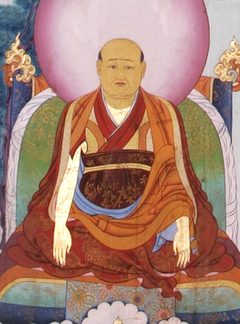
Chase Them Away with Stones
An Explanation for Why I Chase My Students Away with Stones
by Patrul Rinpoche
I bow at the feet of the lama.
When this old dog was staying in solitude,
he heard the sublime teachings of the Lords of Refuge
and yearned, too, to speak like them.
When I first met my lama,
I felt that I had accomplished my goal,
like a sea captain landing on an isle of gold.
That’s why I was passionate about the dharma.
Later, when I met my lama,
I felt nothing but guilt,
like a criminal facing his judge.
That’s why I had to receive a harsh scolding.
Now when I meet my lama,
I feel like I’ve jadedly become his equal,
like a pigeon sleeping in the temple attic.
That’s why I have to keep my distance.
When I first heard the oral instructions,
I felt as if I wanted to practice them immediately,
like a starving person finally finding food.
That’s why I tried to practice.
Later, when I heard the oral instructions,
I felt intensely uncertain,
as if I were hearing a voice from far away.
That’s why I couldn’t settle my doubts.
Now when I hear the oral instructions,
I just feel nauseous,
like I’m being forced to eat my own vomit.
That’s why I’m not interested in requesting any more instruction.
When I first took to solitude,
I felt my mind at total ease,
like a traveler finally arriving home.
That’s why I was happy to stay put.
Later, when I took to solitude,
I felt totally restless,
like a beauty queen who’d been left alone.
That’s why I preferred to travel.
Now when I take to solitude,
I feel like it’s a fine place to be,
like an old dog dying in a ditch.
That’s why I am hiding my corpse.[1]
When I first contemplated the view,
I felt the higher it was, the better,
like a vulture seeking its nest.
That’s why I was just mouthing the view.
Later, when I contemplated the view,
I felt that there were pitfalls everywhere,
like someone traveling up a steep mountain path.
That’s why I was silent.
Now when I contemplate the view,
I feel that I’m being fooled,
like a child bribed by an old man.
That’s why my mind has nothing to trust.
When I first meditated,
I had experiences of joy and bliss,
like finding a new romance.
That’s why I actually liked to meditate.
Later, when I meditated,
I felt weary and exhausted,
like a weak person carrying a heavy load.
That’s why my meditation was short-lived.
Now when I meditate,
I feel I can’t rest for even a second,
like trying to stand a needle on a stone.
That’s why I have no desire to meditate anymore.
When I first considered my conduct,
I felt constrained by my vows,
like a wild horse being broken.
That’s why I had to fake my discipline.
Later, when I considered my conduct,
I felt as if I could go wherever I pleased,
like an old dog who has finally gotten loose.
That’s why I lost my vows.
Now when I think about my conduct,
I feel carefree,
like a prostitute with no shame.
That’s why I don’t care about pursuing happiness or preventing suffering.
When I first contemplated the fruition,
I felt like there was something incredible out there to attain,
like a dishonest salesperson praising their wares.
That’s why I had such big hopes and desires.
Later, when I contemplated the fruition,
I felt that it was so far off,
like the far side of the ocean.
That’s why I have humbler aspirations.
Now when I contemplate the fruition,
I feel that I have no strategies left at my disposal,
like a thief in the waning night.
That’s why I’m completely disappointed.
When I first gave teachings,
I felt totally proud of my learning,
like a gorgeous woman strolling through town.
That’s why I was inspired to teach with style.
Later, when I gave teachings,
I felt quite familiar with the dharma,
like an old man reminiscing about the good old days.
That’s why I had so many big teaching gatherings.
Now when I give teachings,
I feel that I’m just pointing out my own flaws,
like a demon subdued by a yogi.
That’s why I feel totally ashamed.
When I first engaged in debate,
I felt I really wanted to win,
like I was taking a serious case to court.
That’s why I was filled with aggression.
Later, when I engaged in debate,
I felt that I was in search of the definitive meaning,
like an honest judge looking for the truth.
That’s why I sharpened my intellect.
Now when I engage in debate,
I feel like anything I say is all right,
like a liar wandering in a foreign land.
That’s why I am totally carefree.
When I first engaged in composition,
I felt like it was just bursting forth of its own accord,
like a mahāsiddha singing a dohā.
That’s why I made no corrections.
Later, when I engaged in composition,
I got obsessed with word choice,
like an academic writing poetry.
That’s why I was serious about the writing process.
Now when I engage in composition,
I feel that it’s totally unnecessary,
like I’m writing a travelogue for a place I’ve never been.
That’s why I don’t even waste the ink and paper.
When I first spent time with my dharma friends,
I felt extremely competitive,
as if we were young men competing at archery.
That’s why I had love-hate relationships with everyone.
Later, when I spent time with my dharma friends,
I felt that I got along with everybody,
like a hooker prowling the street.
That’s why I had so many companions.
Now when I spend time with my dharma friends,
I feel that I don’t fit in with them,
like a leper arriving at a gathering.
That’s why I prefer to stay by myself.
When I first saw material wealth,
I felt an immediate sense of enjoyment,
like a child picking flowers.
That’s why I don’t have any savings.
Later, when I saw material wealth,
I felt insatiable,
as if I were pouring water into a cracked container.
That’s why I gave up my pursuit of gain.
Now when I see material wealth,
I feel that I’ve taken on a heavy burden,
like a poor old beggar with too many children to feed.
That’s why I’m glad I have nothing.
When I first acquired attendants,
I felt as if I were gathering employees,
like they were laborers coming to work for me.
That’s why I had no real intention to benefit them.
Later, when I acquired attendants,
I felt as if I were losing my independence,
like a young monk relying on a teacher.
That’s why I had to cut my ties.
Now when I acquire attendants,
I feel they will waste whatever I have,
like a thieving dog that has gotten inside the house.
That’s why I like to travel alone.
When I first took on students,
I felt a sense of self-importance,
like a servant taking the master’s place.
That’s why I put up with whatever they did.
Later, when I took on students,
I felt that they trusted me,
like an important guest from afar.
That’s why I did whatever would benefit them.
Now when I take on students,
I feel I have to ridicule them,
like I’m challenging the spirits of a haunted place.
That’s why I have to chase them away with stones.
Virtue! Virtue! Virtue!
| Translated by Lama Chönam and Timothy Hinkle for the Light of Berotsana Translation Group. It appears in their translation of Khenpo Kunzang Palden’s biography of his master Patrul Rinpoche, entitled A Vase of Nectar to Inspire the Faithful. Timothy Hinkle wishes to thank Anya Zilman for originally introducing him to this delightfully iconoclastic poem via an inspired sight translation from a rare Russian translation of the original Tibetan.
Bibliography
Tibetan Edition
o rgyan 'jigs med chos kyi dbang po. "'di snang chos brgyad kyi phyogs spangs nas nyid kyi rnam thar ltar slob par gdams pa rdo ded ma/" in gsung 'bum/_o rgyan 'jigs med chos kyi dbang po. BDRC W1PD107142. 8 vols. khreng tu'u: si khron dpe skrun tshogs pa/ si khron mi rigs dpe skrun khang, 2009, vol. 8: 223–228
Secondary Sources
Chönam, Lama and Timothy Hinkle (Light of Berotsana), trans. A Vase of Nectar to Inspire the Faithful: A Biography of Patrul Rinpoche, Orgyen Jigme Chökyi Wangpo. Ashland, OR: Berotsana Publications, 2018.
Ricard, Matthieu. Enlightened Vagabond: The Life and Teachings of Patrul Rinpoche. Boulder, CO: Shambhala Publications, 2017.
Version: 1.0–20260625
Notes
-
It is often the aspiration of a renunciant such as Patrul Rinpoche to die in isolation. ↩