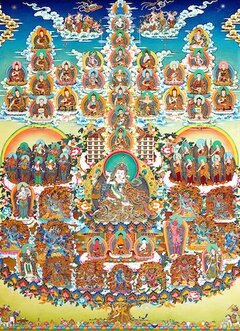
Brief Longchen Nyingtik Ngöndro
༄༅། །རྫོགས་པ་ཆེན་པོ་ཀློང་ཆེན་སྙིང་ཏིག་གི་སྔོན་འགྲོའི་ངག་འདོན་བསྡུས་པ།
A Brief Preliminary Practice of the Heart-Essence of the Vast Expanse
revealed by Jigme Lingpa and arranged by the Fourth Dodrupchen, Tubten Trinle Pal Zangpo
ཐོག་མར་ངག་བྱིན་རླབས་ནི།
The Blessing of the Speech
ཨོཾ་ཨཱཿཧཱུྂ། ལྕེ་དབང་རྂ་ཡིག་ལས་བྱུང་མེས་བསྲེགས་ནས། །
om ah hung, ché wang ram yik lé jung mé sek né
Oṃ āḥ hūṃ. From the syllable raṃ in my speech centre arises fire, consuming my tongue,
འོད་དམར་རྣམ་པའི་རྡོ་རྗེ་རྩེ་གསུམ་སྦུབས། །
ö mar nampé dorjé tsesum bub
Which is transformed into a three-spoked vajra of red light.1
ཨཱ་ལི་ཀཱ་ལིའི་མཐའ་སྐོར་རྟེན་འབྲེལ་སྙིང་། །
ali kali takor tendrel nying
In its centre are the vowels and consonants, and around them the mantra of The Essence of Interdependent Origination:2
མུ་ཏིག་ཕྲེང་བ་ལྟ་བུའི་ཡིག་འབྲུ་ལས། །
mutik trengwa tabü yikdru lé
Their syllables are like strings of pearls. From them,
འོད་འཕྲོས་རྒྱལ་བ་སྲས་བཅས་མཆོད་པས་མཉེས། །
ö trö gyalwa sé ché chöpé nyé
Light streams out, making offerings to the buddhas and bodhisattvas, and pleasing them.3
སླར་འདུས་ངག་སྒྲིབ་དག་ནས་གསུང་རྡོ་རྗེའི། །
lar dü ngak drib dak né sung dorjé
As it converges back, all the obscurations of my speech are purified, and
བྱིན་རླབས་དངོས་གྲུབ་ཐམས་ཅད་ཐོབ་པར་འགྱུར། །
jinlab ngödrub tamché tobpar gyur
I obtain all the blessings and siddhis of vajra speech.
The Vowel Mantra
ཨ་ཨཱ། ཨི་ཨཱི། ཨུ་ཨཱུ། རྀ་རཱྀ། ལྀ་ལཱྀ། ཨེ་ཨཻ། ཨོ་ཨཽ། ཨཾ་ཨཿ
a a, i i, u u, ri ri, li li, e ai, o au, ang ah
a ā, i ī, u ū, ṛ ṝ, ḷ ḹ, e ai, o au, aṃ, aḥ
ལན་བདུན།
Seven times
The Consonant Mantra
ཀ་ཁ་ག་གྷ་ང་། ཙ་ཚ་ཛ་ཛྷ་ཉ། ཊ་ཋ་ཌ་ཌྷ་ཎ། ཏ་ཐ་ད་དྷ་ན། པ་ཕ་བ་བྷ་མ། ཡ་ར་ལ་ཝ། ཤ་ཥ་ས་ཧ་ཀྵཿ
ka kha ga gha nga, cha chha ja jha nya, ta tha da dha na, ta tha da dha na, pa pha ba bha ma, ya ra la wa sha sha sa ha ksha
ka kha ga gha ṅa, ca cha ja jha ña, ṭa ṭha ḍa ḍha ṇa, ta tha da dha na, pa pha ba bha ma, ya ra la va śa ṣa sa ha kṣa
ལན་བདུན།
Seven times.
Mantra of the Essence of Interdependent Origination
ཨོཾ་ཡེ་དྷརྨཱ་ཧེ་ཏུ་པྲ་བྷཱ་ཝཱ་ཧེ་ཏུནྟེ་ཥཱནྟ་ཐཱ་ག་ཏོ་ཧྱ་ཝ་དཏ། ཏེ་ཥཱཉྩ་ཡོ་ནི་རོ་དྷ་ཨེ་ཝྃ་ཝཱ་དཱི་མ་ཧཱ་ཤྲ་མ་ཎཿསྭཱ་ཧཱ།
om yé dharma hetu prabhava hetun teshan tatagato hyavadat teshan tsa yo nirodha evam vadi maha shramana soha
oṃ ye dharmā hetu prabhavā hetuṃ teṣāṃ tathāgato hyavadat teṣāṃ ca yo nirodha evaṃ vādī mahāśramaṇaḥ svāhā4
ལན་བདུན།
Seven times
1. Prayers
Śākyamuni Buddha
ཐབས་མཁས་ཐུགས་རྗེས་ཤཱཀྱའི་རིགས་སུ་འཁྲུངས། །
tabkhé tukjé shakyé rik su trung
With skilful means and compassion, you were born in the Śākya clan,
གཞན་གྱིས་མི་ཐུབ་བདུད་ཀྱི་དཔུང་འཇོམས་པ། །
zhen gyi mitub dü kyi pung jompa
Unconquerable by others, you vanquished Māra's hordes,
གསེར་གྱི་ལྷུན་པོ་ལྟ་བུར་བརྗིད་པའི་སྐུ། །
ser gyi lhünpo tabur jipé ku
Your physical form resplendent, like a mountain of gold.
ཤཱཀྱའི་རྒྱལ་པོ་ཁྱོད་ལ་ཕྱག་འཚལ་ལོ། །
shakyé gyalpo khyö la chaktsal lo
To you, the King of the Śākyas, I pay homage!
ཏདྱ་ཐཱ། ཨོཾ་མུ་ནེ་མུ་ནེ་མ་ཧཱ་མུ་ན་ཡེ་སྭཱ་ཧཱ།
teyata | om muné muné maha munayé soha
tadyathā | oṃ mune mune mahāmunaye svāhā
༈ བདེ་གཤེགས་སྲས་བཅས་ཀུན་གྱི་ཐུགས་བསྐྱེད་དང་། །
deshek sé ché kün gyi tukkyé dang
Like all the buddhas and their heirs — in enlightened intention,
མཛད་པ་སྨོན་ལམ་མཁྱེན་བརྩེ་ནུས་པའི་ཚུལ། །
dzepa mönlam khyen tsé nüpé tsul
And in activity, aspiration, wisdom, love and capacity,
བླ་མེད་ཡེ་ཤེས་སྒྱུ་འཕྲུལ་ཅི་འདྲ་བ། །
lamé yeshe gyutrul chindrawa
In these and all the ways unsurpassable wisdom manifests —
དེ་འདྲ་ཁོ་ནར་བདག་སོགས་འགྱུར་བར་ཤོག །
dendra khonar dak sok gyurwar shok
May I and every other being too come to be exactly as they are!
The Seven-Line Prayer
ཧཱུྃ༔ ཨོ་རྒྱན་ཡུལ་གྱི་ནུབ་བྱང་མཚམས༔
hung, orgyen yul gyi nubjang tsam
Hūṃ. In the north-west of the land of Oḍḍiyāna
པདྨ་གེ་སར་སྡོང་པོ་ལ༔
pema gesar dongpo la
In the heart of a lotus flower,
ཡ་མཚན་མཆོག་གི་དངོས་གྲུབ་བརྙེས༔
yatsen chok gi ngödrub nyé
Endowed with the most marvellous attainments,
པདྨ་འབྱུང་གནས་ཞེས་སུ་གྲགས༔
pema jungné zhé su drak
You are renowned as the ‘Lotus-born’,
འཁོར་དུ་མཁའ་འགྲོ་མང་པོས་བསྐོར༔
khor du khandro mangpö kor
Surrounded by many hosts of ḍākinīs.
ཁྱེད་ཀྱི་རྗེས་སུ་བདག་བསྒྲུབ་ཀྱི༔
khyé kyi jesu dak drub kyi
Following in your footsteps,
བྱིན་གྱིས་བརླབ་ཕྱིར་གཤེགས་སུ་གསོལ༔
jingyi lab chir shek su sol
I pray to you: Come, inspire me with your blessing!
གུ་རུ་པདྨ་སིདྡྷི་ཧཱུྃ༔
guru pema siddhi hung
guru padma siddhi hūṃ
Prayer to the Gurus of the Lineage
ཀུན་བཟང་རྡོར་སེམས་དགའ་རབ་ཤྲཱི་སིང༌། །
kunzang dorsem garab shiri sing
Samantabhadra, Vajrasattva, Garab Dorje, Śrī Siṃha,
པདྨཱ་ཀ་ར་རྗེ་འབངས་ཉི་ཤུ་ལྔ། །
pema kara jebang nyishu nga
Padmākara and the twenty-five disciples—king and subjects,
སོ་ཟུར་གནུབས་ཉང་གཏེར་སྟོན་བརྒྱ་རྩ་སོགས། །
so zur nub nyang tertön gyatsa sok
So, Zur, Nub, Nyang,5 the hundred treasure revealers and all the rest—
བཀའ་གཏེར་བླ་མ་རྣམས་ལ་གསོལ་བ་འདེབས། །
kater lama nam la solwa deb
Gurus of kama and terma, to you I pray.
Prayer to Longchenpa
འཛམ་གླིང་མཛེས་པའི་རྒྱན་དྲུག་མཆོག་གཉིས་དང༌། །
dzamling dzepé gyen druk chok nyi dang
Just like the Six Ornaments and Two Supreme Ones who beautify our world,
ཐུགས་རྗེ་ལུང་རྟོགས་མཉམ་པའི་མཐུ་མངའ་ཡང༌། །
tukjé lungtok nyampé tu nga yang
You were their equal in your mastery of compassion, learning and realization,
ནགས་ཁྲོད་དམ་པར་སྦས་པའི་བརྟུལ་ཞུགས་ཀྱིས། །
naktrö dampar bepé tulzhuk kyi
Yet you practised hidden in the forest in sacred solitude.
འཁོར་འདས་ཆོས་སྐུར་རྫོགས་པའི་ཀློང་ཆེན་པ། །
khordé chökur dzokpé longchenpa
Longchenpa, who perfected saṃsāra and nirvāṇa in the state of dharmakāya,
དྲི་མེད་འོད་ཟེར་ཞབས་ལ་གསོལ་བ་འདེབས། །
drimé özer zhab la solwa deb
Drimé Özer—Stainless Light—at your feet I pray.
Prayer to Jigme Lingpa
ཤེས་བྱ་ཀུན་མཁྱེན་འགྲོ་ལ་རྗེས་བརྩེའི་གཏེར། །
shécha kun khyen dro la jétséi ter
The source of love and compassion for all beings, who knows all that is knowable,
དྲི་མེད་འོད་ཟེར་ཡང་སྤྲུལ་ཐུགས་གཏེར་མཛོད། །
trimé özer yangtrul tuk ter dzö
You are the emanation of Longchenpa, and heir to a treasury of mind termas;
འོད་གསལ་ཀློང་ཆེན་ནམ་མཁའི་རྣལ་འབྱོར་པ། །
ösal longchen namkhé naljorpa
Sky-like yogin of the vast expanse of luminosity,
འཇིགས་མེད་གླིང་པའི་ཞབས་ལ་གསོལ་བ་འདེབས། །
jikmé lingpé zhap la solwa dep
Jigme Lingpa, at your feet I pray.
Prayer to the First Dodrupchen, Jigme Trinlé Özer
དུས་གསུམ་ཀུན་མཁྱེན་པདྨ་འབྱུང་གནས་ཀྱིས། །
dü sum künkhyen pema jungné kyi
Padmasambhava, who knows all past, present and future, acclaimed you
ཟབ་གཏེར་བདག་པོར་མངའ་གསོལ་འཁོར་ལོས་སྒྱུར། །
zabter dakpor ngasol khorlö gyur
As master over the profound treasures. Universal king of Dharma,
སངས་རྒྱས་གླིང་པའི་ཡང་སྤྲུལ་སྦས་ཚུལ་འཆང༌། །
sangye lingpé yangtrul bé tsul chang
Reincarnation of Sangyé Lingpa and hidden yogin,
ཀུན་བཟང་གཞན་ཕན་ཞབས་ལ་གསོལ་བ་འདེབས། །
kunzang zhenpen zhab la solwa deb
Kunzang Zhenpen, at your feet I pray!
Prayer to the Root Guru
འོག་མིན་ཆོས་ཀྱི་དབྱིངས་ཀྱི་ཕོ་བྲང་ན། །
womin chö kyi ying kyi podrang na
Within the dharmadhātu palace of Akaniṣṭha
དུས་གསུམ་སངས་རྒྱས་ཀུན་གྱི་ངོ་བོ་ཉིད། །
dü sum sangye kün gyi ngowo nyi
Is the intrinsic nature of all the buddhas of the three times.
རང་སེམས་ཆོས་སྐུ་མངོན་སུམ་སྟོན་མཛད་པའི། །
rangsem chöku ngönsum tön dzepé
Honourable root guru, you who directly introduced me
རྩ་བའི་བླ་མ་ཞབས་ལ་གསོལ་བ་འདེབས། །
tsawé lama zhab la solwa deb
To the dharmakāya nature of my mind, I pray to you.
2. The Four Thoughts that Turn the Mind from Saṃsāra: A Brief Version
Free and Well-Favoured Human Birth
༈ དལ་འབྱོར་འདི་ནི་ཤིན་ཏུ་རྙེད་པར་དཀའ། །
daljor di ni shintu nyepar ka
This free and well-favoured human form is difficult to obtain.
སྐྱེས་བུའི་དོན་སྒྲུབ་ཐོབ་པར་གྱུར་པ་ལ། །
kyebü dön drub tobpar gyurpa la
Now that you have the chance to realize the full human potential,
གལ་ཏེ་འདི་ལ་ཕན་པ་མ་བསྒྲུབས་ན། །
galté di la penpa madrub na
If you don’t make good use of this opportunity,
ཕྱིས་འདི་ཡང་དག་འབྱོར་པ་ག་ལ་འགྱུར། །
chi di yangdak jorpa gala gyur
How could you possibly expect to have such a chance again?6
Impermanence
སྲིད་གསུམ་མི་རྟག་སྟོན་ཀའི་སྤྲིན་དང་འདྲ། །
si sum mitak tönké trin dang dra
This existence of ours is as transient as autumn clouds.
འགྲོ་བའི་སྐྱེ་འཆི་གར་ལ་བལྟ་དང་མཚུངས། །
drowé kyechi gar la ta dang tsung
To watch the birth and death of beings is like looking at the movement of a dance.
སྐྱེས་བུའི་ཚེ་འགྲོ་ནམ་མཁའི་གློག་འདྲ་སྟེ། །
kyebü tsé dro namkhé lok dra té
A lifetime is like a flash of lightning in the sky,
རི་གཟར་འབབ་ཆུ་བཞིན་དུ་མྱུར་མགྱོགས་འགྲོ །
rizar babchu zhindu nyur gyok dro
Rushing by, like a torrent down a steep mountain.7
Karma: Cause and Effect
དུས་ཀྱིས་བསྙེན་ནས་རྒྱལ་པོ་འགྲོ་གྱུར་ན། །
dü kyi nyen né gyalpo dro gyur na
When his time has come, even a king has to die,
ལོངས་སྤྱོད་མཛའ་དང་གཉེན་བཤེས་རྗེས་མི་འབྲངས༌། །
longchö dza dang nyenshé jé midrang
And neither his friends nor his wealth can follow him.
སྐྱེས་བུ་དག་ནི་གར་གནས་གར་འགྲོ་ཡང༌། །
kyebu dak ni gar né gar dro yang
So for us—wherever we stay, wherever we go—
ལས་ནི་གྲིབ་མ་བཞིན་དུ་རྗེས་སུ་འབྲང༌། །
lé ni dribma zhindu jesu drang
Karma follows us like a shadow.8
The Suffering of Saṃsāra
སྲེད་སྲིད་མ་རིག་དབང་གིས་སྐྱེ་བོ་རྣམས། །
sé si marik wang gi kyewo nam
Because of craving, attachment and ignorance,
མི་དང་ལྷ་དང་ངན་སོང་རྣམ་གསུམ་པོ། །
mi dang lha dang ngensong nam sumpo
Men, gods, animals, hungry ghosts and hell beings
འགྲོ་བ་ལྔ་པོ་དག་ཏུ་མི་མཁས་འཁོར། །
drowa ngapo dak tu mi khé khor
Foolishly go round,
དཔེར་ན་རྫ་མཁན་འཁོར་ལོ་འཁོར་བ་བཞིན། །
per na dza khen khorlo khorwa zhin
Like the turning of a potter’s wheel.9
3. The Uncommon Preliminary Practice
དང་པོ་སྐྱབས་སུ་འགྲོ་བ་ནི།
1. Taking Refuge
དཀོན་མཆོག་གསུམ་དངོས་བདེ་གཤེགས་རྩ་བ་གསུམ༔
könchok sum ngö deshek tsawa sum
In the true Three Jewels, the Sugatas; in the Three Roots;
རྩ་རླུང་ཐིག་ལེའི་རང་བཞིན་བྱང་ཆུབ་སེམས༔
tsa lung tiklé rangzhin changchub sem
In channels, winds and bindus, and their nature, bodhicitta;
ངོ་བོ་རང་བཞིན་ཐུགས་རྗེའི་དཀྱིལ་འཁོར་ལ༔
ngowo rangzhin tukjé kyilkhor la
And in the maṇḍala of essence, nature, and compassion,
བྱང་ཆུབ་སྙིང་པོའི་བར་དུ་སྐྱབས་སུ་མཆི༔
changchub nyingpö bardu kyab su chi
I take refuge until I realize the heart of enlightenment.
ལན་གསུམ༔
Three times
གཉིས་པ་སེམས་བསྐྱེད་པ་ནི།
2. Generation of Bodhicitta
ཧོཿ སྣ་ཚོགས་སྣང་བ་ཆུ་ཟླའི་རྫུན་རིས་ཀྱིས༔
ho, natsok nangwa chudé dzün ri kyi
Hoḥ. Misled by manifold appearances, like reflections of the moon in water,
འཁོར་བ་ལུ་གུ་རྒྱུད་དུ་འཁྱམས་པའི་འགྲོ༔
khorwa lugu gyü du khyampé dro
Beings wander endlessly astray in saṃsāra’s vicious cycle.
རང་རིག་འོད་གསལ་དབྱིངས་སུ་ངལ་བསོའི་ཕྱིར༔
rangrig ösal ying su ngalsö chir
To bring them comfort and ease in the luminous space of awareness,
ཚད་མེད་བཞི་ཡི་ངང་ནས་སེམས་བསྐྱེད་དོ༔
tsemé zhi yi ngang né semkyé do
I generate bodhicitta by means of the four immeasurables.
ལན་གསུམ༔
Three times
གསུམ་པ་རྡོར་སེམས་སྒོམ་བཟླས་ནི།
3. Meditation and Recitation of Vajrasattva
ཨཱཿ བདག་ཉིད་ཐ་མལ་སྤྱི་བོ་རུ༔
ah, daknyi tamal chiwo ru
Āḥ. I am in my ordinary form. Above my head
པད་དཀར་ཟླ་བའི་གདན་གྱི་དབུས༔
pekar dawé den gyi ü
On a white lotus, in the centre of a moon disc seat
ཧཱུྂ་ལས་བླ་མ་རྡོ་རྗེ་སེམས༔
hung lé lama dorjé sem
Is hūṃ, which becomes the Guru Vajrasattva:
དཀར་གསལ་ལོངས་སྤྱོད་རྫོགས་པའི་སྐུ༔
karsal longchö dzokpé ku
Brilliant white, with complete saṃbhogakāya adornments,
རྡོ་རྗེ་དྲིལ་འཛིན་སྙེམས་མ་འཁྲིལ༔
dorjé dril dzin nyemma tril
Holding vajra and bell, and embracing the consort Vajragarvā.
ཁྱོད་ལ་སྐྱབས་གསོལ་སྡིག་པ་སྦྱོངས༔
khyö la kyab sol dikpa jong
I take refuge in you and pray—purify all our negative actions!
འགྱོད་སེམས་དྲག་པོས་མཐོལ་ལོ་བཤགས༔
gyösem drakpö tol lo shak
With the deepest regret I acknowledge them all and ask your forgiveness:
ཕྱིན་ཆད་སྲོག་ལ་བབས་ཀྱང་སྡོམ༔
chinché sok la bab kyang dom
From now on—even if my life is at stake—I shall refrain from indulging in them again.
ཁྱོད་ཐུགས་ཟླ་བ་རྒྱས་པའི་སྟེང་༔
khyö tuk dawa gyepé teng
In your heart, upon a full moon
ཧཱུྂ་ཡིག་མཐའ་མར་སྔགས་ཀྱིས་བསྐོར༔
hung yik tamar ngak kyi kor
Is the syllable hūṃ, encircled by the mantra.
བཟླས་པ་སྔགས་ཀྱིས་རྒྱུད་བསྐུལ་བས༔
depa ngak kyi gyü kulwé
Reciting the mantra invokes your wisdom mind, and
ཡབ་ཡུམ་བདེ་རོལ་སྦྱོར་མཚམས་ནས༔
yabyum dé rol jortsam né
From the point of union of the blissful play of yab-yum
བདུད་རྩི་བྱང་ཆུབ་སེམས་ཀྱི་སྤྲིན༔
dütsi changchub sem kyi trin
A cloud of bodhicitta nectar
ག་བུར་རྡུལ་ལྟར་འཛག་པ་ཡིས༔
gabur dul tar dzakpa yi
Flows down like a shining stream of milk.10 Through this,
བདག་དང་ཁམས་གསུམ་སེམས་ཅན་གྱི༔
dak dang kham sum semchen gyi
For me and all sentient beings of the three worlds
ལས་དང་ཉོན་མོངས་སྡུག་བསྔལ་རྒྱུ༔
lé dang nyönmong dukngal gyu
May our negative karma and destructive emotions—the causes of suffering—
ནད་གདོན་སྡིག་སྒྲིབ་ཉེས་ལྟུང་གྲིབ༔
nedön dikdrib nyetung drib
Illnesses, harmful influences, negative actions and obscurations, along with wrongdoing, downfalls, and blockages due to breakages of samaya,
མ་ལུས་བྱང་བར་མཛད་དུ་གསོལ༔
malü jangwar dzé du sol
Be purified, till not a single one remains!
ཨོཾ་བཛྲ་སཏྭ་ས་མ་ཡ༔ མ་ནུ་པཱ་ལ་ཡ༔ བཛྲ་སཏྭ་ཏྭེ་ནོ་པ་ཏིཥྛ་དྲྀ་ཌྷོ་མེ་བྷ་ཝ༔ སུ་ཏོ་ཥྱོ་མེ་བྷ་ཝ༔ སུ་པོ་ཥྱོ་མེ་བྷ་ཝ༔ ཨ་ནུ་རཀྟོ་མེ་བྷ་ཝ༔ སརྦ་སིདྡྷི་མྨེ་པྲ་ཡཙྪ༔ སརྦ་ཀརྨ་སུ་ཙ་མེ༔ ཙིཏྟཾ་ཤྲེ་ཡཾཿ ཀུ་རུ་ཧཱུྂ༔ ཧ་ཧ་ཧ་ཧ་ཧོཿ བྷ་ག་ཝཱན༔ སརྦ་ཏ་ཐཱ་ག་ཏ་བཛྲ་མཱ་མེ་མུཉྩ་བཛྲཱི་བྷ་ཝ་མ་ཧཱ་ས་མ་ཡ་སཏྭ་ཨཱཿ
om benza sato samaya | manupalaya | benza sato tenopa tishta dridho mé bhava | sutokhayo mé bhava | supokhayo mé bhava | anurakto mé bhava | sarva siddhi mé prayaccha | sarva karma su tsa mé | tsittam shreyang | kuru hung | ha ha ha ha ho | bhagavan | sarva tatagata benza ma mé muntsa benzi bhava maha samaya sato ah
oṃ vajrasattva samayam anupālaya vajrasattva-tvenopa-tiṣṭha dṛḍho me bhava sutoṣyo me bhava supoṣyo me bhava anurakto me bhava sarva-siddhiṃ me prayaccha sarva-karma śuca me cittaṃ śreyaṅ-kuru hūṃ ha ha ha ha hoḥ bhagavān sarva-tathāgata-vajra mā me muñca vajrī-bhava mahā-samaya-sattva āḥ
ཅེས་ཅི་ནུས་བཟླས་མཐར།
Recite the mantra as many times as possible.
མགོན་པོ་བདག་ནི་མི་ཤེས་རྨོངས་པ་ཡིས༔
gönpo dak ni mishé mongpa yi
O protector! In my ignorance and delusion
དམ་ཚིག་ལས་ནི་འགལ་ཞིང་ཉམས༔
damtsik lé ni gal zhing nyam
I have gone against and corrupted my samaya.
བླ་མ་མགོན་པོས་སྐྱབས་མཛོད་ཅིག༔
lama gönpö kyab dzö chik
Guru protector, be my refuge!
གཙོ་བོ་རྡོ་རྗེ་འཛིན་པ་སྟེ༔
tsowo dorjé dzinpa té
Chief of all the maṇḍalas, vajra holder,
ཐུགས་རྗེ་ཆེན་པོའི་བདག་ཉིད་ཅན༔
tukjé chenpö daknyi chen
Embodiment of great compassion:
འགྲོ་བའི་གཙོ་ལ་བདག་སྐྱབས་མཆི༔
drowé tso la dak kyab chi
Chief of all living beings, in you I take refuge!11
སྐུ་གསུང་ཐུགས་རྩ་བ་དང་ཡན་ལག་གི་དམ་ཚིག་ཉམས་པ་ཐམས་ཅད་མཐོལ་ལོ་བཤགས་སོ། །
ku sung tuk tsawa dang yenlak gi damtsik nyampa tamché tol lo shak so
I confess all my impairments of the root and branch samayas of the body, speech and mind.
སྡིག་པ་དང་སྒྲིབ་པ་ཉེས་ལྟུང་དྲི་མའི་ཚོགས་ཐམས་ཅད་བྱང་ཞིང་དག་པར་མཛད་དུ་གསོལ།
dikpa dang dribpa nyetung drimé tsok tamché jang zhing dakpar dzé du sol
I implore you: let my negative actions, obscurations, wrongdoing and downfalls—all my flaws—be completely cleansed and purified!
ཞེས་བརྗོད་པས་རྡོ་རྗེ་སེམས་དཔའ་དགྱེས་བཞིན་འཛུམ་པ་དང་བཅས་པས་རིགས་ཀྱི་བུ་ཁྱོད་ཀྱི་སྡིག་སྒྲིབ་ཉེས་ལྟུང་ཐམས་ཅད་དག་པ་ཡིན་ནོ། །
zhé jöpé dorjé sempa gyé zhin dzumpa dang chepé rik kyi bu khyö kyi dik drib nyetung tamché dakpa yin no
At these words of mine, Vajrasattva is pleased and smiling, says, “Son/daughter of an enlightened family, your negative actions, obscurations, wrongdoing and downfalls are all purified.”
ཞེས་གནང་བ་བྱིན་ཞིང་འོད་དུ་ཞུ་ནས་རང་ལ་ཐིམ་པའི་རྐྱེན་ལས་
zhé nangwa jin zhing ö du zhu né rang la timpé kyen lé
Granting his forgiveness, he melts into light and dissolves into me.
རང་ཉིད་ཀྱང་རྡོ་རྗེ་སེམས་དཔའ་སྣང་སྟོང་མེ་ལོང་ནང་གི་གཟུགས་བརྙན་ལྟ་བུར་གྱུར་པའི་ཐུགས་སྲོག་ཧཱུྂ་གི་མཐའ་མར་ཡི་གེ་འབྲུ་བཞི་པོ་གསལ་བ་ལས་འོད་ཟེར་འཕྲོས།
rangnyi kyang dorjé sempa nangtong melong nang gi zuknyen tabur gyurpé tuk sok hung gi tamar yigé dru zhipo salwa lé özer trö
Through this, I too become Vajrasattva, appearing yet empty, like a reflection in a mirror. At my heart is hūṃ, around which the four brilliantly radiant syllables oṃ vajra sat tva12 emanate rays of light.
ཁམས་གསུམ་སྣོད་བཅུད་དང་བཅས་པ་རྡོར་སེམས་རིགས་ལྔའི་རྟེན་དང་བརྟེན་པའི་རང་བཞིན་དུ་སངས་རྒྱས་པར་གྱུར།
kham sum nöchü dang chepa dorsem rik ngé ten dang tenpé rangzhin du sangyé par gyur
Whereby the three worlds—the whole universe of the environment and beings within it—attain enlightenment all together as the buddha fields and buddhas of the five families of Vajrasattva.
ཨོཾ་བཛྲ་སཏྭ་ཧཱུྂ༔
om benza sato hung
oṃ vajrasattva hūṃ
ཞེས་ཅི་ནུས་སུ་བཟླས་ལ། མཉམ་པར་བཞག་གོ །
Recite as many times as possible, then rest in meditation.
བཞི་པ་མཎྜལ་ནི།
Short Maṇḍala Offering
ས་གཞི་སྤོས་ཆུས་བྱུགས་ཤིང་མེ་ཏོག་བཀྲམ། །
sa zhi pö chü juk shing métok tram
The ground is purified with scented water and strewn with flowers.
རི་རབ་གླིང་བཞི་ཉི་ཟླས་བརྒྱན་པ་འདི། །
rirap ling zhi nyi dé gyenpa di
It is adorned with Sumeru, the king of mountains, the four quarters of the universe, and the sun and the moon;
སངས་རྒྱས་ཞིང་དུ་དམིགས་ཏེ་ཕུལ་བ་ཡིས། །
sangyé zhing du mik té pulwa yi
Thinking of it as the blessed buddha fields, I offer it.
འགྲོ་ཀུན་རྣམ་དག་ཞིང་ལ་སྤྱོད་པར་ཤོག །
dro kun namdak zhing la chöpar shok
By virtue of this offering, may all beings here and now attain the happiness of that pure land!
ཨི་དམ་རཏྣ་མཎྜ་ལ་ཀཾ་ནིརྻཱ་ཏ་ཡཱ་མི།
idam ratna mandala kam nirya tayami
idam ratna maṇḍalakaṃ niryātayāmi
བཞི་པ་བླ་མའི་རྣལ་འབྱོར་ནི།
4. The Actual Practice: Guru Yoga
དང་པོ་མངོན་རྟོགས།
1. The Visualization
ཨེ་མ་ཧོཿ རང་སྣང་ལྷུན་གྲུབ་དག་པ་རབ་འབྱམས་ཞིང་༔
emaho, rangnang lhündrub dakpa rabjam zhing
Emaho! My entire perception, spontaneously perfect, is a realm of infinite purity,
བཀོད་པ་རབ་རྫོགས་ཟང་མདོག་དཔལ་རིའི་དབུས༔
köpa rabdzok zangdokpalri ü
The Copper-Coloured Mountain of Glory, perfectly arrayed, in the centre of which
རང་ཉིད་གཞི་ལུས་རྡོ་རྗེ་རྣལ་འབྱོར་མ༔
rangnyi zhilü dorjé naljorma
My own body is Vajrayoginī,
ཞལ་གཅིག་ཕྱག་གཉིས་དམར་གསལ་གྲི་ཐོད་འཛིན༔
zhal chik chak nyi mar sal dri tö dzin
With one face and two hands, brilliant red and holding hooked knife and skull,
ཞབས་གཉིས་དོར་སྟབས་སྤྱན་གསུམ་ནམ་མཁར་གཟིགས༔
zhab nyi dortab chen sum namkhar zik
My two feet gracefully poised, my three eyes gazing into the sky.
སྤྱི་བོར་པདྨ་འབུམ་བརྡལ་ཉི་ཟླའི་སྟེང་༔
chiwor pema bum dal nyidé teng
Above my head, on a blossoming hundred-thousand-petalled lotus, sun and moon disc seat,
སྐྱབས་གནས་ཀུན་འདུས་རྩ་བའི་བླ་མ་དང་༔
kyabné kündü tsawé lama dang
Inseparable from my own root master, embodiment of all sources of refuge, appears
དབྱེར་མེད་མཚོ་སྐྱེས་རྡོ་རྗེ་སྤྲུལ་པའི་སྐུ༔
yermé tsokyé dorjé trulpé ku
Guru Rinpoche, in the supreme nirmāṇakāya form of the Lake-born Vajra.
དཀར་དམར་མདངས་ལྡན་གཞོན་ནུའི་ཤ་ཚུགས་ཅན༔
kar mar dangden zhönnü shatsuk chen
His body glows with youth, white with a tinge of red.
ཕོད་ཁ་ཆོས་གོས་ཟ་བེར་འདུང་མ་གསོལ༔
pökha chögö zaber dungma sol
He wears a gown, monastic shawl, cloak and robe.
ཞལ་གཅིག་ཕྱག་གཉིས་རྒྱལ་པོ་རོལ་པའི་སྟབས༔
zhal chik chak nyi gyalpo rolpé tab
With one face, two hands and seated in royal poise.
ཕྱག་གཡས་རྡོ་རྗེ་གཡོན་པས་ཐོད་བུམ་བསྣམས༔
chak yé dorjé yönpé tö bum nam
In his right hand he holds the vajra, in his left a skullcup containing the vase of immortality.
དབུ་ལ་འདབ་ལྡན་པདྨའི་མཉེན་ཞུ་གསོལ༔
u la dabden pemé nyen zhusol
On his head he wears a five-petalled lotus hat.
མཆན་ཁུང་གཡོན་ན་བདེ་སྟོང་ཡུམ་མཆོག་མ༔
chenkhung yön na detong yum chokma
Cradled in his left arm he holds the ‘supreme consort’ of bliss and emptiness,
སྦས་པའི་ཚུལ་གྱི་ཁ་ཊྭཱཾ་རྩེ་གསུམ་བསྣམས༔
bepé tsul gyi khatam tsesum nam
Concealed as the three-pointed khaṭvāṅga trident.
འཇའ་ཟེར་ཐིག་ལེ་འོད་ཕུང་ཀློང་ན་བཞུགས༔
jazer tiklé öpung long na zhuk
He presides amidst a shimmering aura of rays and rings of rainbow light.
ཕྱི་འཁོར་འོད་ལྔའི་དྲྭ་བས་མཛེས་པའི་ཀློང་༔
chi khor ö ngé drawé dzepé long
All around him, enveloped in a beautiful lattice of five-coloured light,
སྤྲུལ་པའི་རྗེ་འབངས་ཉི་ཤུ་རྩ་ལྔ་དང་༔
trulpé jebang nyishu tsa nga dang
Are King Tri Songdetsen, the twenty-five disciples,
རྒྱ་བོད་པཎ་གྲུབ་རིག་འཛིན་ཡི་དམ་ལྷ༔
gya bö pendrub rigdzin yidam lha
The paṇḍits, siddhas and vidyādharas of India and Tibet, yidam deities,
མཁའ་འགྲོ་ཆོས་སྐྱོང་དམ་ཅན་སྤྲིན་ལྟར་གཏིབས༔
khandro chökyong damchen trin tar tib
Ḍākinīs, and dharmapālas and oath-bound guardians—like billowing clouds,
གསལ་སྟོང་མཉམ་གནས་ཆེན་པོའི་ངང་དུ་གསལ༔
saltong nyam né chenpö ngang du sal
Visualized vivid and distinct, in the great equality of clarity and emptiness.
གཉིས་པ་ཚིག་བདུན་གསོལ་འདེབས།
2. The Seven-Line Prayer
ཧཱུྂ༔ ཨོ་རྒྱན་ཡུལ་གྱི་ནུབ་བྱང་མཚམས༔
hung, orgyen yul gyi nubjang tsam
Hūṃ. In the north-west of the land of Oḍḍiyāna,
པདྨ་གེ་སར་སྡོང་པོ་ལ༔
pema gesar dongpo la
In the heart of a lotus flower,
ཡ་མཚན་མཆོག་གི་དངོས་གྲུབ་བརྙེས༔
yatsen chok gi ngödrub nyé
Endowed with the most marvellous attainments,
པདྨ་འབྱུང་གནས་ཞེས་སུ་གྲགས༔
pema jungné zhé su drak
You are renowned as the ‘Lotus-born’,
འཁོར་དུ་མཁའ་འགྲོ་མང་པོས་བསྐོར༔
khor du khandro mangpö kor
Surrounded by many hosts of ḍākinīs.
ཁྱེད་ཀྱི་རྗེས་སུ་བདག་བསྒྲུབ་ཀྱི༔
khyé kyi jesu dak drub kyi
Following in your footsteps,
བྱིན་གྱིས་བརླབ་ཕྱིར་གཤེགས་སུ་གསོལ༔
jingyi lab chir shek su sol
I pray to you: Come, inspire me with your blessing!
གུ་རུ་པདྨ་སིདྡྷི་ཧཱུྂ༔
guru pema siddhi hung
guru padma siddhi hūṃ
ཡན་ལག་བདུན་པ་ནི།
3. The Seven Branches13
i. Prostration
ཧྲཱི༔ བདག་ལུས་ཞིང་གི་རྡུལ་སྙེད་དུ༔
hri, dak lü zhing gi dul nyé du
Hrīḥ. As many times as there are atoms in the universe,
རྣམ་པར་འཕྲུལ་པས་ཕྱག་འཚལ་ལོ༔
nampar trulpé chaktsal lo
I multiply my body and offer you prostrations.
ii. Offering
དངོས་བཤམས་ཡིད་སྤྲུལ་ཏིང་འཛིན་མཐུས༔
ngö sham yitrul tingdzin tü
With both real offerings and those created in the mind through the power of samādhi,
སྣང་སྲིད་མཆོད་པའི་ཕྱག་རྒྱར་འབུལ༔
nangsi chöpé chakgyar bul
I offer the entire universe in one vast gesture of offering.
iii. Confession
སྒོ་གསུམ་མི་དགེའི་ལས་རྣམས་ཀུན༔
go sum migé lé nam kün
All the harmful actions of my body, speech and mind,
འོད་གསལ་ཆོས་སྐུའི་ངང་དུ་བཤགས༔
ösal chökü ngang du shak
I confess and purify in the luminosity of dharmakāya.
iv. Rejoicing
བདེན་པ་གཉིས་ཀྱིས་བསྡུས་པ་ཡི༔
denpa nyi kyi düpa yi
Whether they be relative or absolute,
དགེ་ཚོགས་ཀུན་ལ་རྗེས་ཡི་རང་༔
gé tsok kün la jé yi rang
I rejoice in all positive, virtuous actions.
v. Imploring the Buddhas to Turn the Wheel of Dharma
རིགས་ཅན་གསུམ་གྱི་གདུལ་བྱ་ལ།
rikchen sum gyi dulja la
According to the receptivity and needs of different beings,14
ཐེག་གསུམ་ཆོས་འཁོར་བསྐོར་བར་བསྐུལ༔
tek sum chökhor korwar kul
I implore you to turn the wheel of Dharma of the three yānas.
vi. Requesting the Buddhas and Teachers to Remain
ཇི་སྲིད་འཁོར་བ་མ་སྟོངས་བར༔
jisi khorwa matong bar
Till saṃsāra is completely empty, and all beings liberated,
མྱ་ངན་མི་འདའ་བཞུགས་གསོལ་འདེབས༔
nya ngen mida zhuk soldeb
Do not pass into nirvāṇa, but remain here among us, I pray.
vii. The Dedication of Merit
དུས་གསུམ་བསགས་པའི་དགེ་རྩ་ཀུན༔
dü sum sakpé getsa kün
All the merit and positive actions of past, present and future,
བྱང་ཆུབ་ཆེན་པོའི་རྒྱུ་རུ་བསྔོ༔
changchub chenpö gyu ru ngo
I dedicate so that all beings may attain supreme enlightenment.
4. Invoking Padmasambhava
༈ རྗེ་བཙུན་གུ་རུ་རིན་པོ་ཆེ༔
jetsün guru rinpoche
O Guru Rinpoche, Precious One,
ཁྱེད་ནི་སངས་རྒྱས་ཐམས་ཅད་ཀྱི༔
khyé ni sangye tamché kyi
You are the embodiment of
ཐུགས་རྗེ་བྱིན་རླབས་འདུས་པའི་དཔལ༔
tukjé jinlab düpé pal
The compassion and blessing of all the buddhas,
སེམས་ཅན་ཡོངས་ཀྱི་མགོན་གཅིག་པུ༔
semchen yong kyi gön chikpu
The only protector of beings.
ལུས་དང་ལོངས་སྤྱོད་བློ་སྙིང་བྲང་༔
lü dang longchö lo nying drang
My body, my possessions, my heart and soul
ལྟོས་པ་མེད་པར་ཁྱེད་ལ་འབུལ༔
töpa mepar khyé la bul
Without hesitation, I surrender to you!
འདི་ནས་བྱང་ཆུབ་མ་ཐོབ་བར༔
di né changchub matob bar
From now until I attain enlightenment,
སྐྱིད་སྡུག་ལེགས་ཉེས་མཐོ་དམན་ཀུན༔
kyiduk leknyé to men kün
In happiness or sorrow, in circumstances good or bad, in situations high or low:
རྗེ་བཙུན་ཆེན་པོ་པད་འབྱུང་མཁྱེན༔
jetsün chenpo pejung khyen
I rely on you completely, O Padmākara, you know me!
༈ བདག་ལ་རེ་ས་གཞན་ན་མེད༔
dak la resa zhen na mé
I have no one else to turn to;
ད་ལྟའི་དུས་ངན་སྙིགས་མའི་འགྲོ༔
danté dü ngen nyikmé dro
In these evil times, the beings of the kaliyuga
མི་བཟད་སྡུག་བསྔལ་འདམ་དུ་བྱིངས༔
mizé dukngal dam du jing
Are sinking in a swamp of intense and unbearable suffering.
འདི་ལས་སྐྱོབས་ཤིག་མ་ཧཱ་གུ་རུ༔
di lé kyob shik maha guru
Free us from all this, O great Guru!
དབང་བཞི་བསྐུར་ཅིག་བྱིན་རླབས་ཅན༔
wang zhi kur chik jinlab chen
Grant us the four empowerments, O blessed one!
རྟོགས་པ་སྤོར་ཅིག་ཐུགས་རྗེ་ཅན༔
tokpa por chik tukjé chen
Direct your realization into our minds, O compassionate one!
སྒྲིབ་གཉིས་སྦྱོངས་ཤིག་ནུས་མཐུ་ཅན༔
drib nyi jong shik nütu chen
Purify our emotional and cognitive obscurations, O powerful one!
༈ ནམ་ཞིག་ཚེ་ཡི་དུས་བྱས་ཚེ༔
namzhik tsé yi dü jé tsé
When my life is at an end,
རང་སྣང་རྔ་ཡབ་དཔལ་རིའི་ཞིང་༔
rangnang ngayab palri zhing
With my entire perception the heaven of Ngayab Ling—the Glorious Copper-Coloured Mountain,
ཟུང་འཇུག་སྤྲུལ་པའི་ཞིང་ཁམས་སུ༔
zungjuk trulpé zhingkham su
The nirmāṇakāya pure land of indivisible appearance and emptiness—
གཞི་ལུས་རྡོ་རྗེ་རྣལ་འབྱོར་མ༔
zhilü dorjé naljorma
My body, Vajrayoginī,
གསལ་འཚེར་འོད་ཀྱི་གོང་བུ་རུ༔
sal tser ö kyi gongbu ru
Is transformed into a radiant, shimmering sphere of light
གྱུར་ནས་རྗེ་བཙུན་པད་འབྱུང་དང་༔
gyur né jetsün pejung dang
And merging, inseparable, with Padmasambhava,
དབྱེར་མེད་ཆེན་པོར་སངས་རྒྱས་ཏེ༔
yermé chenpor sangye té
I shall attain buddhahood.
བདེ་དང་སྟོང་པའི་ཆོ་འཕྲུལ་གྱི༔
dé dang tongpé chotrul gyi
Then, from the play of vast primordial wisdom,
ཡེ་ཤེས་ཆེན་པོའི་རོལ་པ་ལས༔
yeshe chenpö rolpa lé
Which is the miraculous manifestation of bliss and emptiness,
ཁམས་གསུམ་སེམས་ཅན་མ་ལུས་པ༔
kham sum semchen malüpa
For every single being in the three realms,
འདྲེན་པའི་དེད་དཔོན་དམ་པ་རུ༔
drenpé depön dampa ru
Let me appear as their true guide, to lead them to liberation—
རྗེ་བཙུན་པདྨས་དབུགས་དབྱུང་གསོལ༔
jetsün pemé ukyung sol
Jetsün Padma, grant this, I pray!
གསོལ་བ་སྙིང་གི་དཀྱིལ་ནས་འདེབས༔
solwa nying gi kyil né deb
I pray to you from the bottom of my heart,
ཁ་ཙམ་ཚིག་ཙམ་མ་ཡིན་ནོ༔
kha tsam tsik tsam ma yin no
It’s not just words or empty mouthings:
བྱིན་རླབས་ཐུགས་ཀྱི་ཀློང་ནས་སྩོལ༔
jinlab tuk kyi long né tsol
Grant your blessings from the depth of your wisdom mind,
བསམ་དོན་འགྲུབ་པར་མཛད་དུ་གསོལ༔
samdön drubpar dzé du sol
And cause all my good aspirations to be fulfilled, I pray!
ལྔ་པ་སྔགས་བཟླས།
5. Mantra Recitation
ཨོཾ་ཨཱཿཧཱུྂ་བཛྲ་གུ་རུ་པདྨ་སིདྡྷི་ཧཱུྂ༔
om ah hung benza guru pema siddhi hung
oṃ āḥ hūṃ vajra guru padma siddhi hūṃ
དྲུག་པ་དབང་བཞི་བླང་བ་ནི།
6. Receiving the Four Empowerments
1. The Vase Empowerment
གུ་རུའི་སྨིན་མཚམས་ནས་ཨོཾ་ཡིག་ཆུ་ཤེལ་ལྟ་བུར་འཚེར་བ་ལས་འོད་ཟེར་འཕྲོས།
gurü mintsam né om yik chushel tabur tserwa lé özer trö
From the letter oṃ in the Guru’s15 forehead, radiant and shimmering like moonlight,
རང་གི་སྤྱི་བོ་ནས་ཞུགས།
rang gi chiwo né zhuk
Rays of light stream out and enter my forehead.
ལུས་ཀྱི་ལས་དང་རྩའི་སྒྲིབ་པ་དག
lü kyi lé dang tsé dribpa dak
Negative actions of the body and obscurations of the channels16 are purified.
སྐུ་རྡོ་རྗེའི་བྱིན་རླབས་ཞུགས།
ku dorjé jinlab zhuk
The blessing of the vajra body of the buddhas infuses me,
བུམ་པའི་དབང་ཐོབ།
bumpé wang tob
The vase empowerment is obtained,
བསྐྱེད་རིམ་གྱི་སྣོད་དུ་གྱུར།
kyerim gyi nö du gyur
I become a receptive vessel for the generation phase.
རྣམ་སྨིན་རིག་འཛིན་གྱི་ས་བོན་ཐེབས།
nammin rigdzin gyi sabön teb
The seed of the completely matured vidyādhara17 is sown.
སྤྲུལ་སྐུའི་གོ་འཕང་ཐོབ་པའི་སྐལ་བ་རྒྱུད་ལ་བཞག
tulkü gopang tobpé kalwa gyü la zhak
The potential for obtaining the level of nirmāṇakāya is implanted within me.
2. The Secret Empowerment
མགྲིན་པ་ནས་ཨཱཿཡིག་པདྨ་རཱ་ག་ལྟར་འབར་བ་ལས་འོད་ཟེར་འཕྲོས།
drinpa né ah yik pema raga tar barwa lé özer trö
From the letter āḥ in his throat, blazing like a ruby,
རང་གི་མགྲིན་པ་ནས་ཞུགས།
rang gi drinpa né zhuk
Rays of light streak out and penetrate my throat.
ངག་གི་ལས་དང་རླུང་གི་སྒྲིབ་པ་དག
ngak gi lé dang lung gi dribpa dak
Negative activity of the speech and obscurations of the inner air18 are purified,
གསུང་རྡོ་རྗེའི་བྱིན་རླབས་ཞུགས།
sung dorjé jinlab zhuk
The blessing of the vajra speech of the buddhas enters me,
གསང་བའི་དབང་ཐོབ།
sangwé wang tob
The secret empowerment is obtained,
བཟླས་བརྗོད་ཀྱི་སྣོད་དུ་གྱུར།
dejö kyi nö du gyur
I become a receptive vessel for mantra recitation practice.
ཚེ་དབང་རིག་འཛིན་གྱི་ས་བོན་ཐེབས།
tsewang rigdzin gyi sabön teb
The seed of the vidyādhara with power over life is sown.
ལོངས་སྤྱོད་རྫོགས་པའི་གོ་འཕང་གི་སྐལ་བ་རྒྱུད་ལ་བཞག
longchö dzokpé gopang gi kalwa gyü la zhak
The potential for obtaining the level of saṃbhogakāya is implanted within me.
3. The Wisdom Empowerment
ཐུགས་ཀའི་ཧཱུྂ་ཡིག་ནམ་མཁའི་མདོག་ཅན་ལས་འོད་ཟེར་འཕྲོས།
tukké hung yik namkhé dokchen lé özer trö
At his heart, from the letter hūṃ, sky-coloured rays of light
རང་གི་སྙིང་ག་ནས་ཞུགས།
rang gi nyingga né zhuk
Pour out and plunge into my heart.
ཡིད་ཀྱི་ལས་དང་ཐིག་ལེའི་སྒྲིབ་པ་དག
yi kyi lé dang tiklé dribpa dak
Negative activity of the mind and obscurations of the bindus are purified.
ཐུགས་རྡོ་རྗེའི་བྱིན་རླབས་ཞུགས།
tuk dorjé jinlab zhuk
The blessing of the vajra mind of all the buddhas is instilled in me,
ཤེས་རབ་ཡེ་ཤེས་ཀྱི་དབང་ཐོབ།
sherab yeshe kyi wang tob
The wisdom empowerment is obtained,
བདེ་སྟོང་ཙཎྜ་ལིའི་སྣོད་དུ་གྱུར།
detong tsendali nö du gyur
I become a receptive vessel for the caṇḍālī practice of bliss and emptiness.
ཕྱག་རྒྱའི་རིག་འཛིན་གྱི་ས་བོན་ཐེབས།
chakgyé rigdzin gyi sabön teb
The seed of the mahāmudrā vidyādhara is sown.
ཆོས་སྐུའི་གོ་འཕང་ཐོབ་པའི་སྐལ་བ་རྒྱུད་ལ་བཞག
chökü gopang tobpé kalwa gyü la zhak
The potential for obtaining the level of dharmakāya is implanted within me.
4. The Word or Symbolic Empowerment
སླར་ཡང་ཐུགས་ཀའི་ཧཱུྂ་ལས་ཧཱུྂ་ཡིག་གཉིས་པ་ཞིག་སྐར་མདའ་འཕངས་པ་བཞིན་དུ་ཆད།
lar yang tukké hung lé hung yik nyipa zhik karda pangpa zhindu ché
Again, from hūṃ in his heart, a second letter hūṃ bursts out like a shooting star
རང་སེམས་དང་ཐ་དད་མེད་པར་འདྲེས།
rangsem dang tadé mepar dré
And merges indistinguishably one with my own mind.
ཀུན་གཞིའི་ལས་དང་ཤེས་བྱའི་སྒྲིབ་པ་སྦྱངས།
künzhi lé dang shejé dribpa jang
The karma of the ground of all19 and cognitive obscurations are purified,
ཡེ་ཤེས་རྡོ་རྗེའི་བྱིན་རླབས་ཞུགས།
yeshe dorjé jinlab zhuk
The blessing of the vajra wisdom pervades me,
ཚིག་གིས་མཚོན་པ་དོན་དམ་གྱི་དབང་ཐོབ།
tsik gi tsönpa döndam gyi wang tob
The absolute empowerment, symbolized by the word, is obtained.
ཀ་དག་རྫོགས་པ་ཆེན་པོའི་སྣོད་དུ་གྱུར།
kadak dzogpa chenpö nö du gyur
I become a receptive vessel for the primordial purity of Dzogpachenpo,
ལྷུན་གྲུབ་རིག་འཛིན་གྱི་ས་བོན་ཐེབས།
lhündrub rigdzin gyi sabön teb
The seed of the spontaneously accomplished vidyādhara is sown.
མཐར་ཐུག་གི་འབྲས་བུ་ངོ་བོ་ཉིད་སྐུའི་སྐལ་བ་རྒྱུད་ལ་བཞག་གོ
tartuk gi drebu ngowo nyikü kalwa gyü la zhak go
The potential for the svabhāvikakāya—the final fruition—is implanted within me.
7. Dissolution of the Visualization
༈ བླ་མའི་ཐུགས་ཀ་ནས་འོད་ཟེར་དམར་པོ་དྲོད་དང་བཅས་པ་ཞིག་ཝལ་གྱིས་བྱུང་བ་བདག་ཉིད་རྡོ་རྗེ་རྣལ་འབྱོར་མར་གསལ་བའི་སྙིང་གར་རེག་པ་ཙམ་གྱིས་འོད་དམར་གྱི་གོང་བུ་ཞིག་ཏུ་གྱུར་ནས་གུ་རུ་རིན་པོ་ཆེའི་ཐུགས་ཀར་ཐིམ་པས་དབྱེར་མེད་རོ་གཅིག་ཏུ་གྱུར། །
lamé tukka né özer marpo drö dang chepa zhik walgyi jungwa daknyi dorjé naljormar salwé nyinggar rekpa tsam gyi ö mar gyi gongbu zhik tu gyur né guru rinpoche tukkar timpé yermé ro chik tu gyur
I visualize myself clearly as Vajrayoginī. From the guru’s heart centre, a beam of light, red and warm, suddenly bursts out and touches my heart. Instantaneously I am transformed into a sphere of red light the size of a pea, which shoots up towards Padmasambhava, like a spark that spits from the fire. It dissolves into Guru Rinpoche’s heart, merges and becomes one with him: one taste.
ལྔ་པ་བསྔོ་སྨོན།
5. Dedication of Merit and Prayers of Aspiration
དཔལ་ལྡན་རྩ་བའི་བླ་མ་རིན་པོ་ཆེ། །
palden tsawé lama rinpoche
Glorious root guru, precious one,
བདག་གི་སྙིང་གར་པདྨའི་གདན་བཞུགས་ལ། །
dak gi nyinggar pemé den zhuk la
Dwell on the lotus seat in the depth of my heart,20
བཀའ་དྲིན་ཆེན་པོའི་སྒོ་ནས་རྗེས་གཟུང་སྟེ། །
kadrin chenpö goné jé zung té
Look upon me with the grace of your great compassion,
སྐུ་གསུང་ཐུགས་ཀྱི་དངོས་གྲུབ་སྩལ་དུ་གསོལ། །
ku sung tuk kyi ngödrub tsal du sol
Grant me the attainments of body, speech and mind!
འཇམ་དཔལ་དཔའ་བོས་ཇི་ལྟར་མཁྱེན་པ་དང༌། །
jampal pawö jitar khyenpa dang
Just as the bodhisattva Mañjuśrī knew to be the way,
ཀུན་ཏུ་བཟང་པོ་དེ་ཡང་དེ་བཞིན་ཏེ། །
kuntuzangpo deyang dezhin té
And Samantabhadra too,
དེ་དག་ཀུན་གྱི་རྗེས་སུ་བདག་སློབ་ཅིང༌། །
dedak kün gyi jesu dak lob ching
I shall follow in the footsteps of all the bodhisattvas,
དགེ་བ་འདི་དག་ཐམས་ཅད་རབ་ཏུ་བསྔོ། །
gewa didak tamché rabtu ngo
And make a perfect dedication of these merits.
Prayer of Aspiration
ནམ་མཁའི་མཐར་ཐུག་མཐའ་ཡས་སེམས་ཅན་རྣམས། །
namkhé tartuk tayé semchen nam
Sentient beings are as limitless as the whole of space:
མ་འབད་བཞིན་དུ་སྐུ་གསུམ་མངོན་གྱུར་ཏེ། །
mabé zhindu ku sum ngöngyur té
May each effortlessly realize the three kāyas,
ཕ་མ་འགྲོ་དྲུག་སེམས་ཅན་མ་ལུས་པ། །
pama dro druk semchen malüpa
And may every single being of all the six realms, who has each been in one life or another my father or mother,
ཕྱམ་གཅིག་གདོད་མའི་ས་ལ་ཕྱིན་པར་ཤོག །
chamchik dömé sa la chinpar shok
Attain all together the ground of primordial perfection.
To Secure the Lives of the Glorious Masters
དཔལ་ལྡན་བླ་མའི་སྐུ་ཚེ་བརྟན་པ་དང་། །
palden lamé kutsé tenpa dang
May the lives of the glorious masters be secure,
མཁའ་མཉམ་ཡོངས་ལ་བདེ་སྐྱིད་འབྱུང་བ་དང་། །
khanyam yong la dekyi jungwa dang
And may all beings enjoy happiness and peace;
བདག་གཞན་མ་ལུས་ཚོགས་བསགས་སྒྲིབ་བྱང་ནས། །
dakzhen malü tsok sak drib jang né
May we all accumulate merit and wisdom, purifying all negative karma,
མྱུར་དུ་སང་རྒྱས་ས་ལ་འགོད་པར་ཤོག། །།
nyurdu sangye sa la göpar shok
And swiftly reach enlightenment!
ཐུབ་བསྟན་མཛེས་པའི་རྒྱན་གཅིག་ཀློང་ཆེན་པ། །
tup ten dzépé gyen chik longchenpa
May the teaching of Longchenpa, sole ornament adorning the teachings of Buddha,
བཤད་སྒྲུབ་བསྟན་པའི་མངའ་བདག་འཇིགས་མེད་གླིང། །
shé drup tenpé ngadak jikmé ling
Of Jigme Lingpa, master of teaching and practice,
མཚུངས་མེད་བླ་མའི་བསྟན་པ་སྲིད་མཐའི་བར། །
tsung mé lamé tenpa si té bar
And of the peerless guru, be maintained until the very end of saṃsāra,
བཤད་སྒྲུབ་ཐོས་བསམ་སྒོམ་པས་འཛིན་གྱུར་ཅིག །
shé drup tö sam gompé dzin gyur chik
Through teaching and practice—hearing, contemplation and meditation.
སྣང་གྲགས་རིག་གསུམ་ལྷ་སྔགས་ཆོས་སྐུའི་ངང༌། །
nang drak rik sum lha ngak chökü ngang
May appearance, sound and awareness in the state of deity, mantra and dharmakāya
སྐུ་དང་ཡེ་ཤེས་རོལ་པར་འབྱམས་ཀླས་པས། །
ku dang yeshe rolpar jamlepé
Merge boundlessly as the display of kāyas and wisdoms,
ཟབ་གསང་རྣལ་འབྱོར་ཆེན་པོའི་ཉམས་ལེན་ལ། །
zabsang naljor chenpö nyamlen la
In the profound and secret practice of the great yoga,
དབྱེར་མེད་ཐུགས་ཀྱི་ཐིག་ལེར་རོ་གཅིག་ཤོག །
yermé tuk kyi tikler ro chik shok
And may they be of one taste, indivisible within the sphere of the enlightened mind.
| Compiled by Han Kop, based on Rigpa Translations (revised 2023 and 2025) and others, for the Longchen Nyingtik Project, 2026.
Source
Jigme Lingpa, The Short Preliminary Practice of the Longchen Nyingtig. Hawley, MA: Mahasiddha Nyingmapa Center, 1974.
Version: 1.0-20261103
Notes
- In the speech cakra is the letter hrīḥ, from which a red eight-petalled lotus appears, its roots in the throat, its petals in the mouth. The front petal forms the tongue, which has become the wisdom of discernment of Buddha Amitābha. The three-spoked vajra symbolizes the mind of all the buddhas, the red light the buddhas of the five families. ↑
- The mantras are set anticlockwise in concentric circles within the ‘belly’ of the vajra. Innermost are the vowels which are red; in the middle the consonants which are white; and on the outside the mantra of the Essence of Interdependent Origination which is blue. ↑
- At the end of the rays of light appear thousands of offering goddesses making offerings to all the buddhas, bodhisattvas and buddha realms. ↑
- All dharmas originate from causes. The Tathāgata has taught these causes, and also that which puts a stop to these causes—this too has been taught by the Great Śramaṇa. ↑
- These are So Yeshe Wangchuk, Zurchen Shakya Jungne, Nubchen Sangye Yeshe and Nyang Ral Nyima Özer. Other versions of this verse have Nyak in place of Nyang, referring to Nyak Jñānakumāra. ↑
- This verse is taken from the Bodhicaryāvatāra, I, 4. ↑
- This verse is taken from the Lalitavistara Sūtra. ↑
- This verse is taken from the Rājāvavādaka Sūtra. ↑
- This verse is taken from the Lalitavistara Sūtra. ↑
- Literally, like a cascade of camphor. ↑
- This famous verse, beginning with ‘In my ignorance and delusion...’ is frequently recited during confession practices. Its source is the Abhidhānottaratantra, The Appendix to the Discourse Tantra (D 369, mngon brjod rgyud bla ma). The Abhidhāna is an ‘appendix’ to the Laghuśaṃvara, The Smaller Śaṃvara (D 368, bde mchog nyung ngu), the root tantra of Cakrasaṃvara. ↑
- While in Sanskrit, the source language of the word, vajra consists of two syllables, in Tibetan the transliterated badzra is written together, without the dot that usually separates individual syllables, and is therefore counted as only one written "syllable". ↑
- The seven branches serve as antidotes. Prostration is the antidote to pride; offering is the antidote to attachment, greed, meanness and poverty; confession is the antidote to aggression and anger; rejoicing is the antidote to envy and jealousy; requesting the turning of the Wheel of Dharma is the antidote to ignorance; requesting the buddhas and teachers to remain is an antidote to wrong views; and dedication is an antidote to uncertainty and doubts ↑
- Literally, ‘For the three kinds of beings to be tamed’. This line was composed and added by Jamyang Khyentse Wangpo. Although the Fourth Dodrupchen did not include this line, we have nevertheless included it. ↑
- Guru Rinpoche, identical to our own teacher. ↑
- Skt. nāḍī ↑
- Also translated as ‘vidyādhara with residue’. ↑
- Skt. prāṇa ↑
- The ground of all or universal ground (Tib. kun gzhi; Skt. ālaya. Tulku Thondup, in Enlightened Journey, Boston: Shambhala, 1995, p.207, writes: ‘the karma of the universal ground is the karma that is stored in the universal ground or according to Khenpo Ngagchung, it is the karmas created by the consciousness of the universal ground, which has dualistic concepts (an intellectual obscuration) with traces.’ ↑
- This line is recited as it is in the evening. In the morning or afternoon, replace “in the depth of my heart” with “on the crown of my head”. (dak gi nyinggar becomes dak gi chiwor) ↑