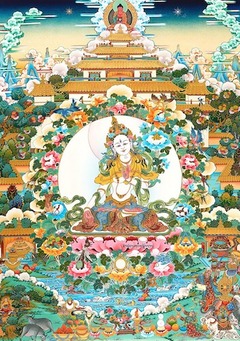
White Tārā Sādhana
༄༅། །ཇོ་ལུགས་སྒྲོལ་དཀར་མཎྜལ་གཅིག་པའི་སྒྲུབ་སྐོར་ལས་ཚོགས་དང་བཅས་པ་བཞུགས་སོ།།
The Cycle for Accomplishing the One Maṇḍala of White Tārā from Atiśa's Tradition Together with Various Activities
The Sādhana
by Jigme Lingpa
ན་མཿཨརྻ་ཏཱ་རཱ་ཡཻ།
Namaḥ ārya-tārāyai!
འདིར་ཇོ་བོ་ལས་བརྒྱུད་པའི་སྒྲོལ་དཀར་ཡིད་བཞིན་འཁོར་ལོའི་བསྙེན་པ་བྱ་བར་འདོད་པས། གནས་དབེན་ཞིང་ཉམས་དགའ་ལ་གཞི་བདག་དང་འབྱུང་པོ་གདུག་པ་ཅན་གྱིས་དབང་དུ་མ་བྱས་པར་བྱི་དོར་ལེགས་པར་བྱ། དཀོན་མཆོག་གི་རྟེན་དགྲམ། ཚེ་སྒྲུབ་སྤྲོས་བཅས་དང་འབྲེལ་ན་སྟེགས་བུ་ཁེབས་ལྡན་པདྨ་འདབ་བརྒྱད་རེ་ཁཱ་ཅན་གྱི་དབུས་སུ་སྐུ་སྟེན་ཚེ་བུམ། གསུང་རྟེན་བདུད་རྩི། ཐུགས་རྟེན་ཚེ་རིལ་ཡང་བཤམ། རྒྱུན་བསྙེན་དང་སྒྲུབ་པ་ཇི་ལྟར་ཡང་དཀར་གསུམ་མངར་གསུམ་ཤིང་འབྲས་སོགས་ཀྱིས་བརྒྱན་པའི་དཀར་གཏོར་ཟླུམ་པོ་པད་འདབ་བཞི་པ་དང་། མཐར་ཉེར་སྤྱོད་ཀྱིས་བསྐོར། གྲུབ་ན་གཏོར་མ་ཆ་གསུམ་དང་། མ་བདེ་ན་གཞི་བདག་ལ་དཀར་གཏོར། འབྱུང་པོ་ལ་ཆང་བུ། རིལ་བུ། ཐེབ་ཀྱུ་སོགས་བཤམས་ལ་ཆུ་ཆང་གིས་བྲན།
If you wish to practise the approach phase of the White Tārā Wish-Fulfilling Wheel from the lineage of Jowo Atiśa, go to an isolated and pleasant place free from the influence of malicious local deities or harmful elemental spirits, and clean it thoroughly. Set up representations of the Three Jewels. If you wish to elaborate with a longevity practice, prepare an altar draped with a cloth bearing an eight-petalled lotus design, and at its centre place a longevity vase as the representation of enlightened body, amṛta as the representation of enlightened speech, and longevity pills as the representation of enlightened mind. Whether you do this as a daily practice or engage in the phases of approach and accomplishment, arrange a round white torma with four lotus petals that is adorned with the three whites, three sweets, fruits and so forth. Surround the torma with the customary offerings. If you are doing the accomplishment practice, prepare the threefold torma.1 If that is not feasible, arrange a white torma for the local deities, and for the elemental spirits arrange fist-tormas (changbu), pills (ril bu), and 'thumb ornaments' (tebkyu). Sprinkle these with water and alcohol.
Preliminary Torma Offering
Bless the torma with:
ཨ་ཀཱ་རོ་ལན་གསུམ་གྱིས་བརླབ།
om akaro mukham sarva dharmanam adyanutpannatota om ah hung pé soha
oṃ ākāro mukhaṃ sarvadharmānām ādyanutpannatvāt oṃ āḥ hūṃ phaṭ svāhā
Three times.
མཆོད་སྦྱིན་གཏོར་མ་འདི་བཞེས་ལ། ། སོགས་ཀྱི་བསྔོས་ལ་ཕྱི་རོལ་དུ་དོར།
chöjin torma di zhé la
Accept this offering torma,
རྣལ་འབྱོར་བདག་ཅག་འཁོར་བཅས་ལ། །
naljor dakchak khor ché la
And carry out your activities so that we, the practitioners and those around us,
ནད་མེད་ཚེ་དང་དབང་ཕྱུག་དང༌། །
nemé tsé dang wangchuk dang
May enjoy good health, long life, power,
དཔལ་དང་གྲགས་དང་སྐལ་པ་བཟང༌། །
pal dang drak dang kalpa zang
Glory, renown, good fortune,
ལོངས་སྤྱོད་རྒྱ་ཆེན་ཀུན་ཐོབ་ཅིང༌། །
longchö gyachen kün tob ching
Wealth and abundant possessions.
ཞི་དང་རྒྱས་ལ་སོགས་པ་ཡི། །
zhi dang gyé lasokpa yi
Grant us the siddhi of performing
ལས་ཀྱི་དངོས་གྲུབ་བདག་ལ་སྩོལ། །
lé kyi ngödrub dak la tsol
The activities of pacifying, enriching and the rest.
དམ་ཚིག་ཅན་གྱིས་བདག་ལ་སྲུངས།
damtsik chen gyi dak la sung
Samaya-bound ones, guard me,
དངོས་གྲུབ་ཀུན་གྱི་སྡོངས་གྲོགས་མཛོད། །
ngödrub kün gyi dongdrok dzö
Be a support for all the accomplishments,
དུས་མིན་འཆི་དང་ནད་རྣམས་དང༌། །
dümin chi dang nénam dang
Eliminate untimely death and disease,
གདོན་དང་བགེགས་རྣམས་མེད་པར་མཛོད། །
dön dang gek nam mepar dzö
Obstructing forces and obstacle-makers,
རྨི་ལམ་ངན་དང་མཚན་མ་ངན། །
milam ngen dang tsenma ngen
Eliminate bad dreams and evil omens,
བྱ་བྱེད་ངན་པ་མེད་པར་མཛོད། །
jajé ngenpa mepar dzö
And all forms of negative action.
འཇིག་རྟེན་བདེ་ཞིང་ལོ་ལེགས་དང༌། །
jikten dé zhing lo lek dang
Bring peace to the world and bountiful harvests,
འབྲུ་རྣམས་འཕེལ་ཞིང་ཕྱུགས་འཕེལ་བ། །
dru nam pel zhing chuk pelwa
May grains and livestock be ever more plentiful,
དགེ་ལེགས་ཐམས་ཅད་འབྱུང་བའི་གནས། །
gelek tamché jungwé né
A source of every happiness and good,
ཡིད་ལ་འདོད་པ་ཀུན་འགྲུབ་མཛོད། །
yi la döpa kün drub dzö
May all that we wish for be accomplished.
Offer the torma with these verses and throw it outside.
Setting the Boundary
ཨོཾ་བཛྲ་རཀྵ་ཧཱུྃ།
om benza raksha hung
oṃ vajra rakṣa hūṃ
མི་ཕྱེད་གཉུག་མའི་ཡེ་ཤེས་ཀྱི།
miché nyukmé yeshe kyi
From the ceaseless expression
རང་རྩལ་འགག་མེད་རྡོ་རྗེའི་གུར།
rang tsal gakmé dorjé gur
Of unwavering innate wisdom
འབར་བའི་མེ་འོད་རབ་འཕྲོ་བས།
barwé mé ö rab trowé
A vajra tent arises, its blazing fire
ཕྱོགས་མཚམས་ཀུན་ཏུ་ཁྱབ་པར་གྱུར།
choktsam küntu khyabpar gyur
Pervading each and every direction.
ཅེས་རྡོ་རྗེ་རྭ་གུར་གྱིས་བསྲུང་འཁོར་བསྒོམ།
Recite this and meditate on the protective circle of the vajra fence and tent.
དེ་ནས་བྱང་ཆུབ་སེམས་ཀྱི་སྔགས་པ་བརྗོད་པ་ནི།
In Praise of Bodhicitta
ངན་འགྲོའི་ལམ་ནི་ལྡོག་བགྱིད་ཅིང་།
ngendro lam ni dok gyi ching
Turning us back from the road to the lower realms,
མཐོ་རིས་ལམ་ནི་རབ་སྟོན་ལ།
tori lam ni rab tön la
It shows us the road to the higher realms,
རྒ་ཤི་མེད་པར་འདྲེན་བགྱིད་པ།
ga shi mépar dren gyi pa
And leads to where there is no old age and death:
བྱང་ཆུབ་སེམས་ལ་ཕྱག་འཚལ་ལོ།
changchub sem la chak tsal lo
To this bodhicitta, in homage I bow!2
ཞེས་བརྗོད་ཅིང་ཚད་མེད་བཞིས་རྒྱུད་ལེགས་པར་སྦྱང་།
Recite this and thoroughly train your mind with the four immeasurables.
སྐྱབས་འགྲོ་ནི།
Taking Refuge
སྐྱོབ་པ་མཆོག་དང་བདེན་གཉིས་དམ་པའི་ཆོས།
kyobpa chok dang den nyi dampé chö
In the supreme protector, in the sacred Dharma of the two truths,
རིག་གྲོལ་གཉིས་ལྡན་བྱང་ཆུབ་སེམས་དཔའི་ཚོགས།
rik drol nyiden changchub sempé tsok
And in the assembly of bodhisattvas endowed with knowledge and liberation—
འཕགས་མའི་སྐུ་གསུང་ཐུགས་ལས་གཞན་མིན་པས།
pakmé ku sung tuk lé zhen minpé
Since you are none other than the body, speech and mind of the Noble Lady,
སྐྱེས་བུ་ཆེན་པོའི་སེམས་ཀྱི་སྐྱབས་སུ་མཆི།
kyebu chenpö sem kyi kyab su chi
With the mindset of a great being, I take refuge in you.
གསུམ།
Three times.
སེམས་བསྐྱེད་ནི།
Generating Bodhicitta
ཧོཿ བདག་དང་མར་གྱུར་སེམས་ཅན་ཐམས་ཅད་ཀུན།
ho, dak dang mar gyur semchen tamché kün
Hoḥ. So that I and all beings, my very own mothers,
གནས་སྐབས་བདུད་བཞིའི་འཇིགས་པ་ལས་གྲོལ་ཞིང་།
nekab dü zhi jikpa lé drol zhing
May be freed from the fears of the four māras temporarily,
མཐར་ཐུག་བྱང་གྲོལ་མཆོག་ལ་འདོང་པའི་ཕྱིར།
tartuk jang drol chok la dongpé chir
And ultimately reach supreme awakening and liberation,
སྨོན་དང་འཇུག་པའི་བྱང་ཆུབ་མཆོག་སེམས་བསྐྱེད།
mön dang jukpé changchub chok semkyé
I generate the supreme mind of bodhicitta, of aspiration and action.
གསུམ།
Three times.
ཡན་ལག་བདུན་པ་ནི།
Seven Branches
ཨཱཿ ཡན་ལག་ལྔས་བཏུད་ལུས་དང་ལོངས་སྤྱོད་འབུལ།
ah, yenlak ngé tü lü dang longchö bul
Āḥ. I pay homage with full prostration3 and offer my body and possessions.
ཉེས་ལྟུང་མི་འཆབ་དགེ་ལ་རྗེས་ཡི་རང་།
nyetung mi chab gé la jé yi rang
I confess all transgressions and downfalls, concealing nothing. I rejoice in virtue.
ཆོས་འཁོར་བསྐོར་ཞིང་མྱ་ངན་མི་འདར་གསོལ།
chökhor kor zhing nya ngen mi dar sol
I implore you to turn the wheel of Dharma and request you not to pass into nirvāṇa.
དགེ་ཚོགས་འགྲོ་ཀུན་རྣམ་མཁྱེན་ཐོབ་ཕྱིར་བསྔོ།
gé tsok dro kün namkhyen tob chir ngo
I dedicate all virtue so that every being may attain omniscience.
མཆོད་རྫས་བྱིན་བརླབས་ནི།
Blessing the Offerings
ཧཱུྃ། མཆོད་པའི་དམ་རྫས་བརྟན་གཡོའི་དངོས་པོ་ཀུན།
hung, chöpé damdzé tenyö ngöpo kün
Hūṃ. All things, animate and inanimate, are the samaya substances of offering.
ཀུན་ཏུ་བཟང་པོའི་རྣམ་པར་འཕྲུལ་པ་ཡིས།
kuntuzangpö nampar trulpa yi
Through Samantabhadra's magical display,
ནམ་མཁའ་མཛོད་ཀྱི་འཁོར་ལོར་བྱིན་གྱིས་རློབས།
namkha dzö kyi khorlor jingyi lob
They are blessed as the wheel of the treasury of space—
མཆོད་པའི་ཕྱག་རྒྱ་ཆེན་པོར་ལྷུན་རྫོགས་ཤོག
chöpé chakgya chenpor lhün dzok shok
May they be spontaneously perfected as the great mudrā of offering!
རཱུ་པ། ཤབྡ། གནྡྷེ། རཱ་ས། སྤརྴེ། དྷརྨ་དྷཱ་ཏུ་སརྦ་པཱུ་ཛ་ཨཱཿཧཱུྃ།
rupa shapda gendhe rasa parshe dharmadhatu sarva pudza ah hung
rūpa śabda gandhe rāsa sparśe dharmadhātu sarva pūja āḥ hūṃ
གསུམ།
Three times.
ནམ་མཁའ་མཛོད་ཀྱི་སྔགས་རྒྱས་བརླབ། སྤྲོ་ན།
Also bless them with the Sky Treasury mantra and mudrā.4 If you wish to elaborate, also recite the Offering Cloud Dhāraṇī:
ན་མོ་རཏྣ་ཏྲ་ཡཱ་ཡ། ན་མོ་བྷ་ག་ཝཱ་ཏེ། བཛྲ་སཱ་ར་པྲ་མརྡྷ་ནི། ཏ་ཐཱ་ག་ཏཱ་ཡ། ཨརྷ་ཏེ་སཾ་མྱཀྶཾ་བུདྡྷཱ་ཡ། ཏདྱ་ཐཱ། ཨོཾ་བཛྲེ་བཛྲེ་མ་ཧཱ་བཛྲེ། མ་ཧཱ་ཏེ་ཛོ་བཛྲེ། མ་ཧཱ་བིདྱཱ་བཛྲེ། མ་ཧཱ་བོ་དྷི་ཙིཏྟ་བཛྲེ། མ་ཧཱ་བོ་དྷི་མཎྜོ་པ་སཾ་མ་ཎ་བཛྲེ། སརྦ་ཀརྨ་ཨ་བ་ར་ཎ་བི་ཤོ་དྷ་ནི་བཛྲེ་སྭཱ་ཧཱ།
namo ratna trayaya | namo | bhagavate vajra sara pramardhane tathagataya arhate samyak sambuddhaya | tadhyata | om vajre vajre maha vajre maha tedzo vajre maha vidya vajre maha bodhitsitta vajre maha bodhi mantopasam mana vajre sarwa karma awarana vishva dhana vajre soha
namo ratna-trayāya | namo bhagavate vajra-sāra-pramardane tathāgatāya arhate samyak-saṃbuddhāya | tadyathā | oṃ vajre vajre mahā-vajre mahā-tejo-vajre mahā-vidyā-vajre mahā-bodhicitta-vajre mahā-bodhi-maṇḍopa-saṃkramaṇa-vajre sarva-karma-āvaraṇa-viśodhana-vajre svāhā
ཞེས་མཆོད་པའི་སྤྲིན་གྱིས་གཟུངས་ཀྱང་བརྗོད།
མངོན་རྟོགས་བསྒོམ་པ་ནི།
Visualization
ཨ༔ ཆོས་རྣམས་ཐམས་ཅད་སྟོང་ཞིང་བདག་མེད་ཀྱང་།
ah, chö nam tamché tong zhing dakmé kyang
A. Phenomena are empty and devoid of self,
འདི་ལྟར་མ་རྟོགས་སེམས་ཅན་སྙིང་རེ་རྗེ།
ditar ma tok semchen nying ré jé
How pitiful are beings who do not realise this!
སྐྱེ་མེད་ངང་ལས་སྐྱེ་བའི་ཆོ་འཕྲུལ་ནི།
kyemé ngang lé kyewé chotrul ni
From the unborn state arises the magical display
གཡུ་ལོ་བཀོད་པའི་ཞིང་ཁམས་ཉམས་དགའ་བ།
yu lo köpé zhingkham nyamgawa
Of the delightful pure realm Array of Turquoise Petals.
མནན་ན་ནེམ་ཞིང་བཏེག་ན་འཕར་བའི་གཞིར།
nen na nem zhing tek na parwé zhir
Its ground yields underfoot and is instantly restored.
རིན་ཆེན་བཻ་ཌཱུརྻ་ཡི་བྲག་རི་ལ།
rinchen baidurya yi drakri la
Upon jewelled vaiḍūrya cliffs
དྲང་སྲོང་རིག་འཛིན་གྲུབ་པ་མཆོག་རྣམས་གནས།
drangsong rigdzin drubpa chok nam né
Dwell the supreme sages, vidyādharas and siddhas.
འབྱུང་བ་ཡོངས་རྫོགས་དྭངས་པའི་མཚོ་རྫིང་ནི།
jungwa yongdzok dangpé tso dzing ni
In a crystal clear lake filled with all the elements,
པུཎྜ་རཱི་ཀའི་ནེའུ་གསིང་དྲྭ་བས་མཛེས།
pundariké né'u sing drawé dzé
Are beautiful fields of white lotus flowers.
རིན་ཆེན་སྣ་ཚོགས་ལྗོན་ཤིང་ལྟ་ན་སྡུག
rinchen natsok jönshing ta na duk
There are jewelled trees of many kinds, delightful to behold,
ཡལ་འདབ་རྣམས་ལ་གསེར་གཡུ་བྱེ་རུ་དང་།
yaldab nam la ser yu jé ru dang
Their branches laden with gold, turquoise, coral,
པད་རཱག་ཨིནྡྲ་ནཱི་ལ་ལ་སོགས་པ།
pé rak indranila lasokpa
Ruby, sapphire and the like.
དབང་གཞུ་ལྟ་བུར་བཀྲ་བའི་བྱ་ཚོགས་དང་།
wang zhu tabur trawé ja tsok dang
There are flocks of birds brightly coloured as a rainbow,
འཕུར་ལྡིང་ཤིན་ཏུ་གཡོ་བའི་བྷྲ་མ་རཿ
pur ding shintu yowé bhra ma ra
And bees hovering and buzzing all around.
སེམས་དང་ཡིད་དང་རྣམ་པར་ཤེས་པ་དང་།
sem dang yi dang nampar shepa dang
The Dharma resounds in the melodies
ཀུན་འབྱུང་སྡུག་བསྔལ་སྤོང་བའི་ཆོས་ཀྱི་སྒྲ།
künjung dukngal pongwé chö kyi dra
Of the three vehicles and the classes of tantra,
ཐེག་པ་གསུམ་དང་རྒྱུད་སྡེའི་དབྱངས་སུ་སྒྲོགས།
tekpa sum dang gyüdé yang su drok
Overcoming the ordinary mind, intellect, consciousness, suffering and its origin.
གཟུགས་སྣང་ཐམས་ཅད་དག་པའི་སྣོད་དང་བཅུད།
zuk nang tamché dakpé nö dang chü
All forms are the pure environment and beings.
ཚོར་བ་ཐམས་ཅད་བདེ་སྟོང་ཕྱག་རྒྱ་ཆེ།
tsorwa tamché detong chakgya ché
All sensations are the great seal of empty bliss.
འདུ་ཤེས་ཐམས་ཅད་ཕ་རོལ་ཕྱིན་པ་དྲུག
dushé tamché parol chinpa druk
All perceptions are the six pāramitās.
འདུ་བྱེད་ཐམས་ཅད་ས་བཅུའི་སྤངས་རྟོགས་ཏེ།
dujé tamché sa chü pang tok té
All conditioning factors are the abandonments and realisations of the ten bhūmis.
རྣམ་ཤེས་ལས་འདས་ཡེ་ཤེས་རོལ་པའི་གདངས།
namshé lé dé yeshe rolpé dang
The radiance of the wisdom beyond thought
དག་པ་རབ་འབྱམས་ཞིང་ཁམས་བཀོད་པའི་ཀློང་།
dakpa rabjam zhingkham köpé long
Unfolds as the expanse of infinite pure realms—
རང་བཞིན་ལྷུན་གྲུབ་སྤྲུལ་པའི་གཞལ་མེད་ཁང་།
rangzhin lhündrub trulpé zhalmé khang
Within it appears an emanated palace,
རྒྱ་ཁྱོན་བཀོད་པ་བློ་ལས་འདས་པའི་དབུས།
gyakhyön köpa lo lé depé ü
Inconceivably vast and beyond the intellect.
པད་ཟླའི་གདན་ལ་ཏཱྃ་ཡིག་ཡོངས་གྱུར་ལས།
pé dé den la tam yik yong gyur lé
In its centre, upon a lotus and moon-disc seat, is the syllable tāṃ,
རྗེ་བཙུན་སྒྲོལ་དཀར་ཡིད་བཞིན་འཁོར་ལོ་ནི།
jetsün drolkar yizhin khorlo ni
Which transforms into noble White Tārā, Wish-Fulfilling Wheel.
ཟླ་བར་རྒྱབ་བརྟེན་རྡོ་རྗེའི་སྐྱིལ་མོ་ཀྲུང་།
dawar gyab ten dorjé kyilmo trung
She is seated in vajra posture and a moon-disc supports her back.
ཕྱག་གཡས་མཆོག་སྦྱིན་མི་མཐུན་ཕྱོགས་ལས་སྒྲོལ།
chak yé chok jin mitün chok lé drol
Her right hand, in the gesture of supreme generosity, liberates from adversity.
གཡོན་པ་སྐྱབས་སྦྱིན་མཐེབ་མཛུབ་ལ་གནས་པའི།
yönpa kyab jin teb dzub la nepé
Her left hand, in the gesture of granting refuge, holds between thumb and forefinger
ཨུཏྤལ་ཟེའུ་འབྲུས་དུས་གསུམ་སངས་རྒྱས་མཚོན།
utpal zé'u drü dü sum sangye tsön
An utpala flower whose pistils represent the buddhas of the three times.
རིགས་ཀྱི་བདག་པོ་སྣང་བ་མཐའ་ཡས་བརྒྱན།
rik kyi dakpo nangwa tayé gyen
Above her head is Amitābha, the lord of the family,
ཚེ་དང་ཡེ་ཤེས་མཆོག་གི་དངོས་གྲུབ་སྟེར།
tsé dang yeshe chok gi ngödrub ter
Who bestows the supreme accomplishments of longevity and wisdom.
འགྲོ་ལ་ཐུགས་རྗེའི་གཟིགས་པ་མི་ཡོལ་བས།
dro la tukjé zikpa mi yolwé
Since her compassionate gaze never wavers from beings,
ཕྱག་ཞབས་མཐིལ་སོགས་ཡེ་ཤེས་སྤྱན་བདུན་སྤྲས།
chak zhab til sok yeshe chen dün tré
She is adorned with seven wisdom eyes—on her palms, soles and so forth.
མཉེན་ལྕུག་འཁྲིལ་ལྡེམ་གཞོན་ནུའི་ངང་ཚུལ་ཅན།
nyenchuk tril dem zhönnü ngang tsulchen
She is resplendent with the thirteen ornaments5 and nine peaceful expressions:
གསལ་འཚེར་ལྷུན་སྡུག་གཟི་བྱིན་ལྡན་པ་སྟེ།
sal tser lhün duk zijin denpa té
Soft, well-proportioned, firm, supple, youthful,
ཞི་ཚུལ་དགུ་དང་རྒྱན་ཆ་བཅུ་གསུམ་མཛེས།
zhi tsul gu dang gyencha chusum dzé
Clear, radiant, attractive and blazing with intense presence.
མཐའ་བསྐོར་སངས་རྒྱས་བྱང་སེམས་རིག་འཛིན་དང་།
ta kor sangye changsem rigdzin dang
Surrounding her are the buddhas, bodhisattvas, vidyādharas,
གནས་ཡུལ་ཉེར་བཞིའི་དཔའ་བོ་མཁའ་འགྲོས་བསྐོར།
neyul nyerzhi pawo khandrö kor
And the heroes and ḍākinīs of the twenty-four sacred places.
ཀུན་ཀྱང་གདན་གསུམ་རྡོ་རྗེའི་བདག་ཉིད་ཅན།
kün kyang den sum dorjé daknyi chen
All of them possess the vajra nature of the three seats,
ཡོངས་གྲུབ་དབང་བསྐུར་རྫོགས་པའི་པྲོག་ཞུས་བརྒྱན།
yongdrub wangkur dzokpé trokzhü gyen
And are adorned with the crown of perfect and complete empowerment.
གནས་གསུམ་ཕྱག་མཚན་གསུམ་དང་ཡིག་འབྲུ་ལས།
né sum chaktsen sum dang yikdru lé
From the three implements and syllables at their three places,
འོད་འཕྲོས་རང་བཞིན་སྤྲོས་བྲལ་གདོད་མའི་དབྱིངས།
ö trö rangzhin trödral dömé ying
Light radiates to the primordial expanse of natural simplicity,
སྐུ་གསུམ་ཡན་ལག་བདུན་ལྡན་ལོངས་སྤྱོད་རྫོགས།
ku sum yenlak dünden longchö dzok
To the saṃbhogakāya, endowed with the seven branches,
གཡུ་ལོ་བཀོད་སོགས་སྤྲུལ་པའི་ཞིང་ཁམས་ནས།
yu lo kö sok trulpé zhingkham né
And to the nirmāṇakāya realms such as the Array of Turquoise Petals—
ཡེ་ཤེས་ལྷ་ཚོགས་བཛྲ་ས་མཱ་ཛཿ
yeshe lhatsok benza sa ma dza
Inviting the wisdom deities of the three kāyas—vajra samājaḥ
སྤྱན་འདྲེན་ནི།
Invitation
ཧཱུྃ། མཁྱེན་པས་བྱང་ཆུབ་ཆོས་ཁམས་ཡོངས་གཟིགས་ཀྱང་།
hung, khyenpé changchub chökham yong zik kyang
Hūṃ. Though your wisdom beholds all phenomena of awakening,
བརྩེ་བས་ཞི་ལ་མི་གཞོལ་འཁོར་བ་སྒྲོལ།
tsewé zhi la mi zhol khorwa drol
Through love, you do not remain in peace, but liberate saṃsāra,
ནུས་པས་བདུད་སྡེ་ཕྱིར་འཐག་བཅོམ་ལྡན་མ།
nüpé dü dé chir tak chomden ma
And through your power, you repel the forces of māra—
ཚེ་དབང་བདེ་སྦྱིན་ལྷ་མོ་གཤེགས་སུ་གསོལ།
tsewang dé jin lhamo shek su sol
Blessed Lady, goddess who bestows longevity, empowerment and bliss, please come!
ཨེ་ཧྱེ་ཧི་བྷ་ག་ཝཱན་མ་ཧཱ་ཀཱ་རུ་ཎི་ཀ་དྲི་ཤྱ་ཧོཿ
é hyé hi bhagavan maha karunika drishya ho
ehy ehi bhagavan mahā-kāruṇika dṛśya hoḥ
བཞུགས་གསོལ་བསྟོད་ཕྱག་ནི།
Requesting the Deities to Take Their Places, and Offering Homage
ཨཿ བདེ་གཤེགས་སྙིང་པོའི་རང་བཞིན་ཡེ་ཤེས་སེམས།
ah, deshek nyingpö rangzhin yeshe sem
Āḥ. Although the wisdom being, whose nature is the sugata,
གདོད་ནས་དམ་ཚིག་འཁོར་ལོ་རོ་གཅིག་ཀྱང་།
döné damtsik khorlo ro chik kyang
And the samaya maṇḍala are primordially of one taste,
གློ་བུར་སྒྲིབ་གཉིས་སྤངས་པའི་སྟན་ཞུགས་ལ།
lobur drib nyi pangpé ten zhuk la
Please come and remain on this seat, that is free of the two adventitious obscurations.
མངོན་སུམ་ལྟ་བ་མཇལ་བའི་ཕྱག་གིས་བཏུད།
ngönsum tawa jalwé chak gi tü
To you I pay homage by directly encountering the view.
ན་མོ་ན་མ་ཧཱུྃ།
namo nama hung
namo nama hūṃ
མཆོད་པ་ནི།
Offerings
ཧཱུྃ། ཡུལ་དང་དབང་པོ་འབྲེལ་བའི་སྲེད་ལེན་གྱིས།
hung, yul dang wangpo drelwé sé len gyi
Hūṃ. I present the great mudrā of offering beyond sensual delights,
ཉེར་སྤྱོད་ལས་འདས་མཆོད་པའི་ཕྱག་རྒྱ་ཆེ།
nyerchö lé dé chöpé chakgya ché
The unsurpassed magical display of Samantabhadra, which transcends the craving
ཀུན་ཏུ་བཟང་པོའི་རྣམ་འཕྲུལ་བླ་ན་མེད།
kuntuzangpö namtrul lanamé
Arising from the sensory faculties meeting their objects—
ནམ་མཁའ་མཛོད་ཀྱིས་འཁོར་ལོས་མཉེས་གྱུར་ཅིག
namkha dzö kyi khorlö nyé gyur chik
May the wheel of the treasury of space delight you!
བཛྲ་རཱུ་པ། ཤབྡ། གནྡྷེ། རཱ་ས། སྤརྴེ། དྷརྨ་དྷ་ཏུ་མ་ཧཱ་སརྦ་པཱུ་ཛ་ཨཱཿཧཱུྃ།
rupa shapda gendhe rasa parshe dharmadhatu maha sarva pudza ah hung
vajra rūpa śabda gandhe rāsa sparśe dharmadhātu mahā sarva pūja āḥ hūṃ
བསྟོད་པ་ནི།
Praise
ཨོཾ། ཆུ་སྐྱེས་ཞལ་གྱི་གེ་སར་ལས།
om, chukyé zhal gyi gesar lé
Oṃ. From Avalokiteśvara's face
འགྲོ་བ་སྒྲོལ་ཕྱིར་རྣམ་པར་འཕྲུལ།
drowa drol chir nampar trul
You magically emanate to liberate beings.
ཕྲིན་ལས་མྱུར་ཞིང་བདུད་ལ་དཔའ།
trinlé nyur zhing dü la pa
Smiling and laughing, swift in activity
བཞད་པ་རབ་བཞད་ཁྱོད་ལ་བསྟོད།
zhepa rab zhé khyö la tö
And courageous in the face of māras—to you I offer praise.
སྦྱིན་པའི་མཆོག་ལྡན་མི་འཇིགས་སྟེར།
jinpé chokden mi jik ter
Granting the supreme generosity of fearlessness,
སེམས་ཅན་དོན་བྱེད་ཚུལ་ཁྲིམས་དང་།
semchen dönjé tsultrim dang
Endowed with the discipline of benefitting beings,
བཟོད་པའི་དཀའ་ཐུབ་ཉམས་མི་མངའ།
zöpé katub nyam mi nga
And unwavering in the austerity of patience—
ཤིན་ཏུ་སྦྱངས་པ་ཁྱོད་ལ་བསྟོད།
shintu jangpa khyö la tö
To you of perfect pliancy,6 I offer praise.
སུ་ཡི་ཁྱོད་ལ་གསོལ་བཏབ་དོན།
su yi khyö la soltab dön
Goddess, your diligence is such
ཡལ་བར་མི་འདོར་བརྩོན་འགྲུས་དང་།
yalwar mi dor tsöndrü dang
That you never abandon anyone who prays to you.
དེ་བཞིན་གཤེགས་དགའི་བསམ་གཏན་དང་།
dezhin shek gé samten dang
You posses the meditative concentration that delights the tathāgatas,
བྱང་གྲོལ་ཤེས་རབ་ལྷ་མོར་བསྟོད།
jang drol sherab lhamor tö
And the insight of awakening and liberation—to you I offer praise.
བདག་གི་ཚེ་རབས་ཐམས་ཅད་དུ།
dak gi tserab tamché du
Whatever wrongful deeds I have accumulated
ཁ་ན་མ་ཐོའི་ལས་བསགས་པ།
khana matö lé sakpa
Throughout all my lives,
ལྷ་མོ་ཁྱོད་ལ་མཐོལ་ཟིན་གྱིས།
lhamo khyö la tol zin gyi
Having confessed them all to you, O goddess—
བདུད་བཞིའི་གཡུལ་ལས་རྒྱལ་བར་མཛོད།
dü zhi yul lé gyalwar dzö
Grant me victory in battle against the four māras!
བཟླས་དམིགས་ནི།
The Visualization for Recitation
ཐུགས་ཀར་ཟླ་གདན་ལ་གནས་པའི།
tukkar da den la nepé
At my heart, upon a moon-disc seat,
འོད་ཀྱི་རྣམ་པའི་འཁོར་ལོའི་དབུས།
ö kyi nampé khorlö ü
Is an eight-spoked wheel of light.
ཏཱྃ་དང་མདུན་རྒྱབ་ཨོཾ་དང་ཧཱ།
tam dang dün gyab om dang ha
In its centre is the syllable tāṃ, with oṃ in front and hā behind.
རྩིབས་བརྒྱད་ཏཱ་རེ་ལ་སོགས་བརྒྱད།
tsib gyé taré lasok gyé
On the spokes are the eight syllables, tā, re, and so forth,7
རེག་ལ་མ་འབྱར་གཡོན་དུ་འཁོད།
rek la ma jar yön du khö
They are arranged counterclockwise, close together but not touching.8
འོད་ཟེར་འཕྲོས་པས་རྒྱལ་བ་མཆོད།
özer tröpé gyalwa chö
Light radiates, making offerings to the victorious ones
སེམས་ཅན་དོན་བྱས་འཁོར་འདས་ཀྱི།
semchen dön jé khordé kyi
And accomplishing the benefit of beings.
དྭངས་བཅུད་བདག་ལ་ཐིམ་པ་ཡིས།
dangchü dak la timpa yi
As the vital essences of saṃsāra and nirvāṇa dissolve into me—
དུས་མིན་འཆི་བའི་འཇིགས་པ་བསལ།
dümin chiwé jikpa sal
The fear of untimely death is cleared away
མཆོག་ཐུན་དངོས་གྲུབ་ཐོབ་པར་གྱུར།
choktün ngödrub tobpar gyur
And I attain the common and supreme accomplishments.
ཨོཾ་ཏཱ་རེ་ཏུཏྟཱ་རེ་ཏུ་རེ་མ་མ་ཨཱ་ཡུར་པུཎྱེ་ཛྙཱ་ན་པུཥྚིཾ་ཀུ་རུསྭཱ་ཧཱ།
om tare tuttare ture mama ayur punye jnana pushtim kuru soha
oṃ tāre tuttāre ture mama āyur puṇya jñāna puṣṭiṃ kuru svāhā
ཞེས་སྣང་བ་སྐུ་དང་ཞིང་ཁམས། གྲགས་པ་སྔགས་ཀྱི་རང་སྒྲ། དྲན་རྟོག་ཆོས་ཉིད་ཀྱི་དོན་ལས་མི་འདའ་བའི་ངང་ནས་བཟླས་དམིགས་བྱ་ཞིང་།
Recite this while remaining in a state where appearances are the deity's form and pure realms; sounds arise as the natural resonance of mantra; and thoughts do not stray from the nature of reality.
ཐུན་བསྡུ་བ་ནི།
Concluding the Practice
ཚོགས་བསགས་པའི་ཕྱིར་མཆོད་པ་བརྗེ། མཎྜལ་རྒྱས་བསྡུས་ཅི་རིགས་པ་དང་།
To accumulate merit, renew the offerings and offer a maṇḍala, elaborate or concise as appropriate.
བསྟོད་བསྔགས་ནི།
Offering Praise
སངས་རྒྱས་ཐམས་ཅད་ཁྱོད་ལས་སྐྱེས།
sangye tamché khyö lé kyé
Homage to you, mother of all the victorious ones
དེ་ཕྱིར་རྒྱལ་བ་ཀུན་གྱི་ཡུམ།
dechir gyalwa kün gyi yum
And source of all the buddhas,
ས་དང་ཕ་རོལ་ཕྱིན་བཅུའི་བདག
sa dang parol chin chü dak
Sovereign of the ten bhūmis and pāramitās,
སྤྲོས་བྲལ་དབུ་མ་ཆེན་པོར་བསྟོད།
trödral uma chenpor tö
And embodying the great simplicity of the middle way.
གཟུགས་སོགས་ཕུང་པོའི་ཉེར་ལེན་བདུད།
zuk sok pungpö nyerlen dü
Homage to you, who eliminates the demon of the aggregates such as form,
རང་བཞིན་རྣམ་དག་སྟོང་ཉིད་དབྱིངས།
rangzhin namdak tongnyi ying
Without depending on anything else,
ལྟོས་གྲུབ་མེད་པར་སྦྱོར་མཛད་པའི།
tö drub mepar jor dzepé
Into the basic space of emptiness
རྣམ་ཀུན་མཆོག་ལྡན་མ་ལ་བསྟོད།
namkün chokden ma la tö
Endowed with qualities sublime.
ཀུན་བརྟགས་ལས་རླུང་བཞོན་པ་དང་།
küntak lé lung zhönpa dang
Homage to you whose flames of awakening factors
ལྷན་ཅིག་སྐྱེས་པའི་ཉོན་མོངས་བདུད།
lhenchik kyepé nyönmong dü
Incinerate the demon of emotions—the discards of the path of seeing—
མཐོང་སྤང་བྱང་ཆུབ་ཡན་ལག་གི
tong pang changchub yenlak gi
Both the innate and the imputed
ཡེ་ཤེས་མེ་ལྕེས་བསྲེགས་ལ་བསྟོད།
yeshe meché sek la tö
That ride on the karmic winds.
མ་རིག་ལས་ནི་རྣམ་ཤེས་སོགས།
marik lé ni namshé sok
Homage to you, destroyer of the demon of death—the forward progression of interdependence
རྟེན་འབྲེལ་ལུགས་འབྱུང་འཆི་བདག་བདུད།
tendrel lukjung chidak dü
Such as the consciousness that arises from ignorance, which are the discards of the path of meditation,
སྒོམ་སྤངས་འཕགས་པའི་ལམ་བརྒྱད་ཀྱིས།
gom pang pakpé lam gyé kyi
And bringer of immortal peace
འཆི་མེད་ཞི་བར་སྦྱོར་ལ་བསྟོད།
chimé zhiwar jor la tö
Through the eightfold path of the noble ones.
ཡུལ་དང་ཡུལ་ཅན་འབྲེལ་པ་ལས།
yul dang yulchen drelpa lé
Homage to you, White Tārā Wish-Fulfilling Wheel,
སླུ་བྱེད་འདུ་བྱེད་ལྷ་བུའི་བདུད།
lu jé dujé lha bü dü
Who liberates the demon of the sons of the gods—
སློབ་པ་མིན་པའི་ཟུང་འཇུག་ཀློང་།
lobpa minpé zungjuk long
The deceiving perceptions of subject and object,
སྒྲོལ་མཛད་ཡིད་བཞིན་འཁོར་ལོར་བསྟོད།
drol dzé yizhin khorlor tö
And delivers us into the expanse of union beyond learning.
ནོངས་བཤགས་ནི།
Confession of Mistakes in Practice
མ་འབྱོར་བ་དང་ཉམས་པ་དང་། ། སོགས་ཀྱི་མཐར་ཡིག་བརྒྱས་ནོངས་པ་བཤགས།
majorwa dang nyampa dang
Anything I did not accomplish or which I have corrupted,
གཙོ་བོ་ནུས་པ་མ་མཆིས་པས། །
tsowo nüpa machipé
And anything I was unable to do,
འདིར་ནི་བགྱི་བ་གང་ནོངས་པ། །
dir ni gyiwa gang nongpa
Whatever mistakes I have made,
དེ་ཀུན་མགོན་པོས་བཟོད་པར་མཛོད། །
dé kün gönpö zöpar dzö
Protector, please forgive them all!
Recite this, followed by the hundred-syllable mantra to confess mistakes in your practice.
Aspiration Prayers and Dedication
རྗེ་བཙུན་བཅོམ་ལྡན་འདས་མ་སོགས།
Recite "Precious noble lady, transcendent conqueror…" and so on.
རྗེ་བཙུན་བཅོམ་ལྡན་འདས་མ་ཡིས། །
jetsün chomden dema yi
Precious noble lady, transcendent conqueror,
བདག་སོགས་དུས་མིན་འཆི་བ་སྦྱངས། །
dak sok dümin chiwa jang
Purify untimely death for me and other beings,
འཆི་མེད་ཚེ་དང་ཡེ་ཤེས་ཀྱི། །
chimé tsé dang yeshe kyi
And grant us the blessings and attainments
བྱིན་རླབས་དངོས་གྲུབ་སྩལ་དུ་གསོལ། །
jinlab ngödrub tsal du sol
Of immortal life and wisdom.
དགེ་བ་འདི་ཡིས་སྐྱེ་བོ་ཀུན། སོགས་ཀྱིས་བསྔོ་སྨོན་བྱ།
gewa di yi kyewo kün
Through this merit, may all beings
བསོད་ནམས་ཡེ་ཤེས་ཚོགས་རྫོགས་ཤིང༌། །
sönam yeshe tsok dzok shing
Complete the accumulations of merit and wisdom,
བསོད་ནམས་ཡེ་ཤེས་ལས་བྱུང་བའི། །
sönam yeshe lé jungwé
And so attain the dharmakāya and rūpakāya
དམ་པ་སྐུ་གཉིས་ཐོབ་པར་ཤོག །
dampa ku nyi tobpar shok
That come from merit and wisdom.9
ཐུན་མཚམས་ཐམས་ཅད་དུ་བྱང་ཆུབ་སེམས་ཀྱིས་ཟིན་པའི་བསྐྱེད་རྫོགས་བཟླས་པ་གསུམ་གྱི་ལམ་ཁྱེར་དང་མ་བྲལ་ན། བར་དོར་ཡང་སྒྲོལ་མའི་ཞལ་མཐོང་བ་ཡིན་ནོ།།
If, during the breaks between sessions, you integrate the generation stage, perfection stage and mantra recitation, while maintaining bodhicitta, you will behold the face of Tārā in the bardo.
ཆོས་མཛད་སཱ་རའི་ངོར་རྒྱལ་བའི་མྱུ་གུ་མཁྱེན་བརྩེའི་ལྷས་སོ།། །།
Composed by Khyentse Lha, the victorious one's offspring, at the request of the dharma practitioner Sāra.
| Translated by Matthias Staber, reviewed by Han Kop and edited by Barry Cohen for the Longchen Nyingtik Project, 2026.
Sources
’jam dbyangs mkhyen brtse'i dbang po, "jo lugs sgrol dkar man+da la gcig pa'i sgrub skor las tshogs dang bcas pa." In klong chen snying thig rtsa pod. BDRC W1KG13585 (Shechen Publications, 1994). Vol. 4, 279–316.
’jam dbyangs mkhyen brtse'i dbang po, "jo lugs sgrol dkar maN+Dal gcig pa'i sgrub skor las tshogs dang bcas pa." In 'jam dbyangs mkhyen brtse'i dbang po'i bka' 'bum. BDRC MW3PD1002 (Khams sde dge rdzong sar dgon: Rdzong sar blo gros phun tshogs, 2014). Vol. 16, 183–191.
Version: 1.0-20260722
Notes
- Though there are many liturgies for this, the most common one is the Ritual for the Three Tormas (gtor ma cha gsum gyi cho ga) by Minling Terchen Gyurme Dorje. ↑
- From Samantabhadra’s ‘Aspiration to Good Actions’. ↑
- Lit. "with the five limbs" (yan lag lnga): the two arms, two legs, and forehead touching the ground. ↑
- namaḥ sarva tathāgatebhayo viśva mukhebhyaḥ sarvathākhaṃ udgate spharaṇa imaṃ gagana khaṃ svāhā ↑
- The thirteen ornaments of a peaceful deity comprise eight jewel ornaments (a crown, earrings, a choker, armlets, a middle-length necklace, a long necklace, bracelets, and anklets) and five silken garments (a white silk upper garment, a multicoloured lower garment, crown pendants, a blue silk scarf, and dancing sleeves). ↑
- Pliancy (Tib. shin tu sbyangs pa, Skt. praśrabdhi) is one of the eleven virtuous mental factors and a factor of enlightenment, defined as the serviceability of body and mind that dispels all hindrances. The perfective form (sbyangs) marks it here as fully perfected. ↑
- tā re tut tā re tu re svā ↑
- In the torma ritual by Khyentse Wangpo, the visualization is described as follows: At the heart is a white eight-spoked wheel, the nature of the moon. In its centre is tāṃ surrounded by the mantra mama āyur puṇya jñāna puṣṭiṃ kuru. In front of it is oṃ and behind it hā. On the eight spokes are the eight syllables tā re and so on. Visualize them as white, luminous and stationary. ↑
- This verse is from Nāgārjuna’s Sixty Stanzas of Reasoning (Skt. Yuktiṣaṣṭikākārika). ↑