Not Taking Harm to Be Dharma
An Ornament of the Sage’s Enlightened Perspective
Refuting the Custom of Taking Harm to Be Dharma
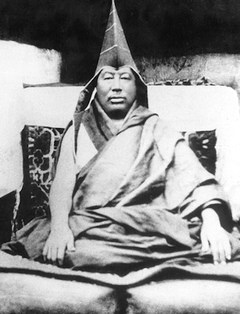
by Khenchen Ngawang Palzang
O, you who, via the path of wondrous interdependence,
Hold the maṇḍala of perspicacious wisdom—
Please let the light of the hundred suns
Of your magnificent marks and attributes shine on me!
When you follow uncivilized[1] guides beyond the pale of the Buddhadharma,
You will not find the authentic, supreme path.
That you may renounce [their ways],
With love, I offer you these few words.
The sūtras, tantras, and treatises speak at great length about the merits and faults of refraining from and engaging in killing. Yet I shall present the matter briefly—in the form of a trenchant instruction with few words and unconstrained by formal literary conventions—so that learned and ordinary people alike may understand it.
In general, of the ten non-virtues, the most serious are killing and wrong view. It is said,
There is no evil greater than killing;
Of the ten non-virtues, the gravest is to have wrong view.[2]
Apart from those in the hells, there are no beings who do not shrink from death or who do not value their lives over all else.[3] That is why it is so wrong to take a being’s life. The Sūtra of the Sublime Dharma of the Application of Mindfulness[4] tells us that we will have to repay the taking of one life with five hundred of our own lives, and that taking one life will land us in hell for an intermediate eon.[5]
It is even more egregious to kill or do other wrongs under the pretext of doing something good, such as creating representations of Three Jewels and so forth. Padampa Sangye said,
When you create representations of the Three Jewels by doing evil and breaking your vows,
You cast your future lives to the wind.
Thus, under the pretext of doing virtue, when you invite lamas and sangha members to your house and offer them the flesh and blood of slain sentient beings, you, as benefactor, and they, as recipients of religious offerings, are both defiled by the indignity of killing. As sponsor, though you are providing sustenance, you are giving what is impure; and for the recipients of the offering, it will amount to improper livelihood. Far from creating virtue, you will be doing something very wrong.
Unless they have the power to immediately resuscitate a slain being, even the lamas cannot escape being stained by the evil of killing, and it is sure to negatively impact their lifespans and activities. Therefore, unless you have the power to guide a consciousness to the state of great bliss,[6] you should avoid the evil of killing as much as you can.
In general, in the Buddhist tradition, once we take refuge, we are required to avoid harming sentient beings. So, if we go around inflicting violence on sentient beings and partaking of their murdered flesh and blood, how would this not fly in the face of your refuge vow?[7]
More specifically, in the Mahāyāna tradition centered around bodhicitta, we are supposed to shelter and protect all infinite sentient beings. However, we lack the slightest compassion for unfortunate beings that need our protection. We have these vulnerable beings slaughtered, and their flesh and blood cooked up. When this is placed before us “bodhisattvas” who have vowed to protect beings, and we are delighted with it and gobble it up, smacking our lips, could anything be more damnable and contemptible?
A Secret Mantra scripture says,
We have not gathered offerings of meat and blood as the manuals prescribe,
And thus disappointed the siṃha and piśācī.[8]
For this, we beg the ḍākinīs of this region for forbearance.
And a Secret Mantra tantra explains:
The five meats and five nectars[9]
Are the food and drink of the outer feast.
The five meats that are worthy feast substances are not tainted by the evil of slaughter for the sake of consumption, yet they are considered impure and inferior. On the other hand, when we consider slaughtered meat to be pure, this is called “fixating on purity and impurity and carelessly enjoying.”[10] It violates the samayas you have accepted.
If that is the case, then what about the ghastly, grisly,[11] non-dharmic activity of a religious sponsor having sentient beings slaughtered, lamas partaking of them with delight, and even offering them to the maṇḍala? Only non-Buddhists and Bönpos would practice this, for there is not even the faintest trace of anything Buddhist about it. This would throw all your vows, precepts and samayas into disarray, from the vow of refuge to the outer pratimokṣa to the inner bodhisattva vow to the [samayas] of Secret Mantras. Since all the scriptures and treatises teach this in detail, you must build a foundation of knowing what to give up and what to adopt.
There is a particular story of how a single act of killing produces unbearable suffering associated with karmic fully ripened results,[12] results resembling its cause,[13] governing results,[14] and so forth:[15]
There is a lake called Yardrok Yumtso, the Turquoise Lake of Yardrok,[16] that stretches from the headwaters of the Ralung Glacier[17] several-days’ journey to Zemaguru.[18] When the siddha Lingje Repa[19] visited there and looked into the lake, he wept, crying out, “Oh dear! Don’t misuse offerings; don’t misuse offerings!” When people asked him what he meant by this, he said, “This lake holds the consciousness of a lama who misused religious offerings. He was born here in an ephemeral hell, and he is experiencing so much suffering.” They asked him to show them [what he saw], so he used his miraculous powers to suddenly dry up the lake, revealing a huge fish whose body spanned the whole extent of the lake. A dense throng of countless creatures covered it, devouring its body. Unable to bear the pain, it writhed about.
The people asked, “Who would be born with such bad karma?”
Lingje Repa said, “This is the rebirth of Tsang Lama Tanakchen, [the black horse lama from Tsang].”[20]
Tsang Lama Tanakchen possessed powers of speech that carried great blessings, and with a single look, he could heal people afflicted by pernicious spirits. For such reasons, the people of the four quarters of Central Tibet[21] venerated him with offerings. At funerals and other rites, for every “Phaṭ!” syllable[22] he exclaimed, he would take many livestock as tribute.[23]
[In another story], Tangtong Gyalpo[24] was practicing tsa-lung exercises on top of a large boulder, which split open, revealing a great frog whose body was covered with small creatures that were devouring it. Unable to bear the pain, it kept gaping and clenching its mouth. When asked what this being was, [Tangtong Gyalpo] said that it was the rebirth of a lama who performed animal sacrifices.[25]
And what about lamas these days? Every time a patron slaughters a plump, succulent sheep and serves its bloody meat—the gullet, liver, and the rest—on top of a quivering rack of yak ribs, [the lamas] pull their shawls over their heads and suck on the entrails like babies at their mother’s breast. Then, cutting away bits with their knife, they take their time savoring the outer meat. When they have finished, they emerge looking quite different from before: their heads steaming and their faces slick with grease, as though they had smeared on a little butter. But for such indulgences in this life, in future lives, they will pay a debt with their own bodies, undergoing extremely hard times in an ephemeral hell.[26]
For these reasons, you should be wary of animal sacrifices and assiduous in your ethical choices.
The supreme tradition of sublime righteousness
Is the shining moon[27] of love and affection’s smile.
Those who honor it, unwavering, at their crowns
Attain the fruit of pristine awareness.
The benighted mistake wicked ways for good.
Some of them, possessed by the power of māras,[28]
Proclaim that they have immense positive qualities,
And dress up in the costumes of Buddhists.
Others are anxious about their livelihoods,
And, although they have a sense of right and wrong,
Shamelessly reckon[29] that blood sacrifices are acceptable.
Such people bring hell right on their crowns.
This document opposing blood sacrifice was compiled by Jang Lama Tsultrim Zangpo,[30] with a request that if it accorded with the Dharma, I would write an endorsement in its support; if it did not, then it would be proper for me to burn it in a fire or cast it into the water.
As requested, I, the Dharma teacher Tsultrim Gyatso, wrote this [endorsement] at the monastic college of Katok Dorje Den during the third month of the Iron Dragon year, [1940]. May it bring virtue.
| Translated by Joseph McClellan, 2026
Bibliography
Tibetan Editions
mkhan po ngag dgaʼ. ‘tshe ‘gog. In gsung ʼbum ngag dbang dpal bzang, vol. 1: 379–386. Khreng tuʼu, n.d.. BDRC MW22946.
mkhan po ngag dgaʼ. go 'jo bla ma bde chen la gdams pa. In gsung ʼbum kun mkhyen ngag gi dbang po, vol. 2, pp. 174–179. Si khron mi rigs dpe skrun khang, 2017. BDRC MW4CZ364088.
Secondary Sources
Khenpo Ngawang Palzang. Wondrous Dance of Illusion. Translated by Heidi L. Nevin and J. Jakob Leschly. Boston and London: Snow Lion, 2013.
Martin, Dan. "Lingrepa Pema Dorje." Treasury of Lives, 2008.
Patrul Rinpoche. Words of My Perfect Teacher. Translated by the Padmakara Translation Group. Boston: Shambhala, 1998.
Stearns, Cyrus. The King of the Empty Plain: The Tibetan Iron-Bridge Builder, Tangtong Gyalpo. Ithaca and Boulder: Snow Lion Publications, 2007.
Sur, Dominic. “Constituting Canon and Community in Eleventh Century Tibet: The Extant Writings of Rongzom and His Charter of Mantrins (sngags pa’i bca’ yig).” Religions 8, no. 3 (2017): 40.
Version: 1.0–20261113
Notes
-
“Uncivilized” for kla klo, which connotes “barbarians”—those who live with little ethical refinement and who are inclined to violence. ↩
-
The exact source of these widely cited lines remains unidentified. Patrul Rinpoche (Words of My Perfect Teacher, 111) gives the same lines with “zer ba yin” (“It is said…”). In multiple other sources, they are introduced with ji skad du (“As it is said…”), suggesting that they are stock proverbial lines. This quote, and the following several paragraphs until “avoid the evil of killing as much as you can,” reproduce, verbatim, a passage from Words of My Perfect Teacher, 111. ↩
-
“Apart from those in the hells” implies that such beings are so fated for endless violence that they do not even have the luxury of clinging to temporary security. ↩
-
Skt: Saddharmasmṛtyupasthāna Sūtra; Tib: dam pa’i chos dran pa nye bar bzhag pa’i mdo. ↩
-
S.v. bod rgya tshig mdzod chen mo: “According to the Abhidharma explanatory tradition, every two small kalpas are called one intermediate kalpa. This [intermediate kalpa] comprises exactly 16,798,000 human years.” ↩
-
“To [the state of] great bliss” for bde chen du, which implies Buddha Amitābha’s pure land of Great Bliss, or Sukhāvatī—the pure land most accessible to all beings after death. ↩
-
This and the following several paragraphs reproduce Patrul Rinpoche’s Words of My Perfect Teacher, 207 ↩
-
“Siṃha and piśācī” (seng ha phra men)—animal-headed ḍākinīs propitiated in tantric ritual. ↩
-
The meat of horses, humans, dogs, elephants, and cows, and the nectars of semen, menstrual blood, urine, feces, and either pus, mucous, phlegm, or brains. ↩
-
This passage paraphrases Patrul, Words of My Perfect Teacher, 207–208. ↩
-
“Ghastly, grisly” loosely renders rngam rngam ’dzig ’dzig, which combines the senses of “awesome” and “frightful.” ↩
-
rnam smin gyi ’bras bu. According to the bod rgya tshig mdzod chen mo: "One of the five types of result. It is that which arises from a cause that is either virtuous or non-virtuous and associated with the contaminants (sāsrava); for example, the aggregates of contaminated appropriation (sāsrava upādāna-skandha).” See Patrul, Words of My Perfect Teacher, 112. ↩
-
rgyu mthun gyi ’bras bu: "One of the five types of result, it is a result that is identical to its cause and arises with a similar character—for example, virtue arising from virtue. It is the result of the two causes known as the cause of similar kind and the universal cause” (bod rgya tshig mdzod chen mo, s.v.). Common examples of this include a generous person becoming rich in their next life, or a sadistic person continuing to cause harm in their next life. See Patrul, Words of My Perfect Teacher, 112. ↩
-
bdag po’i ’bras bu: “One of the five types of result, it is a result brought about through the influence of its own cause. For example, misdeeds lead to birth in an unfavorable realm, while virtuous deeds lead to birth in a favorable realm, over which one then exercises dominion” (bod yig tshig gter rgya mtsho, s.v.). Also understood as the ”environmental result“ or ”conditioning effect" (Patrul, Words of My Perfect Teacher, 116). ↩
-
The remaining two results not listed here are the bral ba’i ’bras bu (“the result of separation [from things to be abandoned]”) and the skyes bu byed pa’i ’bras bu (“the results of human action”)—for example, gaining wealth through skillful business or contracting a disease through negligence. ↩
-
S.v., bod rgya tshig mdzod chen mo: “Located in the southern part of the Tibet Autonomous Region, on the southern side of the Tsangpo River, in the northern part of Nakartse County (sna dkar rtse rdzong). It has a surface area of 678 square kilometers and lies at an elevation of 4,441 meters above sea level. Its greatest depth is 59 meters. The lake is rich in fish, and the abundance of different kinds of grasses and water plants along its shores makes it an excellent pastoral area. At the northwestern tip of the lake there was once an outlet through which its waters flowed into the Yarlung Tsangpo River. However, this outlet has now been blocked by sand and mud, turning the lake into an inland lake with no outflow.” ↩
-
rwa lung gangs chen. ↩
-
ze ma rgu ru. ↩
-
gling rje ras pa pad+ma rdo rje (1128–1188). A student of Pakmodrupa (phag mo gru pa) and teacher of Tsangpa Gyare (gtsang pa rgya ras). See Dan Martin, “Lingrepa Pema Dorje.” ↩
-
gtsang bla ma rta nag can. ↩
-
ru bzhi—lit. “four horns.” See Dominic Sur, “Constituting Canon and Community in Eleventh Century Tibet: The Extant Writings of Rongzom and His Charter of Mantrins (sngags pa’i bca’ yig),” Religions 8, no. 3 (2017): 40: “The Four Horns of Tibet (ru bzhi) are four areas in Central Tibet: the side horn of Tsang, called Rulak, the right horn of Tsang, called Yéru, the Left horn of Ü, called Yoru, and the central horn of Ü, called Uru.” ↩
-
A forceful syllable exclaimed during the practice of ’pho ba (“transference of consciousness”). ↩
-
Cf. Patrul, Words of My Perfect Teacher, 69–70. ↩
-
thang stong rgyal po (1361–1485). For his biography, see Cyrus Stearns, The King of the Empty Plain. ↩
-
Cf. Patrul, Words of My Perfect Teacher, 70. ↩
-
Cf. Patrul, Words of My Perfect Teacher, 70. ↩
-
’od dkar can—lit. “possessing white light.” ↩
-
‘ga’ la bdud kyi byin rlabs zhugs—Alt. “The blessings of māras/demons will enter some of them.” ↩
-
Reading rtsi ba for ci ba. ↩
-
’jang bla ma tshul khrims bzang po. This student is mentioned in the Khenpo’s biography (Khenpo Ngawang Palzang, Wondrous Dance of Illusion, 209). The division of labor described in this colophon is murky. Jang Lama’s verbal action is given as yi ge byas pa (“created/prepared the letter/document”). Since the document’s content is almost entirely Patrul Rinpoche’s words, it makes sense that Jang Lama compiled the passages. Khenpo Ngaga’s role is given as lag nas bris pa (“wrote it by hand”), which seems to imply giving it his seal of approval, adding his introductory and closing verses, and disseminating it. ↩