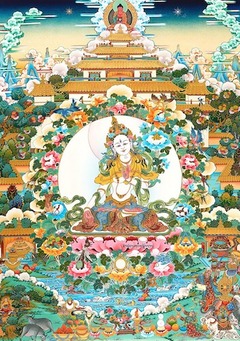
Atiśa's Tradition White Tārā Empowerment
༄༅། །ཇོ་ལུགས་སྒྲོལ་དཀར་མཎྜལ་གཅིག་པའི་སྒྲུབ་སྐོར་ལས་ཚོགས་དང་བཅས་པ་བཞུགས་སོ།།
The Cycle for Accomplishing the One Maṇḍala of White Tārā from Atiśa's Tradition Together with Various Activities
གསུམ་པ་གཞན་རྗེས་སུ་འཛིན་པའི་ཆོ་ག་ནི།
3. The Ritual for Taking Care of Others: The Permission Blessing
by Ratön Ngawang Tendzin Dorje
སྟེགས་བུ་ཁེབས་ལྡན་གྱི་དབུས་སུ་མཎྜལ་པདྨ་འདབ་བརྒྱད་ཀྱི་ལྟེ་བར་སྐུའམ་མེ་ཏོག་གི་ཚོམ་བུ་དགོད། དེའི་མདུན་དུ་རྣམ་བུམ་བཅུད་ལྡན། གཡས་སུ་འོ་མ་དང་མངར་གསུམ་སྦྱར་བའི་བདུད་རྩི། གཡོན་དུ་དཀར་མངར་དང་ཚེ་རྫས་སྦྱར་བའི་རིལ་བུ། དེའི་མདུན་དུ་མཆོད་གཏོར་སོགས་འདུ་བྱ། བདག་བསྐྱེད་བཟླས་པ་དང་བཅས་པའི་རྗེས། མདུན་རྟེན་བསངས་སྦྱང་།
Upon an altar draped with cloth, place a statue or heaps of flowers in the centre of an eight-petalled lotus maṇḍala. Then, in front of it, position the victorious vase filled with liquid. Next, to the right, arrange the medicinal amṛta mixed with milk and the three sweet substances, and to the left, the pills composed of the white, sweet and longevity substances. Finally, in front of these, display the offering tormas and other ritual items. After completing the self-generation and recitation, cleanse and purify the front support.
མདུན་རྟེན་སྟོང་ཉིད་སྐྱེ་བ་མེད་པའི་ངང་།
dün ten tongnyi kyewa mepé ngang
The front support dissolves into emptiness, and from this unborn state
སྐྱེ་བའི་ཆོ་འཕྲུལ་སྒྱུ་མའི་རྣམ་རོལ་ནི།
kyewé chotrul gyumé namrol ni
Arises the illusion-like magical display
གཡུ་ལོ་བཀོད་པའི་ཞིང་ཁམས་ཉམས་དགའ་བ།
yu lo köpé zhingkham nyamgawa
Of the delightful pure realm Array of Turquoise Petals…
ཞེས་སོགས་ནས་བསྟོད་པའི་བར་བྱ། གཏོར་མ་ཕུལ། མདུན་བསྐྱེད་ཀྱི་ཐུགས་རྒྱུད་བསྐུལ་བར་མོས་ལ་བཟླས་པ་ཅི་རིགས་པ་དང་། ཐུགས་ཀའི་འོད་ཀྱིས་ཚེ་བཅུད་བསྡུས་ནས་ཚེ་རྫས་ལ་ཐིམ་པར་དམིགས། བུམ་པ་བསང་སྦྱང་།
Continue through to the praise and present the torma offering. Recite the mantra as many times as appropriate while imagining that you invoke the wisdom minds of the deities of the front visualisation. Light emanates from the heart centre, gathering the essence of life, which dissolves into the longevity substances. Next, cleanse and purify the vase.
སྟོང་པའི་ངང་ལས་པད་ཟླའི་གདན་གྱི་སྟེང་།
tongpé ngang lé pé dé den gyi teng
From the state of emptiness, upon a lotus and moon seat,
བྷྲཱུྃ་ལས་རིན་ཆེན་བུམ་པ་མཚན་ཉིད་རྫོགས།
droom lé rinchen bumpa tsennyi dzok
The syllable bhrūṃ becomes a perfect jewelled vase,
བདུད་རྩིའི་བཅུད་ཀྱིས་ཡོངས་སུ་གང་བའི་དབུས།
dütsi chü kyi yongsu gangwé ü
Filled to the brim with the essence of amṛta.
པད་དཀར་ཟླ་སྟེང་ཏཱྃ་ཡིག་ཡོངས་གྱུར་ལས།
pekar da teng tam yik yong gyur lé
In its centre, on a white lotus and moon disc, the syllable tāṃ transforms into…
ཞེས་སོགས་ནས་བསྟོད་པའི་བར་བྱ། གཟུངས་ཐག་བླངས་ལ།
And so forth, up through the praise. Take hold of the dhāraṇī cord.
རང་གི་ཐུགས་ཀ་ནས་སྔགས་ཀྱི་ཕྲེང་བ་བྱུང་།
rang gi tukka né ngak kyi trengwa jung
From my heart centre emerges a mantra-garland
གཟུངས་ཐག་ལ་འཁྲིལ་བུམ་ལྷའི་ཐུགས་རྒྱུད་བསྐུལ།
zung tak la tril bum lhé tukgyü kul
That flows through the dhāraṇī cord, invoking the wisdom mind of the vase deity.
སྐུ་ལས་འཆི་མེད་ཡེ་ཤེས་བདུད་རྩིའི་རྒྱུན།
ku lé chimé yeshe dütsi gyün
From the deity's form, a stream of immortal wisdom amṛta
བབས་པས་བུམ་པ་ཡོངས་སུ་གང་བར་གྱུར།
babpé bumpa yongsu gangwar gyur
Flows forth, completely filling the vase.
ཅེས་དམིགས་ལ་བཟླས་པ་ཅི་ནུས་མཐར་མཆོད་ཅིང་བསྟོད། ཡི་གེ་བརྒྱ་པ་བརྗོད།
While visualising this, recite the mantra as much as possible. At the conclusion, present offerings and recite praises. Then recite the hundred-syllable mantra.
ཨོཾ་ཨཱཿཧཱུྃ་གིས་དུང་ཞལ་གྱི་ཆུ་མཆོད་ཡོན་དུ་དྲངས་པས་བུམ་པའི་ལྷ་འོད་དུ་ཞུ་བའི་ཆུ་བདུད་རྩིའི་རང་བཞིན་དུ་གྱུར་པར་བསམ།
om ah hung gi dung zhal gyi chu chöyön du drangpé bumpé lha ö du zhuwé chu dütsi rangzhin du gyurpar gyur
While reciting oṃ āḥ hūṃ, present the water from the conch shell as a libation offering. Visualize the vase deity dissolving into light, transforming the water into the nature of amṛta.
དེ་ནས་སློབ་མ་ཁྲུས་བྱས། སྔོན་གཏོར་གཏོང་། ཆོས་བཤད་ཅི་རིགས་པ་ལས་མཚམས་སྦྱོར་གྱི་ཁྱད་པར།
Then, cleanse the student, present the preliminary torma, and give whatever teachings are appropriate to introduce this empowerment.
The History
དེ་ལ་འཆི་མེད་ཚེ་དང་ཡེ་ཤེས་ཀྱི་དངོས་གྲུབ་སྟེར་བའི་ལྷག་པའི་ལྷ་ཁྱད་པར་ཅན་རྗེ་བཙུན་སྒྲོལ་མ་དཀར་མོ་ཡིད་བཞིན་འཁོར་ལོའི་སྐོར་ལ་བཀའ་གཏེར་དག་སྣང་གི་བབས་སོ་མང་དུ་བཞུགས་པ་ལས།
dé la chimé tsé dang yeshe kyi ngödrub terwé lhakpé lha khyepar chen jetsün drolma karmo yizhin khorlö kor la kater daknang gi bab so mangdu zhukpa lé
Numerous lineages from the kama, terma and pure visions exist for the Venerable White Tārā Wish-Fulfilling Wheel—the extraordinary and supreme deity who bestows the accomplishment of immortal life and wisdom.
འདིར་རིང་བརྒྱུད་བཀའ་མ་ཇོ་བོ་རྗེ་དཔལ་ལྡན་ཨ་ཏི་ཤའི་གདམས་པ་ལས་བྱུང་བ་གཞིར་བཟུང་སྟེ།
dir ring gyü kama jowo jé palden ati shé dampa lé jungwa zhir zung té
This teaching draws primarily upon the instructions that derive from the long kama lineage of the glorious Jowo Jé Atiśa.
ཉེ་བརྒྱུད་གཏེར་མ་རྩོད་བྲལ་དུས་བབས་ཀྱི་གཏེར་ཆེན་ཨོ་རྒྱན་རོག་རྗེ་གླིང་པས་འཕྱིང་དབ་བང་སོ་དམར་པོ་ནས་སྤྱན་དྲངས་པའི་འཕགས་མའི་གདམས་བསྐོར་གྱི་བྱིན་རླབས་ཀྱི་བརྒྱུད་པའང་དོན་གྱིས་བཞུགས་ཤིང་།
nyegyü terma tsödral dü bab kyi terchen orgyen rok jé lingpé ching dab bang so marpo né chendrang pé pakmé dam kor gyi jinlab kyi gyüpa ang dön gyi zhuk shing
Yet it is also infused with the blessings of the close lineage of terma, namely the lineage of the cycle of instructions of the Noble Lady that was revealed by the great tertön Orgyen Rokje Lingpa1—an undisputed treasure-revealer precisely for our time—who extracted it from the Red Tomb of Ching.2
ཤིན་ཏུ་ཉེ་བརྒྱུད་ཀུན་མཁྱེན་བླ་མ་ཉིད་ལ་འཕགས་མ་ཡིད་བཞིན་འཁོར་ལོས་མངོན་སུམ་དུ་བྱིན་གྱིས་བརླབས་པས་ཁྱད་པར་དུ་བྱས་པ་འདི་ཉིད་ཀྱི་སྒོ་ནས་སློབ་མ་རྗེས་སུ་བཟུང་བ་ལ་ཐོག་མར་མཎྜལ་ཕུལ་མཛོད།
shintu nyegyü künkhyen lama nyi la pakma yizhin khorlö ngönsum du jin gyi labpé khyepardu jepa di nyi kyi goné lobma jesu zungwa la tokmar mandal pul dzö
Finally, and most significantly, it is distinguished by the extremely close lineage, since the Omniscient Guru Jigme Lingpa was blessed by the reverent Tārā Wish-Fulfilling Wheel herself. Before taking care of the students and giving the permission blessing, have the students offer a maṇḍala.
The Request
གསོལ་བ་འདེབས་པ་འདིའི་རྗེས་ཟློས་མཛོད།
solwa debpa di jé dö dzö
For the request, repeat the following:
རྡོ་རྗེ་འཛིན་པ་དགོངས་སུ་གསོལ། །
dorjé dzinpa gong su sol
Vajra-holder, please turn your attention towards me!
བདག་ནི་འགྲོ་ལ་ཕན་དོན་དུ། །
dak ni dro la pen döndu
For the benefit of all beings,
གཙོ་ཆེན་ཁྱོད་ལ་གསོལ་འདེབས་ཀྱིས། །
tso chen khyö la soldeb kyi
Principle one, I pray to you:
མ་ལུས་རྗེས་གནང་སྩལ་དུ་གསོལ། །
malü jenang tsal du sol
Please grant the permission blessing in its entirety!
ལན་གསུམ།
Three times.
Daily Confession
སློབ་དཔོན་མདུན་བསྐྱེད་དང་བཅས་པའི་སྤྱན་སྔར་རྒྱུན་བཤགས་སྔོན་དུ་འགྲོ་བས་སྡོམ་པ་བཟུང་བ་འདིའི་རྗེས་ཟློས་མཛོད།
lobpön dünkyé dang chepé chen ngar gyün shak ngöndu drowé dompa zungwa di jé dö dzö
In the presence of the master and the deity visualised in front, first perform the daily confession as a preliminary to taking the vows. Then repeat the following:
དཀོན་མཆོག་གསུམ་ལ་བདག་སྐྱབས་མཆི། །
könchok sum la dak kyab chi
I take refuge in the Three Jewels,
སྡིག་པ་མི་དགེ་སོ་སོར་བཤགས། །
dikpa mi gé sosor shak
Confess all my wrongdoing and non-virtuous actions,
འགྲོ་བའི་དགེ་ལ་རྗེས་ཡི་རང་། །
drowé gé la jé yi rang
Rejoice in the virtues of beings,
སངས་རྒྱས་བྱང་ཆུབ་ཡིད་ཀྱིས་གཟུང་། །
sangye changchub yi kyi zung
And maintain the enlightened mind with firm resolve.
སངས་རྒྱས་ཆོས་དང་ཚོགས་མཆོག་ལ། །
sangye chö dang tsok chok la
I take refuge in the Buddha, the Dharma and the Supreme Assembly
བྱང་ཆུབ་བར་དུ་སྐྱབས་སུ་མཆི། །
changchub bardu kyab su chi
Until I reach enlightenment.
རང་གཞན་དོན་གཉིས་རབ་བསྒྲུབ་ཕྱིར། །
rangzhen dön nyi rab drub chir
To fully accomplish the benefit of myself and others
བྱང་ཆུབ་སེམས་ནི་བསྐྱེད་པར་བགྱི། །
changchub sem ni kyepar gyi
I will arouse the heart of the awakening.
བྱང་ཆུབ་མཆོག་གི་སེམས་ནི་བསྐྱེད་བགྱིས་ནས། །
changchub chok gi sem ni kyé gyi né
Having aroused the supreme heart of awakening,
སེམས་ཅན་ཐམས་ཅད་བདག་གིས་མགྲོན་དུ་གཉེར། །
semchen tamché dak gi drön du nyer
I will honour all beings as my guests
བྱང་ཆུབ་སྤྱོད་མཆོག་ཡིད་འོང་སྤྱད་པར་བགྱི། །
changchub chö chok yi ong chepar gyi
And uphold the supreme awakened conduct, pleasing to all.
འགྲོ་ལ་ཕན་ཕྱིར་སངས་རྒྱས་འགྲུབ་པར་ཤོག །
dro la pen chir sangye drubpar shok
For the benefit of beings, I will accomplish buddhahood.
ལན་གསུམ།
Three times.
The Permission Blessing of the Enlightened Body
དངོས་གཞི་སྐུའི་རྗེས་གནང་གི་སླད་དུ།
ngözhi kü jenang gi ledu
For the main part, in order to bestow the permission blessing of the enlightened body:
ཁྱེད་རང་རྣམས་སྟོང་པའི་ངང་ལས་པད་ཟླའི་གདན་ལ་ཏཱྃ་དཀར་པོ་ལས་རྗེ་བཙུན་སྒྲོལ་མ་སྐུ་མདོག་དཀར་མོ་ཞལ་གཅིག་ཕྱག་གཉིས་སྤྱན་བདུན་དང་ལྡན་པ།
khyerang nam tongpé ngang lé pé dé den la tam karpo lé jetsün drolma kudok karmo zhal chik chak nyi chen dün dang denpa
Visualise yourselves emerging from the state of emptiness, seated upon lotus and moon, manifesting from a white syllable tāṃ as the venerable Tārā—radiant white in colour, with one face, two arms, and seven eyes.
གཡས་མཆོག་སྦྱིན་དང་།
yé chok jin dang
Her right hand is in the gesture of supreme generosity,
གཡོན་དཀོན་མཆོག་གསུམ་མཚོན་སྐྱབས་སྦྱིན་གྱི་ཕྱག་རྒྱས་མེ་ཏོག་ཨུཏྤལ་ལ་དཀར་པོ་བསྣམས་པ།
yön könchok sum tsön kyab jin gyi chakgyé metok utpal la karpo nampa
And her left hand holds a white utpala flower in the gesture of granting refuge, symbolizing the Three Jewels.
དར་དང་རིན་པོ་ཆེའི་རྒྱན་གྱིས་བརྒྱན་ཅིང་ཞབས་རྡོ་རྗེའི་སྐྱིལ་མོ་ཀྲུང་གིས་བཞུགས་པའི་གནས་གསུམ་དུ་ཨོཾ་ཨཱཿཧཱུྃ་གིས་མཚན་པ་ལས་འོད་ཟེར་འཕྲོས།
dar dang rinpoche gyen gyi gyen ching zhab dorjé kyilmo trung gi zhukpé né sum du om ah hung gi tsenpa lé özer trö
She is adorned with silks and jewelled ornaments, and is seated in the vajra posture. Her three places are marked with oṃ, āḥ and hūṃ, from which light radiates.
བསྒོམ་པ་དང་འདྲ་བའི་ཡེ་ཤེས་སེམས་མའི་ཚོགས་བསམ་གྱི་མི་ཁྱབ་པ་སྤྱན་དྲངས།
gompa dang drawé yeshe sem mé tsok sam gyi mi khyabpa chendrang
Countless female wisdom deities,3 identical to your visualisation, are invited.
ཁྱེད་རང་རྣམས་ལ་གཉིས་སུ་མེད་པར་ཐིམ་པའི་མོས་པ་མཛོད།
khyerang nam la nyisumepar timpé möpa dzö
Imagine that they dissolve inseparably into you.
རྩ་སྔགས་མཐར།
At the end of the root mantra,4 add:
ཨཱ་བེ་ཤ་ཡ་བཏགས་པ་དང་།
abéshaya
āveśāya
སྤོས་རོལ་དང་བཅས་བྱིན་དབབ།
And accompany the descent of blessings with incense and music.
དེ་བརྟན་པར་བྱ་བའི་སླད་དུ་བུམ་པའི་བདུད་རྩིས་སྤྱི་བོ་ནས་དབང་བསྐུར་བའི་མོས་པ་མཛོད།
dé tenpar jawé ledu bumpé dütsi chiwo né wangkurwé möpa dzö
To stabilise this, visualise receiving the empowerment as the amṛta from the vase is poured onto the crown of your head.
ཨོཾ། རྗེ་བཙུན་འཕགས་མ་སྒྲོལ་མ་ཡི།
om, jetsün pakma drolma yi
Oṃ. This vase empowerment,
སྐུ་ཡི་རང་བཞིན་བུམ་པའི་དབང་།
ku yi rangzhin bumpé wang
Which embodies venerable Ārya Tārā's form,
སྐལ་ལྡན་ཁྱོད་ལ་བསྐུར་བ་ཡིས།
kalden khyö la kurwa yi
Is bestowed upon you, fortunate one:
རྡོ་རྗེའི་སྐུ་རུ་འགྲུབ་པར་ཤོག
dorjé ku ru drubpar shok
May you attain the vajra body.
རྩ་སྔགས་མཐར།
At the end of the root mantra, add:
ཀཱ་ཡ་ཨ་བྷི་ཥིཉྩ་ཨོཾ།
kaya abhikintsa om
kayābhiṣiñca oṃ
དེས་སྐུའི་རྗེས་སུ་གནང་བ་ཐོབ་པ་ཡིན་ནོ།
dé kü jesu nangwa tobpa yin no
Through this, you have received the permission blessing of the enlightened body.
The Permission Blessing of the Enlightened Speech
གསུང་གི་རྗེས་སུ་གནང་བ་ལ་བཟླས་ལུང་གི་སླད་དུ།
sung gi jesu nangwa la dé lung gi ledu
For the permission blessing of enlightened speech and mantra transmission:
ཁྱེད་རང་རྣམས་ཀྱི་སྙིང་གར་འཁོར་ལོ་དཀར་པོ་རྩིབས་བརྒྱད་པའི་ལྟེ་བར་ཏཱྃ། དེའི་མདུན་དུ་ཨོཾ། རྒྱབ་ཏུ་ཧཱ།
khyerang nam kyi nyinggar khorlo karpo tsib gyepé tewar tam, dé dündu om, gyabtu ha
At your heart visualize a white, eight-spoked wheel with tāṃ at its centre. In front of it is the syllable oṃ and behind it is hā.
རྩིབས་བརྒྱད་ལ་ཡི་གེ་འབྲུ་བརྒྱད་གསལ་བཏབ་ནས་སློབ་དཔོན་ལ་མོས་གུས་བྱས་པས་ཐུགས་ཀའི་འཁོར་ལོ་ལས་སྔགས་ཕྲེང་བྱུང་། ཞལ་ནས་ཐོན། ཁྱེད་རང་རྣམས་ཀྱི་ཞལ་དུ་ཞུགས། སྙིང་གའི་སྔགས་ཕྲེང་ལ་ཐིམ་པའི་མོས་པ་འདིའི་རྗེས་ཟློས་མཛོད།
tsib gyé la yigé dru gyé sal tab né lobpön la mögü jepé tukké khorlo lé ngak treng jung, zhal né tön, khyerang nam kyi zhal du zhuk, nyinggé ngak treng la timpé möpa di jé dö dzö
Upon the eight spokes, clearly visualise the eight syllables. Through one’s devotion to the master, a garland of mantras issues from the wheel at his heart, emerges from his mouth, enters through your mouth, and dissolves into the mantra garland at your heart. Visualise this and repeat the following:
རྩ་སྔགས་ལན་གསུམ།
Recite the root mantra three times.
Taking the Vow
དམ་བཅའ་བའི་སླད་དུ།
damchawé ledu
For the purpose of taking the vow:
འདི་ནས་བྱང་ཆུབ་སྙིང་པོའི་བར་དུ་རྗེ་བཙུན་སྒྲོལ་མ་དཀར་མོ་ཡི་དམ་དུ་འཛིན་སྙམ་པས་འདིའི་རྗེས་ཟློས་མཛོད།
di né changchub nyingpö bardu jetsün drolma karmo yidam du dzin nyampé di jé dö dzö
With the thought, "From now until I reach the essence of enlightenment, I will take the venerable White Tārā as my yidam", repeat the following:
ཕྱོགས་བཅུ་ན་བཞུགས་པའི་སངས་རྒྱས་དང་བྱང་ཆུབ་སེམས་དཔའ་ཐམས་ཅད་དང་།
chok chu na zhukpé sangye dang changchub sempa tamché dang
All you buddhas and bodhisattvas who dwell in the ten directions,
སློབ་དཔོན་བདག་ལ་དགོངས་སུ་གསོལ།
lobpön dak la gong su sol
Master, turn your attention toward me, I pray!
བདག་མིང་འདི་ཞེས་བགྱི་བས།
dak ming di zhé gyiwé
I, (...insert your name…),
དུས་འདི་ནས་བཟུང་སྟེ།
dü di né zung té
From this moment
ཇི་སྲིད་བྱང་ཆུབ་སྙིང་པོ་ལ་མཆིས་ཀྱི་བར་དུ།
jisi changchub nyingpo la chi kyi bardu
Until reaching the essence of enlightenment,
སྒྲོལ་དཀར་ཡིད་བཞིན་འཁོར་ལོ་ཡི་དམ་གྱི་ལྷར་བཟུང་ཞིང་།
drolkar yizhin khorlo yidam gyi lhar zung zhing
Take White Tārā Wish-Fulfilling Wheel as my yidam deity,
བཟླས་བརྗོད་ལ་བརྩོན་པར་དམ་འཆའ་ལགས་སོ།
dejö la tsönpar dam cha lak so
And vow to exert myself in mantra recitation.
ལན་གསུམ།
Three times.
Requesting the Blessing
བྱིན་གྱིས་བརླབ་པའི་སླད་དུ།
jingyi lab pé ledu
For the purpose of receiving the blessing:
སློབ་དཔོན་ལ་མེ་ཏོག་འཐོར་བཞིན་དུ་འདིའི་རྗེས་ཟློས་མཛོད།
lobpön la metok tor zhindu di jé dö dzö
While scattering flowers towards the master, repeat the following:
བཅོམ་ལྡན་བདག་ལ་སྩལ་ལགས་ཀྱི། །
chomden dak la tsal lak kyi
Blessed One, bestow the empowerment
བདག་ལ་འགོ་བར་མཛད་དུ་གསོལ། །
dak la gowar dzé du sol
And your command upon me.
ལན་གསུམ།
Three times.
སློབ་དཔོན་གྱི་དེ་ལྟར་ཕུལ་བའི་མེ་ཏོག་སྔགས་ཕྲེང་དུ་བསྒྱུར་ནས་ཁྱེད་རང་རྣམས་ཀྱི་སྤྱི་བོར་གཏོར་བས་སྙིང་གར་ཐིམ་པའི་མོས་པ་མཛོད།
lobpön gyi detar pulwé metok ngak treng du gyur né khyerang nam kyi chiwor torwé nyinggar timpé möpa dzö
Visualise that the flowers you have offered to the master transform into a mantra garland. As he places it upon your crown, it dissolves into your heart.
བཅོམ་ལྡན་འདི་ལ་སྩལ་ལགས་ཀྱི།
chomden di la tsal lak kyi
Blessed One, bestow the empowerment
འདི་ལ་འགོ་བར་མཛད་དུ་གསོལ།
di la gowar dzé du sol
And your command upon them.
སྔགས་ཀྱི་དངོས་གྲུབ་སྩལ་དུ་གསོལ།
ngak kyi ngödrub tsal du sol
Bestow the accomplishment of mantra
བརྟུལ་ཞུགས་བརྟན་པར་མཛད་དུ་གསོལ།
tulzhuk tenpar dzé du sol
And make their yogic conduct stable.
ལན་གསུམ།
Three times.
དེ་བརྟན་པར་བྱ་བའི་སླད་དུ་འཆི་མེད་ཚེའི་བདུད་རྩི་བྱིན་པའི་མོས་པ་མཛོད།
dé tenpar jawé ledu chimé tsé dütsi jinpé möpa dzö
To stabilise this, visualise receiving the amṛta of immortal life.
ཨཱཿ རྗེ་བཙུན་འཕགས་མ་སྒྲོལ་མ་ཡི།
ah, jetsün pakma drolma yi
Āḥ. This stream of amṛta,
གསུང་གི་རང་བཞིན་བདུད་རྩིའི་རྒྱུན།
sung gi rangzhin dütsi gyün
Which embodies the venerable Ārya Tārā's speech,
སྐལ་ལྡན་ཁྱོད་ལ་སྦྱིན་པ་ཡིས།
kalden khyö la jinpa yi
Is bestowed upon you, fortunate one:
རྡོ་རྗེའི་གསུང་དུ་འགྲུབ་པར་ཤོག
dorjé sung du drubpar shok
May you attain the vajra speech.
རྩ་སྔགས་དང་།
At the end of the root mantra, add:
ཝཱ་ཀ་ཨ་བྷི་ཥིཉྩ་ཨཱཿ
waka abhikintsa ah
vākābhiṣiñca āḥ
དེས་གསུང་གི་རྗེས་སུ་གནང་བ་ཐོབ་པ་ཡིན་ནོ།
dé sung gi jesu nangwa tobpa yin no
Through this, you have received the permission blessing of the enlightened speech.
The Permission Blessing of the Enlightened Mind
ཐུགས་ཀྱི་རྗེས་གནང་གི་སླད་དུ།
tuk kyi jenang gi ledu
For the permission blessing of enlightened mind:
སློབ་དཔོན་གྱི་ཐུགས་ཀའི་འོད་ཀྱིས་མདུན་བསྐྱེད་ཀྱི་ཐུགས་རྒྱུད་བསྐུལ།
lobpön gyi tukké ö kyi dünkyé kyi tukgyü kul
Light from the master's heart invokes the wisdom mind of the front-visualisation.
དེའི་ཐུགས་ཀ་ནས་འོད་ཟེར་འཕྲོས།
dé tukka né özer trö
From Tārā’s heart, light radiates forth,
ཕྱོགས་བཅུའི་སངས་རྒྱས་ཐམས་ཅད་ཀྱི་ཐུགས་གཉིས་སུ་མེད་པའི་ཡེ་ཤེས་ཀྱི་ངོ་བོ་ཕྱག་མཚན་ཨུཏྤ་ལའི་རྣམ་པར་སྤྱན་དྲངས།
chok chü sangye tamché kyi tuk nyisumepé yeshe kyi ngowo chaktsen utpalé nampar chendrang
Inviting the non-dual wisdom essence of all the buddhas of the ten directions in the form of implements and utpala flowers.
མདུན་བསྐྱེད་ཀྱི་ཐུགས་ཀར་ཐིམ།
dünkyé kyi tukkar tim
These dissolve into the heart of the front-visualisation.
དེའི་ཐུགས་ཀ་ནས་ཡེ་ཤེས་ཀྱི་སྐུ་གཉིས་པ་བྱུང་།
dé tukka né yeshe kyi ku nyipa jung
From her heart emerges a second wisdom body,
ཁྱེད་རང་རྣམས་ཀྱི་སྤྱི་བོ་ནས་ཞུགས།
khyerang nam kyi chiwo né zhuk
Which enters through your crown
སྙིང་གར་ཐིམ་པའི་མོས་པ་དང་བཅས་སྤྲོས་བྲལ་རྣམ་པར་མི་རྟོག་པའི་ངང་དུ་མཉམ་པར་འཇོག་མཛོད།
nyinggar timpé möpa dangché trödral nampar mitokpé ngang du nyampar jok dzö
And dissolves into your heart. With this visualisation, rest in non-conceptual meditation, a state free from elaboration.
དེ་བརྟན་པར་བྱ་བའི་སླད་དུ་ཚེའི་རིལ་བུ་བྱིན་པའི་མོས་པ་མཛོད།
dé tenpar jawé ledu tsé rilbu jinpé möpa dzö
To stabilise this, imagine that you receive the longevity pill.
ཧཱུྃ། རྗེ་བཙུན་འཕགས་མ་སྒྲོལ་མ་ཡི།
hung, jetsün pakma drolma yi
Hūṃ. This longevity pill,
ཐུགས་ཀྱི་རང་བཞིན་ཚེའི་རིལ་བུ།
tuk kyi rangzhin tsé rilbu
Which embodies the venerable Ārya Tārā's mind,
སྐལ་ལྡན་ཁྱོད་ལ་སྦྱིན་པ་ཡིས།
kalden khyö la jinpa yi
Is bestowed upon you, fortunate one:
རྡོ་རྗེའི་ཐུགས་སུ་འགྲུབ་པར་ཤོག
dorjé tuk su drubpar shok
May you attain the vajra mind.
རྩ་སྔགས་དང་།
At the end of the root mantra, add:
ཙིཏྟ་ཨ་བྷི་ཥིཉྩ་ཧཱུྃ།
tsitta abhikintsa hung
cittābhiṣiñca hūṃ
དེས་ཐུགས་ཀྱི་རྗེས་སུ་གནང་བ་ཐོབ་པ་ཡིན་ནོ།
dé tuk kyi jesu nangwa tobpa yin no
Through this, you have received the permission blessing of the enlightened mind.
རྗེས་སུ་བཀྲ་ཤིས་བརྗོད། དམ་ཚིག་ཁས་བླངས་སོགས་སྤྱི་ལྟར་དང་། རྗེས་ཆོག་མཆོད་བསྟོད་དངོས་གྲུབ་བླངས་བ་སོགས་ཚོགས་མཆོད་ཀྱི་སྐབས་ལྟར་བྱའོ།
After this, recite the auspicious verses. The samaya commitments are taken as usual. The concluding rites—offerings, praises, and receiving accomplishments—follow the procedure of the feast offering section.
ཞེས་པའང་ཞབས་དྲུང་རིན་པོ་ཆེ་བསྟན་འཛིན་ལགས་ཀྱི་གསུང་གིས་བསྐུལ་བ་དང་། རྗེ་བཙུན་རིན་པོ་ཆེ་ཛྙཱ་ནའི་མཚན་ཅན་གྱི་ཞལ་སྔ་ནས་ཀྱང་ལེགས་སོ་དབུགས་དབྱུང་བས་འདྲི་བའི་སྤོབས་པ་སྐྱེས་ཏེ། སྔགས་བཙུན་ཤཱ་ས་ན་དྷ་ར་བཛྲ་གྱིས་ལྷ་དང་མཁའ་འགྲོ་འདུ་བའི་དབེན་རིའི་ངོགས་བསམ་གཏན་བསྒོམ་པའི་ཁང་བུར་ཐུན་མཚམས་འགའ་ཞིག་ཏུ་བྲིས་པའི་དགེ་བའི་བསྟན་འཛིན་གྱི་སྐྱེས་བུ་རྣམས་ཞབས་པད་བརྟན་ཅིང་། སེམས་ཅན་ཐམས་ཅད་ཚེ་མཐར་ཕྱིན་པའི་རྒྱུར་གྱུར་ཅིག
This was written at the request of Zhabdrung Rinpoche Tendzin, and with the encouragement and approval of Jetsün Rinpoche, who is named Jñāna. Having thus gained confidence, the tantric master Śāsana-dhara Vajra5 composed this during breaks between meditation sessions in a hermitage on a secluded mountainside where deities and ḍākinīs gather. Through this virtue, may the lives of those who uphold the teachings be secure, and may all sentient beings reach their full lifespan.
འདིའི་བརྒྱུད་པ་ནི། ཀུན་མཁྱེན་རིན་པོ་ཆེ་ནས། རྗེ་བཙུན་ཡེ་ཤེས་ཆོས་སྒྲོན། ངག་དབང་བསྟན་འཛིན་རྡོ་རྗེ། དགེ་སློང་བློ་བཟང་བསྟན་འཕེལ། བསྟན་འཛིན་རིན་པོ་ཆེ་མཁྱེན་རབ་མཐུ་སྟོབས། དེས་བདག་ལའོ། །
The lineage of this practice is: from the precious Omniscient One,6 to Jetsün Yeshe Chödrön,7 to Ngawang Tenzin Dorje, to the monk Lobzang Tenpel, to Tendzin Rinpoche Khyenrab Tutob,8 and then to myself.9
Accumulation of Long-Life Empowerments
༈ ཚེ་དབང་གྲངས་གསོག་ན། རྒྱས་པ་ཚར་གཅིག་བཀྲ་ཤིས་ཡན་གྲུབ་པའི་མཐར།
For subsequent long-life empowerments: After completing one elaborate empowerment through to the auspicious verses:
སླར་ཡང་བླ་མ་དང་མདུན་བསྐྱེད་རྗེ་བཙུན་སྒྲོལ་མ་དཀར་མོ་ཐ་མི་དད་པས་སྐུ་གསུང་ཐུགས་རྡོ་རྗེའི་འཆི་མེད་ཚེའི་དབང་དང་དངོས་གྲུབ་མ་ལུས་པ་སྩལ་བའི་མོས་པ་མཛོད།
lar yang lama dang dünkyé jetsün drolma karmo tamidepé ku sung tuk dorjé chimé tsé wang dang ngödrub malüpa tsalwé möpa dzö
Then, visualising your teacher and the front visualisation of the venerable White Tārā as inseparable, imagine that they bestow upon you the empowerment of immortal life and all accomplishments of vajra body, speech and mind.
བུམ་པ་སྤྱི་བོར་བཞག་ཅིང་བུམ་ཆུ་བྱིན་ལ།
Place the vase upon the students crown and offer the water of the vase.
ཨོཾ། རྗེ་བཙུན་འཕགས་མ་སྒྲོལ་མ་ཡི།
om jetsün pakma drolma yi
Oṃ. This vase empowerment,
སྐུ་ཡི་རང་བཞིན་བུམ་པའི་དབང་།
ku yi rangzhin bumpé wang
Which embodies the venerable Ārya Tārā's form,
སྐལ་ལྡན་ཁྱོད་ལ་བསྐུར་བ་ཡིས།
kalden khyö la kurwa yi
Is bestowed upon you, fortunate one:
རྡོ་རྗེའི་སྐུ་རུ་འགྲུབ་པར་ཤོག
dorjé ku ru drubpar shok
May you attain the vajra body.
རྩ་སྔགས་དང་།
At the end of the root mantra, add:
ཀཱ་ཡ་ཨ་བྷི་ཥིཉྩ་ཨོཾ།
kaya abhikintsa om
kayābhiṣiñca oṃ
བདུད་རྩི་སྦྱིན་ལ།
Offer the amṛta.
ཨཱཿ རྗེ་བཙུན་འཕགས་མ་སྒྲོལ་མ་ཡི།
ah jetsün pakma drolma yi
Āḥ. This stream of amṛta,
གསུང་གི་རང་བཞིན་བདུད་རྩིའི་རྒྱུན།
sung gi rangzhin dütsi gyün
Which embodies venerable Ārya Tārā's speech,
སྐལ་ལྡན་ཁྱོད་ལ་སྦྱིན་པ་ཡིས།
kalden khyö la jinpa yi
Is bestowed upon you, fortunate one:
རྡོ་རྗེའི་གསུང་དུ་འགྲུབ་པར་ཤོག
dorjé sung du drubpar shok
May you attain the vajra speech.
རྩ་སྔགས་དང་།
At the end of the root mantra, add:
ཝཱཀ་ཨ་བྷི་ཥིཉྩ་ཨཱཿ
waka abhikintsa ah
vākābhiṣiñca āḥ
རིལ་བུ་སྦྱིན་ལ།
Offer the longevity pill.
ཧཱུྃ། རྗེ་བཙུན་འཕགས་མ་སྒྲོལ་མ་ཡི།
hung jetsün pakma drolma yi
Hūṃ. This longevity pill,
ཐུགས་ཀྱི་རང་བཞིན་ཚེའི་རིལ་བུ།
tuk kyi rangzhin tsé rilbu
Which embodies venerable Ārya Tārā's mind,
སྐལ་ལྡན་ཁྱོད་ལ་སྦྱིན་པ་ཡིས།
kalden khyö la jinpa yi
Is bestowed upon you, fortunate one:
རྡོ་རྗེའི་ཐུགས་སུ་འགྲུབ་པར་ཤོག
dorjé tuk su drubpar shok
May you attain the vajra mind.
རྩ་སྔགས་དང་།
At the end of the root mantra, add:
ཙིཏྟ་ཨ་བྷི་ཥིཉྩ་ཧཱུྃ།
tsitta abhikintsa hung
cittābhiṣiñca hūṃ
ཤིས་བརྗོད་ཤློ་ཀ་གང་རུང་རེ་བྱ། གྲངས་རྫོགས་ནས་དམ་ཚིག་ཁས་བླང་མན་དཀྱུས་ལྟར་རོ།། །།
At the end, recite suitable verses of auspiciousness. After the desired number of empowerments is complete, continue with the samaya commitments and so forth in the usual manner.
| Translated by Matthias Staber and edited by Han Kop and Barry Cohen for the Longchen Nyingtik Project, 2026.
Source:
'jam dbyangs mkhyen brtse'i dbang po, “jo lugs sgrol dkar maN+Da la gcig pa'i sgrub skor las tshogs dang bcas pa” in 'Jigs med gling pa, klong chen snying thig rtsa pod, 5 Vols. BDRC W1KG13585. Bodhnath, Kathmandu and Bodhgaya, Bihar: Shechen Publications, 1994. Vol. 4: 279–316.
Version: 1.0-20260227
Notes
- Chöjé Lingpa (1682–1720) ↑
- The treasure site — The Red Tomb of 'Phying — most probably refers to the burial mound of Songtsen Gampo at the 'Phyong rgyas royal cemetery in Yarlung, central Tibet. Roberto Vitali's Essays on the History of Tibet (Dharamsala: Mutag Books, 2024), p. 16, n. 6 (https://vitali-tibet.com/books/Roberto-Vitali-Essays-on-the-history-of-Tibet.pdf) confirms the identification of bang so dmar po as the tomb of Songtsen Gampo and notes its importance as a treasure-extraction site. Jamgön Kongtrul Lodrö Thaye's biography of Chöjé Lingpa, preserved in the Rinchen Terdzö, confirms that he extracted treasures from this site. It is available in English translation (https://www.tibshelf.org/tibetan-translations/a-biography-of-choje-lingpa). ↑
- The Tibetan (ye shes sems ma; jñānasattvā) emphasizes that the jñānasattva or wisdom being is feminine. ↑
- oṃ tāre tuttāre ture mama āyur puṇya jñāna puṣṭiṃ kuru svāhā ↑
- The Sanskrit equivalent of Tendzin Dorje ↑
- Jigme Lingpa. ↑
- Also known as Jñānatāradīpaṃ ↑
- lcags zam 08 mkhyen rab mthu stobs (b. 1796). BDRC P2770. ↑
- i.e., Jamyang Khyentse Wangpo, who compiled these texts and added this note. ↑