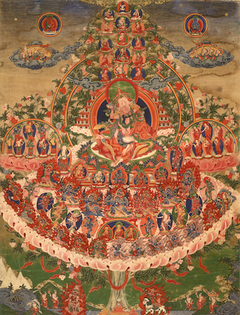
Common and Uncommon Ngöndro
༄༅། །ཐུན་མོང་དང་ཐུན་མོང་མ་ཡིན་པའི་སྔོན་འགྲོ།
The Common and Uncommon Preliminary Practices1
by Jigme Lingpa
1. The Common Preliminary Practice
ཐོག་མར་ངག་བྱིན་བརླབ་ནི།
First, The Blessing of the Speech
ཨོཾ་ཨཱཿཧཱུྃ། ལྕེ་དབང་རཾ་ཡིག་ལས་བྱུང་མེས་བསྲེགས་ནས། །
om ah hung, ché wang ram yik lé jung mé sek né
Oṃ āḥ hūṃ. From the syllable raṃ arises fire, consuming my tongue,
འོད་དམར་རྣམ་པའི་རྡོ་རྗེ་རྩེ་གསུམ་སྦུགས།
ö mar nampé dorjé tsesum bub
Which is transformed into a three-spoked vajra of red light.2
ཨཱ་ལི་ཀཱ་ལིའི་མཐའ་བསྐོར་རྟེན་འབྲེལ་སྙིང་། །
ali kali takor tendrel nying
In its centre are the vowels and consonants, and around them the mantra of The Essence of Interdependent Origination:3
མུ་ཏིག་ཕྲེང་བ་ལྟ་བུའི་ཡིག་འབྲུ་ལས། །
mutik trengwa tabü yikdru lé
Their syllables are like strings of pearls.
འོད་འཕྲོས་རྒྱལ་བ་སྲས་བཅས་མཆོད་པས་མཉེས། །
ö trö gyalwa sé ché chöpé nyé
From them light streams out, making offerings to the buddhas and bodhisattvas, and pleasing them.4
སླར་འདུས་ངག་སྒྲིབ་དག་ནས་གསུང་རྡོ་རྗེའི། །
lar dü ngak drib dak né sung dorjé
As it converges back, all the obscurations of my speech are purified,
བྱིན་རླབས་དངོས་གྲུབ་ཐམས་ཅད་ཐོབ་པར་བསམ།
jinlab ngödrub tamché tobpar gyur
And I obtain all the blessings and siddhis of vajra speech.
The Vowel Mantra
ཨ་ཨཱ། ཨི་ཨཱི། ཨུ་ཨཱུ། རྀ་རཱྀ། ལྀ་ལཱི། ཨེ་ཨཻ། ཨོ་ཨཽ། ཨཾ་ཨཿ
a a, i i, u u, ri ri, li li, e ai, o au, ang ah
a ā, i ī, u ū, ṛ ṝ, ḷ ḹ, e ai, o au, aṃ, aḥ
ལན་བདུན།
Seven times.
The Consonant Mantra
ཀ་ཁ་ག་གྷ་ང་། ཙ་ཚ་ཛ་ཛྷ་ཉ། ཊ་ཋ་ཌ་ཌྷ་ཎ། ཏ་ཐ་ད་དྷ་ན། པ་ཕ་བ་བྷ་མ། ཡ་ར་ལ་ཝ། ཤ་ཥ་ས་ཧ་ཀྵཿ
ka kha ga gha nga, cha chha ja jha nya, ta tha da dha na, ta tha da dha na, pa pha ba bha ma, ya ra la wa sha sha sa ha ksha
ka kha ga gha ṅa, ca cha ja jha ña, ṭa ṭha ḍa ḍha ṇa, ta tha da dha na, pa pha ba bha ma, ya ra la va śa ṣa sa ha kṣa
ལན་བདུན།
Seven times.
Mantra of the Essence of Interdependent Origination
ཡེ་དྷརྨཱ་ཧེ་ཏུ་པྲ་བྷཱ་ཝཱ་ཧེ་ཏུནྟེ་ཥཱནྟ་ཐཱ་ག་ཏོ་ཧྱ་ཝ་དཏ། ཏེ་ཥཱཉྩ་ཡོ་ནི་རོ་དྷ་ཨེ་ཝྃ་ཝཱ་དཱི་མ་ཧཱ་ཤྲ་མ་ཎཿསྭཱ་ཧཱ།
om yé dharma hetu prabhava hetun teshan tatagato hyavadat teshan tsa yo nirodha evam vadi maha shramana soha
oṃ ye dharmā hetu prabhāvā hetuṃ teṣāṃ tathāgato hyavadat teṣāṃ ca yo nirodha evaṃ vādī mahāśramaṇaḥ svāhā
All dharmas originate from a cause. The Tathāgata has taught this cause. That which brings the cause to cessation—this too, has been taught by the Great Śramaṇa.
ལན་བདུན།
Seven times.
༈ བཞེངས་བསྐུལ་བླ་མ་རྒྱང་འབོད་ནི།
Invocation and Calling the Guru from Afar
ཐོ་རངས་ལྡང་བའི་རྣལ་འབྱོར་ལ་བབ་པ་ན།
When it is time for the yoga of waking up:
བླ་མ་མཁྱེན། །བླ་མ་མཁྱེན། །བླ་མ་མཁྱེན།
lama khyen | lama khyen | lama khyen
O guru, care for me! O guru, care for me! O guru, care for me!
ཞེས་གདུང་བ་དྲག་པོས་པོས་ནས།
In this way, call out in ardent longing and devotion.
སྙིང་དབུས་དད་པའི་གེ་སར་བཞད་པ་ནས། །
nying ü depé gesar zhepa né
From the blossoming lotus of devotion at the centre of my heart,
སྐྱབས་གཅིག་དྲིན་ཆེན་བླ་མ་ཡར་ལ་བཞེངས། །
kyab chik drinchen lama yar la zheng
Rise up, O compassionate guru, my only refuge!
ལས་དང་ཉོན་མོངས་དྲག་པོས་གཟིར་བ་ཡི། །
lé dang nyönmong drakpö zirwa yi
I am plagued by past actions and turbulent emotions.
སྐལ་བ་ངན་པ་བདག་ལ་སྐྱོབ་པའི་ཕྱིར། །
kalwa ngenpa dak la kyobpé chir
To protect me in my misfortune,
སྤྱི་བོ་བདེ་ཆེན་འཁོར་ལོའི་རྒྱན་དུ་བཞུགས། །
chiwo dechen khorlö gyen du zhuk
Remain as the jewel ornament on the crown of my head, the chakra of great bliss,
དྲན་དང་ཤེས་བཞིན་ཀུན་ཀྱང་བཞེངས་སུ་གསོལ། །
dren dang shezhin kün kyang zheng su sol
Arousing all my mindfulness and vigilance, I pray!
The Four Thoughts that Turn the Mind from Saṃsāra
Free and Well-Favoured Human Birth
ད་རེས་དམྱལ་བ་ཡི་དྭགས་དུད་འགྲོ་དང་། །
daré nyalwa yidak düdro dang
Being born in hell, preta or animal realms,
ཚེ་རིང་ལྷ་དང་ཀླ་ཀློ་ལོག་ལྟ་ཅན། །
tsering lha dang lalo loktachen
Amidst long-living gods, in uncivilized lands, or with wrong views,
སངས་རྒྱས་མ་བྱོན་ཞིང་དང་ལྐུགས་པ་སྟེ། །
sangye majön zhing dang kukpa té
In a world where a buddha has not come, or incapable of understanding:
མི་ཁོམ་བརྒྱད་ལས་ཐར་བའི་དལ་བ་ཐོབ། །
mikhom gyé lé tarwé dalwa tob
Now I am free from these eight states where there’s no chance for Dharma practice.
མིར་གྱུར་དབང་པོ་ཚང་དང་ཡུལ་དབུས་སྐྱེས། །
mir gyur wangpo tsang dang yulü kyé
Born a human being, with all my faculties intact, and in a central land,
ལས་མཐའ་མ་ལོག་བསྟན་ལ་དད་པ་སྟེ། །
leta malok ten la depa té
My lifestyle not harmful and wrong, and with faith in Buddha’s teaching—
རང་ཉིད་འབྱོར་པ་ལྔ་ཚངས་སངས་རྒྱས་བྱོན། །
rangnyi jorpa nga tsang sangye jön
All five personal advantages are complete. A buddha has come,
ཆོས་གསུངས་བསྟན་པ་གནས་དང་དེ་ལ་ཞུགས།།
chö sung tenpa né dang dé la zhuk
He taught the Dharma, it has survived, I have embraced it, and
བཤེས་གཉེན་དམ་པས་ཟིན་དང་གཞན་འབྱོར་ལྔ། །
shenyen dampé zin dang zhen jor nga
A true spiritual friend has accepted me—I have the five advantages due to circumstances.
ཐམས་ཅད་རང་ལ་ཚང་བའི་གནས་ཐོབ་ཀྱང་།
tamché rang la tsangwé né tob kyang
Although in a position where I have every one of them,
རྐྱེན་མང་ངེས་པ་མེད་པའི་ཚེས་སྤངས་ནས། །
kyen mang ngepa mepé tsé pang né
Once this life, so fraught with uncertainty, is relinquished,
འཇིག་རྟེན་ཕ་རོལ་ཉིད་དུ་སོན་པར་འགྱུར། །
jikten parol nyi du sönpar gyur
I will go on to yet another realm of existence.
བློ་སྣ་ཆོས་ལ་བསྒྱུར་ཅིག་གུ་རུ་མཁྱེན། །
lona chö la gyur chik guru khyen
O Guru Rinpoche, turn my mind towards the practice—care for me!
ལམ་གོལ་དམན་པར་མ་གཏོང་ཀུན་མཁྱེན་རྗེ། །
lamgol menpar matong künkhyen jé
Omniscient masters, keep me from straying onto wrong or lesser paths!
གཉིས་སུ་མེད་དོ་དྲིན་ཆེན་བླ་མ་མཁྱེན། །
nyisumé do drinchen lama khyen
Compassionate guru, you who are one with them—care for me!
ད་རེས་དལ་རྟེན་དོན་ཡོད་མ་བྱས་ན། །
daré dal ten dönyö majé na
If I do not seize the opportunity this present freedom offers,
ཕྱི་ནས་ཐར་པ་བསྒྲུབ་པའི་རྟེན་མི་རྙེད། །
chi né tarpa drubpé ten minyé
I will not find such a basis for attaining liberation later on.
བདེ་འགྲོའི་རྟེན་ལ་བསོད་ནམས་ཟད་གྱུར་ནས། །
dendrö ten la sönam zé gyur né
Once the merit that provided this happy existence is spent,
ཤི་བའི་འོག་ཏུ་ངན་སོང་ངན་འགྲོར་འཁྱམས། །
shiwé oktu ngensong ngendror khyam
After death I will wander as a being in the lower realms.
དགེ་སྡིག་མི་ཤེས་ཆོས་ཀྱི་སྒྲ་མི་ཐོས། །
gedik mishé chö kyi dra mitö
Not knowing good from bad, I will never hear the sound of Dharma,
དགེ་བའི་བཤེས་དང་མི་མཇལ་མཚང་རེ་ཆེ། །
geweshé dang mijal tsang ré ché
Nor meet a spiritual friend—a terrible disaster!
སེམས་ཅན་ཙམ་གྱི་གྲངས་དང་རིམ་པ་ལ། །
semchen tsam gyi drang dang rimpa la
Only to think of the numbers and kinds of sentient beings
བསམ་ན་མི་ལུས་ཐོབ་པ་སྲིད་མཐའ་ཙམ། །
sam na milü tobpa si ta tsam
Is to realize just how slim is the chance of gaining a human body;
མི་ཡང་ཆོས་མེད་སྡིག་ལ་སྤྱོད་མཐོང་ན། །
mi yang chömé dik la chö tong na
And even among human beings—to see how their behaviour is so harmful and contrary to Dharma,
ཆོས་བཞིན་སྤྱོད་པ་ཉིན་མོའི་སྐར་མ་ཙམ། །
chö zhin chöpa nyinmö karma tsam
Is to realize that those who really act according to Dharma are as rare as stars in broad daylight.
བློ་སྣ་ཆོས་ལ་བསྒྱུར་ཅིག་གུ་རུ་མཁྱེན། །
lona chö la gyur chik guru khyen
O Guru Rinpoche, turn my mind towards the practice—care for me!
ལམ་གོལ་དམན་པར་མ་གཏོང་ཀུན་མཁྱེན་རྗེ། །
lamgol menpar matong künkhyen jé
Omniscient masters, keep me from straying onto wrong or lesser paths!
གཉིས་སུ་མེད་དོ་དྲིན་ཅན་བླ་མ་མཁྱེན། །
nyisumé do drinchen lama khyen
Compassionate guru, you who are one with them—care for me!
གལ་ཏེ་མི་ལུས་རིན་ཆེན་གླིང་ཕྱིན་ཡང་། །
galté milü rinchen ling chin yang
Even though I have reached this jewel island, the human body,
ལུས་རྟེན་བཟང་ལ་བྱུར་པོ་ཆེ་ཡི་སེམས། །
lü ten zang la jurpo ché yi sem
A fickle and impetuous mind in such a promising basis
ཐར་པ་སྒྲུབ་པའི་རྟེན་དུ་མི་རུང་ཞིང་། །
tarpa drubpé ten du mirung zhing
Makes it no good as a foundation for attaining liberation.
ཁྱད་པར་བདུད་ཀྱིས་ཟིན་དང་དུག་ལྔ་འཁྲུགས། །
khyepar dü kyi zin dang duk nga truk
Especially when misled by corrupting influences, or with the five poisons raging inside,
ལས་ངན་ཐོག་ཏུ་བབས་དང་ལེ་ལོས་གཡེངས། །
lé ngen tok tu bab dang lelö yeng
When negative karma overtakes me, or I am distracted by laziness,
གཞན་ཁོལ་བྲན་གཡོག་འཇིགས་སྐྱོབ་ཆོས་ལྟར་བཅོས། །
zhen khol drenyok jik kyob chö tar chö
Like a slave—under someone else’s control, turning to Dharma simply out of insecurity or fear, or merely pretending to practise,
རྨོངས་སོགས་འཕྲལ་བྱུང་རྐྱེན་གྱི་མི་ཁོམ་བརྒྱད། །
mong sok tral jung kyen gyi mikhom gyé
Or chronically senseless and stupid. These are the eight incidental circumstances that make Dharma impossible:
བདག་ལ་ཆོས་ཀྱི་འགལ་ཟླར་ལྷགས་པའི་ཚེ། །
dak la chö kyi galdar lhakpé tsé
When they come upon me, menacing my Dharma practice,
བློ་སྣ་ཆོས་ལ་བསྒྱུར་ཅིག་གུ་རུ་མཁྱེན། །
lona chö la gyur chik guru khyen
O Guru Rinpoche, turn my mind towards the practice—care for me!
ལམ་གོལ་དམན་པར་མ་གཏོང་ཀུན་མཁྱེན་རྗེ། །
lamgol menpar matong künkhyen jé
Omniscient masters, keep me from straying onto wrong or lesser paths!
གཉིས་སུ་མེད་དོ་དྲིན་ཆེན་བླ་མ་མཁྱེན། །
nyisumé do drinchen lama khyen
Compassionate guru, you who are one with them—care for me!
སྐྱོ་ཤས་ཆུང་ཞིང་དད་པའི་ནོར་དང་བྲལ། །
kyoshé chung zhing depé nor dang dral
With little renunciation, and without the jewel of devotion,
འདོད་སྲེད་ཞགས་པས་བཅིངས་དང་ཀུན་སྤྱོད་རྩུབ། །
dö sé zhakpé ching dang kunchö tsub
Caught in the bonds of worldly ties and cravings, or with crude, degenerate behaviour,
མི་དགེ་སྡིག་ལ་མི་འཛེམ་ལས་མཐའ་ལོག །
mige dik la midzem leta lok
Never holding back from negative, harmful actions, and without the slightest real interest,
སྡོམ་པ་ཉམས་ཤིང་དམ་ཚིག་རལ་བ་སྟེ། །
dompa nyam shing damtsik ralwa té
With vows all broken, and samaya torn to shreds:
རིས་ཆད་བློ་ཡི་མི་ཁོམ་རྣམ་པ་བརྒྱད། །
riché lo yi mikhom nampa gyé
These are the eight impossible states where mind cuts us off from the Dharma:
བདག་ལ་ཆོས་ཀྱི་འགལ་ཟླར་ལྷགས་པའི་ཚེ། །
dak la chö kyi galdar lhakpé tsé
When they come upon me, menacing my Dharma practice,
བློ་སྣ་ཆོས་ལ་བསྒྱུར་ཅིག་གུ་རུ་མཁྱེན། །
lona chö la gyur chik guru khyen
O Guru Rinpoche, turn my mind towards the practice—care for me!
ལམ་གོལ་དམན་པར་མ་གཏོང་ཀུན་མཁྱེན་རྗེ། །
lamgol menpar matong künkhyen jé
Omniscient masters, keep me from straying onto wrong or lesser paths!
གཉིས་སུ་མེད་དོ་དྲིན་ཅན་བླ་མ་མཁྱེན། །
nyisumé do drinchen lama khyen
Compassionate guru, you who are one with them—care for me!
Impermanence
ད་ལྟ་ནད་དང་སྡུག་བསྔལ་གྱིས་མ་གཟིར། །
danta né dang dukngal gyi mazir
At this moment, I am not ravaged by sickness and pain,
བྲན་ཁོལ་ལ་སོགས་གཞན་དབང་མ་གྱུར་པས། །
drenkhol lasok zhenwang magyurpé
Nor am I a slave or such, under another’s control.
རང་དབང་ཐོབ་པའི་རྟེན་འབྲེལ་འགྲིག་དུས་འདིར། །
rangwang tobpé tendrel drik dü dir
So now that I have this perfect, auspicious quality of total independence,
སྙོམ་ལས་ངང་དུ་དལ་འབྱོར་ཆུད་གསོན་ན། །
nyom lé ngang du daljor chüsön na
If I waste the freedom of this human life through my own indolence,
འཁོར་དང་ལོངས་སྤྱོད་ཉེ་དུ་འབྲེལ་པ་ལྟ། །
khor dang longchö nyé du drelwa ta
No need to worry about companions, possessions, relatives and loved ones,
ལྟ་ཅི་གཅེས་པར་བཟུང་བའི་ལུས་འདི་ཡང་། །
tachi chepar zungwé lü di yang
When this body I hold so dear
མལ་གྱི་ནང་ནས་ས་ཕྱོགས་སྟོང་པར་བསྐྱལ། །
mal gyi nang né sachok tongpar kyal
Is carried out alone from its bed to some desolate spot
ཝ་དང་བྱ་རྒོད་ཁྱི་ཡིས་འདྲད་པའི་དུས། །
wa dang jagö khyi yi drepé dü
To be torn to pieces by foxes, vultures and dogs.
བར་དོའི་ཡུལ་ན་འཇིགས་པ་ཤིན་ཏུ་ཆེ། །
bardö yul na jikpa shintu ché
Then, in the bardo realm there will be nothing but terror in store.
བློ་སྣ་ཆོས་ལ་བསྒྱུར་ཅིག་གུ་རུ་མཁྱེན། །
lona chö la gyur chik guru khyen
O Guru Rinpoche, turn my mind towards the practice—care for me!
ལམ་གོལ་དམན་པར་མ་གཏོང་ཀུན་མཁྱེན་རྗེ། །
lamgol menpar matong künkhyen jé
Omniscient masters, keep me from straying onto wrong or lesser paths!
གཉིས་སུ་མེད་དོ་དྲིན་ཅན་བླ་མ་མཁྱེན། །
nyisumé do drinchen lama khyen
Compassionate guru, you who are one with them—care for me!
Karma: Cause and Effect
དགེ་སྡིག་ལས་ཀྱི་རྣམ་སྨིན་ཕྱི་བཞིན་འབྲང་། །
The results of beneficial and harmful actions will follow me.
The Suffering of Saṃsāra
ཁྱད་པར་དམྱལ་བའི་འཇིག་རྟེན་ཉིད་སོན་ན། །
khyepar nyalwé jikten nyi sön na
If I am born in the hell realms:
ལྕགས་སྲེགས་གཞིར་མཚོན་གྱིས་མགོ་ལུས་འདྲལ། །
chak sek sazhir tsön gyi go lü dral
On a floor of burning iron, head and body are hacked with weapons,
སོག་ལེས་གཤོགས་དང་ཐོ་ལུམ་འབར་བས་འཚིར། །
soklé shok dang tolum barwé tsir
Ripped apart with saws, and crushed with red-hot hammers,
སྒོ་མེད་ལྕགས་ཁྱིམ་འཐུམས་པར་འོ་དོད་འབོད། །
gomé chak khyim tumpar odö bö
Trapped in a doorless iron cell, screaming out loud,
འབར་བའི་གསལ་ཤིང་གིས་འབུགས་ཁྲོ་ཚུར་འཚོད། །
barwé salshing gi buk trochur tsö
Impaled on red-hot spikes or boiled in molten bronze, and
ཀུན་ནས་ཚ་བའི་མེས་བསྲེགས་བརྒྱད་ཚན་གཅིག །
künné tsawé mé sek gyé tsen chik
Burned in a fire of the intensest heat—in the Eight Hot Hells.
གངས་རི་སྟུག་པོའི་འདབ་དང་ཆུ་འཁྱགས་ཀྱི། །
gangri tukpö dab dang chukhyak kyi
On the crests of snow mountains, on precipices of ice,
གཅོང་རོང་ཡ་ངའི་གནས་སུ་བུ་ཡུག་སྦྲེབས། །
chong rong ya ngé né su buyuk dreb
Terrifying places engulfed by squalls and blizzards of snow,
གྲང་རེག་རླུང་གིས་བཏབ་པའི་ལང་ཚོ་ནི། །
drang rek lung gi tabpé langtso ni
My tender body, lashed by freezing winds,
ཆུ་བུར་ཅན་དང་ལྷག་པར་བརྡོལ་བ་ཅན། །
chubur chen dang lhakpar dolwa chen
Breaks out in blisters, which burst open into festering sores,
སྨྲེ་ངག་རྒྱུན་མི་འཆད་པར་འདོན་པ་ཡང་། །
mé ngak gyün michepar dönpa yang
In a ceaseless wail of agonized screams
ཚོར་བའི་སྡུག་བསྔལ་བརྣག་པར་དཀའ་བ་ཡིས། །
tsorwé dukngal nakpar kawa yi
And suffering, hard even to think about,
ཟུངས་ཀྱིས་རབ་བཏང་འཆི་ཁའི་ནད་པ་བཞིན། །
zung kyi rab tang chikhé nepa zhin
Like a dying person whose strength is all gone,
ཤུགས་རིང་འདོན་ཅིང་སོ་ཐམ་པགས་པ་འགས། །
shuk ring dön ching so tam pakpa gé
I let out deep gasps and groans, my teeth clenched. My skin cracks open,
ཤའུ་ཐོན་ནས་ལྷག་པར་འགས་ཏེ་བརྒྱད། །
sha'u tön né lhakpar gé té gyé
And the raw flesh exposed splits deeper, and yet again—in the Eight Cold Hells.
དེ་བཞིན་སྤུ་གྲིའི་ཐང་ལ་རྐང་པ་གཤོགས། །
dezhin pudri tangla kangpa shok
My feet are cut to ribbons in the Plain of Razor Blades,
རལ་གྲིའི་ཚལ་དུ་ལུས་ལ་བཅད་གཏུབས་བྱེད། །
raldri tsal du lü la ché tubjé
In the Forest of Sword Blades my body is gashed and chopped,
རོ་མྱག་འདམ་ཚུད་ཐལ་ཚན་རབས་མེད་ཀློང་། །
ronyak dam tsü taltsen rabmé long
I sink into the Swamp of Putrefying Corpses, and the Pit of Hot Embers,
མནར་བའི་ཉེ་འཁོར་བ་དང་འགྱུར་བ་ཅན། །
narwé nyekhorwa dang gyurwa chen
All in the ‘Neighbouring Hells’ that ring the Hell of Ultimate Torment. And then the changing, uncertain hells:
སྒོ་དང་ཀ་བ་ཐབ་དང་ཐག་པ་སོགས། །
go dang kawa tab dang takpa sok
Born in a door, a pillar, a fireplace, a rope and the like,
རྟག་ཏུ་བཀོལ་ཞིང་སྤྱོད་པའི་ཉི་ཆོ་བ། །
taktu kol zhing chöpé nyitsewa
Always made use of and exploited in these Ephemeral Hells.
རྣམ་གྲངས་བཅོ་བརྒྱད་གང་ལས་འབྱུང་བའི་རྒྱུ། །
namdrang chobgyé ganglé jungwé gyu
When the cause of being born in any of the eighteen hells—
ཞེ་སྡང་དྲག་པོའི་ཀུན་སློང་སྐྱེས་པའི་ཚེ། །
zhedang drakpö künlong kyepé tsé
Intense hatred and aggression—arises,
བློ་སྣ་ཆོས་ལ་བརྒྱུར་ཅིག་གུ་རུ་མཁྱེན། །
lona chö la gyur chik guru khyen
O Guru Rinpoche, turn my mind towards the practice—care for me!
ལམ་གོལ་དམན་པར་མ་གཏོང་ཀུན་མཁྱེན་རྗེ། །
lamgol menpar matong künkhyen jé
Omniscient masters, keep me from straying onto wrong or lesser paths!
གཉིས་སུ་མེད་དེ་དྲིན་ཆེན་བླ་མ་མཁྱེན། །
nyisumé do drinchen lama khyen
Compassionate guru, you who are one with them—care for me!
དེ་བཞིན་ཕོངས་ལ་ཉམས་མི་དགའ་བའི་ཡུལ། །
dezhin pong la nyam migawé yul
Likewise, in a grim and destitute realm
བཟའ་བཏུང་ལོངས་སྤྱོད་མིང་ཡང་མི་གྲགས་པར། །
za tung longchö ming yang midrakpar
Where the words, ‘food’, ‘drink’ or ‘comfort’ have never even been heard,
ཟས་སྐོམ་ལོ་ཟླར་མི་རྙེད་ཡི་དྭགས་ལུས། །
zekom lodar minyé yidak lü
The pretas find nothing to eat or drink for months and years on end. Their bodies
རིད་ཅིང་ལྡང་བའི་སྟོབས་ཉམས་རྣམ་པ་གསུམ། །
ri ching dangwé tob nyam nampa sum
Are emaciated and they lack even the strength to stand. They suffer from three different kinds of obscurations,5 and
གང་ལས་འབྱུང་བའི་རྒྱུ་ནི་སེར་སྣ་ཡིན། །
ganglé jungwé gyu ni serna yin
The reason for being born as one is greed.6
གཅིག་ལ་གཅིག་ཟ་གསོད་པའི་འཇིགས་པ་ཆེ། །
chik la chik za söpé jikpa ché
In constant dread of being killed and eaten by one another,
བཀོལ་ཞིང་སྤྱོད་པས་ཉམ་ཐག་བླང་དོར་རྨོངས། །
kol zhing chöpé nyamtak langdor mong
Exploited and worked until exhaustion, bewildered as to what to do or not to do,
ཕ་མཐའ་མེད་པའི་སྡུག་བསྔལ་གྱིས་གཟིར་བའི། །
pata mepé dukngal gyi zirwé
Animals are oppressed by limitless suffering,
ས་བོན་གཏི་མུག་མུན་པར་འཁྱམས་པ་བདག །
sabön timuk münpar khyampa dak
The seed of which is stubborn stupidity—when I wander into its darkness,
བློ་སྣ་ཆོས་ལ་བསྒྱུར་ཅིག་གུ་རུ་མཁྱེན། །
lona chö la gyur chik guru khyen
O Guru Rinpoche, turn my mind towards the practice—care for me!
ལམ་གོལ་དམན་པར་མ་གཏོང་ཀུན་མཁྱེན་རྗེ། །
lamgol menpar matong künkhyen jé
Omniscient masters, keep me from straying onto wrong or lesser paths!
གཉིས་སུ་མེད་དོ་དྲིན་ཆེན་བླ་མ་མཁྱེན། །
nyisumé do drinchen lama khyen
Compassionate guru, you who are one with them—care for me!
Invoking the Guru’s Compassion to Avoid Pitfalls on the Path7
a. The Three Yānas
ཆོས་ལམ་ཞུགས་ཀྱང་ཉེས་སྤྱོད་མི་སྡོམ་ཞིང༌། །
chö lam zhuk kyang nyechö midom zhing
Though I have entered the path of the Dharma, I haven’t put a stop to my erring ways.
ཐེག་ཆེན་སྒོར་ཞུགས་གཞན་ཕན་སེམས་དང་བྲལ། །
tekchen gor zhuk zhenpen sem dang dral
Though I have entered the door of the Mahāyāna, I am devoid of any beneficial thought for others.
དབང་བཞི་ཐོབ་ཀྱང་བསྐྱེད་རྫོགས་མི་སྒོམ་པའི། །
wang zhi tob kyang kyedzok migompé
Though I have received the four empowerments, I do not practise the development and completion phases of meditation.
ལམ་གོལ་འདི་ལས་བླ་མས་བསྒྲལ་དུ་གསོལ། །
lamgol di lé lamé dral du sol
O guru, free me from such deviations from the path!
b. View, Meditation and Action
ལྟ་བ་མ་རྟོགས་ཐོ་ཅོའི་སྤྱོད་པ་ཅན། །
tawa matok tochö chöpa chen
Though I have not realized the view, I act as if a master of crazy wisdom.
སྒོམ་པ་ཡེངས་ཀྱང་གོ་ཡུལ་འུད་གོག་འཐག །
gompa yeng kyang goyul ü gok tak
Though I am distracted in my meditation, I let myself get stuck in concepts.
སྤྱོད་པ་ནོར་ཀྱང་རང་སྐྱོན་མི་སེམས་པའི། །
chöpa nor kyang rang kyön misempé
Though it’s my own actions that are at fault, it’s someone else I blame.
ཆོས་དྲེད་འདི་ལས་བླ་མས་བསྒྲལ་དུ་གསོལ། །
chödré di lé lamé dral du sol
O guru, free me from becoming so impervious to the teachings!
c. Distractions of the Present Life
ནངས་པར་འཆི་ཡང་གནས་གོས་ནོར་ལ་སྲེད། །
nangpar chi yang né gö nor la sé
Though I may die tomorrow, I am full of craving for home, clothes and possessions.
ན་ཚོད་ཡོལ་ཡང་ངེས་འབྱུང་སྐྱོ་ཤས་བྲལ། །
natsö yol yang ngejung kyoshé dral
Though I am quite old, I’m not mature enough to have the slightest renunciation for saṃsāra.
ཐོས་པ་ཆུང་ཡང་ཡོན་ཏན་ཅན་དུ་རློམ། །
töpa chung yang yönten chen du lom
Though I have truly heard only a little Dharma teaching, I pride myself on all my knowledge.
མ་རིག་འདི་ལས་བླ་མས་བསྒྲལ་དུ་གསོལ། །
marik di lé lamé dral du sol
O guru, free me from such ignorance!
d. The Eight Worldly Concerns
རྐྱེན་ཁར་འཆོར་ཡང་འདུ་འཛིག་ནས་སྐོར་སེམས། །
kyen khar chor yang dudzi nekor sem
Though I am prey to circumstances, I seek entertainment and long to wander as a pilgrim.
དབེན་པ་བརྟེན་ཀྱང་རང་རྒྱུད་ཤིང་ལྟར་རེངས། །
wenpa ten kyang ranggyü shing tar reng
Though going on solitary retreats, my basic character remains as tough as a block of wood.
དུལ་བར་སྨྲ་ཡང་ཆགས་སྡང་མ་ཞིག་པའི། །
dulwar ma yang chakdang mazhikpé
Though appearing calm and speaking softly, I haven’t got rid of the attachment and aversion boiling inside.
ཆོས་བརྒྱད་འདི་ལས་བླ་མས་བསྒྲལ་དུ་གསོལ། །
chö gyé di lé lamé dral du sol
O guru, free me from these eight worldly concerns!8
གཉིད་འཐུག་འདི་ལས་མྱུར་དུ་སད་དུ་གསོལ། །
nyi tuk di lé nyurdu sé du sol
Quickly rouse me from this deep sleep of ignorance!
ཁྲི་མུན་འདི་ལས་མྱུར་དུ་དབྱུང་དུ་གསོལ། །
trimün di lé nyurdu yung du sol
Quickly set me free from this dismal self-imprisonment!
The Ritual for the Bodhisattva Vow
Taking Refuge
སངས་རྒྱས་ཆོས་དང་ཚོགས་ཀྱི་མཆོག་རྣམས་ལ། །
sangye chö dang tsok kyi chok nam la
In the Buddha, the Dharma and the Supreme Assembly,
བྱང་ཆུབ་བར་དུ་བདག་ནི་སྐྱབས་སུ་མཆི། །
changchub bardu dak ni kyab su chi
I take refuge until I attain enlightenment.
བདག་གིས་སྦྱིན་སོགས་བགྱིས་པ་འདི་དག་གིས། །
dak gi jin sok gyipa didak gi
Through the merit of practising generosity and so on,
འགྲོ་ལ་ཕན་ཕྱིར་སངས་རྒྱས་འགྲུབ་པར་ཤོག །
dro la pen chir sangye drubpar shok
May I attain buddhahood for the benefit of beings!
ལན་གསུམ།
Three times.
Inviting the Buddhas and their Entourages as a Field of Merit
མ་ལུས་སེམས་ཅན་ཀུན་གྱི་མགོན་གྱུར་ཅིང་། །
malü semchen kun gyi gön gyur ching
You are the protectors of all beings, every single one.
བདུད་སྡེ་དཔུང་བཅས་མི་བཟད་འཇོམས་མཛད་ལྷ། །
dü dé pung ché mizé jomdzé lha
You are the deities who remorselessly destroy the māras and their forces.
དངོས་རྣམས་མ་ལུས་ཇི་བཞིན་མཁྱེན་གྱུར་པ། །
ngönam malü jizhin khyen gyurpé
You who know all things just as they are, in their true nature,
བཅོམ་ལྡན་འཁོར་བཅས་གནས་འདིར་གཤེགས་སུ་གསོལ། །
chomden khor ché né dir shek su sol
Enlightened ones, with your retinues, come now to this place!
Inviting the Buddhas and their Retinues to Remain
བཅོམ་ལྡན་འདིར་ནི་བྱོན་པ་ལེགས། །
chomden dir ni jönpa lek
Enlightened ones, welcome, now that you have come.
བདག་ཅག་བསོད་ནམས་སྐལ་བར་ལྡན། །
dakchak sönam kalwar den
We have such good fortune and merit.
བདག་གི་མཆོད་ཡོན་བཞེས་སླད་དུ། །
dak gi chöyön zhé ledu
To accept these offerings
འདི་ཉིད་དུ་ནི་བརྟན་པར་བཞུགས། །
di nyi du ni tenpar zhuk
Please come here and remain.
Gathering the Accumulations
སྟོང་གསུམ་ཀུན་དང་མཉམ་པ་ཡི། །
tongsum kün dang nyampa yi
We present you an eight-petaled lotus
པདྨ་འདབ་བརྒྱད་གེ་སར་བཅས། །
pema dab gyé gesar ché
With stamen, comfortable
བདེ་ཞིང་ཡངས་པར་འབུལ་ལགས་ན། །
dé zhing yangpar bul lak na
And vast like a billionfold universe.
ཅི་བདེ་བར་ནི་བཞུགས་སུ་གསོལ། །
chi dewar ni zhuk su sol
Please come and remain seated at your ease.
པདྨ་ཀ་མཱ་ལ་ཡེ་སཏྭཾ།
padma kamalayé stam
oṃ padma-kamalāya stvaṃ
ཁྲུས་ཀྱི་ཁང་པ་ཤིན་ཏུ་དྲི་ཞིམ་པར། །
trü gyi khangpa shintu dri zhimpar
To a bathing chamber filled with soothing scents,9
ཤེལ་གྱི་ས་གཞི་གསལ་ཞིང་འཚེར་བ་བསྟར། །
shel gyi sa zhi sal zhing tserwa tar
With brightly sparkling floors of crystal,
རིན་ཆེན་འབར་བའི་ཀ་བ་ཡིད་འོང་ལྡན། །
rinchen barwé kawa yi ong den
And fine pillars all shimmering with gems,
མུ་ཏིག་འོད་ཆགས་བླ་བྲེ་བྲེས་པ་དེར། །
mu tik ö chak la dré drepa der
And where hang gleaming canopies of pearls, we invite you.
ཇི་ལྟར་བལྟམས་པ་ཙམ་གྱིས་ནི། །
jitar tampa tsam gyi ni
Just as the gods cleansed your body
ལྷ་རྣམས་ཀུན་གྱིས་ཁྲུས་གསོལ་ལྟར། །
lha nam kün gyi trü sol tar
Moments after you took birth,
ལྷ་ཡི་ཆུ་ནི་དག་པ་ཡིས། །
lha yi chu ni dakpa yi
With the purest water of the gods,
དེ་བཞིན་བདག་གིས་སྐུ་ཁྲུས་གསོལ། །
dezhin dak gi kutrü sol
We too, cleanse your body in this way.
དེ་བཞིན་གཤེགས་པ་རྣམས་དང་དེ་སྲས་ལ། །
dezhin shekpa nam dang dé sé la
We invite the buddhas and their bodhisattva heirs
རིན་ཆེན་བུམ་པ་མང་པོ་སྤོས་ཀྱི་ཆུ། །
rinchen bumpa mangpo pö kyi chu
And we request you: Come and bathe yourselves in scented water,
ཡིད་འོང་ལེགས་པར་བཀང་བའི་གླུ་དང་ནི། །
yi ong lekpar kangwa lu dang ni
Poured from overflowing jugs made of exquisite jewels,
རོལ་མོར་བཅས་པ་དུ་མས་སྐུ་ཁྲུས་གསོལ། །
rolmor chepa dumé ku trü sol
All the while accompanied by melody and song.
ཨོཾ་སརྦ་ཏ་ཐཱ་ག་ཏ་ཨ་བྷི་ཥེ་ཀ་ཏེ་ས་མ་ཡ་ཤྲཱི་ཧཱུྃ།
om sarwa tathagata abhishekaté samaya shriyé hung
oṃ sarva tathāgata abhiṣekate samaya śrīye hūṃ
དེ་དག་སྐུ་ལ་མཚུངས་པ་མེད་པའི་གོས། །
dé dak ku la tsungpa mepé gö
Then let us dry you in cloths beyond compare,
གཙང་ལ་དྲི་རབ་བགོས་པས་སྐུ་ཕྱིའོ། །
tsang la dri rap göpé ku chi o
Immaculate and anointed well with perfumed scent,
ཨཱོཾ་ཧཱུྃ་ཏྲཱྃ་ཧྲཱིཿཨཱ། ཀཱ་ཡ་བི་ཤྭ་དྷ་ན་ཡེ་སྭཱ་ཧཱ།
om hung tram hrih ah | kaya bishodhana yé soha
oṃ hūṃ trāṃ hrīḥ āḥ | kāya viśodhanaye svāhā
དེ་ནས་དེ་ལ་ཁ་དོག་ལེགས་བསྒྱུར་བའི། །
dé né dé la kha dok lek gyur wé
Then let us dress you finely in the most excellent of garments,
ན་བཟའ་ཤིན་ཏུ་དྲི་ཞིམ་དམ་པ་འབུལ། །
namza shintu dri zhim dampa bul
Lightly scented and dyed in vivid colours. 10
གོས་བཟང་སྲབ་ལ་འཇམ་པ་སྣ་ཚོགས་དང་། །
gö zang sap la jampa na tsok dang
We offer clothing made of the finest gentle fabrics,
རྒྱན་མཆོག་བརྒྱ་ཕྲག་དག་ཀྱང་དབུལ་བར་བགྱིས། །
gyen chok gya trak dak kyang bulwar gyi
And hundreds of the most beautiful adornments. 11
ཨོཾ་བཛྲ་ཝཥྚ་ཡེ་སྭཱ་ཧཱ།
om bendza watrayé pratitsa soha
oṃ vajra vastrāya pratīccha svāhā
Short Maṇḍala Offering
ས་གཞི་སྤོས་ཆུས་བྱུགས་ཤིང་མེ་ཏོག་བཀྲམ། །
sa zhi pö chü juk shing métok tram
The ground is purified with scented water and strewn with flowers.
རི་རབ་གླིང་བཞི་ཉི་ཟླས་བརྒྱན་པ་འདི། །
rirap ling zhi nyi dé gyenpa di
It is adorned with Sumeru, the king of mountains, the four quarters of the universe, and the sun and the moon;
སངས་རྒྱས་ཞིང་དུ་དམིགས་ཏེ་དབུལ་བར་བགྱི། །
sangyé zhing du mik té pulwa yi
Thinking of it as the blessed buddha-fields, I offer it.
འགྲོ་ཀུན་རྣམ་དག་ཞིང་ལ་སྤྱོད་པར་ཤོག །
dro kun namdak zhing la chöpar shok
By virtue of this offering, may all beings here and now attain the happiness of that pure land!
མཉེས་ཕྱིར་མཎྜལ་བཟང་པོ་འདི་ཕུལ་བས། །
nyé chir mandal zangpo di pulwé
By offering this excellent maṇḍala which delights you,
བྱང་ཆུབ་ལམ་ལ་བར་ཆད་མི་འབྱུང་ཞིང༌། །
changchub lam la barché minjung zhing
May no obstacle occur on the path to enlightenment,
དུས་གསུམ་བདེ་གཤེགས་དགོངས་པ་རྟོགས་པ་དང༌། །
dü sum deshek gongpa tokpa dang
May I realize the wisdom mind of all the sugatas, past, present and future,
སྲིད་པར་མི་འཁྲུལ་ཞི་བར་མི་གནས་ཤིང༌། །
sipar mi trul zhiwar mi né shing
And, neither deluded in saṃsāra, nor dwelling in the peace of nirvāṇa,
མཁའ་དང་མཉམ་པའི་འགྲོ་རྣམས་སྒྲོལ་བར་ཤོག །
kha dang nyampé dro nam drolwar shok
May I liberate beings as limitless as space!
ཏྲཱཾ་གུ་རུ་རཏྣ་མཎྜ་ལ་པཱུ་ཛ་མེ་གྷ་ས་མུ་དྲ་སྥ་ར་ཎ་ས་མ་ཡ་ཨཱཿཧཱུྃ།
tram guru ratna mandala pudza megha samudra saparana samayé ah hung
tram guru-ratna-maṇḍala-pūjā-megha-spharaṇa-samaye āḥ hūṃ
Then recite the Seven Branches from Samantabhadra’s Aspiration to Good Actions:12
ཇི་སྙེད་སུ་དག་ཕྱོགས་བཅུའི་འཇིག་རྟེན་ན། །
ji nyé su dak chok chüi jikten na …
To all the buddhas, the lions of the human race…
སོགས་ནས།
Until:
ཐམས་ཅད་རྫོགས་པའི་བྱང་ཆུབ་ཕྱིར་བསྔོའོ། །
tamché dzokpé changchub chir ngo o
…I dedicate to the enlightenment of all beings!
The Four Immeasurables
སེམས་ཅན་ཐམས་ཅད་བདེ་བ་དང་བདེ་བའི་རྒྱུ་དང་ལྡན་པར་གྱུར་ཅིག །
semchen tamché dewa dang dewé gyu dang denpar gyur chik
May all sentient beings enjoy happiness and the causes of happiness!
སྡུག་བསྔལ་དང་སྡུག་བསྔལ་གྱི་རྒྱུ་དང་བྲལ་བར་གྱུར་ཅིག །
dukngal dang dukngal gyi gyu dang dralwar gyur chik
May they be free from suffering and the causes of suffering!
སྡུག་བསྔལ་མེད་པའི་བདེ་བ་དམ་པ་དང་མི་འབྲལ་བར་གྱུར་ཅིག །
dukngal mepé dewa dampa dang mindral bar gyur chik
May they never be separated from the sacred happiness devoid of suffering!
ཉེ་རིང་ཆགས་སྡང་གཉིས་དང་བྲལ་བའི་བཏང་སྙོམས་ཆེན་པོ་ལ་གནས་པར་གྱུར་ཅིག །
nyering chakdang nyi dang dralwé tangnyom chenpo la nepar gyur chik
And may they dwell in boundless equanimity that is free from attachment and aversion!
ལན་གསུམ་གྱིས་ཚད་མེད་བཞི་སྒོམ།
Meditate on the four immeasurables by reciting this three times.
Taking the Vows of Bodhicitta in Aspiration and Action Combined
བྱང་ཆུབ་སྙིང་པོར་མཆིས་ཀྱི་བར། །
changchub nyingpor chi kyi bar
Until I realize the essence of enlightenment,
སངས་རྒྱས་རྣམས་ལ་སྐྱབས་སུ་མཆི། །
sangyé nam la kyab su chi
I take refuge in the buddhas,
ཆོས་དང་བྱང་ཆུབ་སེམས་དཔའ་ཡི། །
chö dang changchub sempa yi
And likewise in the Dharma,
ཚོགས་ལའང་དེ་བཞིན་སྐྱབས་སུ་མཆི། །
tsok la ang dézhin kyab su chi
And the assembly of bodhisattvas.13
ཇི་ལྟར་སྔོན་གྱི་བདེ་གཤེགས་ཀྱིས། །
jitar ngön gyi déshek kyi
Just as the sugatas of former times
བྱང་ཆུབ་ཐུགས་ནི་བསྐྱེད་པ་དང་། །
changchub tuk ni kyépa dang
Aroused the bodhicitta
བྱང་ཆུབ་སེམས་དཔའི་བསླབ་པ་ལ། །
changchub sempé labpa la
And established themselves by stages
དེ་དག་རིམ་བཞིན་གནས་པ་ལྟར། །
dédak rimzhin népa tar
In the training of a bodhisattva,
བདག་ཀྱང་འགྲོ་ལ་ཕན་དོན་དུ། །
dak kyang dro la pen döndu
Just so, for the benefit of beings
བྱང་ཆུབ་སེམས་ནི་བསྐྱེད་བགྱི་ཞིང་། །
changchub sem ni kyé gyi zhing
I will arouse bodhicitta
དེ་བཞིན་དུ་ནི་བསླབ་པ་ལ། །
dézhin du ni labpa la
And likewise I will train
རིམ་པ་བཞིན་དུ་བསླབ་པར་བགྱི། །
rimpa zhin du labpar gyi
Progressively in those disciplines.14
ལན་གསུམ།
Encouragement and Rejoicing
དེང་དུས་བདག་ཚེ་འབྲས་བུ་ཡོད། །
dengdü dak tsé drébu yö
Today, my birth has been fruitful
མི་ཡི་སྲིད་པ་ལེགས་པར་ཐོབ། །
mi yi sipa lekpar top
I have well obtained a human existence.
དེ་རིང་སངས་རྒྱས་རིགས་སུ་སྐྱེས། །
déring sangyé rik su kyé
Today I am born into the family of the buddhas:
སངས་རྒྱས་སྲས་སུ་ད་གྱུར་ཏོ། །
sangyé sé su da gyur to
I have become a son or daughter of the buddhas.15
བདག་གི་དེ་རིང་སྐྱོབ་པ་ཐམས་ཅད་ཀྱི། །
dak gi déring kyobpa tamché kyi
Today, in the presence of all the protectors,
སྤྱན་སྔར་འགྲོ་བ་བདེ་གཤེགས་ཉིད་དང་ནི། །
chen ngar drowa déshek nyi dang ni
I invite all beings to the state of sugata,
བར་དུ་བདེ་ལ་མགྲོན་དུ་བོས་ཟིན་གྱིས། །
bardu dé la drön du bö zin gyi
And, meanwhile, to happiness and bliss:
ལྷ་དང་ལྷ་མིན་ལ་སོགས་དགའ་བར་བགྱི།
lha dang lhamin lasok gawar gyi
Gods, asuras and others—rejoice!16
༈ མཛད་བཅུ་ནི།
The Praise of the Twelve Acts of the Buddha
དགའ་བ་བརྒྱ་ལྡན་འཆི་མེད་གྲོང་ཁྱེར་ནས། །
gawa gya den chimé drong khyer né
In the city of the immortal gods, in the heaven of Tuṣita,
བྱང་ཆུབ་སེམས་ཀྱི་དམ་པ་ཏོག་དཀར་པོ། །
changchub sem kyi dampa tok karpo
The bodhisattva, holy Śvetaketu, saw the vessel
ཤཱཀྱའི་རིགས་ཀྱི་ཐིག་ལེར་འཛིན་པའི་སྣོད། །
shakyé rik kyi tikler dzinpé nö
To contain the successor of the Śākya clan
སྒྱུ་འཕྲུལ་ལྷ་མོ་རི་དྭགས་མིག་ཅན་ཡིན། །
gyutrul lhamo ridak mikchen yin
Was the lady Māyādevī, her eyes of doe-like beauty.
འོད་སྟོང་ཤར་གྱི་རི་ལ་ཆས་པ་བཞིན། །
ö tong shar gyi ri la chépa zhin
Like the splendour of a sunrise on a mountain’s eastern face,
ལྷུམས་ཀྱི་གེ་སར་བཞད་པ་ལུམྦིའི་ཚལ། །
lhum kyi gesar zhépa lumbi tsal
She gave birth, a lotus opening in blossom, in the Lumbinī grove,
ཚངས་དང་དབང་པོས་སྲི་ཞུས་མཛེས་བྱས་ཤིང༌། །
tsang dang wangpö si zhu dzé ché shing
Brahmā and Indra there to serve you, to tend you with all their grace;
བྱང་ཆུབ་རིགས་སུ་ལུང་བསྟན་ལ་ཕྱག་འཚལ། །
changchub rik su lungten la chak tsal
You who were prophesied into the lineage of enlightened ones, I bow to you in homage!
ལང་ཚོས་དྲེགས་པའི་ཤཱཀྱ་གཞོན་ནུའི་དབུས། །
langtsö drekpé shakya zhönnüi ü
Among the Śākya youths, vaunting their athletic physique,
སྒྱུ་རྩལ་དྲུག་ཅུ་རྩ་བཞིའི་རོལ་རྩེད་མཐུ། །
gyutsal drukchu tsazhi roltsé tu
You excelled in your prowess in the sixty four crafts;
ཀུན་གྱིས་ཁྱོད་ལ་བཏུད་ཅིང་གྲགས་པ་ཡི། །
kun gyi khyö la tü ching drakpa yi
All conceded victory and your renown
སྐྱེ་དགུའི་རྣམ་ཤེས་མིག་དང་རྣ་བར་རྫོགས། །
kyégüi namshé mik dang nawar dzok
Filled the eyes and ears of all.
འདོད་སྲེད་ཞགས་པས་གཞན་དབང་མ་གྱུར་བཞིན། །
dö sé zhakpé zhen wang magyur zhin
Never were you slave to the noose of craving and desire,
ཡབ་ཅིག་དགྱེས་སླད་བཙུན་མོའི་སྒྱུ་མ་ལ། །
yab chik gyé lé tsünmöi gyuma la
Yet to please your father, you married, but saw this illusion
སྒྱུ་མའི་ལྟ་བས་བལྟས་ནས་རྒྱལ་པོའི་ཁབ། །
gyumé tawé té né gyalpöi khap
For the illusion that it was, ruling the kingdom all the while.
བསྐྱངས་པས་དོན་ཀུན་གྲུབ་པ་ལ་ཕྱག་འཚལ། །
kyangpé dön kun drubpa la chak tsal
So you were known as Sarvārthasiddha: I bow to you in homage!
ཤིན་ཏུ་གཡོ་ཞིང་འཇིག་པ་རྒྱལ་སྲིད་ཀྱི། །
shintu yo zhing jikpa gyal si kyi
Though precarious, fraught with danger and with change,
ལྕགས་ཀྱུའི་དབང་དུ་མ་གྱུར་འགའ་མེད་ཀྱང་། །
chak kyüi wang du magyur gamé kyang
No-one was immune to the allure of the kingdom, save you.
ངེས་པར་འབྱུང་བའི་རྐྱེན་བཞིས་ཁྱོད་ཀྱི་ཐུགས། །
ngépar jungwé kyen zhi khyö kyi tuk
Your mind was captivated by the four encounters that caused renunciation,
འཕྲོག་ནས་རང་བྱུང་དགེ་སློང་ཉིད་དུ་བསྟན། །
trok né rangjung gelong nyi du ten
And you ordained yourself, a self-originating bhikṣu.
བརྩོན་འགྲུས་རླབས་ཀྱིས་མི་དལ་ནཻ་རཉྫར། །
tsöndrü lap kyi mi ngal nairandzar
Your constant perseverance, never tiring, by the Nairañjanā river
དཀའ་ཐུབ་གདུང་བ་བཟོད་པའི་སྙིང་སྟོབས་དང་། །
katub dungwa zöpé nying tob dang
Gave you the strength of mind to bear the agony of austerities, and
ཀུན་རྟོག་འདུལ་བ་འཛིན་པའི་བསམ་གཏན་ལ། །
kuntok dulwé dzinpé samten la
The concentration to keep on taming conceptual thought,
ཕྱོགས་བཅུའི་བདེ་གཤེགས་དགྱེས་ལ་ཕྱག་འཚལ་ལོ། །
chok chüi deshek gyé la chak tsal lo
Which delighted the sugatas of the ten directions: I bow to you in homage!
གྲངས་མེད་གསུམ་གྱི་སྲིད་དུ་རྣམ་རིག་ཀུན། །
drangmé sum gyi si du nam rik kun
Through three incalculable aeons in samsaric existence,
ཚོགས་གཉིས་ཐ་གུས་བཅིངས་པ་དོན་ཡོད་ཕྱིར། །
tsok nyi tagü chingpa dön yö chir
You sought the meaningful, by binding all your thoughts
བྱང་ཆུབ་ཤིང་དྲུང་བདུད་རྣམས་སྐྲག་བྱས་ནས། །
changchub shing drung dünam trakché né
With the rope of accumulating merit and wisdom.
མངོན་པར་རྫོགས་སངས་རྒྱ་བ་རྒྱལ་ཀུན་གཤིས། །
ngönpar dzoksang gyawa gyal kun shi
Then, beneath the bodhi tree, you put the māras to flight,
འཁོར་བ་གཏིང་མཐའ་མེད་པའི་གཡང་ས་ལ། །
khorwa ting ta mépé yangsa la
And attained enlightenment, as all the buddhas do.
རྒྱུག་པའི་འགྲོ་བ་འཁོར་ལོ་གསུམ་གྱི་གྲུས། །
gyukpé drowa khorlo sum gyi drü
On the ship of the three turnings of the Wheel of Dharma, you save
བསྒྲལ་ནས་ཐར་པ་དང་ནི་རྣམ་མཁྱེན་གྱི། །
dral né tarpa dang ni namkhyen gyi
Beings who rush into saṃsāra’s bottomless and endless abyss,
གོ་འཕང་བཀྲི་བ་ཁྱོད་ལ་ཕྱག་འཚལ་ལོ། །
gopang triwa khyö la chak tsal lo
And ferry them to the perfect levels of liberation and omniscience: I bow to you in homage!
རྟོག་ཅིང་དཔྱོད་ཀྱང་སྡོམ་པ་མིན་པའི་ཆང་། །
tok ching chö kyang dompa minpé chang
Through the magical power of your miracles in Śravastī,
འཐུངས་བས་ཆེས་བཟིར་མུ་སྟེགས་སྟོན་པའི་ལྕེ། །
tungpé ché zir mutek tönpé ché
You rendered speechless the tīrthika teachers who,
མཉན་དུ་ཡོད་པའི་ཆོ་འཕྲུལ་མཐུས་བཅད་པས། །
nyen du yöpé chotrul tü chépé
With all their analysis and research, drunk on the wine of indulgence, had become oppressive in the extreme.
སྐྱེངས་དང་གཟི་བརྗིད་ཉམས་པའི་ཆོ་ག་རྫོགས། །
kyeng dang ziji nyampé choga dzok
In the final contest they were humbled, their prestige all drained away,
རྫུ་འཕྲུལ་རྐང་པ་བཞི་ལ་མཆོག་ཐོབ་ཁྱོད། །
dzutrul kangpa zhi la chok top khyö
As you triumphed through the ‘four bases of miraculous powers’.
སྐྱེ་རྒ་ན་འཆིའི་ཚོར་བ་མི་མྱོང་ཡང༌། །
kyé ga na chi tsorwa mi nyong yang
Though you never experienced the feelings of birth, old age, sickness and death,
ངེས་པར་ཕ་རོལ་འགྲོ་འདི་མི་སེམས་རྣམས། །
ngépar parol dro di mi sem nam
To bring disillusion to those who never think on the certainty of death,
སྐྱོ་སླད་མྱ་ངན་འདའ་སྟོན་དེར་ཕྱག་འཚལ། །
kyo lé nyangenda tön der chak tsal
You displayed your passing into parinirvāṇa: I bow to you in homage!
བསོད་ནམས་ཉམས་ཆུང་གྱུར་པའི་འགྲོ་བ་རྣམས། །
sönam nyam chung gyurpé drowa nam
As a device to let beings whose merit is weak or small
དཀར་པོའི་ཆོས་རབ་འཕེལ་བའི་ཚོང་ཟང་ནི། །
karpöi chö rap pelwé tsong zong ni
Increase their practice of the positive and virtuous,
འཛད་པ་མེད་པའི་རིང་བསྲེལ་ཆ་བརྒྱད་དུ། །
dzépa mépé ringsel cha gyé du
You left relics, that were inexhaustible, in eight shares,
བཞག་སྟེ་ཆོས་ཀྱི་དབྱིངས་སུ་གཟིམས་པ་ལྟར། །
zhak té chö kyi ying su zimpa tar
And you slept in the dharmadhātu. So, may I too
བདག་ཀྱང་རྫོགས་སྨིན་སྦྱངས་གསུམ་མཐར་ཕྱིན་ནས། །
dak kyang dzok min jang sum tarchin né
Bring perfecting, maturing and creating pure realms to completion,
ཁམས་གསུམ་ལས་འདས་འོག་མིན་ཆེན་པོ་རུ། །
kham sum lé dé womin chenpo ru
Then in the great Akaniṣṭha, that transcends the three realms,
མངོན་པར་སངས་རྒྱས་སྤྲུལ་པའི་མཛད་པ་བཅུས། །
ngönpar sangyé trulpé dzépa chü
Attain manifest buddhahood and through the ten acts displayed by a supreme emanation,
ཀུན་མཁྱེན་ཁྱེད་དང་འགྲོ་དོན་མཉམ་པར་ཤོག །
kun khyen khyé dang dro dön nyampar shok
Become your equal, omniscient one, in benefitting beings!
དེ་བཞིན་གཤེགས་པ་ཁྱེད་སྐུ་ཅི་འདྲ་དང་། །
dezhin shekpa khyé ku chindra dang
O Tathāgata, may I and others have a form,
འཁོར་དང་སྐུ་ཚེའི་ཚད་དང་ཞིང་ཁམས་སོགས། །
khor dang kutsé tsé dang zhingkham sok
An entourage, a lifespan, a pure realm
ཁྱེད་ཀྱི་མཚན་མཆོག་བཟང་པོ་ཅི་འདྲ་བ། །
khyé kyi tsen chok zangpo chindrawa
And sublime marks of perfection
དེ་འདྲ་ཁོ་ནར་བདག་ཀྱང་འགྱུར་བར་ཤོག །
dendra khonar dak kyang gyurwar shok
Exactly like you.
མཐར་ལྟུང་བཤགས་འདོན།
At the end, recite the Bodhisattva’s Confession of Downfalls.17
དེ་ནས་ཐུན་མོང་མ་ཡིན་པའི་སྔོན་འགྲོ་རྣམས་ཁྲིད་ཡིག་དྲན་པ་ཉེར་གཞག་ལྟར་ཤེས་པར་བྱའོ། །མངྒ་ལཾ།
The uncommon preliminary practice can be understood from the instruction manual The Application of Mindfulness.18 Maṅgalam.
༈ གཉིས་པ་ཐུན་མོང་མ་ཡིན་པའི་སྔོན་འགྲོ་ལ།
2. The Uncommon Preliminary Practice
དང་པོ་སྐྱབས་སུ་འགྲོ་བ་ནི།
1. Taking Refuge
དཀོན་མཆོག་གསུམ་དངོས་བདེ་གཤེགས་རྩ་བ་གསུམ༔
könchok sum ngö deshek tsawa sum
In the true Three Jewels, the Sugatas; in the Three Roots;
རྩ་རླུང་ཐིག་ལེའི་རང་བཞིན་བྱང་ཆུབ་སེམས༔
tsa lung tiklé rangzhin changchub sem
In channels, winds and bindus, and their nature, bodhicitta;
ངོ་བོ་རང་བཞིན་ཐུགས་རྗེའི་དཀྱིལ་འཁོར་ལ༔
ngowo rangzhin tukjé kyilkhor la
And in the maṇḍala of essence, nature, and compassion,
བྱང་ཆུབ་སྙིང་པོའི་བར་དུ་སྐྱབས་སུ་མཆི༔
changchub nyingpö bardu kyab su chi
I take refuge until I realize the heart of enlightenment.
ལན་གསུམ༔
Three times.
གཉིས་པ་སེམས་བསྐྱེད་ནི༔
2. Generation of Bodhicitta
ཧོཿ སྣ་ཚོགས་སྣང་བ་ཆུ་ཟླའི་རྫུན་རིས་ཀྱིས༔
ho, natsok nangwa chudé dzün ri kyi
Hoḥ. Misled by manifold appearances, like reflections of the moon in water,
འཁོར་བ་ལུ་གུ་རྒྱུད་དུ་འཁྱམས་པའི་འགྲོ༔
khorwa lugu gyü du khyampé dro
Beings wander endlessly astray in saṃsāra’s vicious cycle.
རང་རིག་འོད་གསལ་དབྱིངས་སུ་ངལ་བསོ་ཕྱིར༔
rangrig ösal ying su ngalsö chir
To bring them comfort and ease in the luminous space of awareness,
ཚད་མེད་བཞི་ཡི་ངང་ནས་སེམས་བསྐྱེད་དོ༔
tsemé zhi yi ngang né semkyé do
I generate bodhicitta by means of the four immeasurables.
ལན་གསུམཿ
Three times.
གསུམ་པ་རྡོར་སེམས་བསྒོམ་བཟླས་ནཿ
4. Meditation and Recitation of Vajrasattva
ཨཱཿ བདག་ཉིད་ཐ་མལ་སྤྱི་བོ་རུ༔
ah, daknyi tamal chiwo ru
Āḥ. I am in my ordinary form. Above my head
པད་དཀར་ཟླ་བའི་གདན་གྱི་དབུས༔
pekar dawé den gyi ü
On a white lotus, in the centre of a moon-disc seat
ཧཱུྂ་ལས་བླ་མ་རྡོ་རྗེ་སེམས༔
hung lé lama dorjé sem
Is hūṃ, which becomes the Guru Vajrasattva:
དཀར་གསལ་ལོངས་སྤྱོད་རྫོགས་པའི་སྐུ༔
karsal longchö dzokpé ku
Brilliant white, with complete saṃbhogakāya adornments,
རྡོ་རྗེ་དྲིལ་འཛིན་སྙེམས་མ་འཁྲིལཿ
dorjé dril dzin nyemma tril
Holding vajra and bell, and embracing the consort Vajragarvā.19
ཁྱོད་ལ་སྐྱབས་གསོལ་སྡིག་པ་སྦྱོངསཿ
khyö la kyab sol dikpa jong
I take refuge in you and pray—purify all our negative actions!
འགྱོད་སེམས་དྲག་པོས་མཐོལ་ལོ་བཤགསཿ
gyösem drakpö tol lo shak
With the deepest regret I acknowledge them all and ask your forgiveness:
ཕྱིན་ཆད་སྲོག་ལ་བབ་ཀྱང་སྡོམཿ
chinché sok la bab kyang dom
From now on—even if my life is at stake—I shall refrain from indulging in them again.
ཁྱོད་ཐུགས་ཟླ་བ་རྒྱས་པའི་སྟེང་༔
khyö tuk dawa gyepé teng
In your heart, upon a full moon
ཧཱུྂ་ཡིག་མཐའ་མར་སྔགས་ཀྱིས་བསྐོར༔
hung yik tamar ngak kyi kor
Is the syllable hūṃ, encircled by the mantra.
བཟླས་པ་སྔགས་ཀྱིས་རྒྱུད་བསྐུལ་བས༔
depa ngak kyi gyü kulwé
Reciting the mantra invokes your wisdom mind, and
ཡབ་ཡུམ་བདེ་རོལ་སྦྱོར་མཚམས་ནས༔
yabyum dé rol jortsam né
From the point of union of the blissful play of yab-yum
བདུད་རྩི་བྱང་ཆུབ་སེམས་ཀྱི་སྤྲིན༔
dütsi changchub sem kyi trin
A cloud of bodhicitta nectar
ག་བུར་རྡུལ་ལྟར་འཛག་པ་ཡིས༔
gabur dul tar dzakpa yi
Flows down like a shining stream of milk.20 Through this,
བདག་དང་ཁམས་གསུམ་སེམས་ཅན་གྱི༔
dak dang kham sum semchen gyi
For me and all sentient beings of the three worlds
ལས་དང་ཉོན་མོངས་སྡུག་བསྔལ་རྒྱུ༔
lé dang nyönmong dukngal gyu
May our negative karma and destructive emotions—the causes of suffering—
ནད་གདོན་སྡིག་སྒྲིབ་ཉེས་ལྟུང་གྲིབ༔
nedön dikdrib nyetung drib
Illnesses, harmful influences, negative actions and obscurations, along with wrongdoing, downfalls, and blockages due to breakages of samaya,
མ་ལུས་བྱང་བར་མཛད་དུ་གསོལ༔
malü jangwar dzé du sol
Be purified, till not a single one remains!
As many times as possible, recite:
ཨོཾ་བཛྲ་སཏྭ་ས་མ་ཡ་སོགས་དང་ཿ
om benza sato samaya | manupalaya | benza sato tenopa tishta dridho mé bhava | sutokhayo mé bhava | supokhayo mé bhava | anurakto mé bhava | sarva siddhi mé prayaccha | sarva karma su tsa mé | tsittam shreyang | kuru hung | ha ha ha ha ho | bhagavan | sarva tatagata benza ma mé muntsa benzi bhava maha samaya sato ah
oṃ vajrasattva samayam anupālaya vajrasattva-tvenopa-tiṣṭha dṛḍho me bhava sutoṣyo me bhava supoṣyo me bhava anurakto me bhava sarva-siddhiṃ me prayaccha sarva-karma śuca me cittaṃ śreyaṅ-kuru hūṃ ha ha ha ha hoḥ bhagavān sarva-tathāgata-vajra mā me muñca vajrī-bhava mahā-samaya-sattva āḥ
And :
ཨོཾ་བཛྲ་ས་ཏྭ་ཧཱུྃཿ ཅི་ནུས་བཟླཿ
om benza sato hung
oṃ vajrasattva hūṃ
བཞི་པ་མཎྜལ་ནིཿ
4. Maṇḍala Offering
a. Nirmāṇakāya Mandala Offering
ཨོཾ་ཨཱཿཧཱུྃཿ སྟོང་གསུམ་འཇིག་རྟེན་བྱེ་བ་ཕྲག་བརྒྱའི་ཞིང་ཿ
om ah hung, tongsum jikten jewa trak gyé zhing
Oṃ āḥ hūṃ. One billion universes—a hundred times ten million worlds,21
རིན་ཆེན་སྣ་བདུན་ལྷ་མིའི་འབྱོར་པས་གཏམསཿ
rinchen na dün lhami jorpé tam
Filled with all the wealth of gods and human beings, like the seven precious riches,22
བདག་ལུས་ལོངས་སྤྱོད་བཅས་པ་ཡོངས་འབུལ་གྱིཿ
dak lü longchö chepa yong bul gyi
My bodies, my possessions, and my sources of merit, all together, I offer them in their entirety, so that
ཆོས་ཀྱི་འཁོར་ལོས་སྒྱུར་པའི་སྲིད་ཐོབ་ཤོགཿ
chö kyi khorlö gyurwé si tob shok
I may be born as a nirmāṇakāya and turn the wheel of Dharma, liberating all beings!
b. Saṃbhogakāya Mandala Offering
འོག་མིན་བདེ་ཆེན་སྟུག་པོ་བཀོད་པའི་ཞིང་༔
womin dechen tukpo köpé zhing
The highest heaven of great bliss, the realm of Ghanavyūha,
ངེས་པ་ལྔ་ལྡན་རིགས་ལྔའི་ཚོམ་བུ་ཅན༔
ngepa ngaden rik ngé tsombu chen
Perfect with the five certainties,23 the mandala of the five buddha families,
འདོད་ཡོན་མཆོད་པའི་སྤྲིན་ཕུང་བསམ་ཡས་པ༔
döyön chöpé trinpung samyé pa
And inconceivably vast clouds of offerings of every variety of sensory delight—
ཕུལ་བས་ལོངས་སྐུའི་ཞིང་ལ་སྤྱོད་པར་ཤོག༔
pulwé longkü zhing la chöpar shok
With this offering, may I enjoy the perfection of the saṃbhogakāya fields!
c. Dharmakāya Mandala Offering
སྣང་སྲིད་རྣམ་དག་གཞོན་ནུ་བུམ་པའི་སྐུ༔
nangsi namdak zhönnu bumpé ku
Where all appearance and existence are completely pure from the very beginning—the youthful vase body,
ཐུགས་རྗེ་མ་འགགས་ཆོས་ཉིད་རོལ་པའི་རྒྱན༔
tukjé magak chönyi rolpé gyen
Ornamented by the play of dharmatā, unceasing compassion,
སྐུ་དང་ཐིག་ལེའི་འཛིན་པ་རྣམ་དག་ཞིང་༔
ku dang tiklé dzinpa namdak zhing
The realm where all clinging to the perception of kāyas and tiklés is naturally liberated—
ཕུལ་བས་ཆོས་སྐུའི་ཞིང་ལ་སྤྱོད་པར་ཤོག༔
pulwé chökü zhing la chöpar shok
With this wisdom offering, may I enjoy the freedom of the dharmakāya reality!
ལྔ་པ་ཀུ་སུ་ལུའི་ཚོགས་གསོག་ནིཿ
6. Chöd: The Accumulation of the Kusulu
ཕཊ྄ཿ ལུས་གཅེས་འཛིན་བོར་བས་ལྷ་བདུད་ཆོམ༔
pé, lü chedzin borwé lha dü chom
Phaṭ! By abandoning my cherishing of the body, the demon of the son of the devas is destroyed.
སེམས་ཚངས་པའི་སྒོ་ནས་དབྱིངས་ལ་ཐོན༔
sem tsangpé goné ying la tön
My consciousness shoots out through the brahma-aperture into all-pervading space,
འཆི་བདག་གི་བདུད་བཅོམ་ཁྲོས་མར་གྱུར༔
chidak gi dü chom trömar gyur
Destroys the demon of the Lord of Death and transforms into Tröma,
གཡས་ཉོན་མོངས་བདུད་བཅོམ་གྲི་གུག་གིས༔
yé nyönmong düjom driguk gi
In her right hand, the hooked knife that symbolizes destruction of the demon of afflictions.24
གཟུགས་ཕུང་པོའི་བདུད་བཅོམ་ཐོད་པ་བྲེགས༔
zuk pungpö dü chom töpa drek
Slicing the top off my corpse’s skull, she destroys the demon of the aggregates.25
གཡོན་ལས་བྱེད་ཚུལ་གྱིས་བྷནྡྷ་ཐོགས༔
yön le jé tsul gyi bhendha tok
Her left hand holds the skullcup to carry out her activity,
སྐུ་གསུམ་གྱི་མི་མགོའི་སྒྱེད་བུར་བཞག༔
ku sum gyi migö gyebur zhak
Places it on the fireplace of three human heads—representing the three kāyas;
ནང་སྟོང་གསུམ་གང་བའི་བམ་རོ་དེ༔
nang tongsum gangwé bamro dé
Inside it is the corpse, now an offering as vast as a billion worlds,
ཨ་ཐུང་དང་ཧཾ་ཡིག་གིས་བདུད་རྩིར་བཞུ༔
a tung dang hang yik gi dütsir zhu
Melted into nectar by an a-stroke and haṃ,
འབྲུ་གསུམ་གྱི་ནུས་པས་སྦྱངས་སྤེལ་བསྒྱུར༔
dru sum gyi nüpé jang pel gyur
Purified, multiplied and transformed through the power of oṃ āḥ hūṃ.
ཨོཾ་ཨཱཿཧཱུྃཿ
om ah hung
oṃ āḥ hūṃ
གྲངས་མེད་བརྗོད་མཐརཿ
Recite this many times. Then:
ཕཊ྄ཿ ཡར་མཆོད་ཡུལ་མགྲོན་གྱི་ཐུགས་དམ་བསྐངསཿ
pé, yar chöyul drön gyi tukdam kang
Phaṭ! The guests above—the root and lineage gurus and yidams—by my offering are pleased,
ཚོགས་རྫོགས་ནས་མཆོག་ཐུན་དངོས་གྲུབ་ཐོབཿ
tsok dzok né choktün ngödrub tob
Whereby merit and wisdom are accumulated, and ordinary and supreme siddhis attained.26
མར་འཁོར་བའི་མགྲོན་མཉེས་ལན་ཆགས་བྱང་ཿ
mar khorwé drön nyé lenchak jang
The guests below, belonging to saṃsāra, are satisfied by my offering; karmic debts are repaid.
ཁྱད་པར་དུ་གནོད་བྱེད་བགེགས་རིགས་ཚིམསཿ
khyepardu nöjé gek rik tsim
In particular, by satisfying malicious and negative forces,
ནད་གདོན་དང་བར་ཆད་དབྱིངས་སུ་ཞིཿ
nedön dang barché ying su zhi
All illnesses, destructive influences, and obstacles are pacified, dissolving into all-pervading space;
རྐྱེན་ངན་དང་བདག་འཛིན་རྡུལ་དུ་བརླགསཿ
kyen ngen dang dakdzin dul du lak
Harmful circumstances and clinging to self are exploded.
མཐར་མཆོད་བྱ་དང་མཆོད་ཡུལ་མ་ལུས་ཀུནཿ
tar chöja dang chöyul malü kün
Finally offering, offerer and guests—all
གཤིས་རྫོགས་པ་ཆེན་པོར་མ་བཅོས་ཨཱཿ
shi dzogpa chenpor machö a
Dissolve into the nature of Dzogpachenpo, the great simplicity: A
དྲུག་པ་བླ་མའི་རྣལ་འབྱོར་ནི་ཕྱི་སྒྲུབ་ལྟར་རོཿ
The guru yoga (chapter six) should be done according to the outer practice.27
| Translated and compiled from earlier translations by Rigpa Translations and Adam Pearcey, some of which have been slightly modified, by Han Kop for the Longchen Nyingtik Project, 2026.
Source
'Jigs med gling pa. "thun mong dang thun mong ma yin pa'i sngon 'gro sogs ngag 'don 'thor bu'i skor", in klong chen snying thig rtsa pod. New Delhi: Shechen Publications, 1994. Vol. 1: 647–662
Version: 1.0-20260218
Notes
- Extracted from "A Collection of Various Liturgies, Including the Common and Uncommon Preliminary Practices" (thun mong dang thun mong ma yin pa'i sngon 'gro sogs ngag 'don 'thor bu'i skor) ↑
- In the speech chakra is the letter hrīḥ, from which a red eight-petalled lotus appears, its roots in the throat, its petals in the mouth. The front petal forms the tongue, which has become the wisdom of discernment of Buddha Amitābha. The three-spoked vajra symbolizes the mind of all the buddhas, the red light the buddhas of the five families. ↑
- The mantras are set anticlockwise in concentric circles within the hub of the vajra. Innermost are the vowels, which are red; in the middle the consonants, which are white; and on the outside the mantra of the Essence of Interdependent Origination, which is blue. ↑
- At the end of the rays of light appear thousands of offering goddesses making offerings to all the buddhas, bodhisattvas and buddha realms. ↑
- External, internal and specific obscurations. See The Words of My Perfect Teacher (revised ed.), pp. 72-3. ↑
- Or miserliness. ‘Because of attachment, being incapable of enjoying one’s own possessions and other material objects, clinging to them and being unwilling to part with them or share them with others. It is one of the twenty secondary negative emotions.’ ↑
- The headings in this section have been adapted from the commentary by Lobpön Tekchok. ↑
- The eight samsaric dharmas, or worldly concerns, are where all one’s actions are governed by: hope for happiness and fear of suffering, hope for fame and fear of insignificance, hope for praise and fear of blame, hope for gain and fear of loss; basically attachment and aversion. ↑
- Bodhicaryāvatāra, chapter 2, verse 10 ↑
- Bodhicaryāvatāra, chapter 2, verse 12 bc ↑
- Bodhicaryāvatāra, chapter 2, verse 13 ab ↑
- The Seven Branches, from Samantabhadra’s “Aspiration to Good Actions” (Zangchö Mönlam) https://www.lotsawahouse.org/words-of-the-buddha/seven-branch-zangcho-monlam ↑
- Bodhicaryāvatāra, II.26 ↑
- Bodhicaryāvatāra, III.23-24 ↑
- Bodhicaryāvatāra, III.26 ↑
- Bodhicaryāvatāra, III.34 ↑
- https://www.lotsawahouse.org/words-of-the-buddha/confession-of-downfalls-nyingma ↑
- The Application of Mindfulness: Instructions of the Unique Great Perfection Preliminaries of the Heart Essence of the Vast Expanse. ↑
- Although Vajrāṭopā is sometimes given as the Sanskrit name of Vajrasattva's consort, whose Tibetan name is Dorje Nyemma (rdo rje snyems ma), it seems that the correct Sanskrit name, which is attested in several extant sources, is Vajragarvā. ↑
- Literally, like a cascade of camphor. ↑
- Literally, ‘A third-order thousand world system’. See Jamgön Kongtrul Lodro Thaye, Myriad Worlds. Ithaca: Snow Lion Publications, 1995, pp. 102-3. ↑
- The seven precious riches of royal power (Tib. rgyal srid rin chen sna bdun; Skt. saptaratna), the attributes of the universal monarch (Cakravartin) are: i) the precious golden wheel, ii) the precious wish-fulfilling jewel, iii) the precious queen, iv) the precious minister, v) the precious elephant, vi) the precious horse, and vii) the precious general (or householder). See Buddhist Symbols, Dagyab Rinpoche, Boston: Wisdom, 1995, pp. 65-83. ↑
- The five certainties or perfections are the certain or perfect: teacher, teaching, place, disciples and time. ↑
- Skt. kleśas. ↑
- The skandhas. ↑
- Also, by offering to the ḍākinīs and protectors, obscurations and obstacles are removed, and all good wishes and activity enhanced. ↑
- This refers to “The Wish-Fulfilling Jewel, The Outer Practice of Guru Yoga from the Heart-Essence of the Vast Expanse” https://www.lotsawahouse.org/tibetan-masters/jigme-lingpa/wish-fulfilling-jewel-outer-guru-yoga . ↑