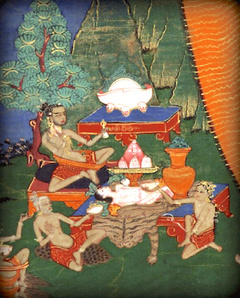
Enjoying the Feast
༄༅། །དངོས་གྲུབ་དམ་རྫས་ཚོགས་ལ་རོལ་པ་ནི།
Enjoying the Feast and Sacred Accomplishment Substances
by the Fourth Dodrupchen, Tupten Trinlé Palzangpo
ལས་སློབ་ཀྱིས་འདུས་པའི་གཙོ་བོ་ལ་བཏུད་དེ་ཕྱག་བྱས་ནས་རྣམ་ལྔ་འདོད་སྐོར་གྱི་ཕྱག་རྒྱ་དང་སྦྲགས།
The master of ceremony pays homage and prostrates to the vajra master presiding over the assembly and, while performing the 'mudrā of the five circles of sensory delights', recites the following:
ཧོཿ བླ་མ་དཔའ་བོ་ཆེན་པོ་དགོངས་སུ་གསོལ། །
ho, lama pawo chenpo gong su sol
Hoḥ. O guru, great hero, turn your attention toward us!
འདིར་ནི་ཆོས་རྣམས་བཟང་པོར་ལྟོས། །
dir ni chö nam zangpor tö
Regard the perfect nature of all phenomena
འདུས་པ་རྣམས་ལ་ཐེ་ཚོམ་མེད། །
düpa nam la tetsom mé
And cast away all doubts about this assembly:
བྲམ་ཟེ་ཁྱི་དང་གདོལ་པ་ཡང༌། །
dramzé khyi dang dolpa yang
Knowing that brahmins, dogs, and even outcasts have the same nature,
རང་བཞིན་གཅིག་ཏུ་དགོངས་ཏེ་རོལ། །
rangzhin chik tu gong té rol
Enjoy the feast!1
ཞེས་པའི་ལན་དུ་སློབ་དཔོན་གྱིས་ཀྱང་ཕྱག་རྒྱ་དེ་ཉིད་དང་བཅས།
The vajra master, performing the same mudrā, responds:
བདེ་བར་གཤེགས་པ་ཆོས་ཀྱི་སྐུ། །
dewar shekpa chö kyi ku
To those gone to bliss, who possess the dharmakāya
འདོད་ཆགས་ལ་སོགས་དྲི་མ་སྤངས། །
döchak lasok drima pang
Free of any trace of desire or attachment,
གཟུང་འཛིན་རྣམ་པར་བྲལ་བ་ཡི། །
zungdzin nampar dralwa yi
And to suchness too, devoid of the duality of grasper and grasped,
དེ་བཞིན་ཉིད་ལ་བདག་ཀྱང་འཚལ། །
dezhin nyi la dak kyang tsal
I pay homage!
ཨ་ལ་ལ་ཧོཿ
a la la ho
a la la ho
ཞེས་པས་བླང་ཞིང་། ལག་སོར་གཡས་གཡོན་རིགས་ལྔ་ཡབ་ཡུམ་དུ་མོས་ནས་རྡོ་རྗེ་ལུས་ཀྱི་དཀྱིལ་འཁོར་ལ་ནང་གི་སྦྱིན་སྲེག་ལྟར་དབུལ་བ་ནི། སློབ་དཔོན་གྱིས་བསྐུལ་ལ་ཚོགས་པ་ཐམས་ཅད་ཀྱིས།
Receive the feast offering, visualizing the fingers of both the right and left hands as embodying the five buddha families in union. Offer the feast to the maṇḍala of the vajra body as an inner fire offering. Encouraged by the vajra master, the entire assembly then recites:
ཧོཿ བདག་ལུས་ཕུང་ཁམས་སྐྱེ་མཆེད་ནི། །
ho, dak lü pung kham kyemché ni
Hoḥ. The aggregates, elements and sense sources of my body
གདན་གསུམ་ཚང་བའི་ངོ་བོ་སྟེ། །
den sum tsangwé ngowo té
Are in essence the three seats of completeness.2
དམ་པ་རིགས་བརྒྱའི་དཀྱིལ་འཁོར་ལྷ། །
dampa rik gyé kyilkhor lha
In this maṇḍala of the hundred peaceful and wrathful deities,
འགུལ་བསྐྱོད་ཐམས་ཅད་བདེ་བ་ཆེ། །
gulkyö tamché dewa ché
All movement is great bliss.
རྡོ་རྗེའི་དམ་ཚིག་བླ་ན་མེད། །
dorjé damtsik lanamé
This is the unsurpassable vajra samaya.
བྱང་ཆུབ་སེམས་ཀྱི་སྤྲིན་ཆེན་པོར། །
changchub sem kyi trin chenpor
This great cloud of bodhicitta,
གཉིས་མེད་མཉམ་པའི་ངང་དུ་རོལ། །
nyimé nyampé ngang du rol
I enjoy in the state of indivisible equality.
རྣལ་འབྱོར་ལམ་གྱི་ཚོགས་རྫོགས་ནས། །
naljor lam gyi tsok dzok né
May we perfect the accumulations of the yogic path,
ཟས་ཀྱི་སྒྲིབ་པར་མི་འགྱུར་ཞིང༌། །
zé kyi dribpar mingyur zhing
Without any obscuration arising due to food,
གཏན་པ་མེད་པའི་སྦྱིན་བདག་ཀྱང༌། །
tenpa mepé jindak kyang
And may the generous patron, too,
ཐེག་ཆེན་འབྲས་བུར་སྤྱོད་པར་ཤོག །
tekchen drebur chöpar shok
Enjoy the fruits of the Mahāyāna.
ཅེས་བརྗོད་ནས་རྡོ་རྗེ་ལུས་ཀྱི་དག་དྲན་འདི་ལྟར་ངེས་པར་བྱ་སྟེ།
Recite this prayer and, with confidence, remember the purity of the vajra body:
རྐང་མཐིལ་རླུང་། སུམ་མདོ་མེ། ལྟོ་བ་ཆུ། སྙིང་ཁ་ས། སྒལ་ཚིགས་རི་རབ། མགོ་བོ་རི་རབ་ཀྱི་སྟོད་ཆ། ལུས་ཀྱི་དཀྱིལ་འཁོར་མི་མཉམ་པ་མེད་པ་གྲུ་བཞི། རྐང་བརྒྱད་ཀ་བ་བརྒྱད། མིག་པཉྩ་རཱ་ག སྣ་ཕ་གུ། སོ་དྲ་བ་དྲ་ཕྱེད། ལྕེ་མཆུ་འདོད་སྣམ། རྣ་བ་རྟ་བབས། སྙིང་གའི་རླུང་རྒྱུ་བའི་རྩ་བཞི་སྒོ་བཞི། རྣམ་པར་ཤེས་པ་ཧེ་རུ་ཀ ཚོགས་བརྒྱད་ཀེའུ་རཱི་མ་བརྒྱད། ཡུལ་བརྒྱད་ཕྲ་མེན་མ་བརྒྱད། རྟག་ཆད་མུ་བཞི་སྒོ་མ་བཞི། སྒལ་ཚིགས་ཉེར་བརྒྱད་དབང་ཕྱུག་ཉི་ཤུ་རྩ་བརྒྱད། མི་དགེ་བ་བཅུ་ཁྲོ་བོ་བཅུ། དགེ་བ་བཅུ་ཁྲོ་མོ་བཅུ། རྩིབ་མ་བཅོ་བརྒྱད་གིང་ཆེན་བཅོ་བརྒྱད། རུས་མགོ་སུམ་བརྒྱ་དྲུག་ཅུ་པོ་ཉ་སུམ་བརྒྱ་དྲུག་ཅུ། དབང་པོའི་སྒོ་བདུན་མ་མོ་བདུན། ལྷུ་ཚིགས་བཅུ་གཉིས་བསྟན་མ་བཅུ་གཉིས།
The soles of the feet are [the maṇḍala of] wind, the junction of the three channels is [the maṇḍala of] fire, the belly is [the maṇḍala of] water, the heart is [the maṇḍala of] earth, the spine is Mount Meru, and the head is the upper part of Mount Meru. The body maṇḍala is the celestial palace, square and with perfect measurement. The eight types of bone are the eight pillars,3 the eyes are the five kinds of ruby, the nose is the frieze, the teeth are hanging garlands with tassels, the tongue and lips are the terraces, the ears are archways, and the four channels through which the winds at the heart move are the four doors. As for the deities: mind is the heruka, the eight consciousnesses are the eight gaurīs, their eight objects are the eight female hybrid spirits,4 the four extremes of permanence and nihilty are the four gatekeepers, the twenty-eight vertebrae are the twenty-eight īśvarīs, the ten non-virtues are the ten wrathful deities, the ten virtues are the ten female wrathful deities, the eighteen ribs are the eighteen kiṃkaras, the three hundred and sixty bones are the three hundred and sixty messengers, the seven sense-doors are the seven mamos, and the twelve joints are the twelve Tenma goddesses.
མདོར་ན་ལུས་རྩའི་དཀྱིལ་འཁོར། རྩ་ཡི་གེའི་དཀྱིལ་འཁོར། ཁམས་བདུད་རྩིའི་དཀྱིལ་འཁོར། རླུང་ཡེ་ཤེས་ཀྱི་དཀྱིལ་འཁོར། རིག་པ་བྱང་ཆུབ་སེམས་ཀྱི་དཀྱིལ་འཁོར་ཏེ། དཀྱིལ་འཁོར་རྣམ་པ་ལྔའི་བདག་ཉིད་དུ་མོས་པ་ལ་མཆོད་པའི་ཚུལ་གྱིས་ཚིམས་པར་རོལ།
In brief, while considering that you have the nature of the following five maṇḍalas, enjoy the feast offerings and satisfy yourself: (1) the body is the maṇḍala of channels, (2) the channels are the maṇḍala of syllables, (3) the semen is the maṇḍala of amṛta, (4) the wind-energies are the maṇḍala of wisdom, and (5) awareness is the maṇḍala of bodhicitta.
དེའི་ཚེ་ཚོགས་ཀྱི་དམ་རྫས་ལ་སྨོད་པ་དང་། ཐེག་དམན་གྱི་བློས་བླང་དོར་དུ་བལྟ་བ་དང་། འཐབ་རྩོད་དང་། ཀུ་ཅོ་དང་། ཤགས་ལ་སོགས་པ་ནི་སྦོམ་པོ་བརྒྱད་ཀྱི་ཡ་གྱལ་ཡིན་པས་སྤང་བར་བྱའོ། །
At this time, avoid the eight infractions such as disparaging the samaya substances of the feast, accepting and rejecting things with a mindset of the Lesser Vehicle, quarrelling, shouting, and bickering.
དེ་ནས་རྡོ་རྗེའི་གླུ་གར་བྱ་བར་མོས་ན། ལས་སློབ་ཀྱིས་སློབ་དཔོན་ལ་ཕྱག་བྱས་ཏེ།
Then, if you wish to engage in vajra song and dance, the master of ceremonies should first prostrate to the vajra master and recite:
ཧོཿ དགོངས་སུ་གསོལ།
ho, gong su sol
Hoḥ. Turn your attention toward us!
མངའ་དབང་རྫོགས་པའི་དཀྱིལ་འཁོར་ཆེན་པོར་ཀུན་ཏུ་བཟང་པོའི་ཚོགས་མཆོད་རྒྱ་མཚོས་ཕྱི་ནང་གི་འདུ་བ་དང་ཉེ་བའི་འདུ་བ་ལེགས་པར་མཆོད་ཟིན་པའི་གནས་སྐབས་འདིར་ནི་མུ་ཏིག་ཕྲེང་བ་ལས།
nga wang dzokpé kyilkhor chenpor kuntuzangpö tsokchö gyatsö chinang gi duwa dang nyewé duwa lekpar chö zinpé nekab dir ni mutik trengwa lé
Within this great maṇḍala of perfect power, we have presented an excellent, ocean-like feast offering, just like Samantabhadra’s offerings, to the outer, inner and subsidiary gatherings. The Pearl Garland states:
ཚོགས་དང་དབང་བསྐུར་དཀྱིལ་འཁོར་འཇུག །
tsok dang wangkur kyilkhor juk
“When offering the feast, receiving empowerment, or entering the maṇḍala,
དེ་ནས་གླུ་ལ་བརྩོན་པར་བྱ། །
dené lu la tsönpar ja
Diligently engage in song.”
ཞེས་པའི་དོན་ལྟར་ཆོས་ཉིད་བསམ་གྱིས་མི་ཁྱབ་པའི་དགོངས་སྤྱོད་རྒྱ་མཚོས་རྡོ་རྗེའི་གླུ་གར་ལ་ཐུགས་གཏད་པར་ཞུ།
zhepé dön tar chönyi sam gyi mi khyabpé gong chö gyatsö dorjé lugar la tuk tepar zhu
Therefore, with your ocean-like conduct and realization of the inconceivable dharmatā, please turn your attention to our vajra songs and dances!
ཞེས་གསོལ་བ་བཏབ་ནས། རིག་པ་བརྟུལ་ཞུགས་ཀྱི་སྤྱོད་པ་བྱུང་རྒྱལ་དུ་བསྐྱང་བའམ། ཆོས་ཉིད་ཀྱི་གླུ་དབྱངས་སྙན་པོས་ལེན་པར་བྱ།
Having made this request, either engage in the yogic conduct of awareness in a spontaneous manner, or sing the melodious songs of dharmatā.
ཞེས་ཚོགས་རོལ་ལག་ལེན་འདི་ཉིད་རྒྱུན་དུ་འཇུག་པ་བདེ་ཕྱིར། བླ་མཆོད་དངོས་གྲུབ་རྒྱ་མཚོ་དང་། སྤྱོད་ཡུལ་ལམ་ཁྱེར་སངས་རྒྱས་ལམ་ཞུགས་གཉིས་ལས་ཁོལ་དུ་ཕྱུང་བ་དགེའོ། །
To facilitate the enjoyment of feast offerings on a regular basis, this liturgy was compiled from Ocean of Siddhis: A Practice for Making Offerings to the Gurus and Entrance to the Path of the Awakened Ones: Taking Daily Activities as the Path.5 May it be virtuous!
| Translated by Stefan Mang and Han Kop and edited by Barry Cohen, for the Longchen Nyingtik Project, 2025. With gratitude to Lama Jigme Namgyal for his clarifications.
Tibetan Edition
“dngos grub dam rdzas tshogs la rol pa.” In klong chen snying thig gi 'don cha rtsa gsum tshogs bskang skor. pp. 429–432. Gangtok, Sikkim: mchod rten dgon pa, 2016. BDRC MW2KG210383.
Secondary Source
Rigdzin Jigme Lingpa, “Entering into the Path of Enlightenment: Taking Daily Activities as the Path, According to the Unified Approach of Sūtra and Tantra.” In Tulku Thondup, Enlightened Living: Teachings of Tibetan Buddhist Masters. Boston: Shambhala, 1990. pp. 130–141.
Version: 1.0-20260108
Notes
- This verse encourages the participants to drop all dualistic concepts. ↑
- The three seats are: (1) The five buddha families and their consorts, (2) the eight bodhisattvas and their consorts, and (3) the four wrathful doorkeepers and their consorts. ↑
- Tulku Thondup explains that here one counts two bones for each arm and leg. ↑
- Tramen. ↑
- Both texts were written by Jigme Lingpa and can be found in his collected works. ↑