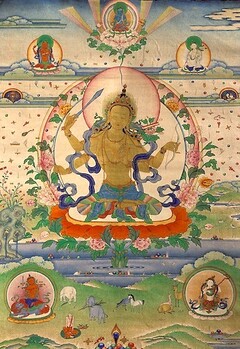
Five Families of Mañjuśrī Praise
༄༅། །འཇམ་དཔལ་རིགས་ལྔར་བསྟོད་གསོལ་བཞུགས། །
Praise and Prayer to the Five Families of Mañjuśrī
by Jamyang Khyentse Chökyi Lodrö
ཨོཾ་ཝཱ་ཀྱེ་དཾ་ན་མཿ
om wakyédam namah
oṃ vākyedaṃ namaḥ
སངས་རྒྱས་ཀུན་གྱི་སྐུ་ཆེན་པོ། །
sangye kün gyi ku chenpo
Great body of all the buddhas,
ཡེ་ཤེས་སྐུ་སྟེ་སྐུའི་དབང་ཕྱུག །
yeshe ku té kü wangchuk
Wisdom body, sovereign body,
འཇམ་དཔལ་དྲི་མ་མེད་པའི་སྐུ། །
jampal drima mepé ku
Mañjuśrī, immaculate in form,
མཆོག་སྦྱིན་རྡོ་རྗེར་ཕྱག་འཚལ་བསྟོད།
chok jin dorjér chaktsal tö
Vajra granter of boons, to you I offer homage and praise.
ཨོཾ་ཝཱ་གཱི་ཤྭ་རི་མུྃ།
om wagi shvari mum
oṃ vāgiśvara muṃ
བདག་མེད་སེངྒེའི་སྒྲ་དང་ལྡན། །
dakmé sengé dra dangden
Striking fear into deer-like heretics
མུ་སྟེགས་རི་དྭགས་ངན་འཇིགས་པ། །
mutek ridak ngen jikpa
With the lion’s roar of selflessness.1
ཀུན་ཏུ་འགྲོ་བའི་དོན་སྟོན་པའི། །
küntu drowé dön tönpé
You reveal the universal meaning,
གསུང་གི་དབང་ཕྱུག་ཕྱག་འཚལ་བསྟོད། །
sung gi wangchuk chaktsal tö
Master of speech, to you I offer homage and praise.
ཨོཾ་ཨ་ར་པ་ཙ་ན་དྷཱིཿ
om arapatsana dhih
oṃ arapacana dhīḥ
འགྲོ་བའི་མར་མེ་ཡེ་ཤེས་སྒྲོན། །
drowé marmé yeshe drön
A light for beings, a lantern unto wisdom,
གཟི་བརྗིད་ཆེན་པོ་འོད་གསལ་བ། །
ziji chenpo ösalwa
With energy supreme, most radiant,2
ཀུན་ཏུ་རྟོག་པ་ཐམས་ཅད་སྤངས། །
küntu tokpa tamché pang
Entirely free from any form of concept.3
འཇམ་དཔལ་རྡོ་རྗེར་ཕྱག་འཚལ་བསྟོད། །
jampal dorjér chaktsal tö
Mañjuvajra, to you I offer homage and praise.
ཨོཾ་བཛྲ་ཏིཀྵ་ཎ་དུཿཁ་ཙྪེ་ད་པྲ་ཛྙཱ་ཛྙཱ་ན་མུརྟྟ་ཡེ། ཛྙཱ་ན་ཀཱ་ཡ་ཝཱ་གཱི་ཤྭ་ར་ཨ་ར་པ་ཙ་ནཱ་ཡ་ཏེ་ན་མཿ
om benza tikshana duhkha tséda prajna jnana murtta yé jnana kaya wagi shara arapatsana ya té namah
oṃ vajratīkṣṇa duḥkha chheda prajñā jñāna mūrtaye | jñāna-kāya-vāgiśvara arapacanāyate namaḥ
དོན་གསུམ་ཐེ་ཚོམ་གཅོད་པའི་བློ། །
dön sum tetsom chöpé lo
His thinking free from doubt, his object threefold,
ཀུན་དོན་ཡོན་ཏན་གསུམ་གྱི་བདག །
kün dön yönten sum gyi dak
His object all, three properties by nature.4
སངས་རྒྱས་བྱང་ཆུབ་བླ་ན་མེད། །
sangye changchub lanamé
The buddha’s unsurpassed awakening,5
ཡོན་ཏན་མཐའ་ཡས་ཕྱག་འཚལ་བསྟོད། །
yönten tayé chaktsal tö
Limitless Qualities, to you I offer homage and praise.
ཨོཾ་ཧྲཱིཿདྷཱིཿམ་མེ་དཱི་པཾ་མཉྫུ་ཤྲཱི་མུྃ་ཧྲཱིཿཔྲཛྙཱ་ཝཱརྡྷ་ནི་ཧྲཱིཿདྷཱིཿསྭཱ་ཧཱ།
om hrih dhih mamé dipam mandzushri mum hrih pradznya wardhani hrih dhih soha
oṃ hrīḥ mame dīpaṃ mañjuśrī mūṃ hrīḥ prajñā vardhani hrīḥ dhīḥ svāhā
སྨྲ་བའི་སེངྒེ་ཚུགས་པ་མེད། །
mawé sengé tsukpamé
The unassailable, the lion of speech,6
ཀུན་ཏུ་བལྟ་བས་མཆོག་ཏུ་དགའ། །
küntu tawé chok tu ga
With universal vision, true delight,
གཟི་བརྗིད་ཕྲེང་བ་ལྟ་ན་སྡུག །
ziji trengwa ta na duk
With fire garlands, handsome to behold,7
ཆོས་ཀྱི་རྒྱལ་མཚན་ཕྱག་འཚལ་བསྟོད།
chö kyi gyaltsen chaktsal tö
Dharma Banner of Victory, to you I offer homage and praise.
ཨོཾ་མཉྫུ་ཤྲཱི་ཛྙཱ་ན་ས་ཏྭ་ཧཱུྃ། །
om mandzushri jnana sata hung
oṃ mañjuśrī-jñāna-satva-hūṃ
དང་པོའི་སངས་རྒྱས་རྒྱུ་མེད་པ། །
dangpö sangye gyu mepa
Primordial buddha, who’s devoid of any cause,
ཡེ་ཤེས་མིག་གཅིག་དྲི་མ་མེད། །
yeshe mik chik drima mé
With wisdom as his only eye, unstained,
ཡེ་ཤེས་ལུས་ཅན་དེ་བཞིན་གཤེགས། །
yeshe lüchen dezhin shek
Tathāgata, with wisdom as his body,8
དཀྱིལ་འཁོར་དབང་ཕྱུག་ཕྱག་འཚལ་བསྟོད། །
kyilkhor wangchuk chaktsal tö
Lord of the maṇḍala, to you I offer homage and praise.
འཇམ་དཔལ་རིགས་ལྔའི་ལྷ་ཚོགས་ལ། །
jampal rik ngé lhatsok la
Through the merit of paying homage and praising
ཕྱག་འཚལ་བསྟོད་པའི་བསོད་ནམས་ཀྱིས། །
chaktsal töpé sönam kyi
The hosts of deities of the five families of Mañjuśrī,
མ་རིག་མུན་པ་ཀུན་སེལ་ནས། །
marik münpa kün sel né
May the darkness of ignorance be entirely dispelled
མཁྱེན་གཉིས་སྣང་བ་རྒྱས་པར་ཤོག །
khyen nyinang ba gyepar shok
And the light of twofold knowledge always shine.
རྒྱུད་ཀྱི་ངེས་པའི་བསྟོད་པ་འདི། །
ཆོས་ཀྱི་བློ་གྲོས་ཞེས་བྱ་བར། །
ལྷ་རྫས་ཡོལ་གོའི་རྟེན་དང་བཅས། །
ཨ་མདོ་བླ་མས་བསྐུལ་ངོར་བྲིས། །
This praise based on the definitive tantra
Was written by one called Chökyi Lodrö,
In response to a request from Amdo Lama,
Accompanied by a silken scarf and vessel.
ཤུ་བྷཾ། ། །།
Śubham.
| Translated by Adam Pearcey with reference to the Chanting the Names of Mañjuśrī (Mañjuśrī-nāma-saṅgīti) translation by Ryan Conlon and Stefan Mang and with the generous support of the Khyentse Foundation and Tertön Sogyal Trust, 2022.
Source
'Jam dbyangs chos kyi blo gros. "jam dpal rigs lngar bstod gsol/" in 'Jam dbyangs chos kyi blo gros kyi gsung 'bum. 12 vols. Bir, H.P.: Khyentse Labrang, 2012. (BDRC W1KG12986). Vol. 2: 385–386
Version: 1.1-20250307
Notes
- These two lines are from Mañjuśrī-nāma-saṅgīti 47. See https://www.lotsawahouse.org/words-of-the-buddha/chanting-names-of-manjushri ↑
- These two lines are from Mañjuśrī-nāma-saṅgīti 62. ↑
- This line is from Mañjuśrī-nāma-saṅgīti 56 ↑
- From Mañjuśrī-nāma-saṅgīti 140 ↑
- From Mañjuśrī-nāma-saṅgīti 143 ↑
- From Mañjuśrī-nāma-saṅgīti 101 ↑
- From Mañjuśrī-nāma-saṅgīti 102 ↑
- From Mañjuśrī-nāma-saṅgīti 100 ↑