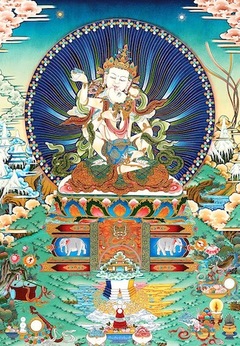
Dorsem Ngön-ga Consecration
༄༅། རྡོ་རྗེ་སེམས་དཔའ་ལ་བརྟེན་པའི་བླ་མ་མཆོད་པའི་ཆོ་ག་གཞན་ཕན་གྱི་ཕྲིན་ལས་དང་བཅས་པ་བདེ་ཆེན་ལམ་བཟང་ཞེས་བྱ་བ་བཞུགས་སོ།
The Excellent Path of Great Bliss
A Ritual of Offering to the Gurus Based on Vajrasattva, Combined with Activity for the Benefit of Others
5) Consecration
by Jamyang Khyentse Wangpo
ལྔ་པ་ལ། དངོས་དང་། ཞར་ལས་བྱུང་བའོ།
There are two parts: 1) the main consecration and 2) supplementary section.
དང་པོ་ནི།
1. The Main Consecration
ཇི་སྐད་དུ།
As it is said:
སྤྱིར་ནི་རྟེན་བསྐྱེད་དགུག་བསྟིམ་དང་། །
In general, generating the deities, invocation and dissolution of the jñānasattva,
དབང་བསྐུར་བརྟན་བཞུགས་བཞི་པོ་འདི། །
Empowerment, and requesting them to remain—
རབ་གནས་ཉིད་ཀྱི་ངོ་བོ་ཡིན། །
These four are the very essence of consecration.
ཞེས་པའི་དོན་ལྟར་མདོར་བསྡུས་ཏེ་བྱ་བའི་ཚུལ། རྟེན་གྱི་མདུན་དུ་སྒྲུབ་དཀྱིལ་རྣམ་བུམ་བཅས། གཡས་སུ་མངའ་དབུལ་གྱི་མཎྜལ་དང་། ཞལ་ཟས་དང་གདུགས་སེར་པོས་བརྒྱན་པའི་མཐར་དཀར་མངར་ཤིང་ཏོག་སོགས་ཀྱིས་བསྐོར་བའི་ཙཱ་རུའི་བཟའ་བ། ཉེར་སྤྱོད་སོགས་མཆོད་པའི་བྱེ་བྲག་ཇི་ལྟར་འབྱོར་པ། གཡོན་དུ་བུམ་གདན་པདྨ་འདབ་བརྒྱད་ཀྱི་ཁར་ཁྲུས་བུམ་བཅུད་ལྡན། རང་གི་མདུན་དུ་རྡོར་དྲིལ་གུལ་ཡུངས་སྦྱོང་ཆས་སོགས་འོག་ཏུ་དགོས་པ་ཐམས་ཅད་འདུ་བྱ། བླ་མ་མཆོད་པའི་གཞུང་བསྲངས་ཏེ་བཟླས་པའི་མཇུག་ཏུ་རྣམ་བུམ་བསྒྲུབ། དེ་ནས་ཁྲུས་བུམ་བསང་སྦྱང་།
Accordingly, the concise procedure is as follows. In front of the representations, set up the accomplishment maṇḍala together with the victorious vase. To the right, place the maṇḍala of investiture and the caru food1—adorned with a yellow parasol and surrounded by the white and sweet foods and various fruits—along with as many offerings as you can procure, such as the customary offerings. To the left, upon an eight-petalled lotus seat, place an ablution vase filled with liquid. In front of you, arrange the vajra and bell, the gugul incense, mustard seeds, the substances for purification and whatever else is needed. Follow the text of the Offering to the Gurus2 up through the mantra recitation. Consecrate the victorious vase. After that, cleanse and purify the ablution vase with:
Consecrating the Vase
སྟོང་པའི་ངང་ལས་པད་ཟླའི་སྟེང་དུ་བྷྲཱུྃ་ལས་རིན་པོ་ཆེའི་བུམ་པ་མཚན་ཉིད་ཐམས་ཅད་ཡོངས་སུ་རྫོགས་ཤིང་བདུད་རྩིའི་བཅུད་ཀྱིས་གང་བའི་དབུས་སུ་སྔགས་ཀྱི་ཕྲེང་བ་འོད་ཟེར་ཀུན་ཏུ་འཕྲོ་བ་ལས།
tongpé ngang lé pé dé tengdu droom lé rinpoche bumpa tsennyi tamché yongsu dzok shing dütsi chü kyi gangwé ü su ngak kyi trengwa özer küntu trowa lé
From the state of emptiness, upon a lotus and moon-disc seat, bhrūṃ transforms into a perfectly designed jewelled vase filled with amṛta. At its centre, a mantra garland radiates light in all directions.
དྲི་མ་སྦྱོང་བའི་མཐུ་ལྡན་གྱི་བདུད་རྩིའི་རྒྱུན་བབས་པས་བུམ་པ་གང་བར་གྱུར།
drima jongwé tuden gyi dütsi gyün babpé bumpa gangwar gyur
A stream of amṛta with the power to purify all stains descends and fills the vase.
Recite this, then repeat the ablution mantra as many times as possible:
ཅེས་བརྗོད་ཅིང་ཁྲུས་སྔགས་ཨ་བྷི་ཥེ་ཀ་ཅི་ནུས་སུ་བཟླ།
oṃ sarva tathāgata abhiṣekate samaya śrīye hūṃ
om sarwa tathagata abhishekaté samaya shriyé hung
ལས་བུམ་དང་གུལ་ཡུངས་བདུད་རྩི་འཁྱིལ་བའི་སྔགས་ཀྱིས་བརླབ། ཡན་ལག་བདུན་པ་དང་། ལམ་དབང་བླང་། དེ་ནས་སྦྱོང་ཆས་ལ་ཆབ་བྲན།
Bless the activity vase, gugul incense and mustard seeds with the mantra of Amṛtakuṇḍalin.3 Continue with the seven-branch practice and receive the path empowerment. Then sprinkle the purification articles with blessed water.
Elimination of Obstacles
Circle the torma clockwise while reciting:
གཏོར་མ་གཡས་སུ་བསྐོར་ཞིང་ཨོཾ་སརྦ་བིགྷྣཱན་སོགས།
om sarwa bighanen nama sarwa tathagaté bhyo bisho mukhé bhé sarwa takham utgaté saparana imam gagana kham grihana idam balingté soha
oṃ sarva vighnān namaḥ saravatathāgatebhyo viśva-mukhebhyaḥ sarvathā-khaṃ udgate spharaṇa imaṃ gagana-khaṃ gṛhṇa idaṃ baliṃ te svāhā
Circle with the small butter lamp (tinglo) and fist-torma (changbu) counterclockwise while reciting:
ཏིང་ལོ་དང་ཆང་བུ་གཡོན་དུ་བསྐོར་ཞིང་སུམྦྷ་སོགས།
om sumbhani sumbhani hung | grihana grihana hung | grihanapaya grihanapaya hung | anaya ho | bhagawan bidyaraza krodha hung pé
oṃ sumbhani sumbhani hūṃ | gṛhṇa gṛhṇa hūṃ | gṛhṇāpaya gṛhṇapāya hūṃ | ānaya ho bhagavān vidyārāja krodha hūṃ phaṭ
ཧཱུྃ། དཀོན་མཆོག་གསུམ་དང་རྩ་གསུམ་འདུས་པའི་དངོས། །
hung, könchok sum dang tsa sum düpé ngö
Hūṃ. Through the power and truth of the guru Vajrasattva,
བླ་མ་རྡོ་རྗེ་སེམས་དཔའི་བདེན་སྟོབས་ཀྱིས། །
lama dorjé sempé den tob kyi
The actual embodiment of the Three Jewels and Three Roots,
ལྷག་གནས་ཆོ་ག་བགྱིད་ལ་བར་གཅོད་ཀུན། །
lhak né choga gyi la barchö kün
All you who create obstacles for this consecration ritual—
གཏོར་མ་འདི་ལོངས་རང་རང་གནས་སུ་དེངས། །
torma di long rang rangné su deng
Take this torma and disperse to your own abodes.
Recite:
ཨ་མྲྀ་ཏ་དང་།
om benza amritakundali hana hana hung pé
oṃ vajrāmṛta-kuṇḍali hana hana hūṃ phaṭ
སུམྦྷ་སོགས་བརྗོད།
om sumbhani sumbhani hung | grihana grihana hung | grihanapaya grihanapaya hung | anaya ho | bhagawan bidyaraza krodha hung pé
oṃ sumbhani sumbhani hūṃ | gṛhṇa gṛhṇa hūṃ | gṛhṇāpaya gṛhṇapāya hūṃ | ānaya ho bhagavān vidyārāja krodha hūṃ phaṭ
གུ་གུལ་གྱིས་བདུག ཡུངས་ཀར་གྱིས་བྲབ། གཏོར་མ་ཕྱིར་དོར།
Purify with gugul incense, scatter mustard seeds and throw the torma outside.
Cleansing Ritual
སྤྲོ་ན་ཁྲུས་ཀྱི་ཁང་པ་སོགས་ཚིགས་བཅད་གཉིས་ཀྱིས་ཁྲུས་ཁང་བསྐྱེད་པ་དང་སྙན་གསན་དབབ།
If you wish to elaborate, recite the two verses beginning "To a bath house..." to generate the bath house and make the request.
ཁྲུས་ཀྱི་ཁང་པ་ཤིན་ཏུ་དྲི་ཞིམ་པ། །
trü kyi khangpa shintu drizhimpa
To a bath house filled with soothing scents,
ཤེལ་གྱི་ས་གཞི་གསལ་ཞིང་འཚེར་བ་ལྟར། །
shel gyi sa zhi sal zhing tserwa tar
With brightly sparkling floors of crystal,
རིན་ཆེན་འབར་བའི་ཀ་བ་ཡིད་འོང་ལྡན། །
rinchen barwé kawa yi ongden
And fine pillars all shimmering with gems,
མུ་ཏིག་འོད་ཆགས་བླ་བྲེ་བྲེས་པ་དེར། །
mutik ö chak ladré drepa der
Where hang gleaming canopies of pearls,
དེ་བཞིན་གཤེགས་པ་རྣམས་དང་དེ་སྲས་ལ། །
dezhin shekpa nam dang dé sé la
I invite the buddhas and their bodhisattva heirs.
རིན་ཆེན་བུམ་པ་མང་པོ་སྤོས་ཀྱི་ཆུས། །
rinchen bumpa mangpo pö kyi chü
I request you: Come to bathe yourselves in scented water,
ཡིད་འོང་ལེགས་པར་བཀང་བའི་གླུ་དང་ནི། །
yi ong lekpar kangwé lu dang ni
Poured from overflowing jugs made of exquisite jewels,
རོལ་མོར་བཅས་པ་དུ་མས་སྐུ་ཁྲུས་གསོལ། །
rolmor chepa dumé kutrü sol
All the while accompanied by melody and song.4
རྟེན་གྱི་གཟུགས་བརྙན་ཁྲུས་བུམ་གྱི་ཆུས་བཀྲུ་ཞིང་།
Then bathe the reflected image of the representations with water from the ablution vase while reciting:
ཇི་ལྟར་བལྟམས་པ་ཙམ་གྱིས་ནི། །
jitar tampa tsam gyi ni
Just as the gods cleansed your body
དེ་བཞིན་གཤེགས་ཀུན་ཁྲུས་གསོལ་ལྟར། །
dezhin shek kün trü sol tar
Moments after you took birth,
ལྷ་ཡི་ཆུ་ནི་དག་པ་ཡིས། །
lha yi chu ni dakpa yi
With the purest water of the gods,
དེ་བཞིན་བདག་གིས་སྐུ་ཁྲུས་གསོལ། །
dezhin dak gi kutrü sol
We too, cleanse your body in this way.
ཨོཾ་སརྦ་ཏ་ཐཱ་ག་ཏ་ཨ་བྷི་ཥེ་ཀ་ཏ་ས་མ་ཡ་ཤྲི་ཡེ་ཧཱུྃ་ཞེས་དང་།
oṃ sarva tathāgata abhiṣekate samaya śrīye hūṃ
om sarwa tathagata abhishekaté samaya shriyé hung
ཁྲུས་རས་ཀྱིས་ཕྱི་ཞིང་།
Dry with the finest cloth:
དེ་དག་སྐུ་ལ་མཚུངས་པ་མེད་པའི་གོས། །
dedak ku la tsungpa mepé gö
Then let me dry you in cloths beyond compare,
གཙང་ལ་དྲི་རབ་བསྒོས་པས་སྐུ་ཕྱིའོ། །
tsang la dri rab göpé ku chi o
Immaculate and anointed well with perfumed scent.
ཨོཾ་ཧཱུྃ་ཏྲཱྃ་ཧྲཱིཿཨཱཿཀཱ་ཡ་བི་ཤོ་དྷ་ནི་སྭཱ་ཧཱ།
om hung tram hrih ah kaya bishodhani soha
oṃ hūṃ trāṃ hrīḥ āḥ kāya viśodhane svāhā
དྲི་བཟང་གིས་བྱུགས་ཤིང་།
Anoint with perfume:
ཨོཾ་བཛྲ་གནྡྷེ་སྭཱ་ཧཱ།
om benza gendhé soha
oṃ vajra gandhe svāhā
ན་བཟའ་དང་རྒྱན་འབུལ་ལ།
Offer robes and ornaments:
དེ་ནས་དེ་ལ་ཁ་དོག་ལེགས་བསྒྱུར་བའི། །
dené dé lakha dok lek gyurwé
And dress you finely in the most excellent of garments,
ན་བཟའ་ཤིན་ཏུ་དྲི་ཞིམ་དམ་པ་འབུལ། །
naza shintu drizhim dampa bul
Lightly scented and dyed in vivid colours.
གོས་བཟང་སྲབ་ལ་འཇམ་པ་སྣ་ཚོགས་དང་། །
gö zang sab la jampa natsok dang
I offer clothing made of the finest gentle fabrics,
རྒྱན་མཆོག་བརྒྱ་ཕྲག་དག་ཀྱང་དབུལ་བར་བགྱི། །
gyen chok gyatrak dak kyang ulwar gyi
And hundreds of the most beautiful adornments,
ཨོཾ་བཛྲ་ཝ་སཏྲ་ཡ་སྭཱ་ཧཱ།
om benza watrayé soha
oṃ vajra vastrāya svāhā
ཞེས་བརྗོད། སྤྲོ་ན་བཀྲ་ཤིས་ཀྱི་ཚིགས་སུ་བཅད་པ་དང་བཅས་མེ་ཏོག་འཐོར།
If you wish to elaborate, recite verses of auspiciousness and scatter flowers.
Generation and Dissolution of the Deities
དེ་ནས་རྟེན་བསང་སྦྱང་།
Cleanse and purify the representations:
ཕྱི་ནང་ཆོས་ཀུན་སྟོང་པ་ཆེན་པོའི་ངང་། །
chinang chö kün tongpa chenpö ngang
All outer and inner phenomena abide in the state of great emptiness.
རབ་ཏུ་གནས་བྱའི་རྟེན་རྣམས་ཡོངས་གྱུར་ལས། །
rabtu né jé ten nam yong gyur lé
The representations to be consecrated are completely transformed:
གླང་པོས་མཚན་པའི་རིན་ཆེན་པད་ཟླའི་ཁྲིར་སོགས་ནས།
langpö tsenpé rinchen pé dé trir...
Upon a jewelled throne marked with elephants, on a lotus and moon disc…
Follow the text from above through to:5
བཛྲ་ཏུ་ཥྱ་ཧོཿ
benza tushya ho
vajra tuṣya hoḥ
ཞེས་པའི་བར་གོང་ལྟར་ལ།
Empowerment and Opening the Eyes
ཨོཾ་བཛྲཱི་བྷ་བ་སོགས་དབང་བསྐུར་གྱི་སྐབས་སུ་རྣམ་བུམ་འདེགས་ཤིང་བུམ་ཆུ་འཐོར། སྤྲོ་ན་ཡན་ལག་བདུན་པ་ཚང་བའམ། བསྡུ་ན་མཆོད་བསྟོད་མདོར་བསྡུས་བྱ། མིག་ཐུར་རམ་རྡོ་རྗེ་ཐོགས་ལ།
At the time of the empowerment, beginning with oṃ vajrī bhava and so on,6 raise the victorious vase and sprinkle the vase water. If you wish to elaborate, recite the complete seven branches; if done concisely, present the short offerings and praise. Holding the special spoon to remove the blindfold or a vajra:
ཇི་ལྟར་མིག་མཁན་རྒྱལ་པོས་འཇིག་རྟེན་གྱི། །
jitar mik khen gyalpö jikten gyi
Just as the king of eye doctors
རབ་རིབ་གསེར་གྱི་ཐུར་མས་བསལ་བ་ལྟར། །
rabrib ser gyi turmé salwa tar
Removes the cataracts of the world with a golden scalpel,
སེམས་ཅན་རྣམས་ལ་གཟིགས་པ་ལྷུར་མཛད་ཕྱིར། །
semchen nam la zikpa lhur dzé chir
So I respectfully open your supreme wisdom eyes,
ཡེ་ཤེས་སྤྱན་མཆོག་སྲི་ཞུས་དབྱེ་བར་བྱ། །
yeshe chen chok sizhü yewar ja
That you may watch over beings with utmost care.
ཨོཾ་ཙཀྵུ་ཙཀྵུ་ས་མནྟ་ཙཀྵུ་བི་ཤོ་དྷ་ནི་སྭཱ་ཧཱ།
om tsakshu tsakshu samanta tsakshu bishodhané soha
oṃ cakṣu cakṣu samanta cakṣu viśodhane svāhā
ཞེས་ལན་གསུམ་གྱིས་སྤྱན་དབྱེ།
Recite this three times to open the eyes.
Transformation of the Representations
སློབ་དཔོན་གྱིས་རྡོ་རྗེ་དང་བཅས་པའི་ཐལ་མོས་རྟེན་དངོས་སམ་གཟུགས་བརྙན་ལ་རེག་ཅིང་སེ་གོལ་གྱི་སྒྲས་མཚོན་པས་ཡི་གེ་བརྒྱ་པའི་མཐར།
The vajra master, holding the vajra, touches the actual representations or their reflections with his palm and snaps his fingers symbolically. After reciting the hundred-syllable mantra:
ཨོཾ་ཨཱཿཧཱུྃ་སྭཱ་ཧཱ་ལན་གསུམ་བརྗོད་པས།
om ah hung soha
oṃ āḥ hūṃ svāhā
Three times.
བསྐྱེད་པའི་ལྷ་ཡོངས་སུ་གྱུར་པ་རྟེན་སོ་སོའི་རྣམ་པར་གྱུར་ཅེས་ཞལ་བསྒྱུར།
kyepé lha yongsu gyurpa ten sosö nampar gyur
The visualized deities transform completely, taking the form of each particular representation.
The Investiture
རྟེན་ལ་གཟུངས་ཐག་སེར་པོ་བཏགས་པའི་སྣེ་མོ་སློབ་དཔོན་གྱིས་བཟུང་ལ།
The vajra master takes hold of the end of the yellow dhāraṇī cord tied to the representations:
གནས་བྱའི་རྟེན་རྣམས་ཀྱི་ཐུགས་ཀར་ཟླ་བ་ལ་གནས་པའི་སྔགས་ཕྲེང་འཁོར་བའི་འོད་ཟེར་གྱིས་ཕྱོགས་བཅུའི་སངས་རྒྱས་སྲས་དང་བཅས་པ་རྟེན་སོ་སོའི་རྣམ་པར་བྱོན་ནས་དེ་ལ་བཞུགས་པར་གྱུར།
né jé ten nam kyi tukkar dawa la nepé ngak treng khorwé özer gyi chok chü sangye sé dang chepa ten sosö nampar jön né dé la zhukpar gyur
At the heart of each representation to be consecrated is a moon-disc seat, upon which the mantra garland rests. The garland turns and rays of light stream forth, inviting all the buddhas of the ten directions and their heirs, who come to abide in the representations.
སུ་པྲ་ཏིཥྛ་དང་རྟེན་འབྲེལ་སྙིང་པོ་ཅི་ནུས་བཟླ།
om supratishta bendzayé soha
oṃ supratiṣṭha-vajraye svāhā
མེ་ཏོག་གི་འབྲུ་རེ་རེ་ནས་རྟེན་འབྲེལ་སྙིང་པོའི་ཡིག་འབྲུ་གསེར་འོད་འབར་བའི་རྣམ་པར་གྱུར་པའི་མོས་པས་འཐོར་ཞིང་།
Recite this together with the mantra of the essence of interdependent origination as many times as possible. While doing so, scatter flower petals, visualizing each one as the syllables of the essence of interdependent origination, blazing with golden light.
ཡེ་དྷརྨཱཿབརྗོད།
om yé dharma hetu prabhava hetun teshan tatagato hyavadat | teshan tsa yo nirodha evam vadi maha shramana soha
oṃ ye dharmā hetu prabhāvā hetuṃ teṣāṃ tathāgato hyavadat | teṣāṃ ca yo nirodha evaṃ vādī mahāśramaṇaḥ svāhā
ཐལ་མོ་སྦྱར་བས་བཏུད་དེ།
Pay homage by putting your palms together. Then recite:
ཕྱོགས་བཅུ་ན་བཞུགས་པའི་སངས་རྒྱས་དང་བྱང་ཆུབ་སེམས་དཔའ་ཐམས་ཅད་བདག་ལ་དགོངས་སུ་གསོལ།
chok chu na zhukpé sangyé dang changchup sempa tamché dak la gong su sol
All you buddhas and bodhisattvas who dwell throughout the ten directions, think of us!
ཇི་སྲིད་ནམ་མཁའི་མཐའ་དང་མཉམ་པའི་སེམས་ཅན་ཐམས་ཅད་མི་གནས་པའི་མྱ་ངན་ལས་འདས་པའི་ས་ལ་མ་བཞག་གི་བར་དུ་རྒྱལ་བ་རྣམས་མྱ་ངན་ལས་མི་འདའ་བར་བརྟན་པར་བཞུགས་སུ་གསོལ།
ji si namkhé ta dang nyampé semchen tamché mi nepé nya ngen lé depé sa la ma zhak gi bar du gyalwa nam nya ngen lé mi dawar tenpar zhuk su sol
Until all beings, as infinite as space itself, are brought to the state of perfect nirvāṇa beyond extremes, may you victorious ones remain here constantly, without passing into nirvāṇa!
ཁྱད་པར་དུ་ཡང་སྐུ་གསུང་ཐུགས་ཀྱི་རྟེན་འདི་རྣམས་ལ་ཇི་སྲིད་འབྱུང་བ་བཞིའི་གནོད་པས་མ་ཞིག་གི་བར་དུ་བརྟན་པར་བཞུགས་སུ་གསོལ།
khyepardu ang ku sung tuk kyi ten dinam la jisi jungwa zhi nöpé ma zhik gi bardu tenpar zhuk su sol
In particular, may you remain here until these representations of enlightened body, speech and mind are destroyed by the four elements.
བརྟན་པར་བཞུགས་ནས་ཀྱང་བདག་དང་སེམས་ཅན་ཐམས་ཅད་ལ་མཆོག་དང་ཐུན་མོང་གི་དངོས་གྲུབ་མ་ལུས་པ་སྩལ་དུ་གསོལ། །
tenpar zhuk né kyang dak dang semchen tamché la chok dang tün mong gi ngö drup ma lü pa tsal du sol
And, as you remain here, may you grant us and all other beings all the supreme and ordinary siddhis!
ཞེས་ལན་གསུམ་གྱིས་གསོལ་བ་བཏབ་ཅིང་བརྟན་བཞུགས་བྱ། མངའ་དབུལ་གྱི་སླད་དུ་མཆོད་པ་བྱིན་རླབས་སྔོན་དུ་འགྲོ་བས་མཎྜལ་ཕུལ་ལ།
Recite this prayer three times to request them to remain. For the investiture, first bless the offerings and then offer the maṇḍala:
ས་གཞི་སྤོས་ཆུས་བྱུགས་ཤིང་མེ་ཏོག་བཀྲམ། །
sa zhi pö chü juk shing metok tram
The ground is purified with scented water and strewn with flowers.
རི་རབ་གླིང་བཞི་ཉི་ཟླས་བརྒྱན་པ་འདི། །
rirab ling zhi nyidé gyenpa di
It is adorned with Sumeru, the king of mountains, the four quarters of the universe, and the sun and the moon;
སངས་རྒྱས་ཞིང་དུ་དམིགས་ཏེ་ཕུལ་བ་ཡིས། །
sangye zhing du mik té pulwa yi
Thinking of it as the blessed buddha-fields, I offer it.
འགྲོ་ཀུན་རྣམ་དག་ཞིང་ལ་སྤྱོད་པར་ཤོག །
dro kün namdak zhing la chöpar shok
By virtue of this offering, may all beings here and now attain the happiness of that pure land!
ཨོཾ་གུ་རུ་སརྦ་ཏ་ཐཱ་ག་ཏ་རཏྣ་མཎྜལ་པཱུ་ཛ་མེ་གྷ་ཨཱཿཧཱུྃ།
om guru sarva tathagata ratna mandala pudza megha ah hung
oṃ guru sarva tathāgata ratna maṇḍala pūja megha āḥ hūṃ
ཉེར་སྤྱོད་སོགས་ཕུལ་ལ།
Present the customary offerings and so forth:
ཕྱོགས་བཅུའི་ཞིང་ཁམས་རྒྱ་མཚོ་ཇི་སྙེད་ན། །
chok chü zhingkham gyatso jinyé na
I present vast and unsurpassable offerings—
དངོས་སུ་འབྱོར་དང་ཡིད་ཀྱིས་རྣམ་སྤྲུལ་བའི། །
ngö su jor dang yi kyi namtrul bé
Customary offerings, sensory delights, the seven precious emblems and so on,
ཉེར་སྤྱོད་འདོད་ཡོན་རིན་ཆེན་རྣམ་བདུན་སོགས། །
nyerchö döyön rinchen nam dün sok
Those actually present and those emanated by the mind,
མཆོད་པ་བླ་མེད་རྒྱ་ཆེན་རྣམས་ཀྱིས་མཆོད། །
chöpa lamé gyachen nam kyi chö
Found throughout the oceans of pure realms in the ten directions.
ཨོཾ་གུ་རུ་སརྦ་ཏ་ཐཱ་ག་ཏ་བཛྲ་ཨརྒྷཾ་ནས། ཤབྡ་པྲ་ཏཱི་ཙྪ་སྭཱ་ཧཱ།
om guru sarva tathagata benza argham padam pupé dhupé aloké gendhé nevidé shapta pratitsa soha
oṃ guru sarva tathāgata vajra arghaṃ pādyaṃ puṣpe dhūpe āloke gandhe naivedye śabda pratīccha svāhā
ཞེས་དང་ནམ་མཁའ་མཛོད་ཀྱི་སྔགས་རྒྱས་འབུལ། སྤྲོ་ན་མཆོད་པའི་སྤྲིན་གྱི་གཟུངས་ཀྱང་བརྗོད།
Make the offering together with the sky-treasury mantra and mudrā. If you wish to elaborate, also recite the Offering Clouds dhāraṇī.7
བསྟོད་པས་མངའ་དབུལ་བའི་ཕྱིར་རྡོ་རྗེ་དྲིལ་བུ་འཛིན་པས།
For the investiture through praise, hold the vajra and bell:
སངས་རྒྱས་ཐམས་ཅད་འདུས་པའི་སྐུ་སོགས་དང་།
sangye tamché düpé ku…
In you are embodied all the buddhas’ perfect forms,
སངས་རྒྱས་ཐམས་ཅད་འདུས་པའི་གསུང༔
sangye tamché düpé sung
In your wisdom speech all the buddhas’ speech,
སངས་རྒྱས་ཐམས་ཅད་འདུས་པའི་ཐུགས༔
sangye tamché düpé tuk
In your wisdom mind all the buddhas' minds.
བདེ་གཤེགས་ཀུན་འདུས་ཐུགས་རྗེ་ཅན༔
deshek kündü tukjé chen
Compassionate one, you are all the sugatas in one.
མགོན་པོ་ཐུགས་རྗེ་ཆེ་ལྡན་པ་སོགས་ཤློ་ཀ་གསུམ་དང་།
gönpo tukjé ché denpa...
The lord who possesses great kindness,
ཐམས་ཅད་མཁྱེན་པ་སྟོན་པ་པོ། །
tamché khyenpa tönpa po
The omniscient teacher,
བསོད་ནམས་ཡོན་ཏན་རྒྱ་མཚོའི་ཞིང༌། །
sönam yönten gyamtsöi zhing
The source of oceans of merit and virtue,
དེ་བཞིན་གཤེགས་ལ་ཕྱག་འཚལ་ལོ། །
dézhinshek la chak tsal lo
I prostrate to the Tathāgata.
དག་པ་འདོད་ཆགས་བྲལ་བའི་རྒྱུ། །
dakpa döchak dralwé gyu
Pure, the cause of freedom from passion,
དགེ་བས་ངན་སོང་ལས་གྲོལ་ཞིང༌། །
gewé ngensong lé drol zhing
Virtuous, liberating from the lower realms,
གཅིག་ཏུ་དོན་དམ་མཆོག་གྱུར་པ། །
chik tu döndam chok gyurpa
This alone is the supreme, ultimate truth:
ཞི་གྱུར་ཆོས་ལ་ཕྱག་འཚལ་ལོ། །
zhi gyur chö la chak tsal lo
I prostrate to the Dharma, which is peace.
གྲོལ་ནས་གྲོལ་བའི་ལམ་ཡང་སྟོན། །
drol ne drolwe lam yang tön
Having been liberated, they show the path to liberation.
བསླབ་པ་དག་ལ་རབ་ཏུ་གུས། །
labpa dak la rabtu gü
They are fully dedicated to the disciplines,
ཞིང་གི་དམ་པ་ཡོན་ཏན་ལྡན། །
zhing gi dampa yönten den
A holy field of merit, endowed with noble qualities:
དགེ་འདུན་ལ་ཡང་ཕྱག་འཚལ་ལོ། །
gendün la yang chaktsal lo
I prostrate to the Saṅgha.
ཕྱག་བྱར་འོས་པ་ཐམས་ཅད་ལ། །
chak jar öpa tamché la
To all those who are worthy of praise,
ཞིང་རྡུལ་ཀུན་གྱི་གྲངས་སྙེད་ཀྱི། །
zhing dul kün gyi drang nyé kyi
With bodies as numerous as atoms in the universe,
ལུས་བཏུད་པ་ཡིས་རྣམ་ཀུན་ཏུ། །
lü tüpa yi namkün tu
And with the most intense devotion,
མཆོག་ཏུ་དད་པས་ཕྱག་འཚལ་བསྟོད། །
chok tu depé chaktsal tö
I offer homage and prostrations.
ཕྱག་བྱར་འོས་པ་སོགས་བརྗོད།
To offer praise, recite verses such as the verse beginning with “To all those who are worthy of praise”.
ཙཱ་རུའི་བཟའ་བས་མངའ་དབུལ་བའི་ཕྱིར། ཞལ་ཟས་ཆབ་ཀྱིས་བྲན་པ་བཏེག །
For the investiture with caru food, sprinkle the food with water [from the activity vase] and raise it up:
ཞལ་ཟས་རོ་བརྒྱ་ལྡན་ཞིང་ཡིད་འཕྲོག་པ། །
zhalzé ro gyaden zhing yitrok pa
Captivating food, expertly prepared with hundreds of delicious flavours,
ལེགས་སྦྱར་འདི་ནི་རྒྱལ་བ་སྲས་བཅས་ལ། །
lek jar di ni gyalwa sé ché la
We faithfully offer to the victorious ones and their heirs.
དད་པས་ཕུལ་བས་འགྲོ་བ་འདི་དག་ཀུན། །
depé pulwé drowa didak kün
Through this, may all wandering beings
འབྱོར་ལྡན་ཏིང་འཛིན་ཟས་ལ་སྤྱོད་པར་ཤོག །
jorden tingdzin zé la chöpar shok
Enjoy the rich food of samadhi.
ལན་གསུམ།
Three times.
བཀྲ་ཤིས་ཀྱིས་མངའ་གསོལ་བའི་ཕྱིར།
For the investiture through auspiciousness:
ཡེ་དྷརྨཱཿསོགས་དང་།
om yé dharma hetu prabhava hetun teshan tatagato hyavadat | teshan tsa yo nirodha evam vadi maha shramana soha
oṃ ye dharmā hetu prabhāvā hetuṃ teṣāṃ tathāgato hyavadat | teṣāṃ ca yo nirodha evaṃ vādī mahāśramaṇaḥ svāhā
ཕུན་སུམ་ཚོགས་པ་ལ་སོགས་པའི་བཀྲ་ཤིས་གང་ཤེས་བརྗོད།
Recite the verse beginning "Possessing every excellence..." and whatever other verses of auspiciousness you know.
ཕུན་སུམ་ཚོགས་པ་མངའ་བ་གསེར་གྱི་རི་བོ་འདྲ། །
punsum tsokpa ngawa ser gyi riwo dra
Possessing every excellence, like a mountain of burnished gold,
འཇིག་རྟེན་གསུམ་གྱི་མགོན་པོ་དྲི་མ་གསུམ་སྤངས་པ། །
jikten sum gyi gönpo drima sum pang pa
Lords of the three worlds who have abandoned the three types of flaw—
སངས་རྒྱས་པདྨ་རྣམ་རྒྱས་འདབ་འདྲའི་སྤྱན་མངའ་བ། །
sangyé pema nam gyé dap dré chen ngawa
Buddhas, your eyes like lotuses in bloom,
དེས་ནི་ཁྱོད་ལ་དེ་རིང་ཞི་བྱེད་བཀྲ་ཤིས་ཤོག །
dé ni khyö la dé ring zhi ché tashi shok
May you grant us auspiciousness here and now!
དེ་ཡིས་ཉེ་བར་བསྟན་པའི་མཆོག་རབ་གཡོ་མེད་པ། །
dé yi nyewar tenpé chok rap yo mepa
The teachings they impart are sublime and unchanging,
འཇིག་རྟེན་གསུམ་ན་གྲགས་ཤིང་ལྷ་དང་མིས་མཆོད་པ། །
jikten sum na drak shing lha dang mi chöpa
Famed throughout the three worlds, honoured by gods and humans,
ཆོས་ཀྱི་དམ་པ་སྐྱེ་རྒུ་རྣམས་ལ་ཞི་བྱེད་པ། །
chö kyi dampa kyé gu nam la zhi chepa
The sacred Dharma which grants peace to all living beings,
དེས་ནི་ཁྱོད་ལ་དེ་རིང་ཞི་བྱེད་བཀྲ་ཤིས་ཤོག །
dé ni khyö la dé ring zhi ché tashi shok
May you grant us auspiciousness here and now!
དམ་ཆོས་ལྡན་པ་ཐོས་པའི་བཀྲ་ཤིས་ཀྱིས་ཕྱུག་ཅིང༌། །
dam chö denpa töpé tashi kyi chuk ching
Those who possess the Dharma and are rich with the fortune of learning,
དགེ་འདུན་མི་དང་ལྷ་དང་ལྷ་མིན་ཡོན་གྱིས་གནས། །
gendün mi dang lha dang lha min yön gyi né
The Sangha, worshipped by humans, gods, and demi-gods,
ཚོགས་ཀྱི་མཆོག་རབ་ངོ་ཚ་ཤེས་དང་དཔལ་གྱི་གཞི། །
tsok kyi chok rap ngo tsa shé dang pal gyi zhi
Most supreme of communities, modest, and glorious,
དེས་ནི་ཁྱོད་ལ་དེ་རིང་ཞི་བྱེད་བཀྲ་ཤིས་ཤོག །
dé ni khyö la dé ring zhi ché tashi shok
May you grant us auspiciousness here and now!
མེ་ཏོག་འཐོར། རོལ་མོའི་སྒྲ་སྙན་པར་སྦྱར། ཚོགས་མཆོད་གོང་ལྟར་དང་། ཆོས་སྲུང་སྐོང་བཤགས་སོགས་ཅི་འགྲུབ་བྱ་ཞིང་།
Scatter flowers and play melodious music. Following the text above, present the feast offering, the fulfilment and confession to the Dharmapālas and so on, to whatever extent you can.
The Entrustment
གང་ལྟར་ཡང་གཉེར་གཏད་ཀྱི་སླད་དུ་གཏོར་མ་བཤམས་ལ།
In any case, arrange a torma for the entrustment. Cleanse and purify with:
རྃ་ཡྃ་ཁྃ་གིས་བསང་སྦྱང་།
ram yam kham
raṃ yaṃ khaṃ
Bless with:
ཨོཾ་ཨཱཿཧཱུྃ་ཧོཿས་བརླབ།
om ah hung ho
oṃ āḥ hūṃ hoḥ
Invite them with:
རང་གི་སྙིང་ག་ནས་འོད་ཟེར་འཕྲོས་པས་རྡོ་རྗེའི་ཆོས་སྐྱོང་བའི་སྲུང་མ་གནས་དང་གཞིའི་བདག་པོ་འཁོར་དང་བཅས་པ་བཛྲ་ས་མཱ་ཛཿས་སྤྱན་དྲང་།
rang gi nyingga né özer tröpé dorjé chökyongwé sungma né dang zhi dakpo khor dang chepa benza sa ma dza
From my heart, light rays radiate forth, summoning the protectors of the Vajrayāna teachings, along with the local deities, lords of the land and their retinues—vajra samājaḥ
Offer the torma with:
ཨོཾ་ཤྲཱི་བཛྲ་དྷརྨ་པཱ་ལ་ས་པ་རི་ཝཱ་ར་ཨི་དཾ་བ་ལིཾ་ཏ་ཁ་ཁ་ཁཱ་ཧི་ཁཱ་ཧིས་གཏོར་མ་དབུལ།
om shri benza dharmapala sapariwara idam balingta kha kha khahi khahi
oṃ śrī vajra dharmapāla saparivāra idaṃ baliṃ ta kha kha khāhi khāhi
དམ་ཚིག་གི་རྡོ་རྗེ་སྤྱི་བོར་རེག་པར་མོས་པས།
Imagine that you touch their crowns with the samaya vajra and bind them to their commitment with:
ཨོཾ་བཛྲ་ས་མ་ཡ་ཧ་ན་ཧ་ན་ཧཱུྃ་ཕཊ྄་ཅེས་དམ་ལ་གཞག།
om benza samaya hana hana hung pé
oṃ vajra samaya hana hana hūṃ phaṭ
རྡོ་རྗེའི་ཆོས་སྐྱོང་བའི་སྲུང་མ་འཁོར་དང་བཅས་པ་རྣམས་ཀྱིས་རྟེན་འདི་རྣམས་ཀྱི་སྲུང་མ་དང་ཡོན་བདག་གྱིས་ལ་འདི་དག་དངོས་དང་དཀོར་ཆ་ལ་མི་སྲུན་པར་བགྱིད་པ་རྣམས་ལ་ཆད་པས་གཅོད་ཅིང་སྲུང་བ་དང་སྐྱོང་བའི་ཕྲིན་ལས་རྒྱུན་མི་འཆད་པར་མཛོད་ཅིག །
dorjé chökyongwé sungma khor dang chepa nam kyi ten dinam kyi sungma dang yöndak gyi la didak ngö dang korcha la misün par gyipa nam la chepé chö ching sungwa dang kyongwé trinlé gyün mi chepar dzö chik
All you protectors of the Vajrayāna teachings, together with your retinues: be the guardians and benefactors of these representations! Punish those who act with hostility towards these representations or towards what is dedicated to them, and carry out your activity of protecting and watching over them without interruption!
ཅེས་གཉེར་གཏད་པས་ཞལ་གྱིས་བཞེས་པར་བསམ། ཚོགས་ཀྱི་ལྷག་མ་ནས་ཉེར་བསྡུའི་བར་གོང་ལྟར་བྱས་ལ། ཡོན་བདག་བསྒོ་བར་འདོད་ནའང་འདིར་བྱ། གང་ལྟར་ཡང་ཙཱ་རུའི་བཟའ་བ་དང་ཚོགས་ཀྱི་ཞལ་ཟས་དགའ་སྟོན་དུ་རོལ། རྟེན་ལ་སླར་ཡང་མེ་ཏོག་དམ་པ་སོགས་ཤློ་ཀ་གསུམ་གྱིས་མཆོད།
Through this entrustment, imagine that they have accepted their vow. Follow the text above from the remainder of the feast through to the dissolution. If you wish to give instructions to the benefactor, do so here. In any case, enjoy the caru food and feast in joyous celebration. Then make further offerings to the representations with the three verses beginning "To every buddha…":
མེ་ཏོག་དམ་པ་ཕྲེང་བ་དམ་པ་དང་། །
métok dampa trengwa dampa dang
To every buddha, I make offerings:
སིལ་སྙན་རྣམས་དང་བྱུག་པ་གདུགས་མཆོག་དང་། །
silnyen nam dang chukpa dukchok dang
Of the loveliest flowers, of beautiful garlands,
མར་མེ་མཆོག་དང་བདུག་སྤོས་དམ་པ་ཡིས། །
marmé chok dang dukpö dampa yi
Of music and perfumed ointments, the best of parasols,
རྒྱལ་བ་དེ་དག་ལ་ནི་མཆོད་པར་བགྱི། །
gyalwa dédak la ni chöpar gyi
The brightest lamps and finest incense.
ན་བཟའ་དམ་པ་རྣམས་དང་དྲི་མཆོག་དང་། །
naza dampa nam dang dri chok dang
To every buddha, I make offerings:
ཕྱེ་མ་ཕུར་མ་རི་རབ་མཉམ་པ་དང་། །
chéma purma ri rap nyampa dang
Exquisite garments and the most fragrant scents,
བཀོད་པ་ཁྱད་པར་འཕགས་པའི་མཆོག་ཀུན་གྱིས། །
köpa khyépar pakpé chok kun gyi
Powdered incense, heaped as high as Mount Meru,
རྒྱལ་བ་དེ་དག་ལ་ནི་མཆོད་པར་བགྱི། །
gyalwa dé dak la ni chöpar gyi
Arranged in perfect symmetry.
མཆོད་པ་གང་རྣམས་བླ་མེད་རྒྱ་ཆེ་བ། །
chöpa gang nam lamé gyachéwa
Then, offerings vast and unsurpassable
དེ་དག་རྒྱལ་བ་ཐམས་ཅད་ལ་ཡང་མོས། །
dé dak gyalwa tamché la yang mö
I imagine I give to all the buddhas, and moved
བཟང་པོ་སྤྱོད་ལ་དད་པའི་སྟོབས་དག་གིས། །
zangpo chö la dépé top dak gi
By the power of my faith in Samantabhadra’s Good Actions—
རྒྱལ་བ་ཀུན་ལ་ཕྱག་འཚལ་མཆོད་པར་བགྱི། །
gyalwa kun la chak tsal chöpar gyi
I prostrate and make offering to all you victorious ones.
དེ་དག་བསྔགས་པ་སོགས་ཀྱིས་བསྟོད།
Recite the verse “Saluting them…” to offer praise:
དེ་དག་བསྔགས་པ་མི་ཟད་རྒྱ་མཚོ་རྣམས། །
dé dak ngakpa mi zé gyatso nam
Saluting them with an endless ocean of praise,
དབྱངས་ཀྱི་ཡན་ལག་རྒྱ་མཚོའི་སྒྲ་ཀུན་གྱིས། །
yang kyi yenlak gyatsöi dra kun gyi
With the sounds of an ocean of different melodies
རྒྱལ་བ་ཀུན་གྱི་ཡོན་ཏན་རབ་བརྗོད་ཅིང་། །
gyalwa kun gyi yönten rap jö ching
We sing of the buddhas' noble qualities,
བདེ་བར་གཤེགས་པ་ཐམས་ཅད་བདག་གིས་བསྟོད། །
dewar shekpa tamché dak gi tö
And praise all those who have gone to perfect bliss.
མ་འབྱོར་པ་དང་སོགས་ཀྱི་མཐར་ཡི་གེ་བརྒྱ་པ་མང་དུ་བཟླས་པས་ནོངས་པ་བཤགས།
To confess faults, recite the verse beginning “For anything lacking or incomplete”. At its end, recite the hundred-syllable mantra as many times as possible.
མ་འབྱོར་པ་དང་ཉམས་པ་དང་། །
majorpa dang nyampa dang
For anything lacking or incomplete,
གཙོ་བོ་ནུས་པ་མ་མཆིས་པས། །
tsowo nüpa machipé
For any mistakes I made or had others make
འདིར་ནི་བགྱི་བ་གང་བགྱིས་པ། །
dir ni gyiwa gang gyipa
Due to my ignorance and confusion,
དེ་ཀུན་མགོན་པོས་བཟོད་པར་མཛོད། །
dé kün gönpö zöpar dzö
Protectors, please forgive them all!
མདོ་རྒྱུད་ལས་བྱུང་བའི་བསྔོ་སྨོན་གང་ཤེས་རྒྱ་ཆེར་བྱ་ཞིང་། བཀྲ་ཤིས་པའི་ཚིགས་སུ་བཅད་པས་མཐའ་བརྒྱན། ཕྲིན་ལས་གཞུང་གི་བསྔོ་སྨོན་དང་། བཀྲ་ཤིས་སོགས་ཆོ་གའི་རྗེས་ཀྱི་བྱ་བ་རྣམས་ཚུལ་བཞིན་དུ་བྱའོ།།
Recite at length whatever prayers of dedication and aspiration you know from the sūtras and tantras, adorning them with verses of auspiciousness. Then follow the activity manual to complete all the concluding rituals—the dedication and aspiration prayers, the verses of auspiciousness and so on.
2. The Supplementary Section
གཉིས་པ་ཞར་ལས་བྱུང་བ་མྱོང་གྲོལ་རིལ་བུ་ལྷག་པར་གནས་པ་ནི། སེལ་མེད་ཀྱི་དམ་རྫས་དང་ཤ་ལྔ་བདུད་རྩི་ལྔ་དངོས་སམ་ཕབས་གཏའ་ལ་གཞི་བྱས། འབྲས་བུ་གསུམ་དང་བཟང་པོ་དྲུག་སོགས་སྐྱོབ་དང་འཕྲོད་དུ་གྱུར་པའི་སྨན་གྱིས་བུངས་བསྐྱེད་ལ་རིལ་བུ་སྲན་འཕོས་ཙམ་དུ་དྲིལ། སྐམ་ཐག་ཆོད་པ་དང་རྩི་དཀར་པོ་གསོལ། རིལ་ཆགས་ཐེམ་པར་བྱས་ནས་བུམ་པར་བླུགས་པ་སྒྲུབ་དཀྱིལ་ལ་དགོད། བླ་མ་མཆོད་པའི་གཞུང་བསྲངས་ནས་བཟླས་པ་ཡན་གྲུབ་པ་དང་། བུམ་པ་བསང་སྦྱང་།
Regarding the consecration of the pills that liberate upon taste: Take as the base untainted samaya substances8 and the five meats and five amṛtas, either the actual substances or a mother substance.9 Enrich the mixture with protective and health-promoting medicines, such as the three fruits10 and the six excellent medicines.11 Roll it into pills about the size of a pea and allow them to dry completely. Then coat them in white. When the pills are fully formed, place them in a vase and arrange it on the accomplishment maṇḍala. Recite the text of the Offering to the Gurus12 up through the mantra recitation, then cleanse and purify the vase:
སྟོང་པའི་ངང་ལས་བྷྲཱུྃ་ཡིག་ཡོངས་གྱུར་ལས། །
tongpé ngang lé droom yik yong gyur lé
From the state of emptiness, the syllable bhrūṃ transforms
ཕྱི་ནི་བུམ་པ་ནང་ནི་གཞལ་ཡས་ཁང་། །
chi ni bumpa nang ni zhalyé khang
Into a vase whose interior is a celestial palace.
མཚན་ཉིད་ཡོངས་རྫོགས་སྤྲུལ་པའི་ཕོ་བྲང་དབུས། །
tsennyi yongdzok trulpé podrang ü
In the centre of this perfect, emanated palace,
གླང་པོས་མཚན་པའི་རིན་ཆེན་པད་ཟླའི་ཁྲིར། །
langpö tsenpé rinchen pé dé trir
Upon a jewelled throne marked with elephants, on a lotus and moon disc,
རིལ་བུ་བླ་མ་རྡོ་རྗེ་མི་བསྐྱོད་པ་སོགས་ནས།
rilbu lama dorjé mikyöpa sok né
The pills appear as the guru Vajra Akṣobhya...13
Follow the text through to:
ཏུ་ཥྱ་ཧོཿ
tushya ho
tuṣya hoḥ
ཞེས་པའི་བར་དང་། མཆོད་བསྟོད་མདོར་བསྡུས་བྱ།
Then present the concise offerings and praise.
རང་གི་ཐུགས་ནས་འོད་ཟེར་གཟུངས་ཐག་ལ། །
rang gi tuk né özer zung tak la
From my heart, rays of light flow along the dhāraṇī cord,
འཁྲིལ་ཏེ་བུམ་པའི་ལྷ་ཡི་ཐུགས་རྒྱུད་བསྐུལ། །
tril té bumpé lha yi tukgyü kul
Invoking the wisdom mind of the vase deities.
སྙོམས་ཞུགས་བདེ་སྟོང་སྒྲ་དང་འོད་ཟེར་གྱིས། །
nyom zhuk detong dra dang özer gyi
Through the sounds and light rays arising from their union of bliss and emptiness,
འཁོར་འདས་དྭངས་བཅུད་བསྡུས་ཏེ་དབྱེར་མེད་ཐིམ། །
khordé dangchü dü té yermé tim
The vital essences of saṃsāra and nirvāṇa gather and dissolve inseparably [into the pills].
ཞེས་གསལ་བཏབ་ལ་རྩ་སྔགས་གཙོ་བོར་བཟླ། མཐར་ཡི་གེ་བརྒྱ་པའང་ཅི་རིགས་པ་བཟླ་ཞིང་། ཡན་ལག་བདུན་པ་ནས་བཟུང་རྗེས་ཆོག་གི་བར་ཚང་བར་གཏོང་། གྲུབ་ན་ཐུན་དྲུག་སོགས་སུ་བཅད་ལ་ཚོགས་ཀྱི་མཆོད་པ་དང་། ཐུན་མཚམས་སུ་བྱིན་འབེབས་དང་། ཁོར་ཡུག་གསུང་མི་ཆག་པར་བཟླ། དེ་ལྟར་བསྒྲུབས་པས་འོད་དང་། སྒྲ་དང་། དྲི་བཟང་དང་། རྨི་ལམ་དགེ་བ་སོགས་རྟགས་བྱུང་ན་དངོས་གྲུབ་བླང་བ་ནི། རྗེས་ཆོག་གི་མཆོད་བསྟོད་གྲུབ་ནས། བུམ་པ་སྤྱི་བོར་བཟུང་ཞིང་།
Visualize this and primarily recite the root mantra, followed by as many recitations of the hundred-syllable mantra as appropriate. Carry out everything in full from the seven branches through to the concluding rituals. If possible, divide the day into six sessions and include the feast offering. At the end of the sessions, perform the descent of blessings and then ensure to keep the environment resounding with the mantra without lapse. If practising like this gives rise to signs such as lights, sounds, sweet fragrances or auspicious dreams, receive the accomplishments as follows. After completing the offering and praise of the concluding rituals, hold the vase to your crown:
དབྱིངས་ཀྱི་བུམ་པར་རིག་པའི་ལྷ་ཚོགས་རྣམས། །
ying kyi bumpar rigpé lhatsok nam
Within the vase of basic space, the hosts the deities arisen from awareness,
ཡེ་ཤེས་ཐུགས་རྗེའི་གཟི་བྱིན་རབ་འབར་བས། །
yeshe tukjé zijin rab barwé
Blazing with the splendour of wisdom and compassion,
སྒོ་གསུམ་རྡོ་རྗེ་གསུམ་དུ་བྱིན་བརླབས་ནས། །
go sum dorjé sum du jinlab né
Bless my three doors as the three vajras,
དངོས་གྲུབ་སྩལ་ཞིང་བརྟན་པར་མཛད་དུ་གསོལ། །
ngödrub tsal zhing tenpar dzé du sol
Grant accomplishments and make them stable, I pray!
At the end of the mantra,14 add:
སྔགས་མཐར་ཀཱ་ཡ་ཝཱ་ཀ་ཙིཏྟ་སརྦ་སིདྡྷི་ཕ་ལ་ཧཱུྃ་ཞེས་བརྗོད་ཅིང་གནས་གསུམ་དུ་གཏུགས།
kaya waka tsitta sarva siddhi pala hung
kāya vāka citta sarva siddhi phala hūṃ
Recite this and touch your three places with the vase.
རིལ་བུ་ལྷར་གསལ་བ་རྡོ་རྗེ་ལྕེའི་ལམ་ནས་བརྒྱུད་དེ་སྙིང་དབུས་མི་ཤིགས་པའི་ཐིག་ལེ་དང་དབྱེར་མེད་པར་ཡེ་ཤེས་སེམས་དཔའི་ཚུལ་གྱིས་བྱང་ཆུབ་བར་དུ་བཞུགས་ཤིང་དབང་དང་དངོས་གྲུབ་སྩལ་བར་གྱུར་བའི་མོས་པས་ཡི་གེ་བརྒྱ་པ་བཟླ་བཞིན་དུ་རིལ་བུ་མིད།
rilbu lhar salwa dorjé ché lam né gyü dé nying ü mishik pé tiklé dang yermé par yeshe sempé tsul gyi changchub bardu zhuk shing wang dang ngödrub tsalwar gyur
The pill, visualized as the deity, descends through the path of the vajra tongue and merges inseparably with the indestructible bindu at the centre of my heart, where it remains as the wisdom being until enlightenment, granting empowerments and accomplishments.
Imagine this while swallowing the pill and reciting the hundred-syllable mantra.
གཞན་ལ་སྦྱིན་ནའང་དབང་བསྐུར་དང་འབྲེལ་བར་བུམ་དབང་གི་རྗེས་སུ་སྦྱར་རོ། སླར་ཡང་བུམ་པ་སྒྲུབ་དཀྱིལ་དུ་བཀོད་ལ་མཆོད་བསྟོད། ནོངས་བཤགས། བརྟན་བཞུགས། བསྡུ་རིམ། བསྔོ་སྨོན་བཀྲ་ཤིས་སོགས་རྒྱས་པར་བྱའོ།།
When giving the pills to others, do so in connection with the empowerment,15 directly after the vase empowerment. Then place the vase again on the accomplishment maṇḍala and extensively carry out the offering and praise, confession of faults, requesting the deity to remain, dissolution, dedication and aspiration, prayers of auspiciousness and so on.
འཇི༷གས་བྲ༷ལ་བདེ་ཆེན་རྡོ་རྗེ་སེམས། །
jikdral dechen dorjé sem
Through this excellent path of wondrous blessings
ཐར་གླི༷ང་སྣང་མཛད་གྲུབ་པའི་རྗེས། །
tar ling nang dzé drubpé jé
Of the fearless Vajrasattva of Great Bliss
བྱིན་བརླབས་རྨད་བྱུང་ལམ་བཟང་འདིས། །
jinlab mejung lamzang di
Revealed by the lord of accomplishments, the illuminator of the sanctuary of liberation—16
འགྲོ་ཀུན་རྣམ་གྲོལ་མཆོག་ཐོབ་ཤོག། །
dro kün namdrol chok tob shok
May all beings attain supreme and complete liberation!
ཅེས་པའང་འཇིགས་བྲལ་གྱི་སློབ་དཔོན་ཆེན་པོ་ཉིད་ཀྱི་གསུང་རྡོ་རྗེའི་ཚིག་རྐང་ལས་བྱིན་རླབས་ཟབ་མོའི་སྣང་བས་ངག་འདོན་རྒྱས་པར་ཕྱེ་སྟེ། ཀུན་མཁྱེན་བླ་མ་དགྱེས་པའི་འབངས་ཀྱིས་ལེགས་པར་སྦྱར་བའི་དགེ་བས་མཐོང་ཐོས་དྲན་རེག་གི་འགྲོ་ཀུན་དམ་ཚིག་དང་སྡོམ་པ་རྣམ་པར་དག་ཅིང་། སྨིན་གྲོལ་མཆོག་གི་མྱུར་ལམ་ལ་བརྟེན་ནས་ཟུང་འཇུག་ཡེ་ཤེས་ཀྱི་སྐུ་ཁྱབ་བདག་བླ་མ་རྡོ་རྗེ་སེམས་དཔའི་གོ་འཕང་ལ་ཁ་སྦྱོར་བདུན་ལྡན་གྱི་ལོངས་སྤྱོད་ཆེན་པོས་དུས་རྟག་ཏུ་འདོད་རྒུར་རྩེན་པའི་རྒྱུར་གྱུར་ཅིག། སརྦ་དཱ་ཀལྱཱ་ཎཾ་བྷ་བ་ཏུ།། རང་གཞན་གྱི་སྡིག་ལྟུང་དག་པར་དམིགས་ཚུལ་ཁྲིམས་རྒྱ་མཚོས་སྤར་དུ་བསྒྲུབས་པ་མངྒ་ལཾ།། །།
Based on visionary experiences of profound blessing, I, the servant who delights the omniscient guru,17 have here expanded the vajra words of the great master Jigdral18 into an extensive liturgy. By the merit of this excellent composition, may all beings who see, hear, remember or come into contact with it have their samayas and vows completely purified! Relying on this swift path of supreme ripening and liberation, may they attain the state of the pervasive lord, the wisdom kāya of union, guru Vajrasattva, forever delighting in the great enjoyment of the seven aspects of union! Sarvadā kalyāṇaṃ bhavatu! Prepared for printing by Tsultrim Gyatso, who aspires to purify the misdeeds and downfalls of self and others. Maṅgalaṃ!
| Translated by Matthias Staber, reviewed by Han Kop and ??? for the Longchen Nyingtik Project, 2026.
Sources
jam dbyangs mkhyen brtse'i dbang po, “rdo rje sems dpa' la brten pa'i bla ma mchod pa'i cho ga gzhan phan gyi phrin las dang bcas pa bde chen lam bzang.” In klong chen snying thig rtsa pod. BDRC W1KG13585 (Shechen Publications, 1994). Vol. 4, 211–258.
jam dbyangs mkhyen brtse'i dbang po, "rdo rje sems dpa' la brten pa'i bla ma mchod pa'i cho ga gzhan phan gyi phrin las dang bcas pa bde chen lam bzang." In 'jam dbyangs mkhyen brtse'i dbang po'i bka' 'bum. BDRC MW3PD1002 (Khams sde dge rdzong sar dgon: Rdzong sar blo gros phun tshogs, 2014). Vol. 15, 477–529.
Version: 1.0-20261021
Notes
- The caru is a type of prasād eaten during the course of the ritual already in Vedic rites. It is a thickened rich food made with milk and butter as main ingredients. (Dan Martin) ↑
- https://www.lotsawahouse.org/tibetan-masters/jamyang-khyentse-wangpo/dorsem-ngon-ga-sadhana ↑
- oṃ vajrāmṛtakuṇḍali hana hana hūṃ phaṭ ↑
- Bodhicaryāvatāra 2.10 – 2.11. ↑
- https://www.lotsawahouse.org/tibetan-masters/jamyang-khyentse-wangpo/dorsem-ngon-ga-sadhana ↑
- This refers to the section "Establishing the Field of Merit" in the sādhana, specifically the short empowerment passage ending with oṃ vajrī bhava abhiṣiñca hūṃ | oṃ trāṃ hrīḥ āḥ. ↑
- namo ratna trayāya | namo bhagavate | vajra-sāra-pramardane | tathāgatāyārhate samyak-saṃbhuddhāya | tadyathā | oṃ vajre vajre mahā-vajre | mahā-teja-vajre | mahā-vidyā-vajre | mahābodhicittavajre mahābodhi-maṇḍopasaṃ-kramaṇa-vajre | sarvakarmāvaraṇaviśodhanavajre svāhā ↑
- Tib. sel med kyi dam rdzas. Lama Jigme Namgyal explains that this refers to samaya substances that have not passed through the hands of anyone whose samaya is broken. ↑
- Mother substance or pabta (phabs gta') is a small quantity of highly blessed medicine that serves as the starter (phabs) for new batches of mendrup or medicine, much like a sourdough starter or yoghurt culture. It often contains relics of great masters and substances from earlier accomplishment practices (drubchens). When a new batch of ingredients is prepared, the mother substance is mixed in to pass on the unbroken lineage of blessings, so that the new mendrup carries the same potency as the original. ↑
- The three medicinal fruits (triphala): Amla (Emblica officinalis), Bibhitaki (Terminalia bellirica), and Haritaki (Terminalia chebula). ↑
- The six excellent medicines are nutmeg (jāti), bamboo juice (vaṃśalocanā), saffron (kuṅkuma), cloves (lavaṅga), cardamom (elā) and black cardamom (kākoli). ↑
- https://www.lotsawahouse.org/tibetan-masters/jamyang-khyentse-wangpo/dorsem-ngon-ga-sadhana ↑
- This line replaces "Is my root guru, Vajra Akṣobhya" from the sādhana. ↑
- oṃ āḥ guru-vajra-satva rulu rulu hūṃ bhyo hūṃ ↑
- https://www.lotsawahouse.org/tibetan-masters/jamyang-khyentse-wangpo/dorsem-ngon-ga-empwerment ↑
- The Tibetan verse contains the name of Jigme Lingpa, with subjoined circles marking the relevant syllables: fearless ('jigs bral), synonymous with Jigme, and sanctuary (gling), the root of his title Lingpa. ↑
- Jamyang Khyentse Wangpo ↑
- Jigme Lingpa ↑