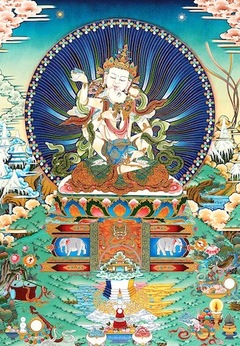
Dorsem Ngön-ga Nedren
༄༅། རྡོ་རྗེ་སེམས་དཔའ་ལ་བརྟེན་པའི་བླ་མ་མཆོད་པའི་ཆོ་ག་གཞན་ཕན་གྱི་ཕྲིན་ལས་དང་བཅས་པ་བདེ་ཆེན་ལམ་བཟང་ལས། གཉིས་པ་གནས་འདྲེན།
2. Guiding the Dead (Nedren)
from The Excellent Path of Great Bliss: A Ritual of Offering to the Gurus Based on Vajrasattva, Combined with Activity for the Benefit of Others
by Jamyang Khyentse Wangpo
སྦྱོང་བའི་སྐབས་སུ་མིང་བྱང་། སྦྱོང་ཆས། བྲབ་རྫས། ཟས་བསྔོ་སོགས་འདུ་བྱ། སྐྱབས་འགྲོ་ནས་བཟླས་པ་ཡན་གོང་ལྟར་གྲུབ་ནས་བུམ་པ་བསྒྲུབ་ཅིང་ཡི་གེ་བརྒྱ་པ་གཙོ་བོར་བཟླ། སྔགས་ཀྱི་ནུས་པ་བྱེ་མ་ལའང་བསྟིམ། ཡན་ལག་བདུན་པ། ལམ་དབང་བླང་བ། ཚོགས་མཆོད་བཅས་གྲུབ་ནས།
For the ritual of guiding the dead, prepare the name card, purification articles, scattering substances, food to dedicate and so on. Having completed the practice1 from refuge up to and including the mantra recitation, consecrate the vase and primarily recite the hundred-syllable mantra. Infuse the flour with the power of the mantra. Complete the seven-branch prayer, the path empowerment and the feast offering.
གནས་ལུང་དངོས་ལ། རྟེན་བསྐྱེད་རྣམ་ཤེས་དགུག་ཅིང་བསྟིམ། བགེགས་དང་སྡིག་པ་སྦྱོང་བ་དང་། བཀྲུ་བྱ་བ་དུག་བསལ་སྐྱབས་སུ་གསོལ། དབང་བསྐུར་འདོད་པའི་ཡོན་ཏན་སྦྱིན། ལམ་བསྟན་གནས་སྤོར་བྱང་བུ་བསྲེག སཱ་ཙྪ་བྱ་ཞིང་སྨོན་ལམ་གདབ། ཅེས་བཅོ་ལྔ་ལས།
The actual ritual of guiding the dead has fifteen parts: 1) generating the support, 2) summoning and absorbing the consciousness, 3) eliminating obstacles, 4) purifying negativities, 5) ablution, 6) dispelling poison, 7) dispelling elemental poison, 8) granting refuge, 9) granting empowerment, 10) offering the sensoryl delights, 11) guiding the deceased, 12) transference, 13) burning the name card, 14) making tsa-tsas and 15) aspiration prayers.
དང་པོ་ནི།
1. Generating the Support2
Purify the support with:
རྟེན་ཤཱུ་ནྱ་ཏཱས་སྦྱང་།
om maha shunyata jnana benza sobhava emako hang
oṃ mahā-śūnyatā-jñāna-vajra-svabhāvātmako ’ham
སྟོང་པའི་ངང་ལས་པད་ཟླའི་གདན་གྱི་སྟེང་། །
tongpé ngang lé pé dé den gyi teng
From the state of emptiness, upon a lotus and moon seat,
ནྲྀ་ཡིག་ཡོངས་གྱུར་ཚེ་ལས་འདས་པ་ཉིད། །
nri yik yong gyur tsé lé depa nyi
The syllable nṛi transforms into the deceased person,
ཕུང་པོ་ཁམས་དང་སྐྱེ་མཆེད་ཡོངས་རྫོགས་ཤིང་། །
pungpo kham dang kyemché yongdzok shing
With aggregates, elements and sense sources fully complete,
ཐལ་སྦྱར་གུས་པའི་ཚུལ་གྱིས་གནས་པར་གྱུར། །
taljar güpé tsul gyi nepar gyur
Abiding in a posture of devotion, palms joined together.
གཉིས་པ་ནི།
2. Summoning and Absorbing the Consciousness
ན་མོ། དཀོན་མཆོག་གསུམ་དང་རྩ་གསུམ་འདུས་པའི་དངོས། །
namo, könchok sum dang tsa sum düpé ngö
Namo. Through the power and truth of guru Vajrasattva,
བླ་མ་རྡོ་རྗེ་སེམས་དཔའི་བདེན་སྟོབས་ཀྱིས། །
lama dorjé sempé den tob kyi
The actual embodiment of the Three Jewels and Three Roots,
ཚེ་འདས་རྣམ་ཤེས་རིགས་དྲུག་བར་མ་དོ། །
tsedé namshé rik druk barma do
The consciousness of the deceased, wherever it may dwell in the six realms or the bardo,
གང་ན་གནས་ཀྱང་རྟེན་འདིར་མྱུར་དུ་ཁུག །
gang na né kyang ten dir nyurdu khuk
Is summoned immediately into this support!
ནྲྀ་བཛྲ་ཨངྐུ་ཤ་ཛཿ ཛཿཧཱུྃ་བྃ་ཧོཿ
nri benza angkusha dza | dza hung bam ho
nṛi vajra aṅkuśa jaḥ | jaḥ hūṃ baṃ hoḥ
གསུམ་པ་ནི།
3. Elimination of Obstacles
གཏོར་མ་གསུམ་རྟེན་ལ་གཡས་སུ་བསྐོར་ཞིང་།
For the peaceful elimination of obstacles, make clockwise circles with the three tormas towards the support while reciting:
ཨོཾ་སརྦ་བིགྷྣཱན་ན་མ་སརྦ་ཏ་ཐཱ་ག་ཏེ་བྷྱོ་སོགས་བརྗོད་པས་ཞི་བ།
om sarwa bighanen nama sarwa tathagaté bhyo bisho mukhé bhé sarwa takham utgaté saparana imam gagana kham grihana idam balingté soha
oṃ sarva vighnān namaḥ saravatathāgatebhyo viśva-mukhebhyaḥ sarvathā-khaṃ udgate spharaṇa imaṃ gagana-khaṃ gṛhṇa idaṃ baliṃ te svāhā
ཏིང་ལོ་དང་ཆང་བུས་གཡོན་དུ་བསྐོར་ཞིང་། སུམྦྷ་སོགས་བརྗོད་པས་ཕྱེད་མ།
For the semi-wrathful elimination, make counter-clockwise circles with the small butter lamp (tinglo) and fist-torma (changbu) while reciting:
om sumbhani sumbhani hung | grihana grihana hung | grihanapaya grihanapaya hung | anaya ho | bhagawan bidyaraza krodha hung pé
oṃ sumbha ni-sumbha(ni) hūṃ | gṛhāna gṛhāna hūṃ | gṛhānapaya gṛhānapaya hūṃ | ānaya ho bhagavān vidyārājāya hūṃ phat
For the wrathful elimination of obstacles:
ན་མོ། དཀོན་མཆོག་གསུམ་དང་རྩ་གསུམ་འདུས་པའི་དངོས། །
namo, könchok sum dang tsa sum düpé ngö
Namo. Through the power and truth of guru Vajrasattva,
བླ་མ་རྡོ་རྗེ་སེམས་དཔའི་བདེན་སྟོབས་ཀྱིས། །
lama dorjé sempé den tob kyi
The actual embodiment of the Three Jewels and Three Roots,
ཚེ་འདས་སྲོག་གཅོད་ཐར་ལམ་གེགས་བྱེད་ཀུན། །
tsedé sokchö tarlam gek jé kün
All you murderous spirits obstructing the path to liberation of the deceased:
གཏོར་མ་འདི་ལོངས་རང་རང་གནས་སུ་དེངས། །
torma di long rang rang né su deng
Take this torma and disperse to your own abodes.
སུམྦྷ་སོགས་བརྗོད་ཅིང་གུ་གུལ་བྱིས་བདུག
om sumbhani sumbhani hung | grihana grihana hung | grihanapaya grihanapaya hung | anaya ho | bhagawan bidyaraza krodha hung pé
oṃ sumbha ni-sumbha(ni) hūṃ | gṛhāna gṛhāna hūṃ | gṛhānapaya gṛhānapaya hūṃ | ānaya ho bhagavān vidyārājāya hūṃ phat
ཡུངས་ཀར་གྱིས་བྲབ། སྦྱོང་གཏོར་ཕྱིར་བསྐྱལ་བ་ན་དྲག་པོའི་སྦྱོང་བའོ།
While reciting this, offer guggul incense, scatter mustard seeds and carry the purification torma outside.
བཞི་པ་ནི།
4. Purifying Negativities
ཚེ་ལས་འདས་པའི་སྤྱི་བོར་ལྷའི་ས་བོན་ཨ་དཀར་པོ། །
tsé lé depé chiwor lhé sabön a karpo
At the crown of the deceased is the seed syllable of the gods, a white a.
མགྲིན་པར་ལྷ་མིན་གྱི་ས་བོན་སུ་སེར་པོ། །
drinpar lhamin gyi sabön su serpo
At the throat, the seed syllable of the demigods, a yellow su.
སྙིང་གར་མིའི་ས་བོན་ནྲྀ་སྔོ་སྐྱ། །
nyinggar mi sabön nri ngokya
At the heart, the seed syllable of humans, a pale blue nṛ.
ལྟེ་བར་དུད་འགྲོའི་ས་བོན་ཏྲི་ལྗང་གུ། །
tewar düdrö sabön tri janggu
At the navel, the seed syllable of the animals, a green tri.
གསང་གནས་སུ་ཡི་དྭགས་ཀྱི་ས་བོན་པྲེ་ཐལ་སྐྱ། །
sangné su yidak kyi sabön tré tal kya
At the secret place, the seed syllable of the hungry ghosts, an ash-coloured pre.
རྐང་མཐེལ་དུ་དམྱལ་བའི་ས་བོན་དུཿདུད་ཀའི་རྣམ་པར་གནས་པ། །
kang tel du nyalwé sabön du dü ké nampar nepa
At the soles of the feet, the seed syllable of the hell beings, a smoke-coloured duḥ.
བླ་མ་རྡོ་རྗེ་སེམས་དཔའི་ཐུགས་ཀ་ནས་ཡེ་ཤེས་ཀྱི་འོད་ཟེར་མེ་ལྕེ་ལྟ་བུ་བྱུང་བས་ཚེ་འདས་རིགས་དྲུག་ཏུ་སྐྱེ་བའི་ས་བོན་དང་ལྷན་ཅིག་ཏུ་ཉོན་མོངས་པ་དང་སྡིག་སྒྲིབ་བག་ཆགས་དང་བཅས་པ་ཐམས་ཅད་བསྲེགས་ཤིང་སྦྱངས་བར་གྱུར། །
lama dorjé sempé tukka né yeshe kyi özer meché tabu jungwé tsedé rik druk tu kyewé sabön dang lhenchik tu nyönmongpa dang dikdrib bakchak dang chepa tamché sek shing jangwar gyur
From the heart of guru Vajrasattva, light rays of wisdom stream forth like tongues of flame, incinerating and purifying the seeds for rebirth in the six realms of the deceased, together with all their afflictions, negative actions, obscurations and habitual tendencies.
རྩ་སྔགས་དང་ཡི་གེ་བརྒྱ་པའི་མཐར། །
At the end of the root mantra and the hundred-syllable mantra, add:
ཨ་སུ་ནྲྀ་ཏྲི་པྲེ་དུཿསརྦ་པཱ་པཾ་ཀླེ་ཤ་ད་ཧ་ན་བྷསྨིཾ་ཀུ་རུ་སྭཱ་ཧཱ།
a su nri tri tré duh sarva papam klésha dahana bhasmim kuru soha
a su nṛi tri pre duḥ sarva pāpaṃ kleśa dahana bhasmiṃ kuru svāhā
ཞེས་བརྗོད་ཅིང་བྱེ་མས་བྲབ། སྤྲོ་ན་སྒྲིབ་སྦྱོང་གི་སྔགས་གཞན་ཡང་ཇི་ལྟར་རིགས་པ་བཟླའོ།
Recite this while scattering flour. If you wish to elaborate, recite other purification mantras as appropriate.
ལྔ་པ་ནི།
5. Ablution
སྤྲོ་ན་ལྷ་ཁྲུས་སྔོན་དུ་འགྲོ་བས། །
If you wish to elaborate, first perform the ablution of the deity.3 Then recite:
ཨོཾ། ཀ་དག་གཞོན་ནུ་བུམ་སྐུའི་དབྱིངས། །
om, kadak zhönnu bumkü ying
Oṃ. Within the expanse of the youthful vase body of primordial purity,
ལྷུན་གྲུབ་ཡེ་ཤེས་བདུད་རྩིའི་ཆུས། །
lhündrub yeshe dütsi chü
Is the amṛta water of spontaneously present wisdom—
ཚེ་འདས་ལས་དང་ཉོན་མོངས་དང་། །
tsedé lé dang nyönmong dang
Through this, may the karma, as well as the emotional and cognitive obscurations
ཤེས་བྱའི་སྒྲིབ་པ་དག་གྱུར་ཅིག །
shejé dribpa dak gyur chik
Of the deceased be purified.
རྩ་སྔགས་དང་ཡི་གེ་བརྒྱ་པའི་མཐར། །
At the end of the root mantra and the hundred-syllable mantra, add:
ཚེ་ལས་འདས་པའི་ལས་དང་ཉོན་མོངས་པ་དང་ཤེས་བྱའི་སྒྲིབ་པ་བག་ཆགས་དང་བཅས་པ་ཐམས་ཅད་ཤཱནྟིཾ་ཀུ་རུ་སྭཱ་ཧཱ་ཞེས་བགྲུ
tsé lé depé lé dang nyönmongpa dang shejé dribpa bakchak dang chepa tamché shanting kuru soha
Let the harmful actions, emotional and cognitive obscurations and habitual tendencies of the deceased be purified—śāntiṃ kuru svāhā
རྒྱས་པར་ཕར་ཕྱིན་དྲུག་གི་ཚིགས་བཅད་ཀྱང་སྦྱར།
Cleanse the support while reciting this. For the elaborate version, also add the verses of the six pāramitās.4
དྲུག་པ་ནི།
6. Dispelling Poison
བུམ་ཆུས་རྟེན་ལ་བྱབས་ཤིང་།
Cleanse the support with water from the vase and recite:
འདོད་ཆགས་ཞེ་སྡང་གཏི་མུག་གསུམ། །
döchak zhedang timuk sum
Desire, hatred and delusion—
འདི་དག་འཇིག་རྟེན་དུག་གསུམ་སྟེ། །
didak jikten duk sum té
These are the three poisons of the world.
དཀོན་མཆོག་གསུམ་པོ་དུག་མི་མངའ། །
könchok sumpo duk mi nga
The Three Jewels are free from these three;
དཀོན་མཆོག་བདེན་པས་དུག་གཞོམ་མོ། །
könchok denpé duk zhommo
Through the truth of the Three Jewels, may the poisons be overcome!
At the end of the mantras, add:
སྔགས་མཐར་ཚེ་ལས་འདས་པའི་དུག་གསུམ་རྒྱུ་འབྲས་དང་བཅས་པ་ཐམས་ཅད་ཤཱནྟིཾ་ཀུ་རུ་སྭཱ་ཧཱ།
tsé lé depé duk sum gyundré dang chepa tamché shanting kuru soha
Let all the three poisons of the deceased, together with their causes and effects, be purified—śāntiṃ kuru svāhā
བདུན་པ་ནི།
7. Dispelling Elemental Poison
འབྱུང་བ་སོ་སོས་བྱབས་ཤིང་། །
Cleanse with each element in turn and recite:
འབྱུང་བཞི་དུག་གི་ཕ་ཡིན་ཏེ། །
jung zhi duk gi pa yin té
The four elements are the fathers of the poisons,
འབྱུང་བཞི་དུག་གི་མ་ཡང་ཡིན། །
jung zhi duk gi ma yang yin
And the four elements are also the mothers of the poisons.
ཡུམ་ཆེན་བཞི་ཡི་བྱིན་རླབས་ཀྱིས། །
yumchen zhi yi jinlab kyi
Through the blessings of the four great mothers,
ཚེ་འདས་ཁྱོད་ལ་དུག་མེད་ཤོག །
tsedé khyö la dukmé shok
Deceased one, may you be free from the poisons!
སྔགས་མཐར།
At the end of the mantra, add:
ཚེ་ལས་འདས་པའི་འབྱུང་བ་དང་འབྱུང་བ་ལས་གྱུར་པའི་དུག་ཐམས་ཅད་ཤཱནྟིཾ་ཀུ་རུ་སྭཱ་ཧཱ།
tsé lé depé jungwa dang jungwa lé gyurpé duk tamché shanting kuru soha
Let all the elements of the deceased and the poisons arisen from them be purified—śāntiṃ kuru svāhā
བརྒྱད་པ་ནི།
8. Granting Refuge
ཚེ་འདས་ཉིད་བླ་མ་དང་རྡོ་རྗེ་སེམས་དཔའ་དབྱེར་མ་མཆིས་པ་རྩ་གསུམ་ཞི་ཁྲོ་རིགས་འདུས་ཀྱི་སྤྱན་སྔར་ཕྱག་འཚལ་ཞིང་སྐྱབས་སུ་འགྲོ་བར་གྱུར། །
tsedé nyi lama dang dorjé sempa yer machipa tsa sum zhitro rik dü kyi chen ngar chaktsal zhing kyab su drowar gyur
The deceased person pays homage and takes refuge in the guru, who is inseparable from Vajrasattva—the embodiment of all the families of the Three Roots and peaceful and wrathful deities.
ཕྱག་འཚལ་རྒྱས་བསྡུས་གང་རིགས་མཐར།
After the prostrations, whether elaborate or condensed, recite:
དཀོན་མཆོག་རྩ་གསུམ་འདུས་པའི་དངོས། །
könchok tsa sum düpé ngö
To the Guru Vajrasattva,
བླ་མ་རྡོ་རྗེ་སེམས་དཔའ་ལ། །
lama dorjé sempa la
Actual embodiment of the Three Jewels and Three Roots,
ཚེ་འདས་འཇིགས་པས་རྣམ་སྐྲག་སྟེ། །
tsedé jikpé nam trak té
The deceased person, stricken with fear,
སྙིང་ནས་ཕྱག་འཚལ་སྐྱབས་སུ་མཆི། །
nying né chaktsal kyab su chi
Pays homage and takes refuge from the depths of their heart.
འཁོར་བ་ངན་སོང་སྡུག་བསྔལ་དང་། །
khorwa ngensong dukngal dang
May they be freed from saṃsāra, the suffering of the lower realms,
བར་དོའི་འཕྲང་ལས་བསྒྲལ་ནས་ཀྱང་། །
bardö trang lé dral né kyang
The perilous passage of the intermediate state,
ཐར་པ་བླ་ན་མེད་པ་ཡི། །
tarpa lanamepa yi
And find relief
བྱང་ཆུབ་གནས་སུ་དབུགས་དབྱུང་གསོལ། །
changchub né su ukyung sol
In the state of unsurpassable awakening!
དགུ་པ་ནི།
9. Granting the Empowerment
རྒྱས་པར་སློབ་མ་རྗེས་སུ་བཟུང་བའི་སྐབས་ལྟར་བྱ། བསྡུ་ན།
For the elaborate version, follow the ritual for taking care of the students.5 In brief:
ཚེ་ལས་འདས་པ་སྐད་ཅིག་གིས་དཔལ་རྡོ་རྗེ་སེམས་དཔའི་སྐུར་གྱུར་པ་ལ་བླ་མ་རྡོ་རྗེ་མི་བསྐྱོད་པའི་སྨིན་མཚམས་ནས་གདན་གསུམ་ཚང་བའི་དཀྱིལ་འཁོར་ནམ་མཁའ་གང་བར་སྤྲོས་ཏེ་རིག་པའི་ལྷ་མོ་རྣམས་ཀྱིས་བྱང་ཆུབ་སེམས་ཀྱི་བདུད་རྩིས་དབང་བསྐུར་བར་གྱུར།
tsé lé depa kechik gi pal dorjé sempé kur gyurpa la lama dorjé mikyöpé mintsam né den sum tsangwé kyilkhor namkha gangwar trö té rigpé lhamo nam kyi changchub sem kyi dütsi wangkurwar gyur
The deceased person instantly transforms into the form of glorious Vajrasattva. From between the eyebrows of guru Vajra Akṣobhya, the maṇḍala of the three seats of completeness emanates, filling the sky, whereupon the wisdom goddesses confer the empowerment with the nectar of bodhicitta.
ཨོཾ། དཔལ་ལྡན་སངས་རྒྱས་ཀུན་བདག་ཉིད། །
om palden sangye kün daknyi
Oṃ. Glorious embodiment of all the buddhas,
རྡོ་རྗེ་མི་ཕྱེད་གསུམ་འཆང་བ། །
dorjé miché sum changwa
Holder of the three inseparable vajras,
དེང་འདིར་སངས་རྒྱས་ཐམས་ཅད་ཀྱི། །
dengdir sangye tamché kyi
Confer here and now the empowerment
སྐུ་གསུང་ཐུགས་སུ་དབང་བསྐུར་རོ། །
ku sung tuk su wangkur ro
Of the body, speech and mind of all the buddhas!
At the end of the mantras, add:
སྔགས་མཐར་ཀཱ་ཡ་ཝཱ་ཀ་ཙིཏྟ་ཨ་བྷི་ཥིཉྩཱ་མི།
kaya waka tsitta abhishintsa mi
kāya vāka citta abhiṣiñcāmi
ཞེས་དབང་བསྐུར་བས་སྒྲིབ་གཉིས་བག་ཆགས་དང་བཅས་པ་དག
zhé wangkurwé drib nyi bakchak dang chepa dak
Through this empowerment, the two obscurations together with their habitual tendencies are purified.
རྡོ་རྗེ་གསུམ་གྱི་ཡེ་ཤེས་མངོན་དུ་བྱས།
dorjé sum gyi yeshe ngön du jé
The wisdom of the three vajras is actualized.
ཆུའི་ལྷག་མ་སྤྱི་བོར་འཁྱིལ་པ་ལས་མི་བསྐྱོད་པ་གཙོ་བོར་གྱུར་པའི་རིགས་ལྔས་དབུར་བརྒྱན།
chü lhakma chiwor khyilpa lé mikyöpa tsowor gyurpé rik ngé ur gyen
The remaining liquid gathers at the crown of the head and transforms into the crown of the five families, headed by Akṣobhya,
ནམ་མཁར་བཞུགས་པའི་དབང་གི་ལྷ་རྣམས་ཀྱང་དབྱེར་མེད་དུ་ཐིམ་པར་གྱུར།
namkhar zhukpé wang gi lha nam kyang yermé du timpar gyur
After which the empowerment deities abiding in the sky dissolve inseparably into the deceased.
ཨོཾ་སུ་པྲ་ཏིཥྛ་བཛྲཱ་ཡ་སྭཱ་ཧཱ་ཞེས་བརྗོད་ཅིང་མེ་ཏོག་འཐོར།
om supratishtha badzraya soha
oṃ supratiṣṭha vajrāya svāhā.
Recite this while scattering flowers.
བཅུ་པ་ནི།
10. Offering the Sensory Delights
Cleanse and purify the sensory delights with:
འདོད་ཡོན་གྱི་དངོས་པོ་རྃ་ཡྃ་ཁྃ་གིས་བསང་སྦྱང་།
ram yam kham
raṃ yaṃ khaṃ
ཨོཾ་ཨཱཿཧཱུྃ་ཧོཿ
om ah hung ho
oṃ āḥ hūṃ hoḥ
དང་སྤྲོ་ན་ནམ་མཁའ་མཛོད་ཀྱི་སྔགས་རྒྱས་བརླབ།
If you wish to elaborate, bless them with the sky-treasury mantra and mudrā. Offer them with:
ཕྱོགས་དུས་ཀུན་ན་གཟུགས་སྒྲ་དྲི་རོ་དང་། །
chok dü kün na zuk dra dri ro dang
I offer the most splendid, exquisite forms and sounds,
རེག་བྱའི་ཁྱད་པར་ཕུན་སུམ་ཚོགས་པ་རྣམས། །
rekjé khyepar pünsum tsokpa nam
Smells, tastes and textures in all of space and time,
རྡོ་རྗེ་སེམས་དཔའི་གནས་ཐོབ་ཁྱོད་ལ་འབུལ། །
dorjé sempé né tob khyö la bul
To you who have attained the state of Vajrasattva—
ཟག་མེད་དགའ་བདེས་རྟག་ཏུ་ཚིམ་པར་ཤོག །
zakmé gadé taktu tsimpar shok
May you forever be satisfied by undefiled bliss and happiness!
ཨོཾ་བཛྲ་སཏྭ་པཉྩ་ཀཱ་མ་གུ་ཎ་པྲ་ཏཱི་ཙྪ་སྭཱ་ཧཱ།
om benza sato pentsa kama guna pratitsa soha
oṃ vajrasattva pañca kāma guṇa pratīccha svāhā
ཞེས་བསྔོ།
བཅུ་གཅིག་པ་ནི།
11. Guiding the Deceased
ཉོན་ཅིག་ཚེ་འདས་རིགས་ཀྱི་བུ། །
nyön chik tsedé rik kyi bu
Listen, child of noble family, your life has come to an end.
འཁོར་བ་སྡུག་བསྔལ་ཅན་ཕུང་པོ། །
khorwa dukngal chen pungpo
Saṃsāra is a mass of suffering,
འགྱུར་དང་འདུ་བྱེད་ཉིད་འཁྲུལ་ཅན། །
gyur dang dujé nyi trulchen
Itself changing and compounded, nothing but delusion.
ལས་ལས་སྐྱེས་ཤིང་ལས་ལ་བརྟེན། །
lé lé kyé shing lé la ten
You were born based on your karma and are dependent on karma,
དེ་ཕྱིར་དེ་ལ་མ་ཆགས་པར། །
dechir dé la machakpar
Therefore, relinquish any attachment.
བླ་མ་དཀོན་མཆོག་རྣམས་ཀྱི་མཐུ། །
lama könchok nam kyi tu
The power of the gurus and the Three Jewels
དད་པའི་ཡུལ་ན་ཤིན་ཏུ་སྣང་། །
depé yul na shintu nang
Is clearly experienced by those who have faith.
མོས་གུས་སྐྱེད་ཅིག་རིགས་ཀྱི་བུ། །
mögü kyé chik rik kyi bu
So, child of noble family, generate devotion!
འདི་ནས་ཤར་གྱི་ཕྱོགས་རོལ་ན། །
di né shar gyi chok rol na
To the east of here,
སྲིད་གསུམ་དྲི་མ་རབ་སྤངས་པ། །
si sum drima rab pangpa
Beyond all the stains of the three realms of existence,
རང་བཞིན་སྤྲུལ་པའི་ཞིང་ཁམས་ནི། །
rangzhin trulpé zhingkham ni
Lies the naturally emanated pure realm
མངོན་པར་དགའ་བ་ཞེས་བྱ་བར། །
ngönpar gawa zhejawar
Known as Abhirati,
བླ་མ་རྡོ་རྗེ་མི་བསྐྱོད་པ། །
lama dorjé mikyöpa
Where guru Vajra Akṣobhya dwells
རྒྱལ་དང་དེ་སྲས་འཁོར་བཅས་བཞུགས། །
gyal dang dé sé khor ché zhuk
Together with the victorious ones, their heirs and retinue.
གང་ཞིག་ཡིད་ལ་དྲན་པའི་མོད། །
gangzhik yi la drenpé mö
The moment you bring him to mind,
ཁྱེད་ཀྱང་དེ་རུ་ཕྱིན་འགྱུར་བས། །
khyé kyang dé ru chin gyurwé
You too will go there.
དད་གུས་སྐྱེད་ལ་དེ་མཚན་ཟུངས། །
dé gü kyé la dé tsen zung
So arouse faith and devotion, and hold his name in mind!
སྟོན་པ་དེ་ཡི་ཞལ་མཐོང་བའི། །
tönpa dé yi zhaltongwé
The moment you behold the face of that teacher,
མོད་ལ་སྒྲིབ་པ་རྣམ་པ་གཉིས། །
mö la dribpa nampa nyi
The two obscurations
ཡུད་ཀྱིས་སྤངས་ནས་མངོན་སངས་རྒྱས། །
yükyi pang né ngön sangye
Will be instantly abandoned and you will fully awaken!
ཡིད་གཉིས་སྤངས་ལ་དེར་གཤེགས་ཤིག །
yi nyi pang la der shek shik
Abandon any doubt and go there!
བཅུ་གཉིས་པ་ནི།
12. Transference
ཚེ་ལས་འདས་པའི་རྣམ་ཤེས་ཧཱུྃ་ཡིག་གི་རྣམ་པས་སྐར་མདའ་འཕང་བ་བཞིན་སྤྱི་བོ་ནས་ཐོན།
tsé lé depé namshé hung yik gi nampé karda pangwa zhin chiwo né tön
The consciousness of the deceased, in the form of the syllable hūṃ, bursts out from the crown of the head like a shooting star
འོག་མིན་གྱི་ཞིང་དུ་སོང་།
womin gyi zhing du song
And travels to the pure realm of Akaniṣṭha.
བཅོམ་ལྡན་འདས་རྡོ་རྗེ་སེམས་དཔའ་ཡབ་ཡུམ་གྱི་སྦྱོར་མཚམས་སུ་ཐིམ་ནས་རྒྱལ་བའི་སྲས་སུ་སངས་རྒྱས་པར་གྱུར་པའི་མོས་པས་དབྱིངས་རིག་དབྱེར་མེད་ཀྱི་ངང་དུ་མཉམ་པར་གཞག །
chomdendé dorjé sempa yabyum gyi jortsam su tim né gyalwé sé su sangyé par gyur
It dissolves into the point of union of Bhagavān Vajrasattva and consort, and awakens as an heir of the victorious ones.
Considering this, rest in meditative equipoise within the expanse of inseparable space and awareness.
བཅུ་གསུམ་པ་ནི།
13. Burning the Name Card
རྣམ་ཤེས་གཤེགས་པའི་བྱང་བུ་ཡེ་ཤེས་ཀྱི་མེས་བསྲེགས་པར་གྱུར་པའི་མོས་པས།
namshé shekpé jang bu yeshe kyi mé sekpar gyur
Imagine that the name card from which the consciousness has departed is burned by the fire of wisdom:
ཚེ་འདས་ཕུང་ཁམས་སྐྱེ་མཆེད་ལ། །
tsedé pung kham kyemché la
Through the fire of the union of space and awareness,
དབྱིངས་རིག་ཟུང་འཇུག་མེ་སྦར་བས། །
yingrik zungjuk mé parwé
Blazing within the aggregates, elements and sense-sources of the deceased,
སྐུ་གསུམ་ཡེ་ཤེས་ལྔ་ལྡན་པ། །
ku sum yeshe ngaden pa
May they be endowed with the three kāyas and five wisdoms
འགྲོ་བའི་དོན་དུ་འགྲུབ་པར་ཤོག །
drowé döndu drubpar shok
And accomplish the benefit of beings!
ཅེས་དང་སྔགས་བརྗོད་བཞིན་བསྲེག །
Recite this, followed by the mantra, while burning the name card.
བཅུ་བཞི་པ་ནི།
14. Making Tsa-Tsas
སླར་ཡང་བྱང་རོའི་སྟེང་དུ་ཟླ་བ་ལ་སྔགས་ཀྱི་ཕྲེང་བས་མཚན་པ་ལས་ཡེ་ཤེས་ཀྱི་བདུད་རྩིའི་རྒྱུན་བབས་པས་སྡིག་སྒྲིབ་ཐམས་ཅད་ལྷག་མེད་དུ་སྦྱངས་པར་གྱུར་པའི་མོས་པས་སྔགས་བཟླ་བཞིན་དུ་བུམ་ཆུས་བཀྲུ། །
lar yang jang rö tengdu dawa la ngak kyi trengwé tsenpa lé yeshe kyi dütsi gyün babpé dikdrib tamché lhakmé du jangpar gyur
Once again, visualize a moon disc encircled by a garland of mantras above the cremated remains. From it, a stream of wisdom amṛta descends, purifying all negative actions and obscurations without a trace.
Imagine this and cleanse the remains with vase water while reciting the mantra.
བཅོ་ལྔ་པ་ནི།
15. Aspiration Prayers
ཐལ་བ་དྲི་ཞིམ་པོའི་ཆུ་དྭངས་གཙང་མ་སྦྱར་ལ་ཡིག་བརྒྱ་བཟླ་བཞིན་སཙྪ་གདབ། ཡེ་དྷརྨཱས་མེ་ཏོག་འཐོར་བས་སངས་རྒྱས་ཐམས་ཅད་བརྟན་པར་བཞུགས་པར་བསམ། བཟང་པོ་སྤྱོད་པ་སོགས་སྨོན་ལམ་རྒྱས་བསྡུས་གང་རིགས་བཏབ་པས་རྫོགས་སྨིན་སྦྱང་གསུམ་མཐར་ཕྱིན་པར་བསམ་མོ། དེ་ནས་ཚོགས་ལ་རོལ་ཞིང་ལྷག་མ་དང་། རྗེས་ཆོག་གཞུང་ལྟར་བྱའོ།།
Mix the ashes with fragrant water to make a clean paste and press tsa-tsas while reciting the hundred-syllable mantra. Scatter flowers while reciting the ye dharmā mantra and consider that all the buddhas remain constantly within them. Recite the Aspiration to Good Actions6 or similar aspiration prayers, either elaborate or condensed as appropriate, and consider that perfecting, maturing and purifying are brought to completion. Then enjoy the feast, offer the remainder and perform the concluding rituals according to the text.
| Translated by Matthias Staber, reviewed by Han Kop and edited by Alexi Dhami and Barry Cohen for the Longchen Nyingtik Project, 2026.
Sources
’jam dbyangs mkhyen brtse'i dbang po, “rdo rje sems dpa' la brten pa'i bla ma mchod pa'i cho ga gzhan phan gyi phrin las dang bcas pa bde chen lam bzang.” In klong chen snying thig rtsa pod. BDRC W1KG13585 (Shechen Publications, 1994). Vol. 4, 211–258.
’jam dbyangs mkhyen brtse'i dbang po, "rdo rje sems dpa' la brten pa'i bla ma mchod pa'i cho ga gzhan phan gyi phrin las dang bcas pa bde chen lam bzang." In 'jam dbyangs mkhyen brtse'i dbang po'i bka' 'bum. BDRC MW3PD1002 (Khams sde dge rdzong sar dgon: Rdzong sar blo gros phun tshogs, 2014). Vol. 15, 477–529.
Version: 1.0-20260806
Notes
- https://www.lotsawahouse.org/tibetan-masters/jamyang-khyentse-wangpo/dorsem-ngon-ga-sadhana ↑
- Support (rten) refers to a so-called tsenjang (mtshan byang) – an effigy, photograph or name card. ↑
- See the ablution ritual in The Heart of Great Bliss. ↑
- See the ablution ritual in The Heart of Great Bliss. ↑
- https://www.lotsawahouse.org/tibetan-masters/jamyang-khyentse-wangpo/dorsem-ngon-ga-empwerment ↑
- https://www.lotsawahouse.org/words-of-the-buddha/samantabhadra-aspiration-good-actions ↑