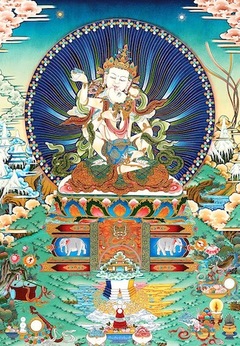
Dorsem Ngön-ga Restoring Impairments
༄༅། རྡོ་རྗེ་སེམས་དཔའ་ལ་བརྟེན་པའི་བླ་མ་མཆོད་པའི་ཆོ་ག་གཞན་ཕན་གྱི་ཕྲིན་ལས་དང་བཅས་པ་བདེ་ཆེན་ལམ་བཟང་ཞེས་བྱ་བ་བཞུགས་སོ།
The Excellent Path of Great Bliss
A Ritual of Offering to the Gurus Based on Vajrasattva, Combined with Activity for the Benefit of Others
3) Restoring Impairments and Breakages
by Jamyang Khyentse Wangpo
གཞུང་རྩ་བ་ལས།
From the root text:1
བསྙེན་སྒྲུབ་ཟབ་མོར་འཇུག་པའི་ཚེ༔
དེ་ཡི་དབང་ཐོབ་བླ་མ་དང་༔
དམ་ཚིག་ཉམས་ཆག་ཡོད་སྲིད་ན༔
སྒྲུབ་འབྲས་འབྱིན་པ་ཕུལ་བས་ན༔
གནད་ཀྱི་མན་ངག་འདི་ལྟར་བྱ༔
དབང་ལུང་ནོད་པའི་བླ་མ་དེ༔
སངས་རྒྱས་ཐམས་ཅད་འདུས་པའི་སྐུར༔
བསམས་ཏེ་རང་གི་སྤྱི་བོར་བསྐྱེད༔
སྟོབས་བཞིའི་གནད་དང་ལྡན་པའི་ངང་༔
གླང་པོ་རབ་འབོགས་རྒྱུད་ཀྱི་དོན༔
ཡེ་ཤེས་སྐུ་མཆོག་ཚར་གསུམ་དང་༔
ཡི་གེ་བརྒྱ་པ་ཅི་ནུས་མཐར༔
དབྱངས་གསལ་རྟེན་འབྲེལ་སྙིང་པོ་བརྗོད༔
When engaging in the profound practices of approach and accomplishment,
If there is any possibility of impairments and breakages of samaya
Relating to the guru from whom you have received empowerment,
This can rob you of the fruits of the practice—
Thus apply the following crucial pith instruction.
Consider that the guru from whom you have received empowerment and transmissions
Is the embodiment of all the buddhas
And visualize him or her on the crown of your head.
While maintaining the four powers,
Recite three times the Yeshe Kuchok prayer,
Which conveys the meaning of The Rampant Elephant Tantra,
And the hundred-syllable mantra as much as possible.
Finally, recite the vowels and consonants and the mantra of the essence of interdependent origination.
ཅེས་པའི་དོན་ཉམས་སུ་བླང་བ་ནི། བླ་མཆོད་གཞུང་གི་བཟླས་པའི་རྗེས་ཡན་ལག་བདུན་པ་དང་། ཚོགས་མཆོད་ལྷག་མ་ཡན་ཆད་གཞུང་ལྟར་གྲུབ་རྗེས། མདུན་གྱི་བླ་མ་རྡོ་རྗེ་སེམས་དཔའ་ལ་མོས་གུས་གདུང་ཤུགས་དྲག་པོས་གསོལ་བ་གདབ་ཅིར་ཡེ་ཤེས་སྐུ་མཆོག་ཚར་གསུམ། ཡི་གེ་བརྒྱ་པ་ཅི་ནུས། དབྱངས་གསལ་རྟེན་སྙིང་བཅས་བརྗོད། དེ་ནས།
To apply this in practice, proceed as follows. After the mantra recitation in the Offering to the Gurus,2 complete the seven-branch practice, the feast offering and the remainder offering as usual. Then, with intense longing and devotion, supplicate the guru Vajrasattva before you. Recite the Yeshe Kuchokma3 three times, the hundred-syllable mantra as many times as you can, and finally the vowels and consonants together with the essence of interdependent origination.
དེ་རྗེས་སྤྱི་བོའི་བླ་མ་དང་༔
བདག་ཉིད་ཡི་དམ་གང་བསྙེན་གྱི༔
སྐུ་རུ་ལམ་གྱིས་གནས་བསྒྱུར་ལ༔
དབང་བཞི་བླངས་ཤིང་རྩ་སྔགས་བཟླ༔ ཞེས་པས།
Then, the guru at your crown
Instantly transforms into the form
Of whichever yidam deity you are practising.
Receive the four empowerments and recite the root mantra.
In accord with this:
མདུན་གྱི་བླ་མ་རྡོ་རྗེ་སེམས་དཔའ་དང་། རང་ཉིད་ཀྱི་གཞི་ལུས་སྐད་ཅིག་གིས་ལྷག་པའི་ལྷའི་སྐུར་གྱུར་ཅེས་པའམ་མངོན་རྟོགས་རྒྱས་པར་བརྗོད་པས་གསལ་བཏབ་ལ་མཎྜལ་ཕུལ།
dün gyi lama dorjé sempa dang | rangnyi kyi zhilü kechik gi lhakpé lhé kur gyur
Both the guru Vajrasattva before me and my body instantly transform into the form of the supreme yidam deity.
Either recite only this or recite the elaborate generation stage of the relevant sādhana so as to clearly bring to mind the visualization. Then offer a maṇḍala.
Starting with the following prayer, proceed to receive the four empowerments:4
དཀྱིལ་འཁོར་གཙོ་བོ་ཁྱོད་ལ་འདུད་སོགས་གསོལ་འདེབས་ནས་བཟུང་དབང་བཞི་བླང་།
kyilkhor tsowo khyö la dü…
I pay homage to you, principal one of the maṇḍala…
དེའང་ཡན་ལག་བདུན་པའི་མགོའི།
Furthermore, at the beginning of the seven-branch practice where it says:5
རྩ་བའི་བླ་མ་དཔལ་ལྡན་རྡོ་རྗེ་སེམས་ཞེས་པར།
tsawé lama palden dorjé sem...
And embodying Glorious Vajrasattva, in whom all buddha families are present…
Replace with:
རྩ་བའི་བླ་མ་དཀྱིལ་འཁོར་གཙོ་བོ་མཆོག་ཅེས་དང་།
tsawé lama kyilkhor tsowo chok...
And embodying the supreme yidam deity, in whom all buddha families are present…
And wherever it says:
བླ་མ་རྡོ་རྗེ་སེམས་དཔའ་ཞེས་པའི་མལ་དུ་
lama dorjé sempa...
The guru Vajrasattva…
Replace with:
བླ་མ་དང་ལྷག་པའི་ལྷ་ཐ་མི་དད་པའི་ཞེས་བསྒྱུར།
lama dang lhakpé lha tamidepé…
The guru inseparable from the supreme yidam deity...
བུམ་དབང་སྐབས་ལྷ་རང་གི་སྔགས་མཐར་ཨ་བྷི་ཥིཉྩ་གདགས་པ་ཙམ་ཁྱད་པར་རོ། །
During the vase empowerment, the only other difference is to add abhiṣiñca to the end of the deity's root mantra.
མཐར་ཡི་དམ་དེ་ཉིད་ཀྱི་རྩ་སྔགས་ཅི་ནུས་བཟླ། སྒོས་ཀྱི་མཆོད་བསྟོད་གང་ཤེས་བྱ། ནོངས་བཤགས་རྗེས།
Finally, recite the root mantra of the yidam deity as many times as you can, and present the specific offerings and praise. After the confession of faults:
དཔལ་ལྡན་བླ་མ་ལྷག་པའི་ལྷ། །
palden lama lhakpé lha
The glorious guru, the supreme deity,
དགྱེས་པ་ཆེན་པོས་རང་ལ་ཐིམ། །
gyepa chenpö rang la tim
Dissolves into me with great delight.
རང་ཡང་སྣང་སྟོང་བརྗོད་བྲལ་ངང་། །
rang yang nangtong jödral ngang
I myself merge into an inexpressible experience of appearance and emptiness,
མི་རྟོག་རྗེན་པའི་ངང་དུ་བཞག །
mi tok jenpé ngang du zhak
And settle in the naked state that is beyond thought.
ཅེས་བརྗོད་ཅིང་བླ་མའི་ཐུགས་དང་རང་སེམས་དབྱེར་མེད་དུ་འདྲེས་པའི་ངང་གནས་ལུགས་མ་བཅོས་པའི་རང་ཞལ་བལྟ་བས་མཚམས་སྦྱར་ཏེ་བསྔོ་སྨོན་ཤིས་བརྗོད་རྒྱས་པར་བྱས་ལ།
Recite this, and as the guru's wisdom mind and your own mind merge inseparably, look directly at the face of the unaltered natural state. Then conclude with extensive prayers of dedication, aspiration and auspiciousness.
ཕྱིན་ཆད་ཉམས་ཆག་འཁོན་འཛིན་དེ༔
Thereafter, impairments, breakages or malice
ནམ་ཡང་རྒྱུད་ལ་གནས་མི་བྱ༔
Should never again be permitted to taint your mind.
ཞེས་གསུངས་པ་ལྟར་སྡོམ་སེམས་བརྟན་པོ་བགྱིས་པས་ཉམས་ཆག་ཐམས་ཅད་འདག་ཅིང་། དངོས་གྲུབ་ཀྱི་སྣོད་དུ་འགྱུར་པ་ཡིན་ནོ། །
As stated, if you firmly resolve never to act in such a way again, all impairments and breakages are purified and you become a suitable vessel for the accomplishments.
| Translated by Matthias Staber and reviewed by Han Kop for the Longchen Nyingtik Project, 2026.
Sources
'jam dbyangs mkhyen brtse'i dbang po, "rdo rje sems dpa' la brten pa'i bla ma mchod pa'i cho ga gzhan phan gyi phrin las dang bcas pa bde chen lam bzang." In klong chen snying thig rtsa pod. BDRC W1KG13585 (Shechen Publications, 1994). Vol. 4, 211–258.
'jam dbyangs mkhyen brtse'i dbang po, "rdo rje sems dpa' la brten pa'i bla ma mchod pa'i cho ga gzhan phan gyi phrin las dang bcas pa bde chen lam bzang." In 'jam dbyangs mkhyen brtse'i dbang po'i bka' 'bum. BDRC MW3PD1002 (Khams sde dge rdzong sar dgon: Rdzong sar blo gros phun tshogs, 2014). Vol. 15, 477–529.
Version: 1.0-20261019
Notes
- The sections here and in the colophon are inserted from Jigme Lingpa’s Instruction for Repairing Impairments and Breakages (https://www.lotsawahouse.org/tibetan-masters/jigme-lingpa/impairments-breakages-repair-instruction). ↑
- https://www.lotsawahouse.org/tibetan-masters/jamyang-khyentse-wangpo/dorsem-ngon-ga-sadhana ↑
- https://www.lotsawahouse.org/words-of-the-buddha/yeshe-kuchokma ↑
- Follow the path empowerment section of the Offering to the Gurus sādhana, adapting only the opening line of the supplication as given here (https://www.lotsawahouse.org/tibetan-masters/jamyang-khyentse-wangpo/dorsem-ngon-ga-sadhana). ↑
- This refers to the short seven branches at the opening of the close approach in the Offering to the Gurus sādhana (https://www.lotsawahouse.org/tibetan-masters/jamyang-khyentse-wangpo/dorsem-ngon-ga-sadhana). ↑